


What Is an Overhead Crane Called?
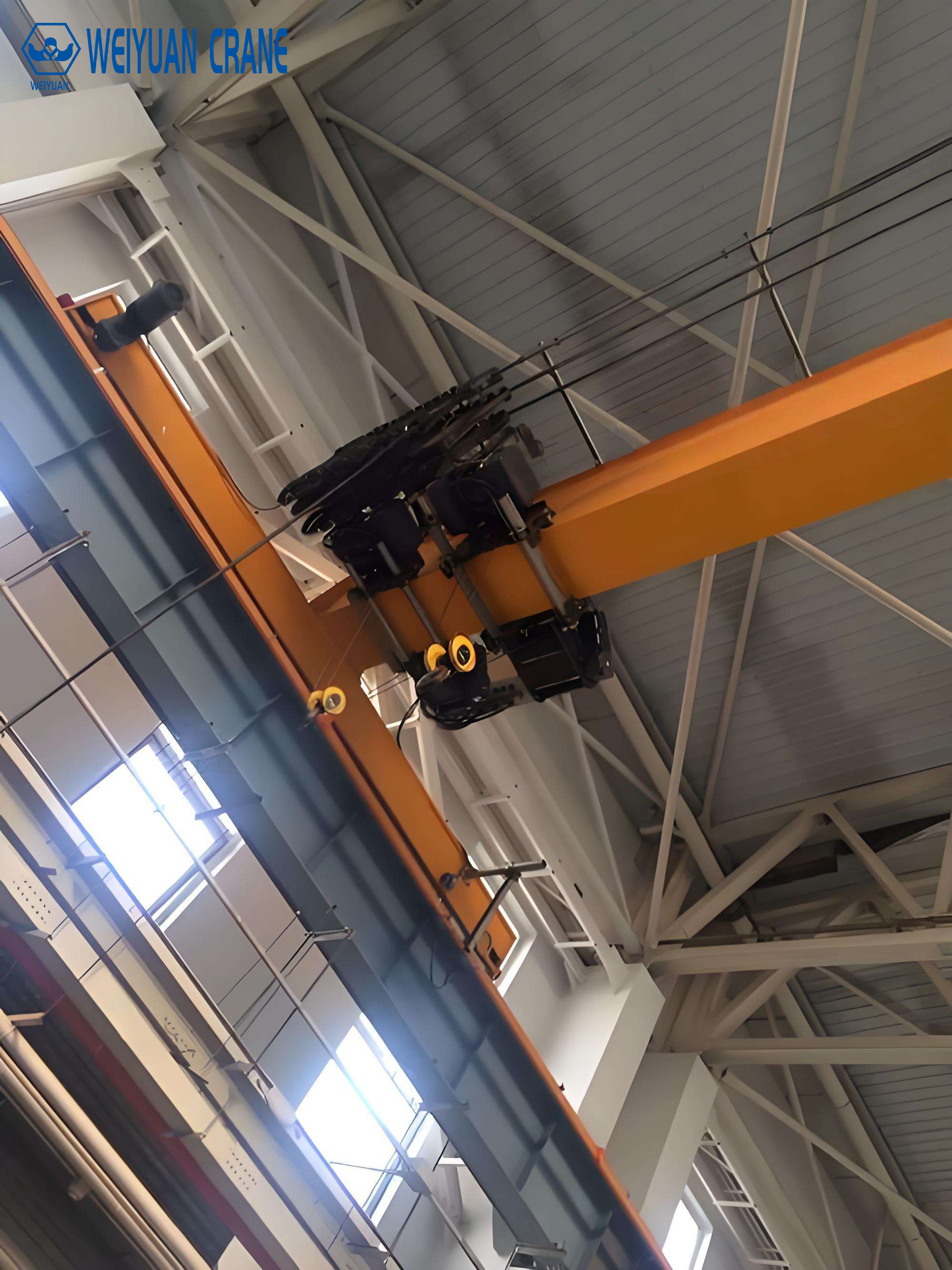
When navigating the world of heavy industrial equipment, precise terminology is essential. The term “overhead crane” is often used interchangeably with several other common names, leading to potential confusion for new buyers or operations managers. Understanding these different names is crucial, as they often refer to the same fundamental piece of machinery—a system designed for heavy vertical lifting and horizontal material transport within a defined area.
The core function of this equipment is to optimize workspace utilization and achieve safe, precise movement of large or heavy loads, such as in automotive manufacturing for mould loading or in heavy mechanical factories for component assembly. By significantly improving material handling efficiency (often by 20% or more), the overhead crane serves as a vital investment for modern factories, warehouses, shipyards, and metallurgical sites.
This article explores the most common alternative names for the overhead crane, details the defining features of this indispensable equipment, and explains why this heavy lifting system is the superior choice for demanding industrial applications.
1. The Synonyms: Other Names for the Overhead Crane System
The most frequent alternative term for an overhead crane is usually based on its structural design or the industry it serves.
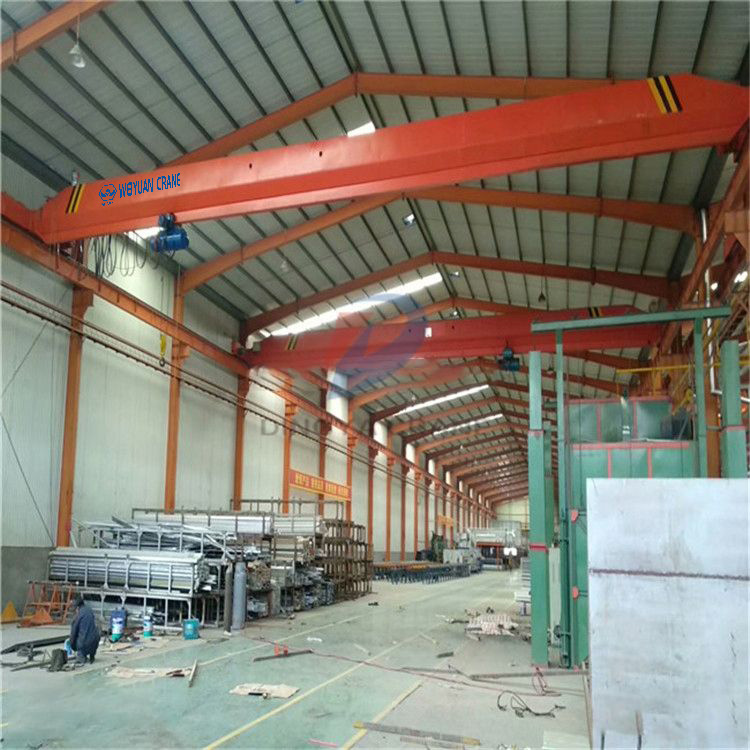
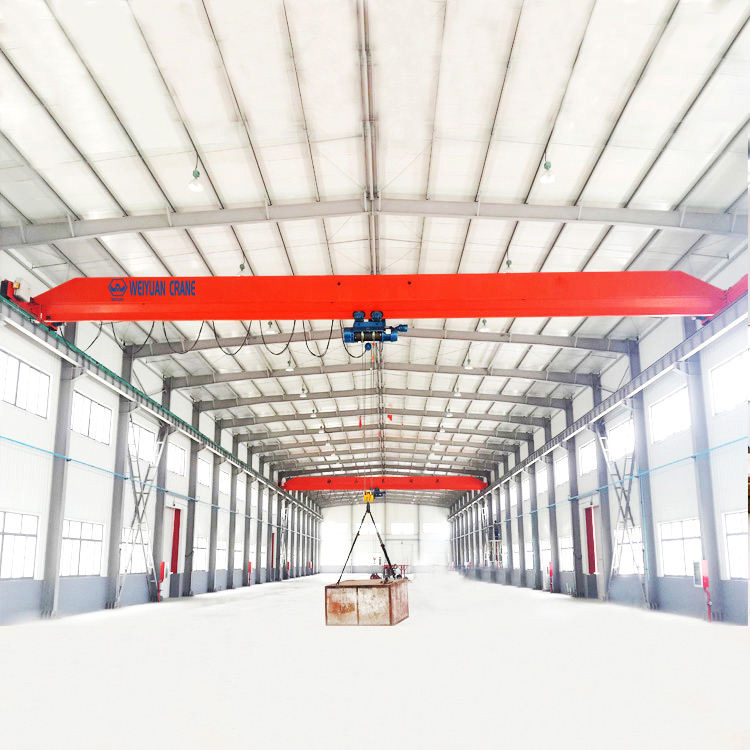
The name Overhead Bridge Crane is arguably the most specific and accurate alternative name. It describes the structure: a horizontally moving bridge (the girder) supported by end trucks that run on elevated parallel runways. It literally bridges the space between the runways. The overhead bridge crane is the workhorse of indoor industrial facilities, designed to service the entire span of a manufacturing bay from above. The most common configurations include the single girder overhead crane for lighter loads and the double girder overhead crane for high capacity, heavy-duty work.
The term Bridge Crane is often used as a simplified or shortened version of “Overhead Bridge Crane.” It is used for brevity, particularly when context (e.g., being inside a factory or warehouse) makes it clear that the crane is supported by an overhead structure. If you see the term “bridge crane,” it almost certainly refers to the traditional, building-supported overhead lifting system.
The name EOT Crane (Electric Overhead Travelling Crane) highlights the crane’s power source and mobility. This name is popular in technical specifications and certain markets, emphasizing that the crane uses electricity (Electric) and that it moves along elevated rails (Overhead Travelling). It differentiates the modern electric crane from older, manually operated, or hydraulic systems. The EOT crane typically utilizes advanced control modes, such as Variable Frequency Drive (VFD), to achieve smooth, stepless speed regulation and high-precision positioning.
Finally, Shop Crane or Industrial Crane are less specific but descriptive names based on location. They describe the environment where the crane is commonly found—in a manufacturing shop or any heavy industry setting (e.g., steel, power, or logistics). A request for a “shop crane” often implies a smaller, maybe a 5 ton overhead crane, but the term can apply to any size used within a manufacturing facility.
2. Core Value Proposition of the Overhead Crane System
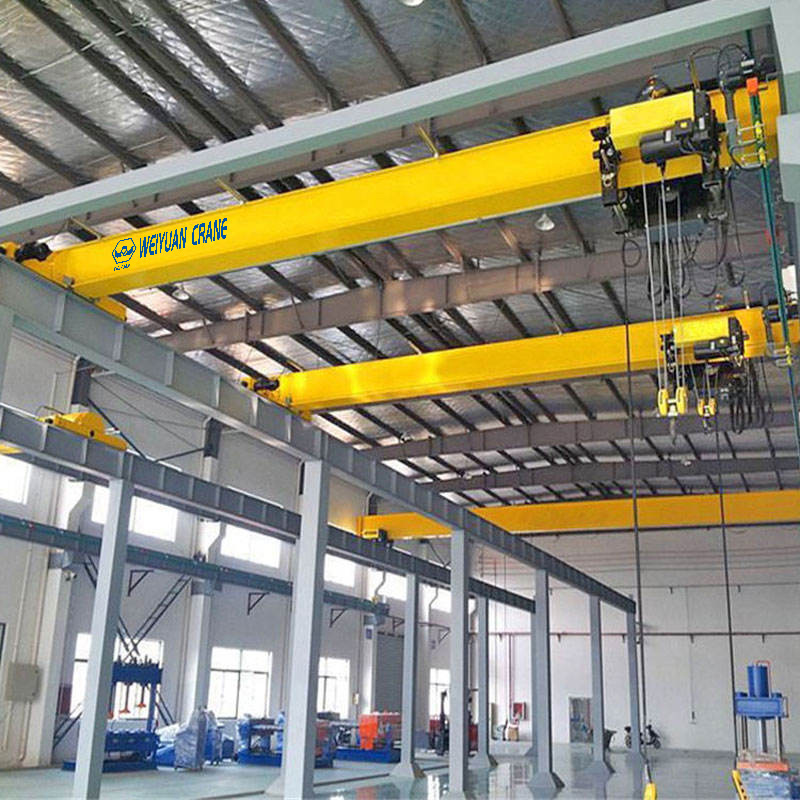
Regardless of what it is called—bridge crane, EOT crane, or simply overhead crane—the system provides unmatched value in modern material handling. The design of these cranes is engineered for efficiency and durability. They utilize optimized box-type or I-beam main girders, ensuring low self-weight and minimal wheel pressure on the runway, maximizing the structural integrity and longevity of the system. The driving mechanism features a highly precise three-in-one reducer (comprising a hard-tooth surface gear reducer and a VFD braking motor) that guarantees stable operation and pinpoint accuracy when positioning heavy loads. Built to withstand continuous, rigorous use, standard models often achieve a working classification (A-class) of A4 or A5, signifying medium to heavy-duty capability.
3. Technical Specifications and Capacity Overview
The versatility of the overhead crane means it can be tailored to virtually any facility size and lifting requirement. Our standard overhead crane systems offer a broad range of capacities and dimensions, with options for extreme specialization.
- Standard Capacity: Ranges from 1 ton up to 80 tons (standard models).
- Maximum Custom Capacity: Can be engineered and built to handle massive loads up to 400 tons.
- Dimensions: Standard spans are typically between 7.5 meters and 34 meters, with lifting heights ranging from 6 meters to 50 meters, all customizable to fit unique building dimensions.
- Power & Control: Operates on standard industrial power (380V / 400V / 415V, 50-60Hz, 3-Phase AC) and allows flexible control via ground pendant, wireless remote control, or an operator cabin.
4. Customization and Application Versatility
A significant advantage of partnering with a dedicated supplier is the ability to customize the system to 100% of your operational needs.
As a professional manufacturer integrating design, production, sales, and installation, WEIYUAN offers specialized engineering services. We provide complimentary factory structure analysis and crane layout optimization design to ensure seamless integration and maximum space efficiency. Custom options include non-standard capacities, extra-long spans, high lift requirements, and critical features like explosion-proof or anti-corrosion protection for harsh environments. We can outfit the crane with specific lifting attachments such as grabs, clamps, or electromagnetic chucks to meet the demands of applications in metallurgy, mold processing, and heavy machinery production.
5. Commitment to Safety and Compliance
The robust design of an overhead crane must be matched by uncompromised safety standards. Compliance is not optional; it is fundamental to the value of the equipment.
Every system is designed to meet rigorous national and industry safety standards, such as TSG Q0002-2008.
- Load Limiters: A mandatory load weight limiter is installed to automatically interrupt the lifting mechanism if the rated load is exceeded.
- Safety Components: The system includes multiple layers of protection, such as limit switches, an emergency stop button, reliable brake systems, and a main power disconnection device.
- Operator Safety: The control voltage for the suspended control devices is strictly limited to 50V, which is a safe voltage standard.
Here is a technical snapshot of the standard model range:
| Specification | Standard Range | Customization Note |
| Standard Capacity | 1 ton to 80 tons | Maximum customizable up to 400 tons |
| Span Length | 7.5 meters to 34 meters | Non-standard available |
| Lifting Height | 6 meters to 50 meters | Customized upon request |
| Control Voltage | $\le 50V$ (Suspension control) | Safety standard |
| Rated Power Supply | 380V / 400V / 415V, 50-60Hz, 3-Phase AC | Standard industrial voltage |
6. Installation, Training, and Support
When you invest in an overhead crane system, you are investing in a decades-long operational asset. WEIYUAN ensures that this asset is installed correctly and maintained efficiently.
We offer comprehensive support, including detailed installation manuals, video tutorials, and online guidance from our technical team. Our senior engineers are also available for on-site support, providing installation guidance and operator training services. We back our equipment with a one-year warranty, covering parts replacement and repair services for designated components.
For instance, in a recent project for a large automotive parts manufacturing facility, the deployment of five sets of our 10-ton double-girder bridge cranes led to an 8% reduction in the production line cycle time. These cranes have operated safely for over 8,000 hours with zero incidents. This demonstrates the long-term reliability and efficiency of a well-designed overhead crane system.
Frequently Asked Questions (FAQ)
1. How do I request a quote for an overhead crane?
To ensure the quote is accurate, please provide detailed information, including: A: Lifting capacity; B: Crane span; C: Lifting height; D: Material to be handled; E: Power source, and any special operating requirements.
2. What types of environments can the cranes handle?
We can customize the equipment for nearly any environment. If you operate in a hazardous environment, we can specifically design the crane with anti-acid or explosion-proof features.
3. What is the delivery time?
Standard models that are in stock can be shipped within 3-5 working days. Custom models require a lead time of 2-4 weeks, depending on the complexity of the design and production schedule.
Are you ready to discuss the specific requirements for your facility and receive a complimentary structural analysis for an optimized overhead crane system?