


What are the Three Types of Cranes? A Guide to Industrial Lifting Solutions
In the world of material handling and heavy manufacturing, efficiency is determined by the tools you use. Choosing the right lifting system can transform a workshop’s throughput, enhance safety, and lower operational costs. While the industry utilizes dozens of specialized machines, most industrial lifting needs fall into three primary categories: Overhead/Bridge Cranes, Jib Cranes, and the versatile Gantry crane.
At WEIYUAN, we are more than just a manufacturer; we are a partner in your facility’s success. As an integrated producer, designer, and installer, we provide bespoke solutions that ensure your equipment matches your specific duty cycle and site conditions.
1. The Gantry Crane: Versatility Beyond the Factory Walls
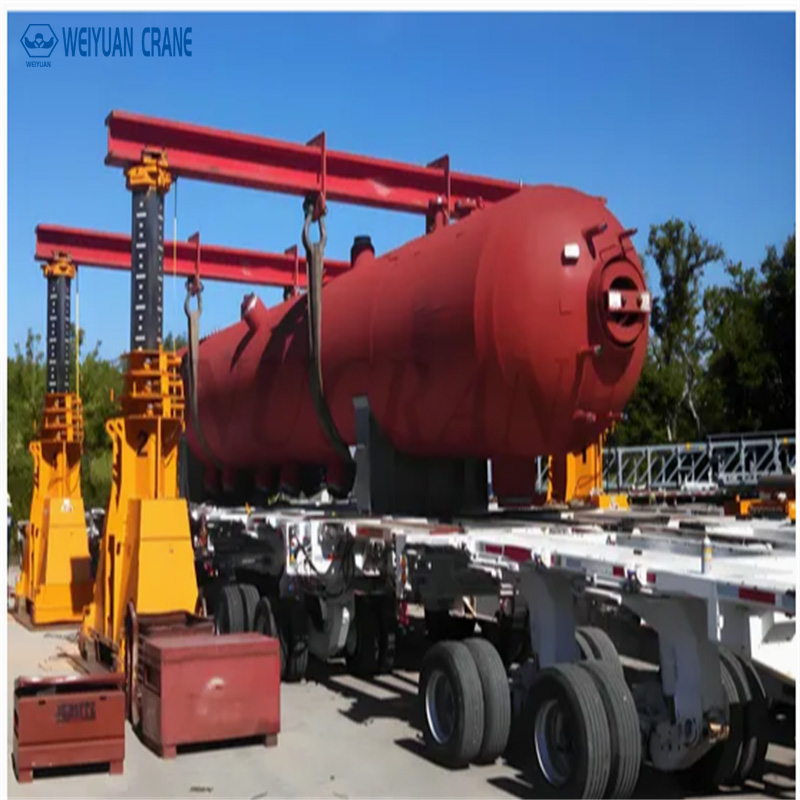
The Gantry crane is perhaps the most recognizable lifting system in heavy industry. It is defined by its unique “gate-like” steel structure that spans the work area, supporting a hoist or trolley. Unlike bridge cranes that require a building’s structural support, a gantry crane is self-supporting, with legs that transfer the load directly to floor-mounted rails or the ground.
Key Features and Advantages
- High Adaptability: Because it doesn’t rely on existing building columns, it can be independently installed in outdoor yards or open indoor spaces.
- Cost-Effective Implementation: For large spans and outdoor environments, the cost of a gantry crane is often lower than building a massive overhead runway system.
- High Load Capacity: Modern systems are capable of handling ultra-heavy loads ranging from 5 tons to over 500 tons, ensuring consistent production flow.
2. Overhead/Bridge Cranes: The Backbone of Indoor Production
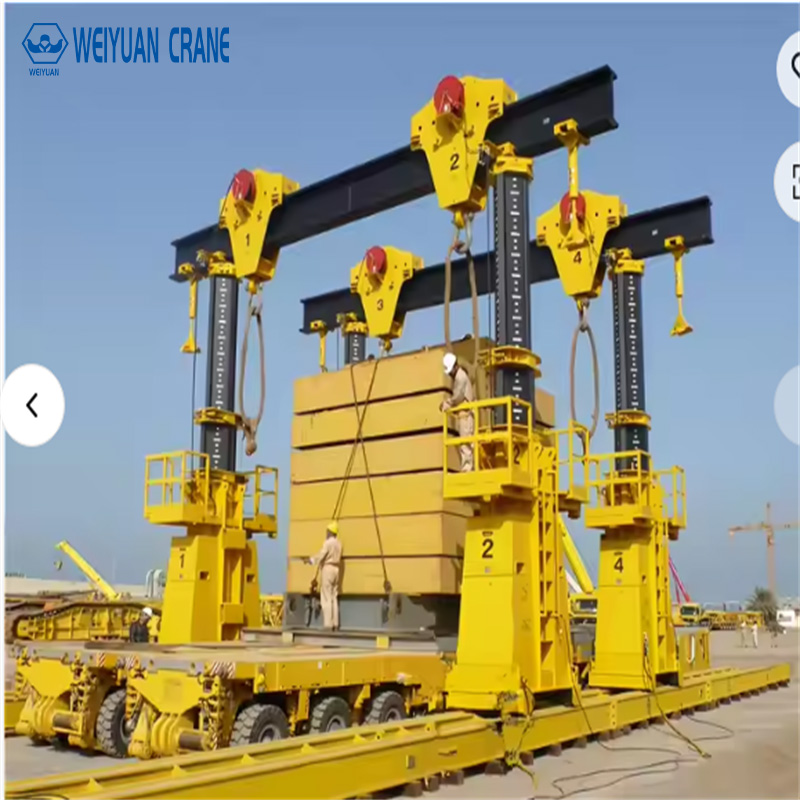
When people discuss a bridge crane versus a gantry crane, they are usually comparing indoor efficiency versus outdoor flexibility. An overhead bridge crane is permanently fixed to a building’s structure. It is ideal for high-speed, high-frequency lifting within a factory or warehouse where ceiling space is available for runway beams.
For many facility managers, a Gantry crane system is preferred when the workshop isn’t strong enough to support an overhead bridge crane, or when the operation needs to move outdoors.
3. Jib Cranes: Precision for Localized Workstations
Jib cranes feature a horizontal arm (jib) that supports a hoist and is mounted either to a wall or a floor-mounted pillar. These are perfect for localized lifting—such as at a single CNC machine or a small assembly station—where a large Gantry crane would be impractical.
Exploring Gantry Crane Models and Configurations
Understanding the diversity within the gantry family is essential for finding the right lifting device for your site.
Motorized and Rubber Tired Systems
For massive logistics operations, a motorized gantry crane provides the power needed for continuous movement. In ports and terminals, the rubber tired gantry crane (RTG) is the gold standard, offering mobility without the need for fixed rails. Whether it’s a rubber tire model or a rail-mounted version, these machines are the workhorses of global trade.
Portable and Shop Solutions
For smaller facilities, a rolling gantry crane or a shop gantry crane provides excellent localized lifting. Many workshops utilize an A-frame design for its simplicity and portability. While smaller consumer units might work for home use, industrial duty requires a more robust fixed Gantry crane.
Technical Specifications: Sample Range
Technical parameters ensure the crane meets your specific work requirements.
| Feature | Specification Range | Suitability |
| Lifting Capacity (SWL) | 5T to 500T+ | Based on max load |
| Span Length | 10m to 50m | Determines work area width |
| Lifting Height | 6m to 30m | Consider vertical stacking |
| Duty Class | A5 (Intermediate) to A8 (Heavy) | Based on cycle frequency |
| Power Source | 380V / 50Hz (or local standard) | Matches facility grid |
Customization and Design by WEIYUAN
Every industrial environment is unique, which is why we provide fully customized solutions. WEIYUAN offers free technical consultation and design services to ensure your equipment is a perfect match for your site:
- Dimensions & Spans: Precise customization of spans, cantilever lengths, and lift heights based on your rail distance.
- Functional Configuration: Choice of single or double beam structures, variable frequency drives (VVVF), and anti-sway systems.
- Environmental Adaptation: Tailored designs for explosion-proof, anti-corrosion, or high/low-temperature environments.
Application Fields
The Gantry crane is essential in several key industries:
- Ports & Terminals: RTG and RMG systems are central to container handling.
- Construction: Used for moving large steel structures and precast concrete beams.
- Manufacturing & Shipyards: Critical for assembling heavy machinery and hull sections.
- Rail Yards: Ideal for loading and transferring cargo between rail and road.
Safety, Compliance, and Installation
Safety is the primary standard for all our lifting equipment. Our cranes follow the ISO 9001 quality system and meet international standards like CE. Every unit includes overload protection, limit switches, and emergency stops to protect the operator and the facility.
WEIYUAN provides complete installation and support:
- Installation Guidance: Detailed manuals and video tutorials for remote assistance.
- On-site Support: Senior engineers can be dispatched for installation, commissioning, and training.
- Warranty: We provide a 12-month warranty with dedicated spare parts support.
Case Study: Shipyard Component Handling
A major shipyard faced the challenge of assembling massive hull sections weighing hundreds of tons in a coastal environment with high salinity. WEIYUAN designed and delivered a 300-ton double-beam rail-mounted crane. With a high-precision VVVF system and anti-corrosion coatings, the client significantly increased their assembly speed and reduced construction cycles.
Pricing and Quotations
Prices for our cranes are determined by your specific capacity and customization needs.
- Standard Models: Usually in stock, shipping within 3-5 business days.
- Custom Models: Lead times vary between 2-4 weeks depending on complexity.
FAQ: Frequently Asked Questions
1. What information do I need for a quote?
Please provide the lifting capacity, span length, lifting height, type of material, and power source. Detailed site drawings are always appreciated.
2. Can these cranes work in hazardous environments?
Yes. We can customize acid-resistant or explosion-proof designs for specialized industrial needs.
3. What are the operating options?
Standard options include handheld pendant controllers with buttons or wireless remote controls.
4. Can I visit your factory?
Absolutely. We can pick you up from the station or airport and assist with hotel reservations.
5. How do we install the crane?
Our senior engineers can visit your site to provide installation guidance and staff training.