


Understanding Running Length in Industrial Environments
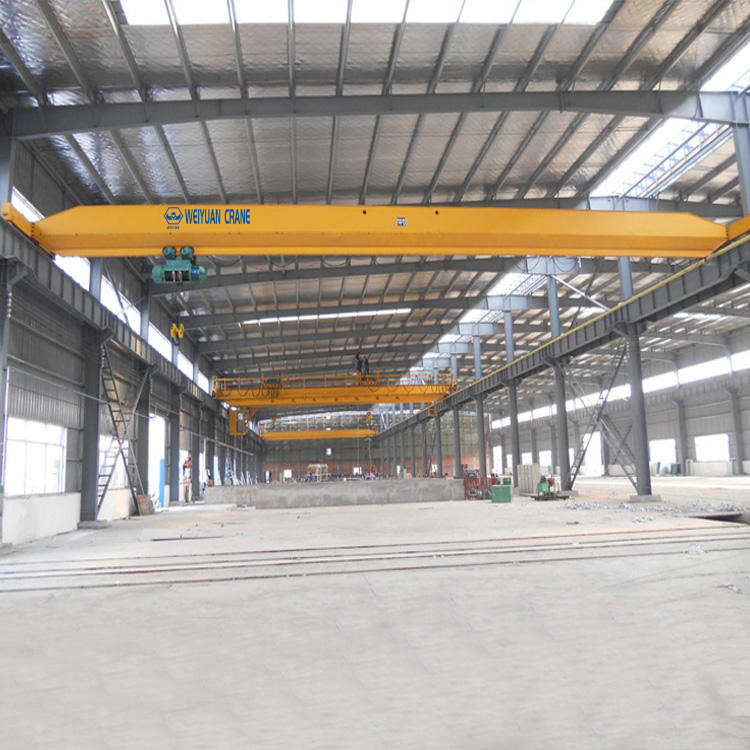
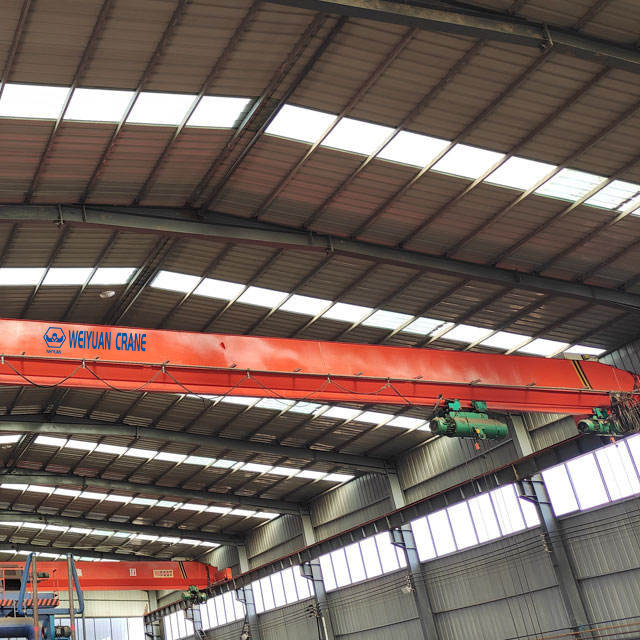
The “running length” refers to the distance the bridge travels along the runway rails. Unlike the span, which is the width between the rails, the running length is typically determined by the length of your building or the specific production line the crane needs to service.
For a high-quality bridge overhead crane, the running length can theoretically be infinite, provided there is enough structural support and power supply. In practical applications—such as automotive assembly or steel processing—lengths typically range from 30 meters to over 200 meters.
Why Running Length Dictates Productivity
A well-calculated runway ensures that the crane can reach every critical point in the shop floor. For instance, in a double girder overhead crane factory setting, the running length must account for:
- Loading Docks: The ability to reach the very edge of the bay to pick up raw materials.
- Buffer Zones: Space for temporary storage between processing steps.
- Maintenance Bays: An area at the end of the runway where the crane can be parked for inspections without blocking production.
Key Components of a High-Performance Runway System
To achieve a seamless running length, several overhead bridge crane components must work in perfect harmony. At WEIYUAN, we focus on the integration of these parts to reduce mechanical wear and energy consumption.
1. The Runway Beams and Rails
The foundation of the running length is the steel runway beam. Whether you are using a manual overhead crane for light tasks or a heavy-duty electromagnetic overhead crane for moving scrap metal, the rails must be perfectly aligned. Even a few millimeters of deviation over a long distance can cause “crane skewing,” which leads to premature wheel wear.
2. Drive Systems and VFD Control
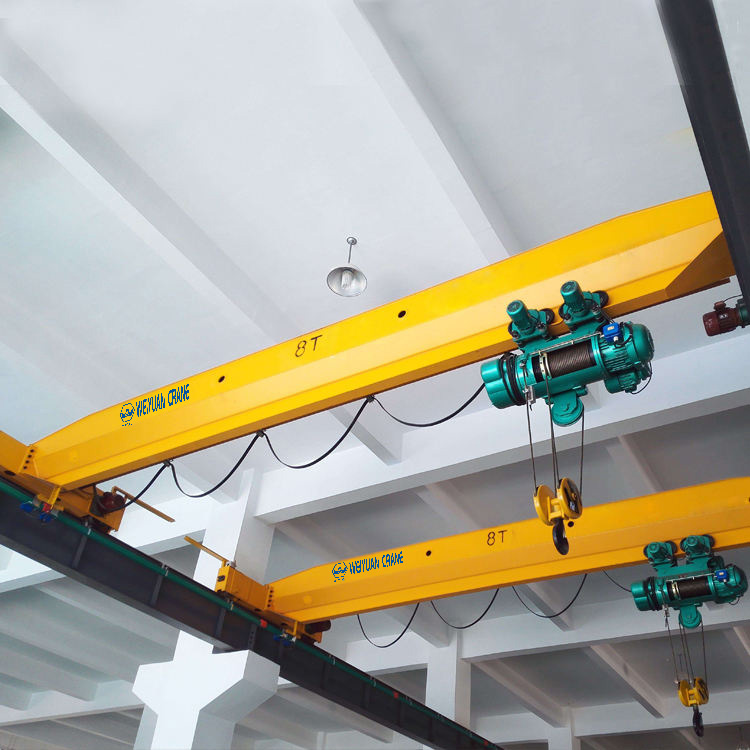
For long runways, smooth acceleration is vital. Modern electric overhead crane systems utilize “Three-in-One” driving units—combining the motor, brake, and reducer. By implementing Variable Frequency Drives (VFD), the crane achieves stepless speed regulation. This prevents the “pendulum effect” where the load swings during the long travel, significantly improving safety.
3. Load Monitoring
For heavy industrial applications, integrating a wholesale overhead crane load cell is essential. These cells ensure that as the crane travels the length of the building, it stays within safe operating limits, protecting both the structure and the personnel.
Customization: Meeting 100% of Working Conditions
Every facility has unique challenges. An outdoor overhead crane at a port or railway yard requires different considerations (like wind loading and weather protection) compared to industrial indoor overhead cranes.
WEIYUAN provides comprehensive design and installation services. Our engineers offer free structural analysis of your plant to optimize the crane layout. Whether you need a double girder overhead crane drawing for a new project or a specialized attachment for an existing setup, we ensure the equipment matches your specific A4 or A5 work duty requirements.
Safety and Training: The Human Element
A long running length means more area to monitor. To prevent overhead crane accidents, safety devices like limit switches and emergency stop buttons are mandatory. However, technology is only half the battle.
Proper operator education is the best defense against mishaps. While some teams prefer online overhead crane training for theoretical knowledge, we often recommend hands-on electric overhead travelling crane training to ensure operators understand how to operate overhead crane systems safely over long distances, especially when handling 80-ton or 400-ton loads.
Frequently Asked Questions (FAQ)
1. What information is needed for a customized running length quote? The more detail, the better. We typically need:
- Lifting capacity (Tons)
- Span length and total running length (Runway length)
- Lifting height
- Power source and environmental conditions (e.g., high heat or explosive dust)
2. Can these cranes work in hazardous environments? Yes. For specialized industries, we design explosion-proof and acid-resistant versions of the electric overhead traveling cranes market leading models to ensure longevity in harsh conditions.
3. What are the control options for long-travel cranes? You can choose between a standard pendant (wired) controller, a wireless remote control, or a dedicated driver’s cabin for high-intensity operations.
4. How is the crane installed over a long distance? Our senior engineers provide on-site guidance. We offer detailed manuals and video tutorials, and for complex projects, our team can handle the entire installation and commissioning process.
5. Is there a warranty for the drive systems? We provide a 12-month warranty under standard usage. We also support our clients with a full range of overhead crane attachments and spare parts to keep your production running without interruption.