


Comparing Jib Cranes, Hoists, and Davit Arms: What’s Best for Your Workflow?
In the fast-paced environments of modern manufacturing, shipyards, and logistics hubs, choosing the right lifting equipment is the difference between a bottleneck and a streamlined production line. Decision-makers often find themselves weighing the pros and cons of various systems. What is a jib crane, and how does it differ from a davit or a standalone hoist? Selecting the wrong tool can lead to wasted floor space or, worse, safety risks for your team.
At WEIYUAN, we operate as a professional manufacturer providing a full suite of services—from initial design and production to sales and global installation. We understand that every workflow has unique constraints, whether you are operating a small workshop in Europe or a massive port facility in Asia.
Understanding the Role of a Jib Crane in Modern Production
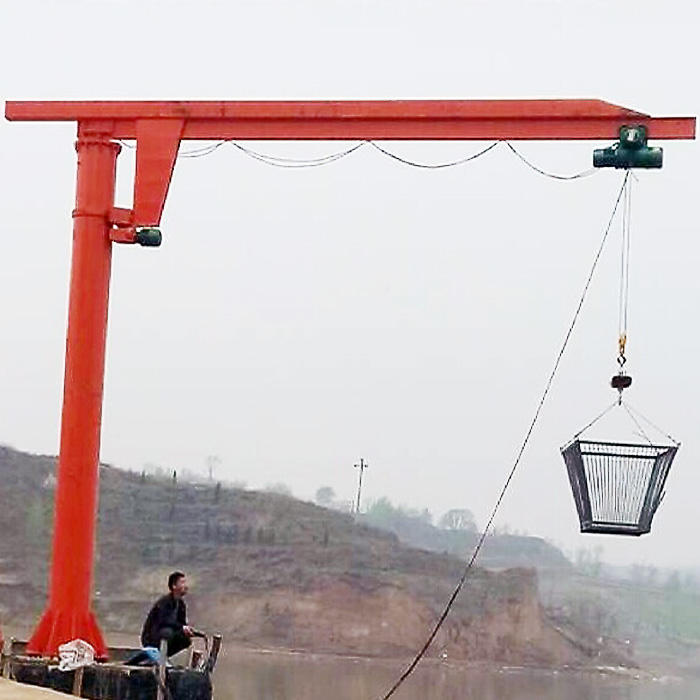
A jib crane is a versatile lifting solution consisting of a horizontal member (the boom or jib) that supports a moveable hoist. This assembly is either attached to a wall or mounted on a floor pillar. Unlike overhead bridge cranes that cover an entire rectangular area, a jib crane provides localized, circular lifting coverage, making it the perfect “workstation” assistant.
By integrating a jib hoist crane into your facility, you allow workers to handle heavy components with precision, reducing manual labor and significantly lowering the risk of repetitive strain injuries.
Popular Configurations for Diverse Workspaces
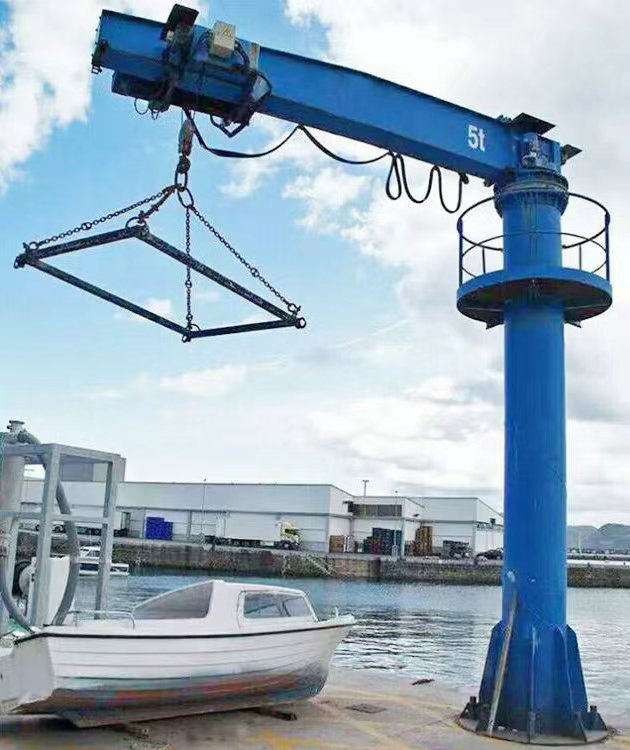
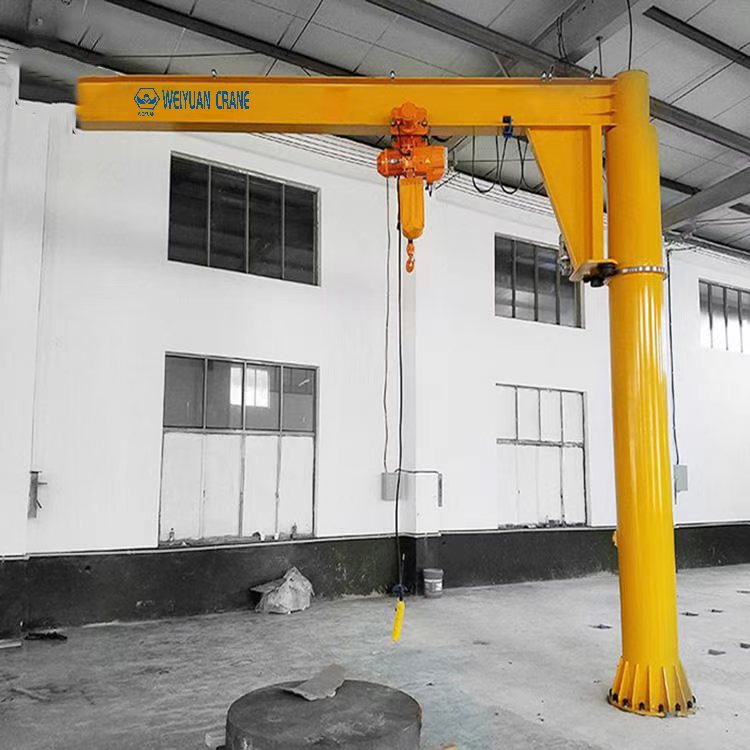
- Floor Mounted Jib Crane: The most common heavy-duty solution. These are bolted to the foundation and offer 360-degree rotation, ideal for serving multiple machines at once.
- Wall Mounted Jib Crane: A space-saving alternative that attaches to existing building columns or walls. These provide 180 to 200 degrees of rotation without taking up any floor space.
- Portable Jib Crane: For facilities that require flexibility, a mobile jib crane can be moved via forklift to wherever the work is happening, providing “on-the-spot” lifting power.
Key Features & Advantages: Why Invest?
Investing in quality lifting gear is about more than just moving weight; it’s about optimizing your ROI through durability and speed.
- High-Strength Materials: We utilize Q235B or Q345B steel to ensure structural integrity under maximum load.
- Increased Throughput: Implementing a 1 ton jib crane at a CNC machining station can reduce part-loading times by up to 40%.
- Ergonomic Design: Options like the articulating jib crane allow the boom to reach around corners or into machinery where a standard straight boom cannot.
- Cost-Effectiveness: Compared to large bridge systems, a crane jib setup is significantly more affordable while providing the same lifting precision.
Technical Specifications
| Parameter | Floor Mounted Model | Wall Mounted / Bracket |
| Lifting Capacity | 0.25t to 20t | 0.25t to 5t |
| Rotation Angle | 360° | 180° – 270° |
| Arm Length (Reach) | Up to 12 meters | Up to 10 meters |
| Lifting Speed | 0.8 – 8 m/min (Customizable) | 0.8 – 8 m/min |
| Power Supply | 3-Phase 380V/440V/220V | 3-Phase 380V/440V/220V |
Davit Crane vs Jib Crane: Which One Do You Need?
A common question we receive at WEIYUAN is how to choose between these two systems.
- The Jib Crane: Best for high-cycle, permanent industrial applications. If you are moving parts all day in a factory, the floor mounted jib crane is your workhorse.
- The Davit Arm: Generally more portable and used for lighter, specialized tasks like lifting pumps in water treatment plants or equipment on ships. Davits are often designed to be disassembled and moved by hand.
Customization and Global Delivery
No two factories are identical. WEIYUAN provides free design and personalization services to ensure your equipment meets your exact requirements. We can customize:
- Tonnage: From a light 1 ton jib crane to 10+ ton industrial monsters.
- Dimensions: Boom length and pillar height tailored to your ceiling clearance.
- Environment: Specialized paint and sealed components for outdoor or corrosive marine environments.
Delivery Timelines: We maintain a streamlined production cycle. Standard components ship within 20 days, while custom-engineered systems typically have a lead time of 30 to 40 days.
Application Fields
Our equipment is currently active in several key sectors across Africa, Asia, and Europe:
- Automotive & Machinery: Loading parts into assembly lines.
- Ports & Marine: Utilizing a wall bracket jib crane on docks for small vessel maintenance.
- Warehousing: Rapidly moving heavy crates from floor to pallet.
- Energy Sector: Maintenance of turbines and heavy valves.
Case Study: Efficiency Gains in a Heavy Machinery Plant
A manufacturing partner recently transitioned from manual lifting to a WEIYUAN workstation system.
- The Challenge: Workers were using manual chain blocks, leading to 15-minute load times per part.
- The Solution: We installed three wall mounted jib crane units with electric hoists.
- The Result: Loading time was slashed to 3 minutes per part, and the plant reported a 22% increase in daily output within the first quarter.
Safety, Installation, and Support
Safety is non-negotiable. All WEIYUAN lifting products are engineered to meet CE and ISO standards, featuring overload protection and emergency stop systems.
We don’t just sell equipment; we ensure it works. Our team provides:
- Remote Installation Guidance: High-definition video support and technical documentation for your local team.
- On-site Assistance: For complex projects, our engineers can fly to your site for commissioning.
- Lifetime Support: 24/7 technical help and a rapid-response spare parts supply chain.
FAQ: Frequently Asked Questions
Q: Can a jib crane be used outdoors?
A: Yes. We offer “Outdoor Packages” that include galvanized steel, weather-resistant motor covers, and specialized coatings to prevent rust.
Q: Do you sell the hoist separately?
A: While we offer the complete jib crane for sale, we can also provide just the arm structure if you already have a compatible hoist.
Q: What is the maintenance schedule?
A: We recommend a daily visual check of the limit switches and a deep inspection/lubrication every 6 months to ensure smooth rotation.
Q: How do I get a price quote?
A: Simply contact our sales team with your required lifting capacity, arm length, and power supply. We provide a detailed proposal within 24 hours.
Would you like me to draft a comparison table specifically focusing on the differences between Wall-Mounted and Floor-Mounted models for your technical brochure?