


Single Girder vs. Double Girder: The Ultimate Gantry Crane Selection Guide
Meta Title: Single vs. Double Girder Gantry Cranes: Cost & Selection Guide
Meta Description: Comparing single vs. double girder gantry cranes? Discover the key differences in price, capacity, and application to choose the right industrial lifting solution.
Choosing the right industrial lifting equipment is rarely a simple task. It involves balancing load requirements, facility constraints, and budget. When your operation requires a solution that stands independent of your building’s structure, the gantry crane is often the answer. However, the next decision is just as critical: should you invest in a single girder or a double girder design?
This guide breaks down the technical differences, cost implications, and operational advantages of both types to help you make an informed decision for your facility.
Understanding the Basics: Single vs. Double Girder
Before diving into costs, it is essential to understand the structural differences.
Single Girder Gantry Cranes
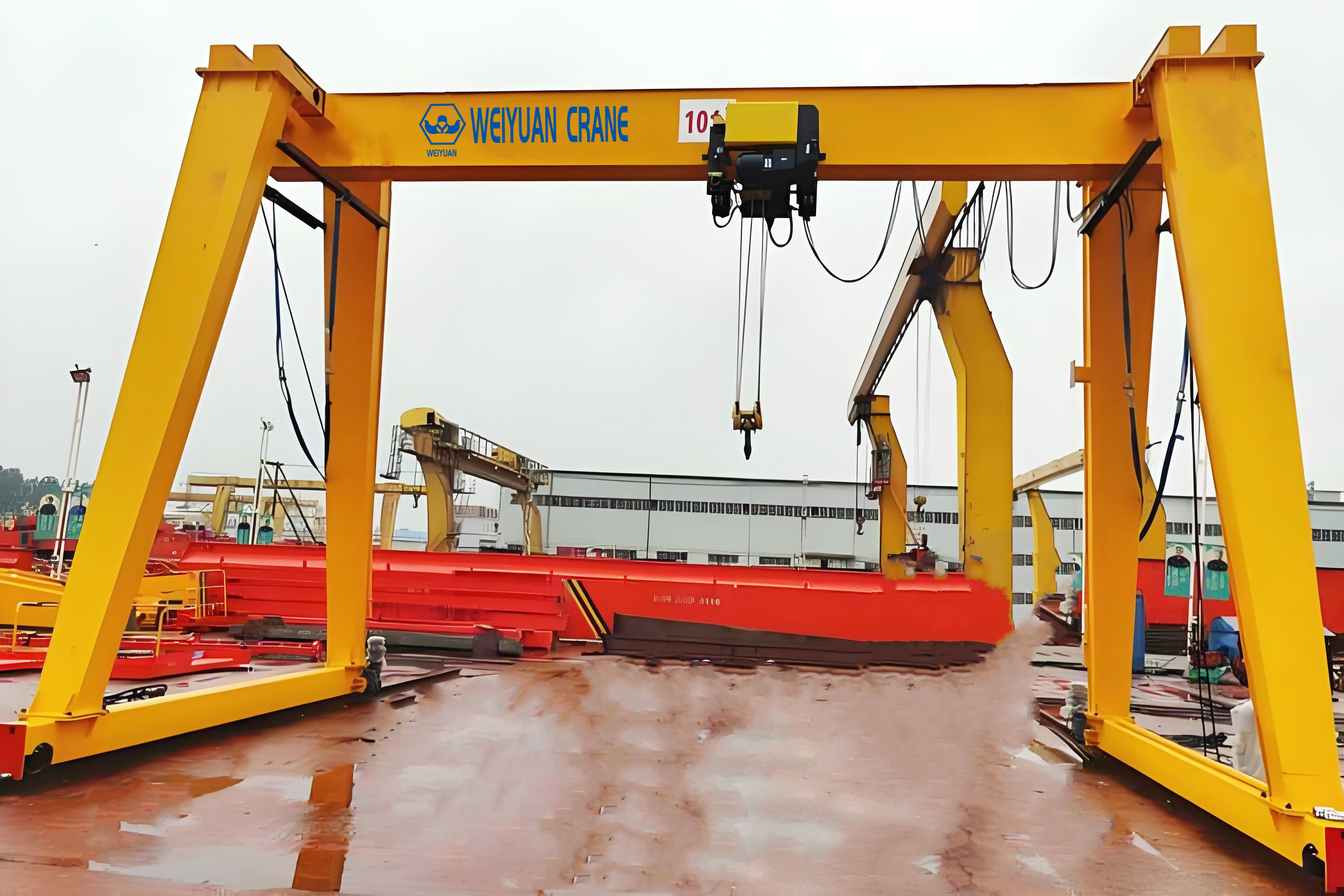
A single girder crane features one main beam that spans the legs. The hoist usually hangs underneath this beam. This design is typically used for light to medium-duty applications.
- Typical Capacity: Up to 20 tons (though often used for 1–10 ton loads).
- Span: Generally shorter spans, usually under 30 meters.
- Structure: Lighter deadweight, which means less stress on the rails and foundation.
Double Girder Gantry Cranes
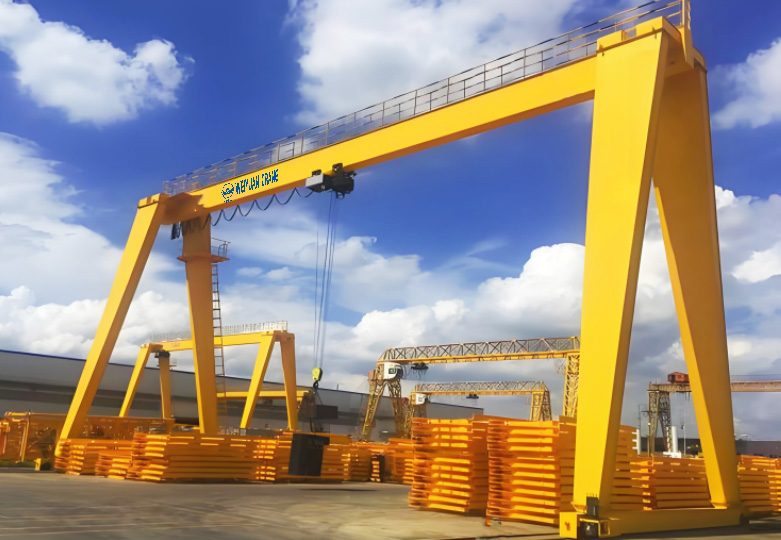
As the name suggests, this design uses two main beams. The hoist and trolley travel on top of the rails mounted to these beams. This structure offers significantly higher stability and lifting height.
- Typical Capacity: Can handle heavy loads from 10 tons up to 500 tons or more.
- Span: Capable of much wider spans, suitable for large shipyards or storage yards.
- Structure: Heavier and more rigid, ideal for high-frequency, heavy-duty cycles.
Double Girder vs. Single Girder: A Detailed Comparison
When selecting an industrial gantry crane, several factors will dictate which configuration is right for you.
1. Lifting Height (Hook Height)
If your facility has height restrictions but you need maximum lift, the double girder design wins. Because the hoist sits between or on top of the girders rather than hanging below them, you gain significant hook height (often 18–36 inches more) compared to a single girder model where the hoist hangs underneath.
2. Duty Cycle and Durability
For operations requiring continuous, high-speed lifting—such as steel mills or busy rail terminals—a double girder system is built for endurance. They typically meet higher ISO/FEM duty classifications (e.g., A5–A8). A single girder crane is often sufficient for maintenance workshops, warehouses, or assembly lines where the crane is not running 24/7.
3. Production and Installation Costs
Budget is always a primary concern.
- Single Girder: Generally 20-40% cheaper to manufacture due to less steel usage and simpler trolley components. Installation is also faster and less expensive due to the lower weight.
- Double Girder: Higher initial investment. The complex structure requires more material, and the transportation and installation logistics are heavier. However, the long-term durability can offset these costs in high-demand environments.
Gantry Crane Cost Analysis
Price transparency is difficult in the heavy machinery world because nearly every unit is customized. However, understanding the factors that drive the single girder gantry crane price can help you budget effectively.
Key Cost Drivers:
- Span and Capacity: A 10 ton gantry crane with a 20-meter span will cost significantly more than a 5-ton model with a 10-meter span.
- Electrical Components: Adding Variable Frequency Drives (VFD) for precision control or automation features increases the price but reduces wear and tear.
- Customization: Outdoor units require weatherproofing (special paint, motor covers, wind locks), which adds to the base cost.
At WEIYUAN, we focus on value engineering. By analyzing your specific workflow, we can design a gantry crane that meets your exact needs without over-specifying expensive features you won’t use. Whether you need a simple 5 ton overhead gantry crane for a workshop or a massive rail-mounted system, the goal is optimizing your ROI.

Weiyuan MG Type Gantry Crane for Outdoor Applications | Walk-on, Double Girder
The Weiyuan MG Type Gantry Crane is engineered for robust outdoor performance with heavy-duty double girders, ground rail travel, and full-length maintenance walkways for safe, efficient service and inspection in demanding outdoor environments. :contentReference[oaicite:0]{index=0}
View Product / Get QuoteSelection Guide: Which One Do You Need?
To simplify your selection process, answer these three questions:
- What is your heaviest load?
If it’s consistently over 20 tons, go double girder. If it’s usually under 10 tons, a single girder electric gantry crane is likely sufficient. - How frequently will you use it?
If the crane lifts loads once an hour, single girder is fine. If it’s lifting every 5 minutes for an 8-hour shift, the durability of a double girder is necessary. - What are your height constraints?
If you have low ceilings but need to stack materials high, the extra hook height of a double girder design is crucial.
Special Mention: Portable and Semi-Gantry Options
Not every facility needs a permanent rail-mounted giant.
- Portable Gantry Cranes: Ideal for maintenance tasks. A portable gantry crane with electric hoist can be wheeled manually to different workstations.
- Semi-Gantry Cranes: One leg runs on a floor rail, while the other runs on an elevated runway rail attached to the building wall. This saves floor space and cost.
Why Design Matters
The structural integrity of your lifting equipment is non-negotiable. A poorly designed crane is not just an operational bottleneck; it is a safety hazard.
Professional manufacturers like WEIYUAN prioritize safety and longevity in every design gantry crane project. From the grade of steel (Q235/Q345) to the precision of the welding seams, every detail matters. We ensure that our rail mounted gantry crane systems are equipped with advanced safety features, including overload limiters, emergency braking systems, and laser anti-collision devices.
Furthermore, we understand that installation is half the battle. Our team provides comprehensive support, from foundation guidance to final load testing, ensuring your equipment is compliant with international safety standards.
Conclusion
Choosing between a single and double girder crane isn’t just about price—it’s about matching the tool to the task. A single girder model offers an economical, space-saving solution for light to medium duties, while the double girder configuration provides the strength and height needed for heavy, intensive operations.
By carefully assessing your load requirements, duty cycles, and facility dimensions, you can select an industrial gantry crane that enhances safety and productivity for years to come.
Still unsure which configuration fits your facility? Contact WEIYUAN today for a free consultation and a detailed cost analysis tailored to your project.