


Selecting a Reliable Gantry Crane Manufacturer: A Comprehensive Sourcing Guide for Bulk Buyers
1. Start with Operational Reality, Not Catalog Specifications
One of the most common sourcing mistakes is beginning with a supplier’s standard model instead of your actual operating conditions. Bulk buyers, in particular, need a specification framework that allows consistency without oversimplification.
Before contacting any manufacturer, document the following in plain operational terms:
- Load behavior, not just rated capacity
How often is the crane lifting near maximum load? Continuous medium loads stress components very differently than occasional peak lifts. - Work cycle intensity
A crane used 10 hours a day in a steel yard requires a fundamentally different design approach than one used intermittently in a warehouse. - Environmental exposure
Outdoor cranes face corrosion, wind loads, temperature swings, and dust ingress. These factors should influence steel treatment, enclosure ratings, and motor selection.
Clear internal documentation at this stage reduces redesign costs later and filters out suppliers who rely on generic solutions.
2. Distinguishing a Manufacturer from an Assembler
In global sourcing, the word “manufacturer” is used loosely. For bulk buyers, the difference matters.
A true manufacturer typically controls:
- Structural design and calculation
- Steel cutting, forming, and welding
- Assembly and load testing
- Quality documentation and traceability
An assembler often outsources critical steps, which can introduce variability between batches—an unacceptable risk when ordering multiple units.
Practical ways to verify depth:
- Ask where main girders are fabricated
- Request welding procedure specifications (WPS)
- Review past projects with comparable duty cycles
A supplier who cannot explain how structural deflection or fatigue life is calculated is unlikely to support your equipment over its full lifespan.
3. Engineering Standards as a Risk Management Tool
International standards are not just compliance checkboxes; they are risk-control frameworks.
Depending on your market, relevant standards may include ISO, FEM, EN, ASME, or regional safety codes. What matters is not how many standards a supplier claims, but whether their designs are consistently aligned with one system.
From a buyer’s perspective:
- Mixed-standard designs complicate maintenance
- Inconsistent safety factors make audits harder
- Documentation gaps delay customs clearance and site acceptance
Reliable manufacturers integrate standards into their design process rather than retrofitting certificates at the end.
4. Looking Beyond Purchase Price: Lifecycle Economics
Bulk buyers often operate under budget pressure, but experienced procurement teams evaluate cost differently. The initial contract value rarely reflects the true expense of ownership.
Key lifecycle considerations include:
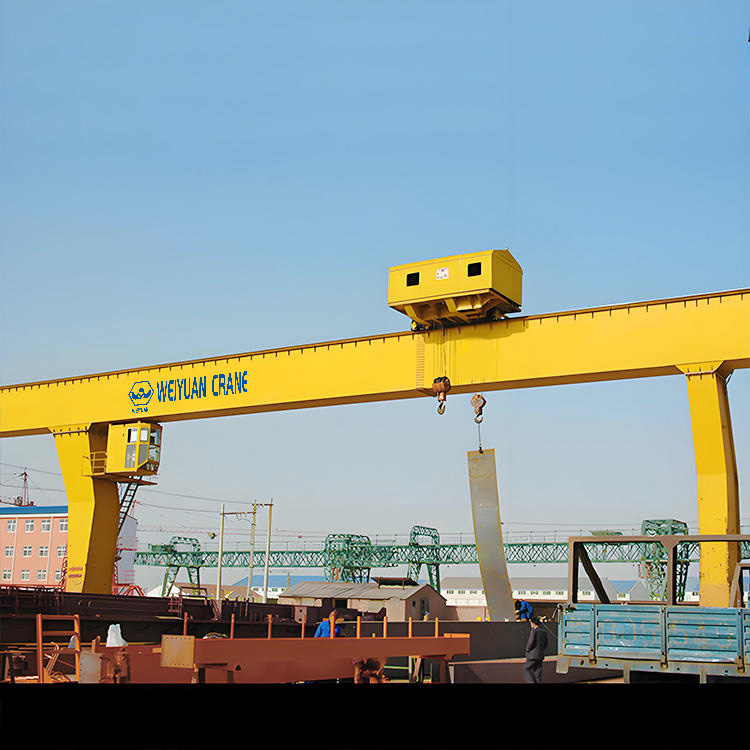
Weiyuan L-Shape Leg Walk Gantry Crane | Manufacturer Direct, Enhanced Mobility
The Weiyuan L-Shape Leg Walk Gantry Crane is a high-performance single-girder gantry crane with a distinctive L-shaped leg design that offers superior clearance for long and oversized loads, and smooth “walk” travel on ground rails — direct from the manufacturer for competitive pricing and reliable quality. :contentReference
View Product / Get QuoteComponent Strategy
Are motors, brakes, and electrical systems standardized and widely available? Proprietary components can lock you into a single supplier for decades.
Maintenance Accessibility
Designs that simplify inspection and replacement reduce downtime and labor costs. Ask how long routine brake or wire rope replacement typically takes.
Energy Consumption
Modern drives and control logic can significantly reduce power draw during partial loads and idle cycles—an increasingly relevant factor as energy prices rise.
A competitively priced crane that requires frequent intervention quickly becomes a liability.
5. Logistics, Packaging, and Site Reality
Bulk orders often cross borders, climates, and handling conditions before reaching their final site. Damage during transport is not uncommon—and not always obvious on arrival.
Professional manufacturers plan for this by:
- Segmenting long girders to reduce deformation risk
- Using moisture-resistant packaging for electrical components
- Providing clear lifting and storage instructions before installation
Equally important is installation support. Whether on-site or remote, experienced guidance during erection and commissioning reduces alignment issues that later affect rail wear and travel accuracy.
6. After-Sales Capability as a Measure of Trust
Many procurement contracts focus heavily on delivery milestones and lightly on what happens after acceptance. This imbalance often surfaces years later.
When evaluating after-sales support, look for:
- Clearly defined response times
- Long-term spare parts commitments
- Technical documentation that goes beyond basic manuals
Manufacturers who invest in post-delivery support typically design with serviceability in mind from the start.
This is where long-term partnerships form—not during negotiation, but during the first unexpected issue.
7. Technology Trends That Actually Matter
Not every “smart” feature adds value. Bulk buyers should focus on technologies that reduce operational risk or maintenance uncertainty.
Meaningful developments include:
- Condition monitoring for motors and brakes
- Load data logging for usage analysis
- Remote diagnostics for faster troubleshooting
These tools help maintenance teams move from reactive repairs to planned intervention, extending asset life and improving safety records.
When integrated thoughtfully, a modern Gantry Crane becomes part of a broader asset management strategy rather than a standalone machine.
8. Making the Final Selection
At the end of the sourcing process, the most reliable choice is rarely the loudest or the cheapest. It is the supplier who demonstrates:
- Technical clarity
- Consistent documentation
- Realistic timelines
- A willingness to explain—not just sell
For bulk buyers, confidence comes from transparency. A manufacturer who can show how decisions are made is more valuable than one who simply promises results.
Frequently Asked Questions (FAQ)
1. How many years should a well-built gantry crane realistically last?
With proper maintenance, a structurally sound crane can operate safely for 20–30 years. Electrical and drive components may require earlier replacement, but the core structure should be designed for long-term fatigue resistance.
2. Is it risky to source gantry cranes internationally?
Not inherently. The risk depends on supplier verification, documentation quality, and export experience. Many international manufacturers deliver consistently when due diligence is done properly.
3. Should bulk buyers standardize on one manufacturer?
In many cases, yes. Standardization simplifies training, spare parts inventory, and maintenance procedures. However, it should not come at the expense of technical suitability.
4. What documentation should be considered essential?
At minimum: structural calculations, material certificates, load test reports, electrical schematics, and maintenance manuals. These documents are critical for audits and long-term service.
5. When is customization necessary?
Customization is justified when standard designs cannot meet duty cycles, environmental exposure, or site constraints. It should be driven by operational need, not aesthetics.