


How to Choose a Gantry Crane: A Strategic Guide for Procurement
For heavy industries such as shipbuilding, steel manufacturing, and large-scale logistics, material handling equipment is more than just an asset—it is the operational backbone of the facility. A bottleneck in lifting capacity translates directly to stalled production lines and delayed shipments. Consequently, the decision to procure a gantry crane involves far more than simply comparing load charts and price tags.
Procurement professionals and facility managers must navigate a complex landscape of engineering specifications, international safety standards, and long-term operational costs. Whether you are outfitting a new container yard or upgrading an existing outdoor steel depot, the equipment you choose must withstand environmental stressors while delivering precise, reliable performance.
This guide moves beyond basic catalog specifications to explore the strategic elements of selecting the right lifting solution. By focusing on engineering integrity, total cost of ownership, and rigorous supplier validation, your organization can secure a machine that delivers value for decades rather than just meeting a budget for the fiscal year.
Understanding Industrial Applications
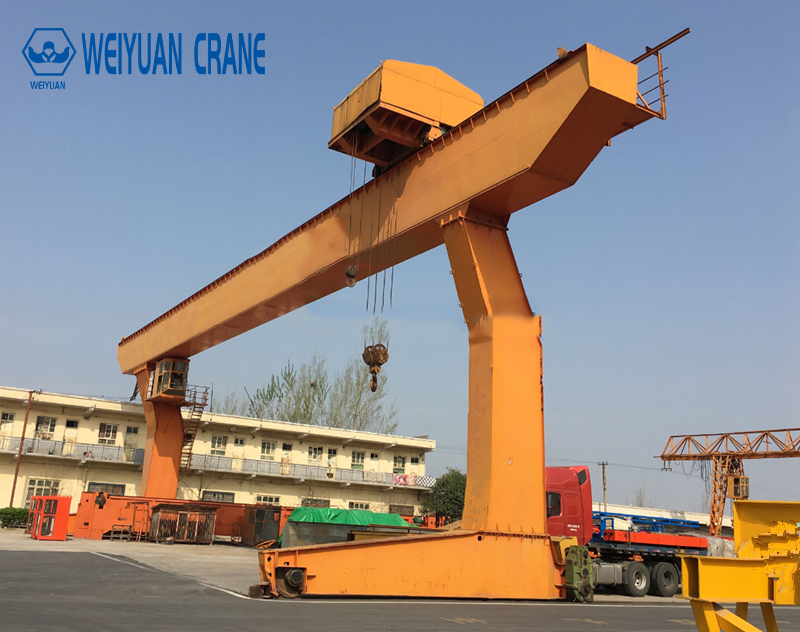
The first step in strategic procurement is accurately matching the crane architecture to the specific environmental and operational challenges of your site. Unlike overhead bridge cranes which rely on the building structure, a gantry crane stands on its own legs, moving on rails (or tires) at ground level. This makes them the dominant choice for outdoor applications, but the specific configuration dictates their efficiency.
Single Girder Gantry Cranes
For facilities with moderate lifting requirements—typically under 20 tons—single girder configurations offer a balance of cost-efficiency and utility. These are frequently deployed in small to medium manufacturing yards or for auxiliary lifting in storage areas. The main advantage here is lower deadweight, which reduces the wheel load on the rails and lowers the cost of the foundation work. However, buyers must be aware that the hook height is often limited compared to double girder designs because the hoist is suspended beneath the beam.
Double Girder Gantry Cranes
When operations demand heavy lifting capacities (ranging from 20 tons to over 500 tons) or high duty cycles, the double girder design is the industry standard. This configuration allows the hoist trolley to travel on top of the girders, significantly increasing the available hook height. This is crucial for shipyards where large hull sections must be rotated or stacked. Furthermore, the structural rigidity of a double girder system is superior, handling the lateral forces caused by wind loads or rapid acceleration much better than single girder alternatives.
Rail-Mounted Gantry (RMG) Cranes
Specific to container handling and intermodal logistics, RMG cranes are engineered for speed and precision. Unlike general-purpose industrial cranes, these specialized units must handle anti-sway requirements and precise positioning to stack containers efficiently. If your operation involves high-volume throughput of standardized loads, a general-purpose crane will likely fail to meet the necessary cycle times.
The E-A-T Framework for Sourcing
In the digital age, finding a supplier is easy; validating their capability is difficult. Adopting the E-A-T framework—Expertise, Authoritativeness, and Trustworthiness—provides a structured approach to vetting manufacturers, particularly when sourcing from global hubs.
Expertise: Engineering Beyond the Weld
A gantry crane is only as strong as its design. High-quality manufacturers do not simply fabricate steel; they engineer solutions. During the audit phase, procurement teams should look for in-house engineering capabilities that utilize Finite Element Analysis (FEA).
FEA allows engineers to simulate structural stress, wind loads, and seismic activity on the crane structure before a single piece of steel is cut. This digital prototyping ensures that the crane is optimized for weight without compromising structural integrity. Ask potential suppliers to demonstrate how they handle custom design requirements. Off-the-shelf solutions rarely fit complex industrial sites perfectly; a supplier with strong OEM capabilities can adjust span lengths, cantilever distances, and leg heights to maximize your yard’s storage density.
Authoritativeness: Standards and Compliance
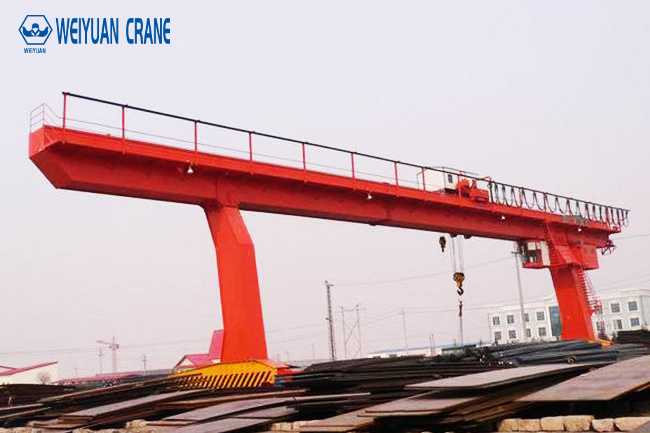
Heavy machinery requires strict adherence to international safety standards. A manufacturer’s authority is proven through their certifications. At a minimum, buyers should verify compliance with ISO 9001 for quality management.
However, for welding-intensive structures like gantry cranes, look for ISO 3834 certification, which specifically governs fusion welding quality requirements. Additionally, ensure the equipment meets FEM (European Materials Handling Federation) standards or equivalent local regulations. These standards dictate the duty classification of the crane, ensuring the mechanism is rated for the frequency of use it will experience in your facility.
Trustworthiness: Production Infrastructure
Trust is established through transparency in the manufacturing process. The best suppliers invest heavily in automated production lines. Automated welding robots, for example, produce consistent, deep-penetration welds that manual processes struggle to match over long girder spans.
Furthermore, inquire about material traceability. A trustworthy manufacturer should be able to provide mill certificates for the steel plates used in your crane, proving that the raw materials meet the required yield strength. This level of traceability is essential for insurance and safety auditing purposes.
Total Cost of Ownership (TCO) Analysis
One of the most common pitfalls in capital equipment procurement is prioritizing the initial purchase price (CAPEX) over the total cost of ownership (OPEX). For machinery expected to last 20 to 30 years, the operational costs can eclipse the initial investment if not managed correctly.
Energy Efficiency and Variable Frequency Drives (VFD)
Cheaper cranes often use contactor controls for motor movement. While simple, these result in jerky starts and stops, causing high current spikes and significant mechanical wear on gears and brakes.
Strategic buyers should insist on Variable Frequency Drives (VFD) for all motions (hoist, trolley, and long travel). VFDs allow for smooth acceleration and deceleration, which drastically reduces mechanical stress and prevents load swing. From an energy perspective, VFDs can reduce power consumption by matching the motor output to the actual load requirement, a significant saving for high-duty cycle operations.
Component Standardization
A gantry crane with proprietary, hard-to-source components is a liability. TCO analysis must consider the cost and availability of spare parts. Premium manufacturers utilize standardized components from globally recognized brands (such as Siemens for electronics or SEW for motors). This ensures that if a relay fails five years down the line, you can source a replacement locally rather than waiting weeks for a proprietary part to ship from the factory.
TCO Comparison Table
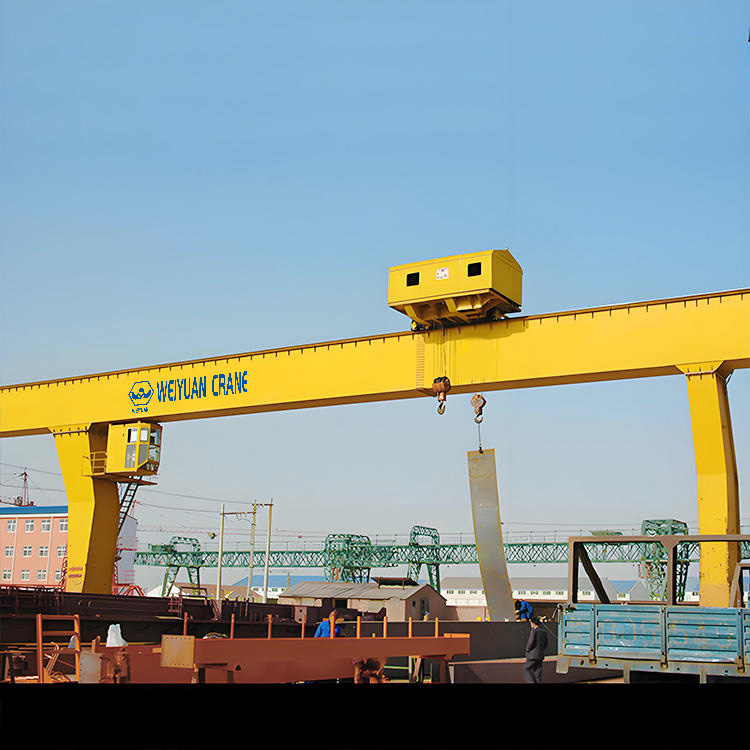
Weiyuan L-Shape Leg Walk Gantry Crane | Manufacturer Direct, Enhanced Mobility
The Weiyuan L-Shape Leg Walk Gantry Crane is a high-performance single-girder gantry crane with a distinctive L-shaped leg design that offers superior clearance for long and oversized loads, and smooth “walk” travel on ground rails — direct from the manufacturer for competitive pricing and reliable quality. :contentReference
View Product / Get QuoteThe following table illustrates why a higher initial investment often leads to lower long-term costs.
| Feature | Budget-Focused Procurement | TCO-Focused Procurement | Impact on Operations |
|---|---|---|---|
| Motor Control | Contactor / Direct-on-Line | Variable Frequency Drive (VFD) | VFD reduces brake wear and energy bills; offers smoother load handling. |
| Gearing | Open gearing or soft-tooth | Hardened, enclosed gearboxes | Enclosed gearboxes require less maintenance and last significantly longer. |
| Electrification | Festive cables (exposed) | Energy Chain / Drag Chain | Energy chains protect cables from UV and mechanical damage, reducing downtime. |
| Steel Structure | Manual welding, standard paint | Robotic welding, epoxy coating | Robotic welds and marine-grade paint prevent corrosion in outdoor environments. |
Lifecycle Support & Partnerships
The relationship with a crane manufacturer should not end once the equipment is commissioned. In fact, the quality of after-sales support is often the deciding factor in maintaining high uptime.
Remote Diagnostics and IoT
Modern industrial cranes can be equipped with remote diagnostic units. These systems monitor brake wear, motor temperature, and load cycles, transmitting data back to the maintenance team. In the event of a fault, engineers can often diagnose the issue remotely, allowing the technician to arrive at the site with the correct part already in hand. This capability is rapidly becoming a standard requirement for major logistics hubs.
Spare Parts Legacy
Industrial equipment has a long lifespan. A reputable partner guarantees the availability of spare parts—or compatible upgrades—for at least 10 to 20 years after installation. When evaluating suppliers, ask about their legacy support policy. A manufacturer with a multi-decade history is statistically more likely to be around to support your equipment in the future than a new, low-cost entrant.
Due Diligence Checklist
Before signing a contract, procurement teams should execute a rigorous due diligence process. Use this checklist to audit potential global suppliers:
- Video Factory Audit: If an in-person visit is not possible, request a live video tour of the production floor. Look for organized workflows, CNC cutting machines, and shot-blasting facilities for steel preparation.
- Reference Verification: Do not settle for a list of logos. Ask for contact details of previous clients with similar use cases. Ask those clients specifically about the commissioning process and response time to warranty claims.
- Welding Procedures: Request the WPS (Welding Procedure Specifications) and WPQR (Welding Procedure Qualification Records) to ensure their welding processes are codified and qualified.
- Electrical Schematics: Ensure the supplier provides full electrical diagrams in English (or your local language) to facilitate future maintenance by local technicians.
- Logistics Plan: Shipping massive girders requires expertise. Verify the supplier’s experience in dismantling, packing, and shipping Over-Dimensional Cargo (ODC) to your specific region.
FAQ: Addressing Common Buyer Concerns
Q: How do I determine the correct duty cycle for my crane?
Duty cycle is determined by how often the crane lifts and how close the loads are to the maximum capacity. ISO standards classify this from M3 (light maintenance use) to M8 (continuous high-speed production). Under-specifying the duty cycle will lead to rapid motor burnout and structural fatigue.
Q: Can a gantry crane be installed on existing concrete floors?
Generally, no. Gantry cranes impose significant point loads through their wheels. A dedicated reinforced concrete runway beam or a rail system on a specific foundation is usually required to prevent the concrete from cracking and the rails from sinking.
Q: How does international shipping work for long crane girders?
For beams longer than 40 feet (12 meters), manufacturers often design the main girder in segments connected by splice plates and high-strength friction grip bolts. This allows the crane to be shipped in standard containers, significantly reducing freight costs.
Moving Forward with Confidence
Selecting a gantry crane is a high-stakes decision that impacts safety, efficiency, and profitability. By strictly evaluating suppliers based on engineering merit, prioritizing TCO over initial price, and demanding robust lifecycle support, you protect your company’s interests.
Whether you need a 5-ton auxiliary hoist or a 100-ton shipyard giant, the goal is to partner with a manufacturer who understands the weight of your operations. Look for suppliers who combine decades of manufacturing experience with modern innovation—partners who lift not just the load, but the future of your business.