


Engineering Your Perfect Overhead Crane Solution
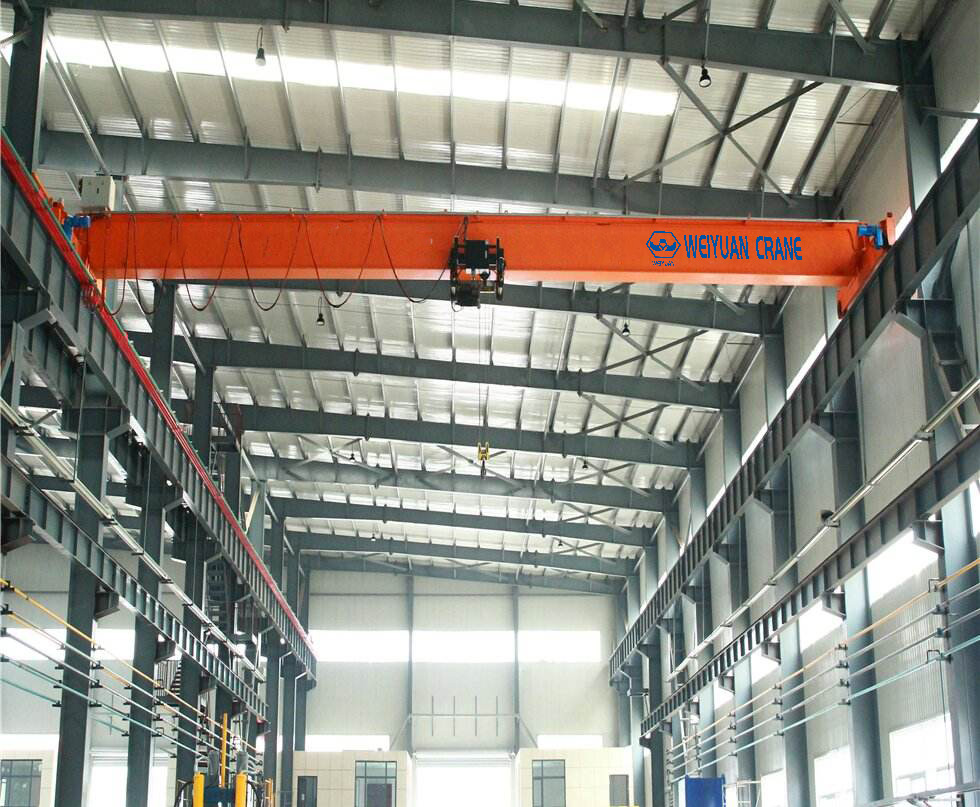
In the high-stakes environment of heavy industry—whether it’s a bustling steel mill or an intricate automotive assembly line—an overhead crane is never just a piece of hardware. It is the pulse of the facility. If the crane stops, production stops.
Yet, many procurement professionals find themselves trapped in the “Procurement Paradox.” The pressure to minimize upfront capital expenditure (CapEx) often creates a collision course with long-term operational reality. Choosing a crane isn’t a simple commodity purchase like buying office supplies; it is a 20-year engineering commitment.
While the sticker price is the only thing visible above the water, nearly 80% of a crane’s true cost lies beneath the surface. This hidden bulk consists of maintenance, energy consumption, and the catastrophic price of unplanned downtime.
This guide moves beyond the brochure to analyze the structural engineering, component standardization, and duty cycles that separate a “budget liability” from a strategic asset.
Structural Integrity: The Foundation of Workflow
The first decision you make dictates the physical constraints of your facility for the next two decades: the girder configuration. This isn’t just about how much weight the crane can lift; it’s about how much space you can utilize.
Single Girder Cranes
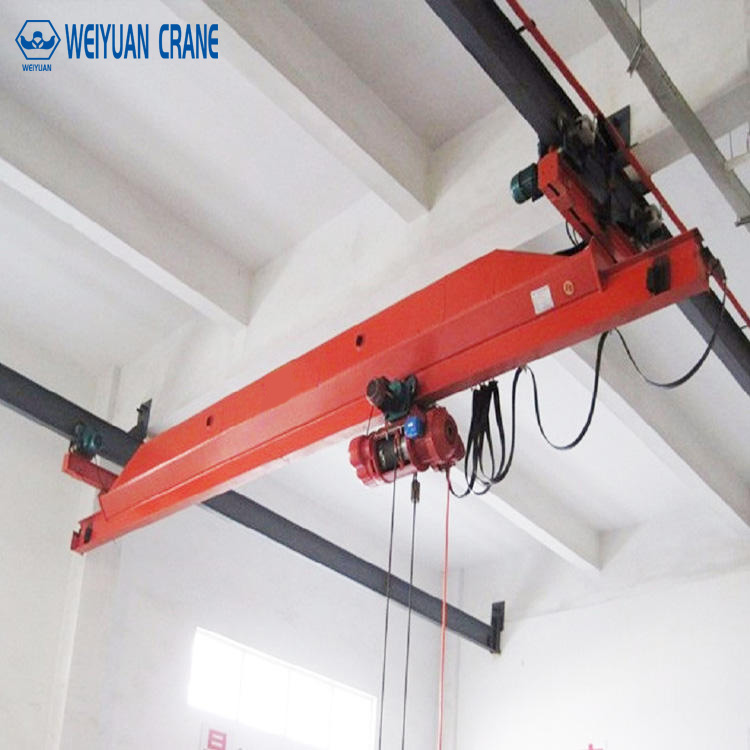
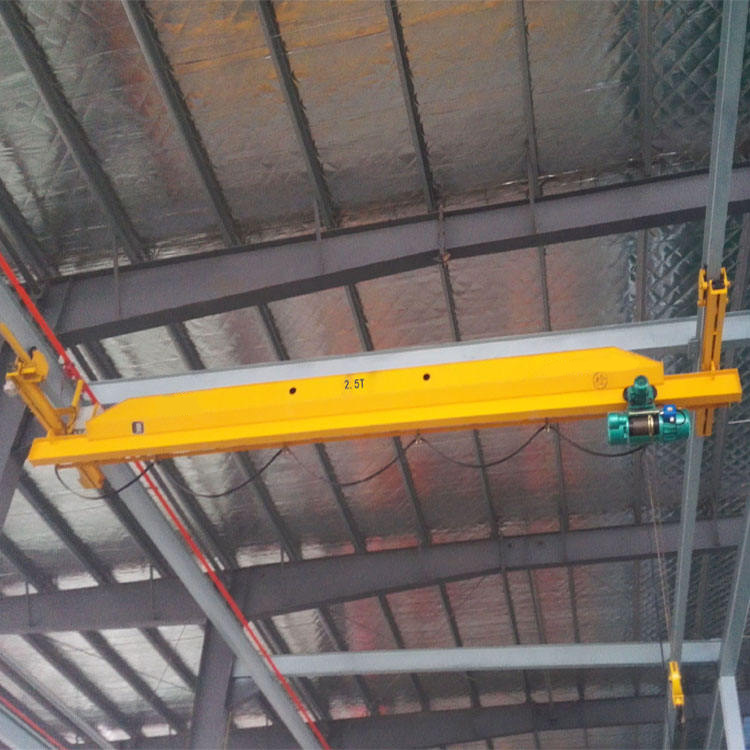
These systems utilize a hoist suspended from the bottom flange of a single beam. They are the practical choice for light-to-medium duty cycles where headroom is tight and budgets are lean. However, you must consider the trade-off in “hook approach.” Because of the hoist design, the hook often cannot get as close to the ends of the building, potentially leaving “dead zones” in your factory floor coverage.
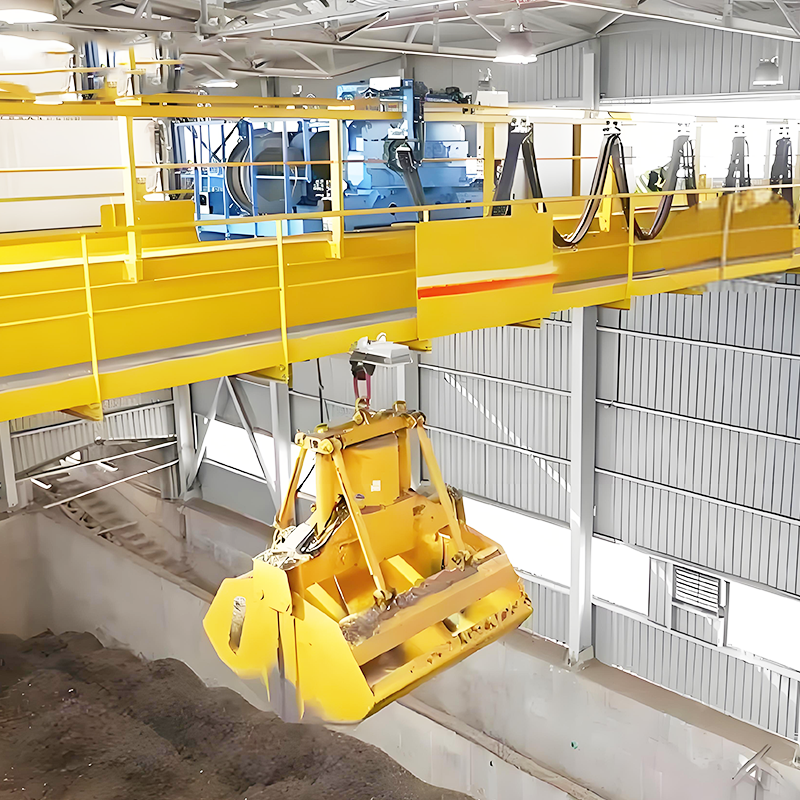
Weiyuan QZ Type Grab Crane for Steel Scrap | 30 Ton, Heavy-Duty, High-Efficiency
The Weiyuan QZ Type 30 Ton Grab Crane is engineered specifically for demanding steel scrap handling operations. Built on a heavy-duty double-girder platform with a high-strength orange peel grab, it delivers reliable performance and high efficiency in continuous scrap yard and foundry material handling environments. :contentReference
View Product / Get QuoteDouble Girder Cranes
For facilities requiring maximum lift height, the double girder is superior. Here, the hoist “crab” travels on rails mounted to the top of two beams. This design allows the hook to be pulled up between the girders, granting you maximum vertical space.
Engineering Insight: When evaluating quotes, look for structural camber. High-quality double girders are engineered with a slight upward curve. This is not a manufacturing defect; it is precision engineering designed to counteract deflection. When the crane is under a 100% rated load, the beam flattens out, ensuring the trolley always runs on a level surface rather than fighting an uphill battle.
Decoding the “Iceberg”: TCO and Duty Cycles
To master the Total Cost of Ownership (TCO), you must look past the acquisition cost. The real equation is:
Acquisition + Installation + Energy + Maintenance + Downtime = True Cost.
The fastest way to inflate the TCO is to under-specify your Duty Classification (based on ISO/FEM standards). If you put a light-duty motor in a heavy-duty environment, you will burn it out.
Understanding the Classifications
- Light Duty (ISO M3 / FEM 1Bm): These cranes are designed for standby operations, such as maintenance shops where the lift occurs once or twice a day.
- Heavy Duty (ISO M5 / FEM 2m): This is the standard for continuous production lines where the crane is in constant motion.
- Severe Duty (ISO M7 / FEM 4m): Required for 24/7 automated environments, like steel mills or waste-to-energy plants, where a failure stops the entire plant.
The Material Factor
The steel itself matters. Insist on Q345B steel (equivalent to S355 or A572). This grade provides the optimal balance of tensile strength and ductility. Cheaper alternatives often use lower-grade carbon steel (like Q235), which is significantly more prone to fatigue cracking under dynamic loads.
The “Global Maintenance” Strategy
A common trap in crane procurement is buying a “black box” system where the manufacturer uses proprietary motors and electrics. If a proprietary inverter fails five years from now, you are held hostage by that single supplier’s pricing and lead time.
The smarter strategy is to specify a “Global Trinity” in your Request for Quotation (RFQ). This ensures that replacement parts are available off-the-shelf from local distributors, regardless of where the crane manufacturer is located.
- Electrics: Stick to globally recognized brands like Schneider or ABB.
- Motors/Gearboxes: Specify trusted names like SEW Eurodrive or ABM.
- Variable Frequency Drives (VFDs): These should be non-negotiable.
Why VFDs Are Essential
Variable Frequency Drives provide “soft starts,” eliminating the mechanical shock that snaps couplings and wears down gears. Furthermore, they reduce brake wear by using dynamic braking to slow the load electrically before the mechanical brake even engages. This simple addition can double the lifespan of your mechanical components.
Safety and Compliance: Beyond the Basics
A crane is only as safe as its limit switches and protection systems. In modern lifting, relying solely on operator skill is a liability.
Overload Protection
Modern systems use integrated load cells. If the weight exceeds the rated capacity, the system prevents the hoist from leaving the ground. This protects the structure from stress and prevents accidents caused by attempting to lift anchored loads.
Anti-Sway Technology
This electronic control system neutralizes load swing during acceleration and deceleration. For ground personnel, this is a life-saving feature that prevents impact injuries. For the facility, it prevents damage to walls and machinery.
Verification Protocols
Do not take a salesperson’s word for quality. Use the IAF CertSearch database to verify ISO 9001 certificates. More importantly, request Non-Destructive Testing (NDT) reports—specifically X-ray or Ultrasonic testing—for all critical butt welds on the main girder.
Logistics: The Modern Modular Approach
Historically, shipping a 20-meter rigid girder across oceans was a logistical nightmare involving “break-bulk” shipping and high risks of damage. Modern strategic sourcing has solved this through modular design.
Leading manufacturers now utilize bolted splice joints. By using high-strength friction grip bolts, large cranes can be disassembled to fit into standard 40ft containers. This approach can reduce ocean freight costs by 30% to 50% without compromising structural stiffness.
FAQ: Common Procurement Questions
Q: Is Q345B steel really necessary for light-duty cranes?
A: While you technically can use lower grades for lighter loads, Q345B offers superior fatigue resistance. The price difference upfront is negligible compared to the cost of repairing structural cracks that appear five years down the line due to repetitive stress.
Q: Why should I pay more for a VFD if a standard contactor works?
A: Standard contactors cause “jerky” movements, sending shockwaves through your gearboxes and structure. A VFD pays for itself within two years by significantly reducing spare parts consumption and allowing for precision positioning.
Q: How do I verify a manufacturer’s CE certification?
A: Ask for the “Declaration of Conformity” and, crucially, the name of the Notified Body that performed the audit. Cross-reference this with the official NANDO database (for Europe) or check their ISO 9001 status via the IAF global database.
Q: Can a modular bolted crane handle the same loads as a fully welded one?
A: Yes. When designed correctly with high-tensile friction grip bolts, the joint is often stronger than the surrounding steel. This is standard practice in international bridge building and high-end structural engineering.