


The “Hidden Iceberg” of Overhead Cranes
Introduction
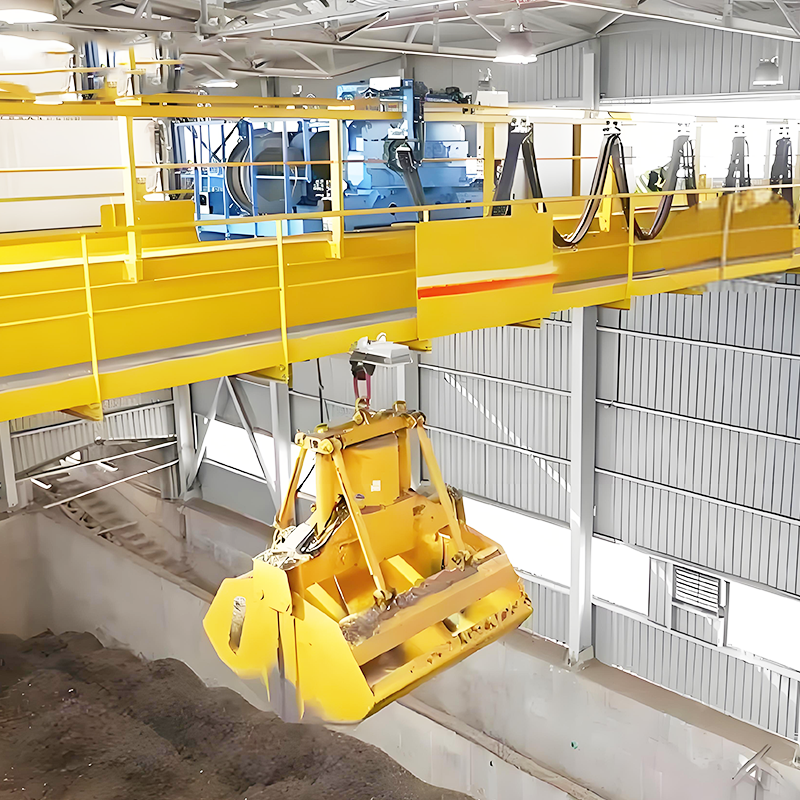
Weiyuan QZ Type Grab Crane for Steel Scrap | 30 Ton, Heavy-Duty, High-Efficiency
The Weiyuan QZ Type 30 Ton Grab Crane is engineered specifically for demanding steel scrap handling operations. Built on a heavy-duty double-girder platform with a high-strength orange peel grab, it delivers reliable performance and high efficiency in continuous scrap yard and foundry material handling environments. :contentReference
View Product / Get Quote- The Procurement Paradox: Open with the common dilemma facing procurement professionals in heavy industry—the pressure to reduce upfront capital expenditure (CapEx) often conflicts with long-term operational efficiency.
- The “Iceberg” Analogy: Introduce the concept that the sticker price of an overhead crane is just the tip of the iceberg. 80% of the cost lies beneath the surface in maintenance, downtime, and energy consumption over a 10-20 year lifecycle.
- Why This Matters Now: Discuss current supply chain volatility and the rising cost of raw materials. Strategic sourcing isn’t just about finding the cheapest vendor; it’s about securing a reliable asset that won’t become a liability.
- What You Will Learn: Briefly outline the roadmap of this article: from analyzing steel quality and global component standardization to predictive maintenance strategies and essential factory audit checklists.
Body Sections
1. The True Cost of Ownership (TCO) vs. Initial Purchase Price
- Defining TCO in Lifting Equipment: Break down the Total Cost of Ownership equation: Acquisition Cost + Installation + Energy Consumption + Maintenance + Downtime + Spare Parts + Decommissioning.
- The 10-Year Horizon: Present a hypothetical scenario comparing a “Budget Crane” vs. a “Premium Strategic Crane.”
- Budget Crane: Lower upfront cost, but frequent motor burnouts, proprietary parts, and higher energy usage.
- Premium Crane: Higher upfront, but standard components and predictive reliability.
- The Hidden Cost of Downtime: Highlight that for many industries (like automotive or steel manufacturing), one hour of crane downtime can cost tens of thousands of dollars in lost production—far exceeding the savings from a cheaper crane.
2. Structural Integrity: Why Q345B Steel and Welding Standards Matter
- Decoding Steel Grades: Explain why the specific grade of steel matters. Focus on Q345B (equivalent to S355 in Europe or A572 Gr 50 in the US).
- Why Q345B? It offers the optimal balance of tensile strength and ductility for dynamic loads, reducing the risk of fatigue cracking compared to lower-grade carbon steels (like Q235).
- The Welding Factor: Steel quality means nothing if the fabrication is poor.
- Discuss International Standards: Look for suppliers adhering to ISO 3834 (Quality requirements for fusion welding) or AWS D1.1.
- Procurement Tip: Ask for Non-Destructive Testing (NDT) reports (ultrasonic or X-ray) on all butt welds in the main girder.
3. The “Global Maintenance” Strategy: Standardizing Components
- The Proprietary Trap: Warn against cranes built with obscure, manufacturer-specific motors and electrics. If a proprietary inverter fails, you are held hostage by that single supplier’s lead time and pricing.
- The Top-Tier Trinity (Schneider, ABB, SEW): Advocate for specifying globally recognized brands in your RFQ (Request for Quotation).
- Schneider/ABB for Electrics: Available in almost every country, ensuring easy replacement.
- SEW Eurodrive for Motors/Gearboxes: Known for reliability and global support networks.
- Risk Mitigation: Explain how this standardization acts as an insurance policy. If a contactor fails in Brazil, you can source a Schneider replacement locally rather than shipping a part from China.
4. Navigating International Logistics and Modular Design
- The Logistics Challenge: Shipping a 20-meter girder is expensive and logistically complex.
- The Modular Solution: Introduce the concept of Open Top Container (OTC) friendly designs.
- Splice Joints: High-quality cranes can be designed with bolted splice connections (utilizing high-strength friction grip bolts) to fit standard 40ft containers.
- Cost Impact: This can reduce ocean freight costs by 30-50% compared to break-bulk shipping.
- Installation Support: Discuss the difference between “remote guidance” and “turnkey installation.”
- Recommendation: For bulk orders, ensure the supplier provides on-site engineers for commissioning, or detailed 3D installation manuals and video guides for your local team.
5. Predictive Maintenance: Reducing the 10-Year Operational Cost
- From Reactive to Proactive: Shift the mindset from “fix it when it breaks” to “fix it before it fails.”
- IIoT and Smart Features: Discuss modern features that should be standard in strategic sourcing:
- Remote Monitoring: Systems that track hoist runtime, brake wear, and load cycles.
- Sway Control: Reduces stress on the structure and improves safety.
- The ROI of Intelligence: Cite how predictive maintenance can extend the asset’s lifespan by 3-5 years and reduce emergency repair costs by up to 25%.
6. The Ultimate Factory Audit Checklist for Procurement
- Visual Inspection: Don’t just look at the office; look at the floor.
- Shot Blasting: Is steel shot-blasted to Sa2.5 standard before painting? (Critical for rust prevention).
- CNC Machining: Are wheel groups and drums machined on precision CNC lathes, or manual machines?
- Documentation Review:
- Mill Certificates: Can they trace the steel plate back to the foundry?
- WPS/PQR: Do they have Welding Procedure Specifications and Procedure Qualification Records?
- Testing Capabilities: Does the factory have a dedicated test bench for hoisting mechanisms? Do they perform full-load assembly tests before shipment?