


Selecting the Right Jib Crane: 7 Critical Factors Every Manager Must Know
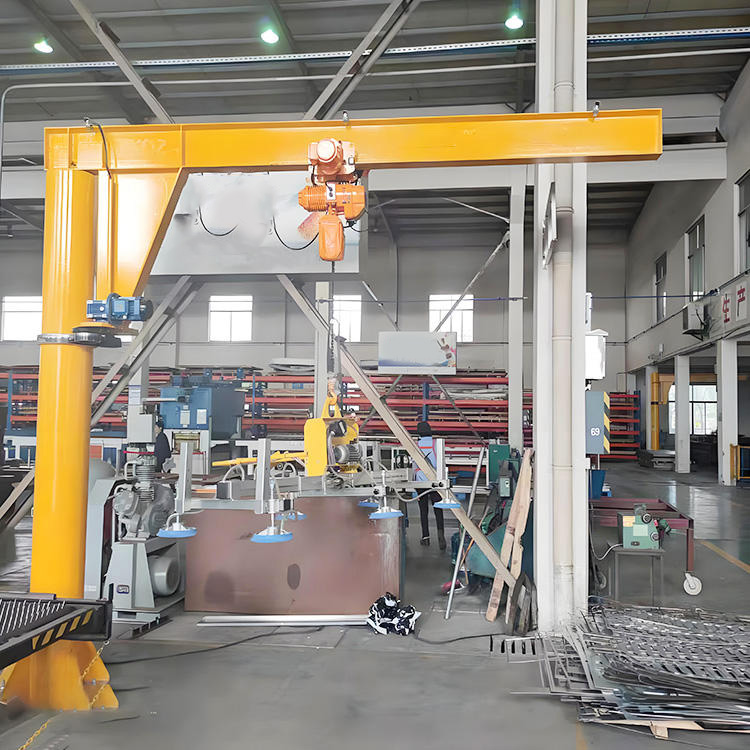
Selecting the right jib crane is not just a purchasing decision—it’s a long-term investment in safety, productivity, and operational efficiency. As manufacturing, warehousing, and industrial facilities continue to modernize in 2026, buyers are facing a wider range of crane configurations, load capacities, and compliance standards than ever before.
This guide is designed to help facility managers, engineers, and procurement teams make a confident, well-informed decision. Whether you’re upgrading an existing lifting system or designing a new workspace from scratch, we will walk through the critical variables that define a successful installation.
Beyond the Hook: Why Your Choice Matters
An incorrectly selected jib crane does more than just underperform; it creates bottlenecks. We’ve seen facilities struggle with operator fatigue because a manual swing was chosen for a high-frequency station, or worse, face costly structural retrofits because floor PSI wasn’t verified.
A well-matched jib crane, however, transforms a workstation. It bridges the gap between manual labor and large-scale material handling, often serving as the perfect localized partner to a larger 【Gantry Crane】 system that handles the heavy intake.
1. Defining Your Load and Duty Cycle
Everything starts with what you are lifting. But in 2026, we look beyond just the “maximum weight.”
- Rated Capacity (SWL): While standard capacities range from 125 kg to 10 tons, the smart move is to factor in a “service buffer.” If your heaviest load is 900 kg, opting for a 1-ton crane is standard, but if that 900 kg lift happens every 5 minutes, you should consider a higher duty-cycle hoist to prevent premature wear.
- Load Dynamics: Are you lifting stable steel plates or sensitive, off-center machinery? Irregular loads require smoother control—think variable frequency drives (VFDs)—to prevent the “pendulum effect” that can strain the crane’s pivot points.
2. Selecting the Configuration That Fits Your Floor
The “best” crane is the one that utilizes your existing architecture without compromising floor space.
The Freestanding Powerhouse
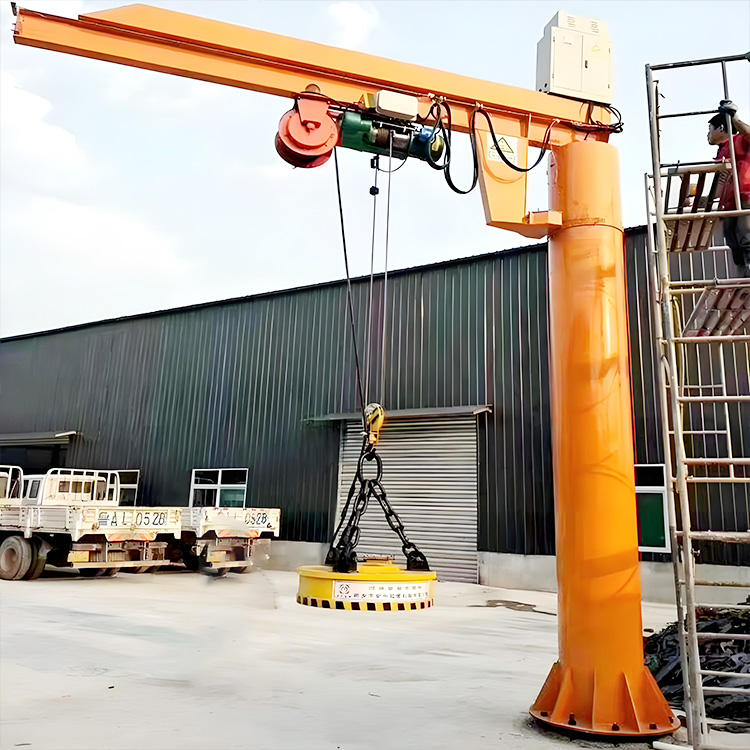
Floor-mounted and independent, these are the workhorses of the industry. They offer a full 360° rotation. In 2026, advanced base-plate designs allow for easier installation, though a reinforced concrete foundation remains a must.
Wall-Mounted Efficiency
If your facility has structurally sound steel columns or concrete walls, wall-mounted jibs are a revelation. They provide 180° to 200° of coverage while keeping the floor completely clear for forklift traffic or AGVs (Automated Guided Vehicles).
The Linear Alternative: Wall-Travelling Jibs
For long assembly lines, a wall-travelling jib moves along a track. It offers a unique middle ground—providing localized lifting like a standard jib, but covering a linear path similar to a 【Gantry Crane】, without the need for floor tracks.
3. Assessing the Physical Environment
Before signing a purchase order, take a tape measure to your facility.
- Height Under Boom (HUB): You must account for the height of the load, the length of the slings, and the “dead space” taken up by the hoist body itself.
- Obstruction Mapping: In 2026, many plants are denser with overhead lighting, HVAC ducts, and fire sprinlkler systems. Ensure your jib’s swing path doesn’t interfere with these utilities.
- The Foundation: For freestanding models, the soil’s bearing capacity is as important as the concrete’s thickness. Never skip the structural engineering review.
4. Manual vs. Motorized: The Productivity Gap

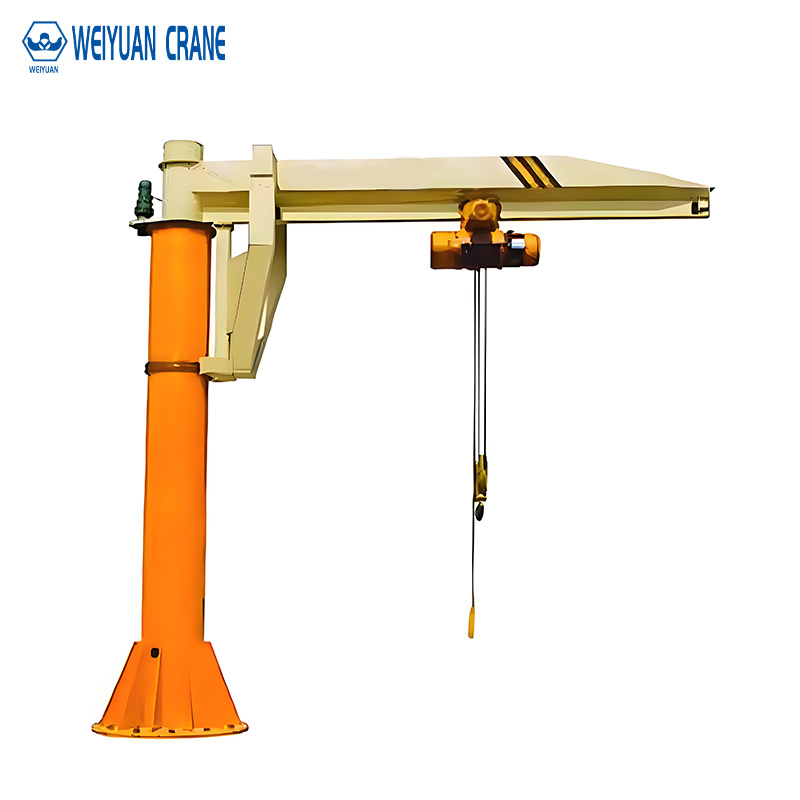
Weiyuan Column Jib Crane
The Weiyuan Column Jib Crane is a versatile and cost-effective freestanding lifting solution designed for precise material handling in workshops, assembly lines, and maintenance areas. With a full 360-degree slewing range and robust steel structure, this crane delivers smooth rotation, dependable performance and enhanced operational flexibility in confined workspaces. :contentReference
View Product / Get QuoteIn 2026, the ROI on motorized components has never been clearer.
- Manual Operation: Best for infrequent lifts (once or twice an hour) and lighter loads. It’s cost-effective and low-maintenance.
- Motorized Rotation: If your operators are moving loads over 1 ton multiple times an hour, motorized rotation is no longer a luxury—it’s a safety requirement to prevent musculoskeletal injuries. It also allows for much finer placement precision.
5. Strategic Integration: Jib Cranes vs. Gantry Cranes
A common question we encounter is: “Do I need a jib or a gantry?” The answer usually lies in mobility. A 【Gantry Crane】 is often the better choice for outdoor yards or facilities where you need to move the crane itself to different bays. However, for a dedicated workstation—like a CNC machine center or a welding station—the fixed pivot of a jib crane provides faster cycle times and a smaller footprint.
In high-efficiency plants, these systems are not mutually exclusive. A large 【Gantry Crane】 might handle the primary assembly move, while a series of wall-mounted jibs handle the localized parts-fitting.
6. Safety Standards and 2026 Compliance
Global standards (ISO, OSHA, and CE) have become more stringent regarding overload protection and emergency stops. When evaluating suppliers like Weiyuan Crane, ensure the equipment includes:
- Overload Limiters: To prevent lifting beyond the rated SWL.
- Adjustable Rotation Stops: To physically limit the boom from hitting walls or other machinery.
- Weather-Proofing: If your application is near a loading dock or outdoors, specify NEMA 4 or IP65-rated enclosures for electrical components.
Common Pitfalls to Avoid
- Ignoring Future Needs: Don’t buy for today’s 500kg load if you plan to upgrade your machinery to 1-ton parts next year.
- Choosing Price Over Duty Cycle: A “cheap” hoist might meet the capacity requirement but fail after six months of high-frequency use.
- Neglecting Spare Parts: Ensure your supplier has a documented supply chain for wear items like trolley wheels and contactors.
FAQ: What You Need to Know
Q: How long should I expect my jib crane to last? A: With a disciplined maintenance schedule, a high-quality industrial jib crane has a service life of 15 to 25 years. The hoist usually requires more frequent servicing than the steel structure itself.
Q: Can I install a jib crane on a standard 4-inch factory floor? A: Generally, no. Most freestanding jib cranes require a deeper, reinforced concrete pad (often 6-12 inches depending on the span and capacity). Wall-mounted versions avoid this but require a structural integrity check of the pillar.
Q: How does the maintenance of a jib crane compare to a 【Gantry Crane】? A: Jib cranes are typically simpler to maintain because they have fewer moving “travel” parts (no long-travel end trucks or floor tracks). The focus is primarily on the pivot bearing and the hoist.
Q: Is it possible to relocate a freestanding jib crane later? A: Yes. Unlike a large bridge crane, freestanding jibs can be disassembled and moved. However, you will need to pour a new foundation at the destination.