


Bridge Cranes: Reliable Lifting Solutions for Maximum Productivity
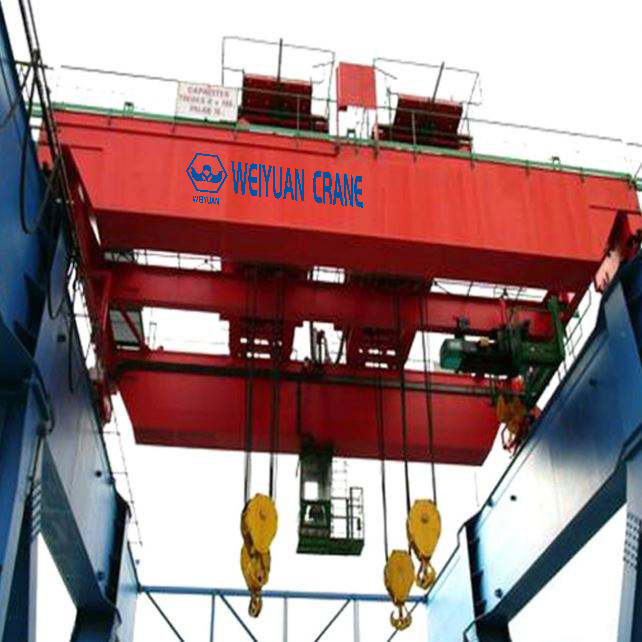
In the high-stakes environment of modern manufacturing and heavy industry, efficiency isn’t a happy accident. It is the result of deliberate engineering—woven into the layout of a workshop, the flow of the production line, and the reliability of the equipment overhead.
For many facility managers, the most valuable “real estate” in their building isn’t on the ground; it’s the unused space near the ceiling. This is where a properly specified 【bridge Crane】 transforms from a simple lifting tool into a strategic productivity platform. By moving operations off the floor and into the rafters, businesses can unlock capacity they didn’t know they had while drastically reducing the physical risks associated with heavy material handling.
1. Beyond Lifting: The Structural Impact of a Bridge Crane
Often simplified as “just a hoist on rails,” a bridge crane (or overhead crane) is actually a complex three-dimensional movement system. It consists of a bridge beam that spans the width of your facility, traveling along runways fixed to the building’s structure.
The true value of a 【bridge Crane】 lies in its ability to provide total coverage. Because it utilizes a trolley and hoist that move laterally across the bridge while the bridge moves longitudinally down the shop, you gain a “work zone” that covers every square inch of your floor. Unlike forklifts, which require wide turning radii and clear paths, an overhead system navigates above obstacles, allowing for a much denser and more efficient floor layout.
Common Industry Applications
- Steel Fabrication: Handling awkward, heavy beams and plates with precision.
- Automotive Assembly: Moving chassis and heavy components between stations.
- Power Generation: Maintaining massive turbines where stability is non-negotiable.
- Injection Molding: Swapping out heavy dies quickly to minimize downtime.
2. The Productivity Multiplier: Why Overhead Lifting Wins
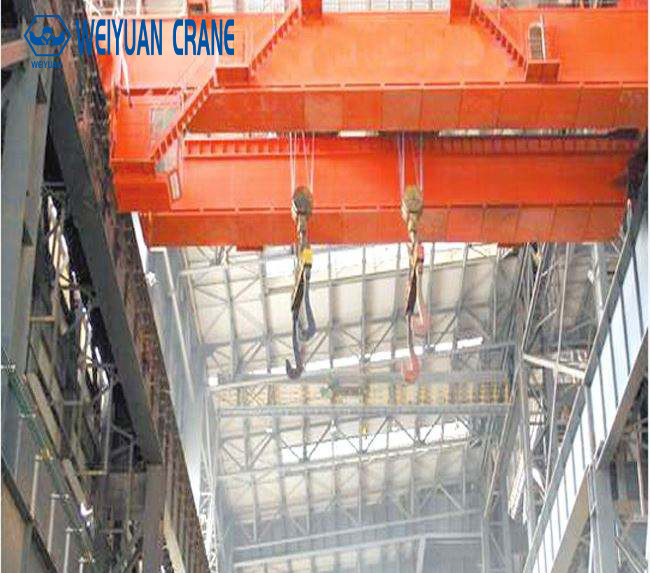
When you transition from ground-based lifting (like forklifts or manual jacks) to an integrated overhead system, the impact on your bottom line is measurable in three specific areas:
A. Accelerated Cycle Times
Manual handling is a friction point. It’s slow, labor-intensive, and prone to “traffic jams” on the shop floor. An overhead system allows for direct, linear movement between workstations. In high-output environments, shaving just two minutes off every lift can result in hundreds of additional production hours gained over a year.
B. Reduced Labor Dependency
Heavy lifting used to require a “team effort.” Today, a single trained operator using a 【bridge Crane】 can position a 20-ton component with millimeter precision. This allows you to reallocate your workforce to high-value tasks that require human ingenuity rather than raw physical strength.
C. Reclaiming the “Hidden” Floor Space
Industrial floor space is expensive. By moving your primary material handling overhead, you can:
- Narrow your forklift aisles.
- Compact your material staging areas.
- Increase the density of your machinery layout.For many facilities, this reclaimed space is the equivalent of a building expansion without the cost of new construction.
3. Technical Selection: Choosing the Right “Duty”
Not all cranes are built for the same level of punishment. One of the most critical decisions an engineer or manager makes is selecting the correct Duty Cycle.
The industry typically follows CMAA (Crane Manufacturers Association of America) classifications, ranging from Class A (infrequent maintenance lifting) to Class F (continuous, severe service in steel mills).
- Single Girder Cranes: These are the workhorses of light-to-medium manufacturing. They are cost-effective, install quickly, and are perfect for loads up to 20 tons.
- Double Girder Cranes: When you need maximum hook height or are dealing with ultra-heavy loads (above 20 tons), double girder systems provide the structural rigidity and stability required for high-frequency use.
Investing in a 【bridge Crane】 with a duty cycle that matches your actual workflow prevents premature motor burnout and structural fatigue—saving you thousands in emergency repairs down the road.
4. Safety as a Strategic Asset
In 2026, workplace safety is no longer just a compliance box to check; it is a competitive advantage. High-performance facilities recognize that a safe worker is a productive worker. Modern bridge cranes integrate several key technologies to mitigate risk:
- Variable Frequency Drives (VFDs): These ensure “soft starts” and “soft stops,” preventing the dangerous load swing (sway) that occurs with sudden movements.
- Overload Protection: Sensors that automatically halt lifting if the load exceeds the crane’s rated capacity.
- Predictive Maintenance Sensors: Modern systems can now monitor brake wear and motor heat in real-time, alerting your team to potential issues before they cause a breakdown.
Fewer accidents mean lower insurance premiums, higher employee morale, and, most importantly, zero interruptions to your production schedule.
5. The ROI: Evaluating the Long-Term Value
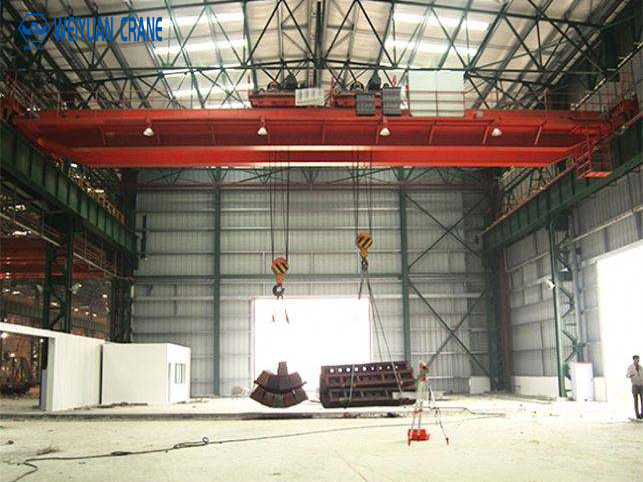
The sticker price of a crane is only one part of the financial equation. To see the true Return on Investment, you must look at the Total Cost of Ownership (TCO) over 20 to 30 years.
| Factor | Impact on ROI |
| Energy Efficiency | Modern VFD-controlled motors draw significantly less peak power. |
| Durability | A high-quality bridge crane is a 25-year asset, not a 5-year tool. |
| Digital Integration | Integration with your Manufacturing Execution System (MES) allows for automated tracking of every lift. |
By reducing product damage (through smoother handling) and minimizing the need for ground-based vehicles, the 【bridge Crane】 often pays for itself within the first 18 to 36 months of operation.
Frequently Asked Questions (FAQ)
Q1: How do I know if my building can support a bridge crane?
A: A structural engineer must perform a runway survey. If your building isn’t designed to take the “top-running” load, you might opt for an “under-hung” system or a self-supporting freestanding gantry structure.
Q2: What is the difference between a bridge crane and a gantry crane?
A: A bridge crane runs on elevated runways fixed to the building’s walls or ceiling. A gantry crane has “legs” and travels on tracks embedded in the floor or on wheels. Bridge cranes are generally preferred for permanent indoor production lines.
Q3: Is wireless remote control better than a pendant control?
A: In most cases, yes. Wireless remotes allow the operator to stand at a safe distance and view the load from the best possible angle, which significantly improves both safety and precision.
Q4: How often does the crane need a “major” inspection?
A: While daily pre-shift checks are standard, most safety regulations (like OSHA or CE standards) require a comprehensive annual inspection by a certified third-party technician to ensure structural integrity and brake safety.