


Top Benefits of Gantry Cranes: The Ultimate Guide to Efficient Material Handling
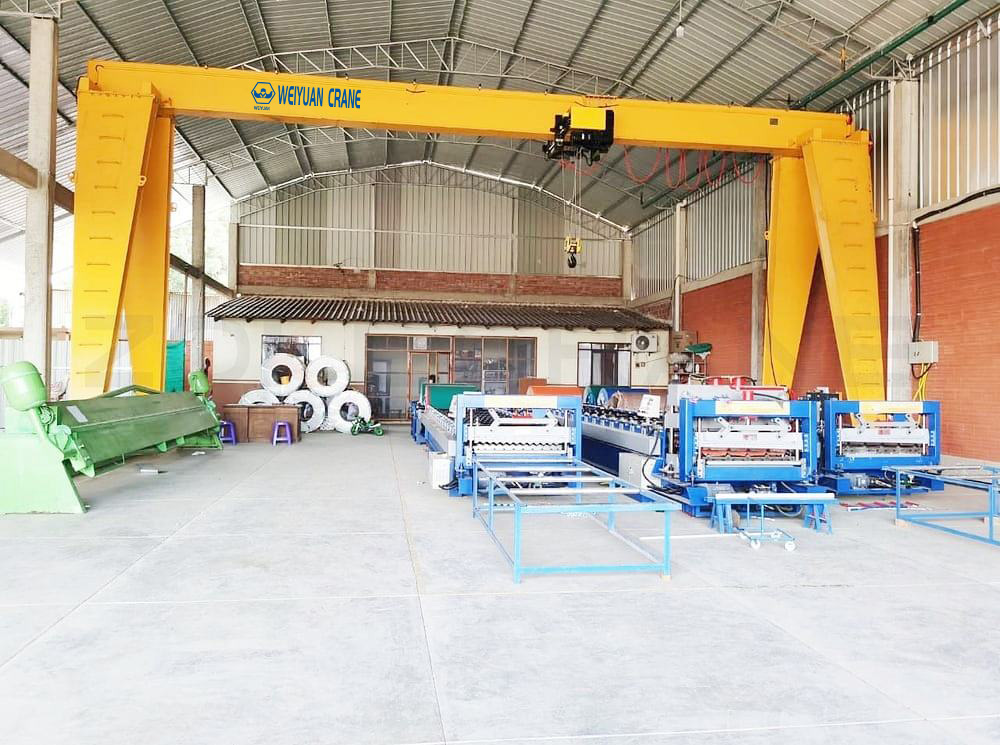
Efficiency in heavy industry is rarely accidental. It is engineered—into layouts, workflows, and the equipment that moves materials every day. In shipyards, fabrication plants, steel stockyards, logistics hubs, and infrastructure projects, lifting systems directly influence productivity, safety performance, and long-term operating costs.
While overhead bridge cranes remain widely used, they are not always the most practical solution—especially in open yards, leased facilities, or expansion projects where structural modification is costly or impractical. In these environments, the 【Gantry Crane】 has become a preferred alternative, offering structural independence, scalability, and robust lifting performance.
This guide examines the technical, financial, and operational advantages of gantry cranes, explores design variations, and outlines the critical factors decision-makers should evaluate before investing.
What Defines a Gantry Crane?
At its core, a gantry crane is a bridge-type lifting system supported by freestanding legs that travel on rails or wheels at ground level. Unlike overhead cranes that rely on elevated runway beams attached to a building structure, gantry cranes are self-supporting.
This structural independence delivers a key advantage:
the building does not carry the crane load.
Instead, loads are transferred directly into the ground through rails or wheel assemblies. For many facilities, this eliminates expensive roof reinforcements and reduces structural engineering complexity.
Typical Components
- Bridge girder (single or double)
- Hoisting system (wire rope or chain)
- Support legs
- End carriages
- Electrical control system
- Travel mechanism (rail-mounted or rubber-tired)
Why Gantry Cranes Are Gaining Momentum in 2026 Projects
Industrial planning in 2026 emphasizes flexibility, automation readiness, and cost discipline. The 【Gantry Crane】 aligns with all three priorities.
Below are the most compelling advantages.
1. Infrastructure Cost Control
One of the primary drivers behind gantry crane adoption is financial efficiency.
Installing a traditional overhead crane may require:
- Structural steel reinforcement
- New support columns
- Engineering re-certification of the building
These modifications can significantly increase project CAPEX.
A gantry system avoids these requirements. By placing rails directly on reinforced foundations, facilities can:
- Reduce civil construction expenses
- Shorten installation timelines
- Simplify future layout adjustments
For expanding operations or temporary industrial sites, this can be decisive.
2. True Operational Flexibility
Few lifting systems offer the adaptability of gantry configurations.
Outdoor Readiness
Gantry cranes are standard equipment in shipbuilding, bridge construction, steel yards, and wind energy assembly sites. They operate reliably in open-air environments where overhead crane installation is impossible.
Semi-Gantry Solutions
A semi-gantry crane uses one freestanding leg while the opposite side runs along a wall-mounted runway. This hybrid design saves floor space while maintaining high lifting capacity.
Portable Systems
Smaller adjustable gantries can be repositioned manually, making them ideal for maintenance workshops and equipment repair bays.
Rubber-Tired Gantry (RTG)
Widely used in container terminals, RTGs provide mobility without fixed rails, allowing dynamic stacking operations.
This adaptability makes the gantry crane suitable for both long-term industrial infrastructure and short-term project deployment.
3. High Load Capacity with Structural Stability
Gantry cranes are engineered for heavy-duty applications.
Depending on configuration, capacities can range from 1 ton to well beyond 500 tons. Double girder systems, in particular, provide:
- Increased lifting height
- Improved structural rigidity
- Reduced deflection under load
- Better stability for long spans
In sectors such as steel manufacturing, marine engineering, and precast construction, structural rigidity translates directly into safer and more precise lifting.
4. Spatial Optimization in Large Yards
In large-scale storage or fabrication yards, maximizing usable ground area is critical.
Forklift fleets require wide aisles. Mobile cranes demand clear zones. A gantry crane spans wide areas and lifts vertically, allowing dense stacking below the bridge.
Benefits include:
- Higher storage density
- Reduced vehicle congestion
- Cleaner workflow separation between lifting and transport
For logistics and heavy fabrication operations, this improves throughput without expanding facility footprint.

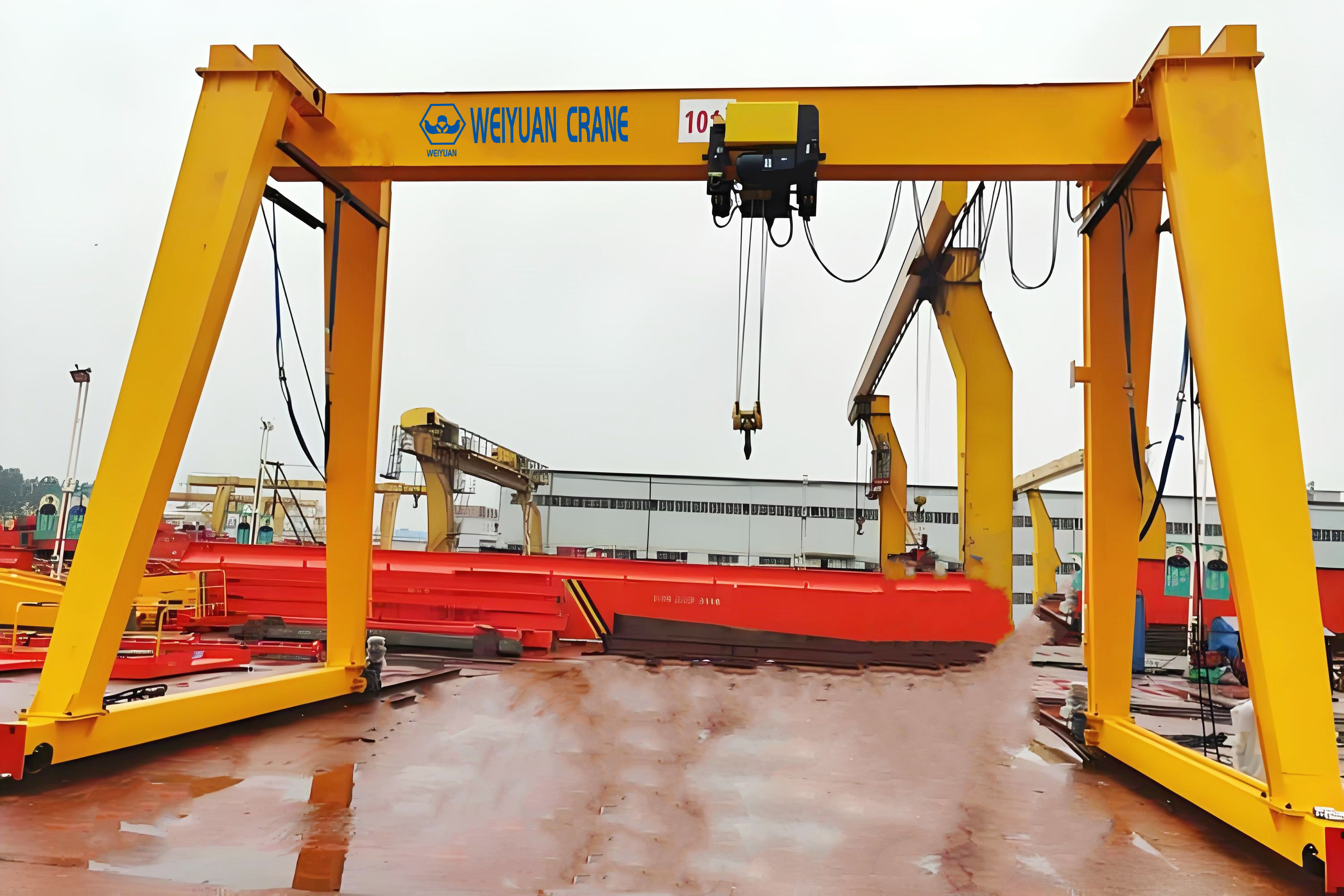
Weiyuan Heavy Duty MG Type Gantry Crane for Outside Lifting
The Weiyuan Heavy Duty MG Type Gantry Crane is a powerful and resilient outdoor lifting solution engineered for demanding outside lifting operations, combining a robust A-frame double-girder structure with weatherproof components for reliable performance in outdoor stockyards, construction and industrial environments. :contentReference
View Product / Get Quote5. Precision and Process Control
Modern gantry systems incorporate advanced drive technologies:
- Variable Frequency Drives (VFDs)
- Soft-start/soft-stop travel systems
- Anti-sway control algorithms
- Radio remote operation
These features allow controlled acceleration and deceleration, reducing load swing and improving placement accuracy.
Precision becomes especially important in:
- Turbine assembly
- Heavy machinery alignment
- Mold handling in foundries
- Container stacking in ports
When integrated with automated yard systems or warehouse management software, the 【Gantry Crane】 becomes part of a synchronized production ecosystem.
6. Duty Classification and Longevity
A crane’s duty cycle determines its durability.
Professional buyers evaluate crane classification based on expected usage:
- Light service (A/B) – Maintenance or infrequent lifting
- Moderate service (C/D) – General manufacturing
- Severe service (E/F) – Continuous industrial production
Selecting the correct classification prevents premature motor wear, gearbox failure, and structural fatigue.
Well-designed gantry cranes routinely achieve operational lifespans exceeding 25 years when paired with preventive maintenance programs.
7. Safety as a Design Standard
Material handling safety is governed by strict regulatory frameworks worldwide. Reputable manufacturers design gantry systems in compliance with recognized standards such as:
- ISO 9001 (quality management systems)
- CE conformity for European markets
- CMAA guidelines in North America
Essential safety features include:
- Electronic overload protection
- Upper and lower travel limit switches
- Wind monitoring sensors for outdoor use
- Rail clamps and storm locks
- Emergency braking systems
In outdoor environments, wind protection is particularly critical. Integrated anemometers can automatically restrict operation during unsafe conditions.
8. Energy Efficiency and Smart Monitoring
Industrial energy optimization is no longer optional.
Modern gantry cranes may include:
- Regenerative braking systems
- High-efficiency IE3/IE4 motors
- Smart diagnostic modules
- Predictive maintenance analytics
Remote monitoring systems enable maintenance teams to detect abnormal vibration, motor temperature increases, or brake wear before failure occurs—reducing unplanned downtime.
For high-throughput operations, even a 10% reduction in downtime significantly improves annual output.
9. Installation Considerations for Decision-Makers
Before specifying a gantry crane, procurement teams should evaluate:
Ground Bearing Capacity
The foundation must support wheel loads and dynamic forces.
Rail Alignment
Precision alignment ensures smooth travel and reduces wheel flange wear.
Span and Cantilever Requirements
Cantilevers allow load pickup beyond rail boundaries—useful for truck loading zones.
Power Supply
Options include cable reels, busbars, or onboard diesel generators for remote sites.
Professional engineering assessment during early planning prevents costly redesigns later.
10. Long-Term ROI Perspective
While upfront costs vary depending on capacity and configuration, long-term value comes from:
- Reduced building modification expenses
- Lower labor dependency
- Improved safety metrics
- Increased material flow efficiency
- Extended equipment lifespan
For expanding facilities or operations requiring phased development, gantry systems offer scalability that supports growth without rebuilding infrastructure.
Frequently Asked Questions (FAQ)
Q1: Are gantry cranes suitable for both indoor and outdoor applications?
Yes. Indoor models are common in fabrication plants, while outdoor versions include weather-resistant coatings, sealed electrical panels, and wind-protection systems.
Q2: How often should gantry cranes be inspected?
Daily visual checks are recommended for hooks and wire ropes. Comprehensive inspections should be conducted monthly, with annual structural audits performed by certified technicians.
Q3: What is the advantage of a semi-gantry configuration?
It maximizes usable floor space by utilizing one side of the building for support, making it ideal for narrow workshops or perimeter operations.
Q4: Can gantry cranes be relocated?
Rail-mounted systems can be dismantled and reinstalled. Portable gantries offer even greater flexibility for temporary projects.
Q5: What is the typical service life of a gantry crane?
With correct duty classification and routine maintenance, many systems operate reliably for 20–30 years or more.
If your goal is to eliminate lifting bottlenecks, improve safety, and create scalable infrastructure for heavy material handling, a professionally engineered gantry system deserves serious consideration.