


The Ultimate Guide to Overhead Cranes: Types, Benefits, and Applications
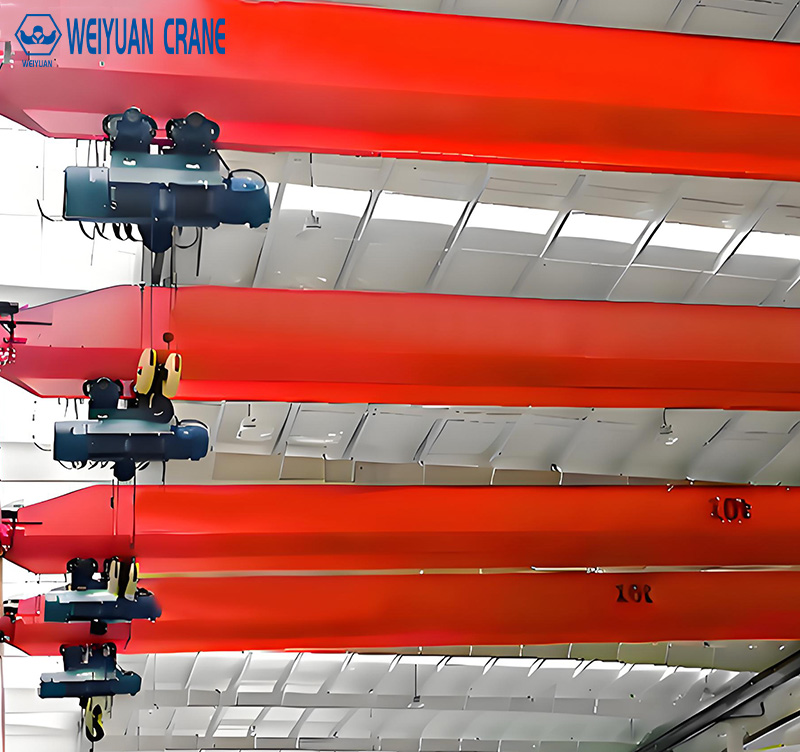
In heavy industry and large-scale manufacturing, the efficient and safe movement of materials is the foundation of a productive operation. While forklifts handle ground-level logistics, the true workhorses of the modern facility operate above the shop floor. These are Overhead Cranes, the essential infrastructure for lifting and transporting heavy loads with precision and safety.
These systems are more than just machinery; they are integrated solutions that unlock a facility’s true potential. By utilizing the vertical space above the production area, they free up valuable floor real estate and provide the power needed to move everything from massive steel coils to delicate, high-value components. This guide offers a deep dive into the world of overhead lifting, designed to help managers and engineers make informed decisions about this critical asset.
What is an Overhead Crane?
An overhead crane, also known as a bridge crane, is a lifting system composed of parallel runways with a traveling bridge spanning the gap. A hoist, which is the component that performs the actual lifting, travels side-to-side along this bridge. This configuration allows for three axes of movement, enabling an operator to position a load anywhere within the rectangular area covered by the crane.
Unlike mobile or ground-based equipment, Overhead Cranes operate on an elevated plane. This design allows them to move over machinery, workstations, and other obstacles, creating a safer and less congested work environment.
The Core Components
To understand how these systems function, it helps to know their primary structural elements:
- The Bridge: The main horizontal beam (or pair of beams) that spans the width of the work area.
- The Runways: The stationary tracks, often supported by the building’s columns, that the bridge travels on.
- The Trolley: The unit that carries the hoist and moves laterally across the bridge.
- The Hoist: The mechanical device that raises and lowers the load, typically using wire rope or a chain.
Major Types of Overhead Lifting Systems
Not all facilities have the same lifting requirements. The right crane configuration is a balance of required capacity, building dimensions, and operational intensity.
Single Girder vs. Double Girder Cranes
The most fundamental distinction is the number of bridge beams, or girders.
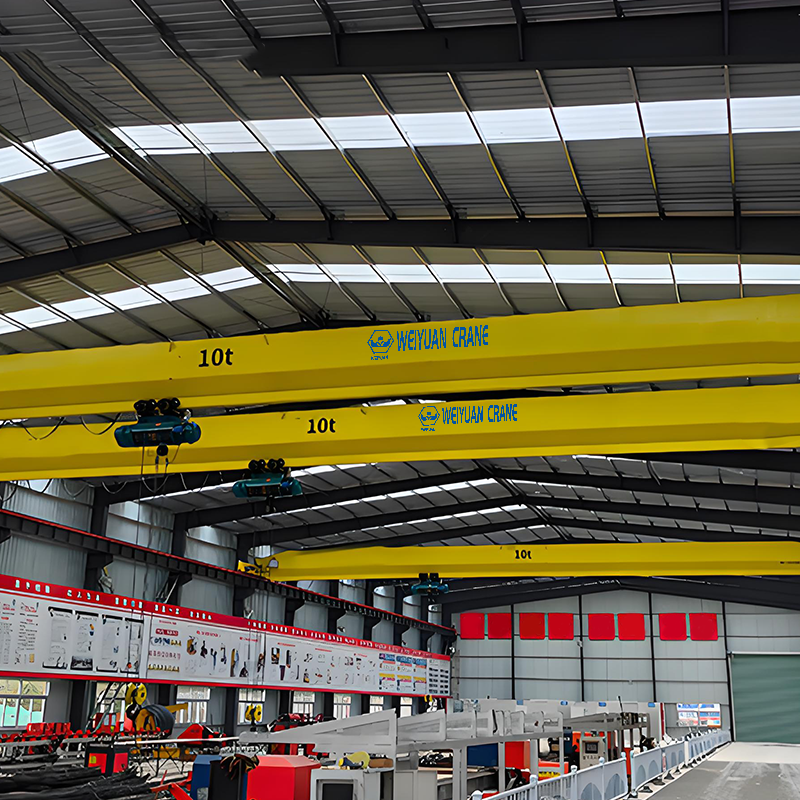
- Single Girder Cranes: This design uses one main girder for the bridge. The hoist and trolley typically run on the bottom flange of this beam. They are lighter, more cost-effective, and ideal for light to medium-duty applications, generally up to 20 tons.
- Double Girder Cranes: These systems use two parallel girders, with the trolley running on rails mounted on top. This design is stronger and more stable, making it suitable for heavy-duty applications (from 20 to over 500 tons) and very long spans. They also provide maximum lifting height, as the hook can retract up between the girders.
Top-Running vs. Under-Running Cranes
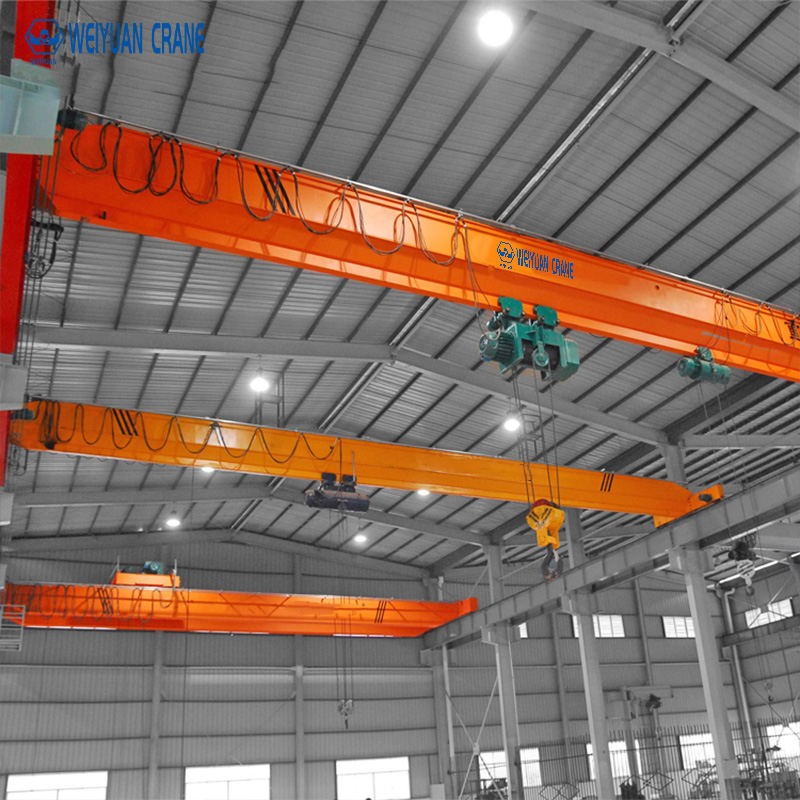
This classification refers to how the crane interacts with its runway.
- Top-Running Cranes: The crane’s end trucks ride on top of the runway rails. This is the standard for high-capacity systems.
- Under-Running (or Underslung) Cranes: The end trucks hang from and ride on the bottom flange of the runway beams. This design is often used in buildings with limited headroom, as the crane can be tucked up closer to the ceiling.
Strategic Benefits: More Than Just Lifting
Investing in a quality overhead crane system delivers a measurable return through several key advantages.
1. Unlocking Valuable Floor Space
Industrial floor space is a finite and expensive asset. By moving the primary material handling pathway overhead, you can eliminate the need for wide forklift aisles. This allows for a denser and more efficient layout of machinery, effectively increasing your production capacity within the same footprint.
2. Enhancing Workplace Safety
According to safety organizations, incidents involving ground-based vehicles and manual lifting are leading causes of workplace injuries. Overhead cranes significantly reduce this risk by keeping loads elevated and clear of personnel. Modern systems with features like anti-collision sensors and Variable Frequency Drives (VFDs) for smooth movement further enhance this safety.
3. Boosting Productivity and Precision
An overhead crane allows a single operator to move heavy loads faster and more directly than any other method. This dramatically reduces cycle times for loading machines, assembling large components, or moving finished goods. The precision control offered by VFDs allows for millimeter-perfect positioning, reducing product damage and speeding up delicate operations.
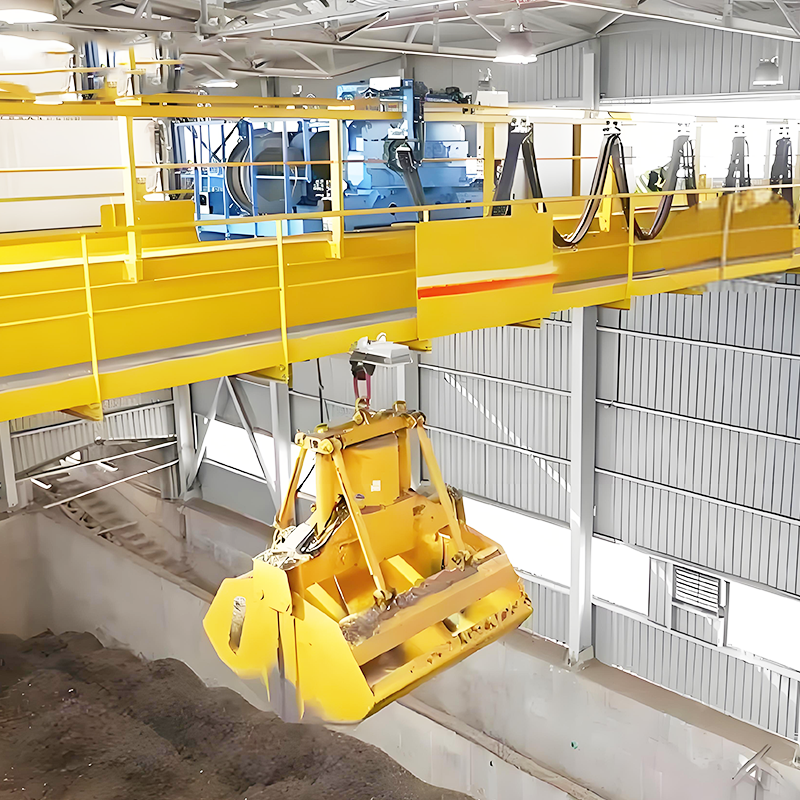
Weiyuan QZ Type Grab Crane for Steel Scrap | 30 Ton, Heavy-Duty, High-Efficiency
The Weiyuan QZ Type 30 Ton Grab Crane is engineered specifically for demanding steel scrap handling operations. Built on a heavy-duty double-girder platform with a high-strength orange peel grab, it delivers reliable performance and high efficiency in continuous scrap yard and foundry material handling environments. :contentReference
View Product / Get QuoteUnderstanding Duty Cycle Classifications
One of the most critical and often overlooked aspects of crane selection is the duty cycle. The Crane Manufacturers Association of America (CMAA) classifies cranes based on their intended service intensity. Choosing the wrong class can lead to premature failure.
| Class | Service Type | Typical Application |
|---|---|---|
| Class A | Standby/Infrequent | Maintenance in powerhouses, infrequent light lifts |
| Class B | Light Service | Repair shops, light assembly, low-speed handling |
| Class C | Moderate Service | General machine shops, standard production lines |
| Class D | Heavy Service | Foundries, heavy machine shops, steel warehouses |
| Class E | Severe Service | Scrap yards, cement mills (high volume, 20+ lifts/hr) |
| Class F | Continuous Severe | Custom-designed for constant use at or near capacity |
Expert Insight: Running a Class C crane in a Class E environment is a recipe for disaster. The motors, brakes, and structural components are not designed for that level of stress and will wear out rapidly. Always match the crane’s classification to your actual operational demand.
Critical Industry Applications
Because of their adaptability, Overhead Cranes are found in nearly every sector of heavy industry.
- Steel and Metals: Handling raw coils, moving molten metal, and loading finished products.
- Automotive: Lifting and setting heavy stamping dies in presses and moving car bodies along assembly lines.
- Aerospace: Precisely positioning large and delicate fuselage and wing sections during fabrication.
- Power Generation: Installing and maintaining massive turbines and generators that require absolute stability.
- Warehousing & Logistics: Moving large, heavy pallets or machinery in high-density storage areas.
The Future of Lifting: Automation and Smart Technology
The industry is evolving beyond simple manual control. Modern Overhead Cranes are becoming smarter and more automated. Features like anti-sway technology, which uses algorithms to counteract the pendulum effect of a suspended load, are making every operator an expert. Fully automated systems are also becoming common in repetitive, high-volume applications like refuse-to-energy plants and steel coil handling.
Frequently Asked Questions (FAQ)
Q1: What is the typical lifespan of an industrial overhead crane?
With proper maintenance and a duty cycle that matches its workload, a high-quality overhead crane’s structure can easily last 25 to 30 years or more. Wear components like the hoist, brakes, and wire rope will require periodic replacement based on usage.
Q2: Can an overhead crane be installed in an existing building?
Yes, but it always requires a professional structural analysis of your building. If the existing columns cannot support the crane’s loads, a freestanding runway system can be installed on its own dedicated columns.
Q3: Is a single girder or double girder crane better?
Neither is inherently “better”; they are suited for different tasks. Single girder cranes are more cost-effective for lighter loads and shorter spans. Double girder cranes are necessary for high capacities, long spans, and when maximum lifting height is needed.
Q4: What is the main benefit of a Variable Frequency Drive (VFD)?
A VFD provides smooth acceleration and deceleration for all crane movements. This reduces mechanical shock on the crane, prevents dangerous load swing, and allows the operator to position loads with exceptional precision.
Q5: How often do I need to inspect my crane?
Regulations typically require daily pre-shift visual checks by the operator and more thorough, documented periodic inspections by a qualified technician (often quarterly or annually, depending on usage). Annual load testing may also be required.