


How to Choose the Perfect Gantry Crane for Your Industrial Needs
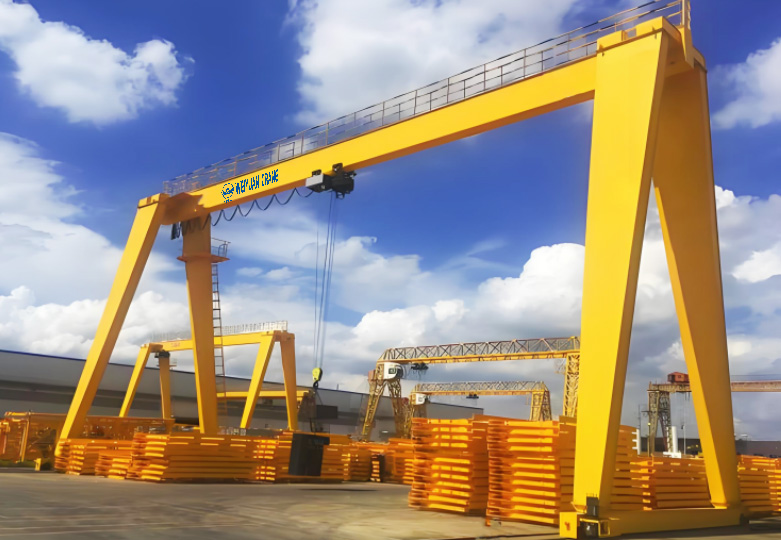
Selecting the right material handling equipment is a foundational decision that can define the efficiency and safety of your entire operation for decades. When your work involves lifting heavy, bulky loads in outdoor yards, leased facilities, or areas where building structures can’t support a traditional bridge crane, the gantry crane becomes an essential tool. These freestanding systems offer unparalleled flexibility and power, but choosing the wrong one can lead to costly downtime, operational bottlenecks, and significant safety risks.
The market for Gantry Cranes is diverse, with options ranging from small, portable units for workshop maintenance to colossal rail-mounted systems capable of lifting entire ship sections. This guide provides a detailed, step-by-step process to help you navigate the critical specifications, understand the technical trade-offs, and ultimately select the perfect gantry crane to meet your industrial needs with authority and confidence.
1. Start with the Load: Defining Your Core Lifting Parameters
Before you ever look at a crane model, you must first create a complete profile of the objects you need to lift. This initial analysis is the most critical step and forms the basis for every other decision.
Determine Your Required Lifting Capacity
The first question is always: “What is the heaviest load you will ever need to lift?” Once you have that number, add a safety buffer of at least 20-25%. A 10-ton crane should not be used to regularly lift 10-ton loads. This buffer accounts for several factors:
- The weight of the rigging equipment itself (slings, chains, spreader beams).
- Future operational needs or heavier product lines.
- Reduced wear and tear on the hoist motor and brakes, significantly extending the crane’s service life.
Map Out the Physical Dimensions: Span and Height
Next, define the physical space your crane will occupy and operate within.
- Span: This is the horizontal distance between the centerlines of the two legs. Your span must be wide enough to clear your largest workpiece, truck, or piece of machinery. For outdoor yards, it needs to straddle your widest inventory row with enough clearance on either side for safe movement.
- Height Under Hook (HUH): This is the distance from the floor to the bottom of the hoist hook when it is at its highest point. To calculate your required HUH, measure the height of your tallest load, add the length of your rigging, and then add a safe clearance margin to lift the load over any obstacles in its path.
2. Match the Crane Type to Your Environment
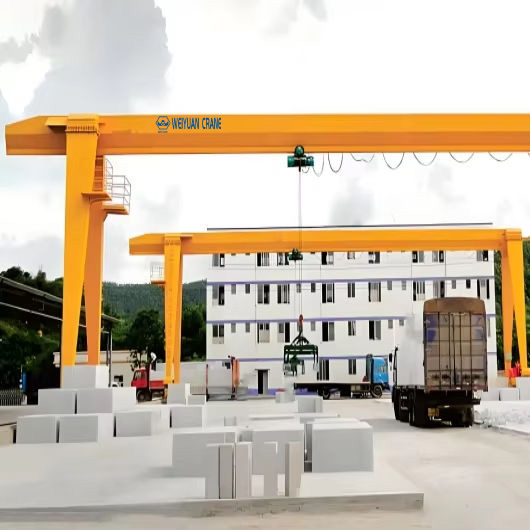
Not all gantry cranes are created equal. The physical layout of your facility and the nature of your workflow will dictate which structural configuration is the right fit.
Full Gantry Cranes
This is the classic design where two legs support the bridge and travel along parallel rails on the ground. They are the go-to choice for heavy-duty outdoor applications or large indoor bays where no building support is available.
- Choose this if: You need to cover a large, open area (like a steel yard or shipping port) and require high capacity and a wide span.
Semi-Gantry Cranes
This hybrid configuration uses one leg that rides on a ground-level rail, while the other side of the bridge is supported by an elevated runway beam attached to a building’s wall or columns.
- Choose this if: You need to maximize floor space along one side of your facility. It provides lifting coverage without requiring a second ground rail, keeping that area clear for forklift traffic or other operations.
Portable Gantry Cranes
These smaller, lightweight cranes move on heavy-duty casters instead of rails. They offer ultimate flexibility for maintenance and light assembly tasks.
- Choose this if: Your lifting needs are infrequent and occur in various locations within your facility. They are perfect for pulling engines, moving molds, or general repair work.
3. Analyze the Duty Cycle: How Hard Will Your Crane Work?
Perhaps the most common mistake in crane procurement is buying based on capacity alone. To ensure longevity and prevent premature failure, you must accurately classify your crane’s duty cycle. The Crane Manufacturers Association of America (CMAA) provides service classifications that are the industry standard.
- Class A/B (Standby or Light Service): For cranes used infrequently, such as in maintenance shops or for occasional assembly. Lifts are few and far between.
- Class C (Moderate Service): This is the workhorse of general manufacturing and machine shops, handling up to 10 lifts per hour at an average of 50% capacity.
- Class D (Heavy Service): Built for the demands of steel warehouses, foundries, and heavy fabrication shops. These Gantry Cranes are expected to run consistently, handling 10-20 lifts per hour at or near their rated capacity.
- Class E/F (Severe or Continuous Service): Reserved for the most demanding applications, such as scrap yards, cement plants, and busy container ports, where the crane runs almost constantly at full load.
Misclassifying the duty cycle is a costly error. A Class C crane used in a Class D application will suffer from rapid motor burnout, brake failure, and structural fatigue.
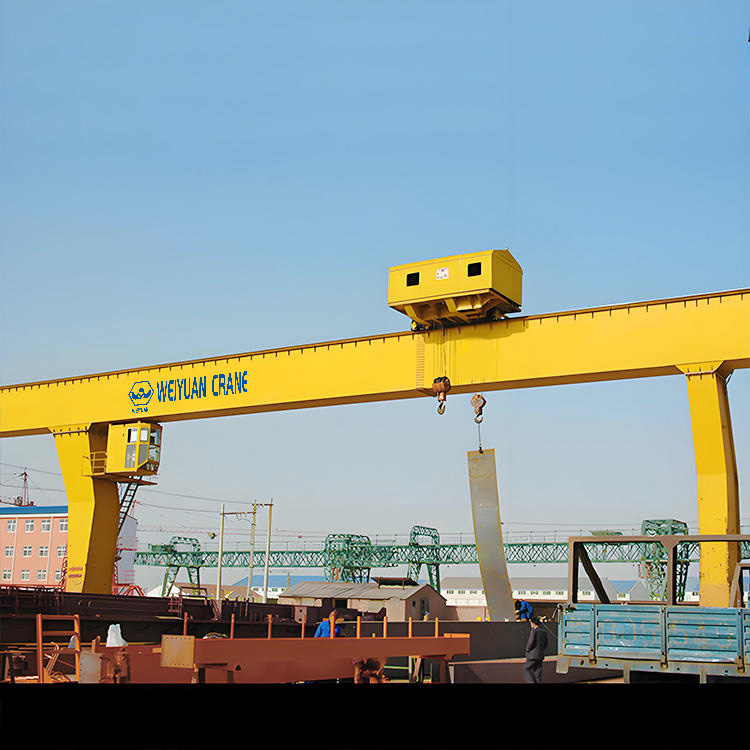
Weiyuan L-Shape Leg Walk Gantry Crane | Manufacturer Direct, Enhanced Mobility
The Weiyuan L-Shape Leg Walk Gantry Crane is a high-performance single-girder gantry crane with a distinctive L-shaped leg design that offers superior clearance for long and oversized loads, and smooth “walk” travel on ground rails — direct from the manufacturer for competitive pricing and reliable quality. :contentReference
View Product / Get Quote4. Consider the Power and Control Systems
The “brains and muscle” of the crane are its hoist and control system. Your choices here will directly impact safety, precision, and operational speed.
Power Source and Delivery
How will your crane get power?
- Cable Reel: A spring-loaded or motorized reel pays out and retracts a flexible power cable as the crane travels. This is a common and reliable solution for rail-mounted systems.
- Festoon System: A series of looped cables hang from trolleys that run along a track, accordioning out as the crane moves. It’s a simple, low-maintenance option.
- Onboard Generator: For ultimate mobility, Rubber-Tired Gantry (RTG) cranes used in large ports are often powered by their own diesel generators.
Control Method: Pendant vs. Radio Remote
- Pendant Control: A wired control box hangs from the hoist. It’s a reliable, cost-effective option but requires the operator to walk alongside the load, potentially putting them in a hazardous position.
- Radio Remote Control: A wireless remote gives the operator the freedom to control the crane from a safe distance. This is the recommended option as it dramatically improves visibility and keeps personnel away from suspended loads and potential swing hazards.
The Importance of Variable Frequency Drives (VFDs)
Modern Gantry Cranes should be equipped with VFDs on all motions (hoist, trolley, and travel). VFDs allow for smooth acceleration and deceleration, which provides several critical benefits:
- Eliminates Load Swing: By ramping up and down smoothly, VFDs prevent the dangerous pendulum effect of a swinging load.
- Reduces Mechanical Wear: Soft starts reduce the shock load on gears, motors, and brakes.
- Enables Precise Positioning: It allows for micro-movements, which are essential when placing delicate or expensive components.
5. Factor in Your Specific Operating Environment
The conditions inside—or outside—your facility will dictate the materials and protective features your crane needs. A standard crane will not survive in a harsh environment.
- Outdoor Use: Cranes exposed to the elements require a weatherization package. This includes corrosion-resistant epoxy paint, waterproof electrical enclosures (NEMA 4X rated), motor space heaters to prevent condensation, and structural wind tie-downs.
- Corrosive or Wash-Down Environments: Facilities like galvanizing plants or food processing centers need cranes with stainless steel components, zinc-plated hardware, and protected electronics.
- Explosive Atmospheres: Chemical plants or refineries require explosion-proof Gantry Cranes with spark-resistant features like bronze wheels, brass hooks, and specially sealed motor enclosures.
6. Plan for Installation and Compliance
Finally, consider the long-term ownership of the equipment. A crane is a long-term asset that requires professional installation and ongoing maintenance to remain compliant with safety standards like OSHA and ASME.
When selecting a supplier, look beyond the initial price. A reputable partner will provide:
- A detailed analysis of your floor or ground to ensure it can support the crane’s wheel loads.
- Professional, certified installation and load testing.
- Comprehensive operator training.
- A clear plan for preventative maintenance and annual inspections.
Frequently Asked Questions (FAQ)
Q1: What is the main advantage of a gantry crane over an overhead bridge crane?
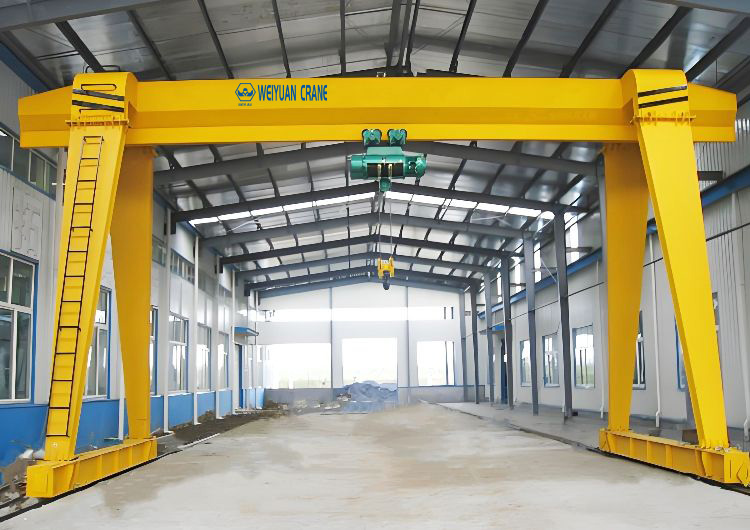
The primary advantage is structural independence. Gantry cranes are self-supporting and run on the ground, so they don’t require a building with a support structure strong enough to handle a suspended runway system. This makes them ideal for outdoor yards and leased buildings.
Q2: How do I know if I need a rail-mounted or a portable gantry crane?
Choose a rail-mounted system if you have a fixed, high-volume workflow in a dedicated area. Choose a portable gantry if your lifting needs are for occasional maintenance or repairs in multiple locations around your shop.
Q3: Can a gantry crane be used on an uneven surface?
Rail-mounted gantry cranes require a precisely leveled set of rails embedded in a concrete foundation. Portable gantry cranes need a smooth, flat, and level concrete surface to operate safely. Using them on slopes or uneven ground is extremely dangerous and can lead to tipping.
Q4: What’s the difference between a single girder and a double girder gantry crane?
A single girder crane uses one main beam and is more cost-effective for lighter loads (typically under 15 tons) and shorter spans. A double girder crane uses two beams, offering greater strength and stability for very heavy loads and wider spans.
Q5: How much does a gantry crane cost?
The cost varies dramatically based on capacity, span, height, and features. A small portable gantry might cost a few thousand dollars, while a large, rail-mounted, heavy-duty system for a shipping yard can cost millions. It is essential to get a custom quote based on your specific requirements.