


How to Choose the Best Jib Crane for Your Industrial Needs
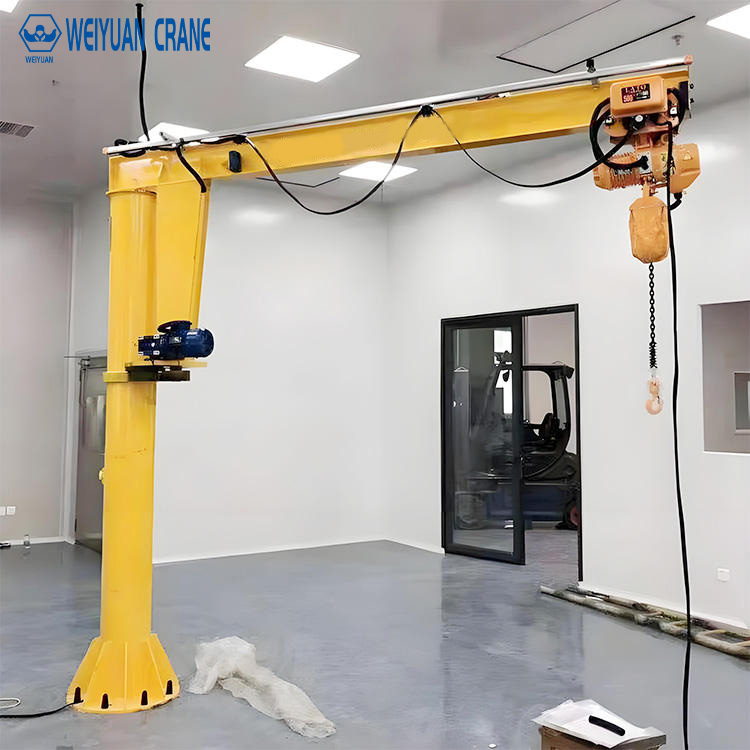
In any modern industrial facility, optimizing the flow of materials is key to maximizing productivity and ensuring worker safety. While large overhead systems like bridge cranes handle the heavy lifting across entire bays, they can create significant bottlenecks when individual workstations need immediate, localized lifting power. This is precisely where the jib crane excels, acting as a dedicated, agile tool for a specific work cell.
Choosing the right jib crane, however, is a critical decision that impacts everything from production speed to operator safety. It’s not as simple as picking a model based on weight capacity alone. A thorough analysis of your application, environment, and structural limitations is essential. This guide will walk you through the key factors you must evaluate to select a jib crane that integrates seamlessly into your operations and provides a lasting return on investment.
1. Define Your Lifting Parameters: The “S.C.A.T.” Method
Before you even look at specific models, you need a clear picture of what you’re lifting and where. A simple acronym to remember is S.C.A.T: Span, Capacity, Area, and Type.
Span and Reach
The span is the horizontal length of the boom. You need to determine the maximum reach required to cover your entire workstation. Measure the distance from the mounting point (the pillar or wall) to the furthest point the hook needs to reach. Always add a small buffer, but avoid choosing a span that is excessively long, as this increases the engineering complexity, cost, and forces exerted on your building’s structure. Remember that the usable “hook coverage” is always slightly less than the total boom length due to the physical size of the hoist and trolley.
Capacity (Working Load Limit)
Capacity is the maximum weight the crane is certified to lift. A common mistake is selecting a crane rated for the exact weight of your heaviest part. Best practice dictates adding a safety buffer of at least 25%. This accounts for the weight of the rigging (slings, magnets, or clamps) and provides a margin for future needs. Operating a crane consistently at its maximum limit shortens its service life; a capacity buffer ensures longevity.
Area of Rotation
How much does the boom need to swing? A freestanding, pillar-mounted jib crane can offer a full 360 degrees of rotation, making it ideal for serving multiple machines in a circular cell. A wall-mounted unit is typically limited to a 180- to 200-degree arc. Carefully map out the required swing to ensure the crane can reach all necessary points without interfering with nearby columns, machinery, or walkways.
Type of Hoist
The hoist is the muscle of the crane. For most jib applications under 5 tons, an electric chain hoist is the most practical and cost-effective choice. They are compact, reliable, and well-suited for the moderate duty cycles of workstation lifting. For heavier loads or higher-speed applications, a wire rope hoist may be necessary, though they are less common on standard jib cranes.
2. Match the Crane Type to Your Facility’s Structure
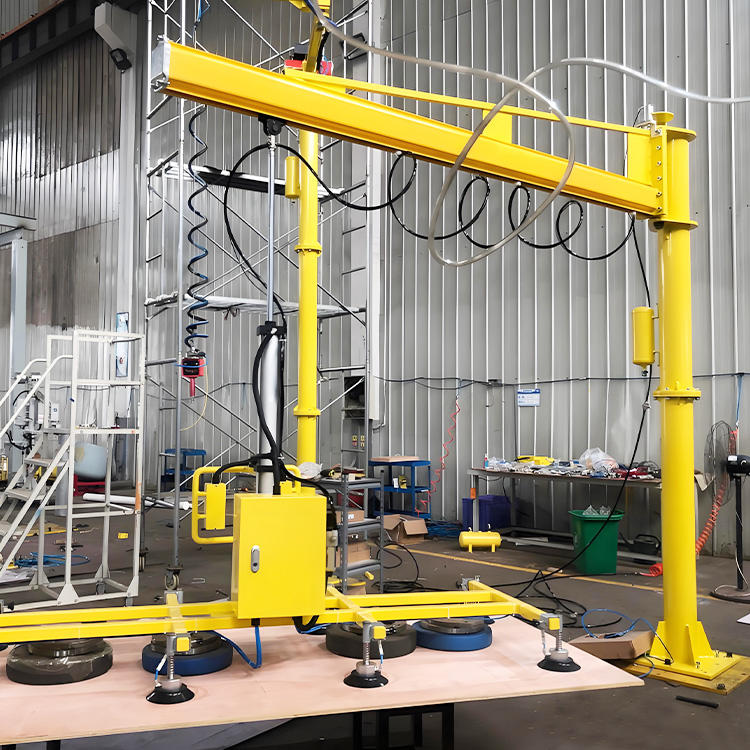
The physical layout and structural integrity of your facility will be the deciding factor in what type of jib crane you can install. There are four primary configurations to consider.
Freestanding Jib Cranes
These are the most common and versatile option. They feature a vertical mast that is anchored to a large, specially poured concrete foundation. Because they are entirely self-supporting, they do not put any stress on your building’s structural steel.
- Choose this if: You need 360-degree rotation, have ample floor space for a foundation, and require high lifting capacities (up to 15 tons). They are perfect for open work areas and outdoor applications.
Wall-Mounted Jib Cranes
These cranes offer a fantastic space-saving solution by mounting directly to a structural wall or building column. They leave the floor completely clear for traffic and other equipment.
- Choose this if: Floor space is a premium, and you have a structurally sound building column capable of supporting the crane. A structural engineer must always verify that the column can handle the dynamic forces generated by the lift.
Mast-Type Jib Cranes
This hybrid design uses a mast that is supported by both the floor and an overhead building beam or ceiling structure. By distributing the load between two anchor points, it reduces the size and cost of the concrete foundation required.
- Choose this if: You want 360-degree rotation but have a floor that cannot accommodate a massive foundation for a fully freestanding model. Your overhead structure must be verified to handle the support loads.
Articulating Jib Cranes
Unlike a standard straight boom, an articulating jib has an “elbow” joint, allowing it to fold and maneuver loads around corners and obstacles.
- Choose this if: You need to reach into a tight machine enclosure or navigate around columns within the work cell. They offer unparalleled precision but are typically used for lighter capacities.

Weiyuan Column Jib Crane
The Weiyuan Column Jib Crane is a versatile and cost-effective lifting solution designed for efficient localized material handling with 360° rotation and robust freestanding structure — ideal for workshops, assembly areas, and maintenance bays.:contentReference
View Product / Get Quote3. Assess Your Foundation and Structural Integrity
This is a step that cannot be skipped. The forces exerted by a jib crane are immense. When a load is at the end of the boom, it acts as a giant lever trying to pull the mounting point out of its anchor.
For a freestanding model, a standard 6-inch warehouse floor is not sufficient. You will need to excavate and pour a reinforced concrete foundation, often several feet deep, to safely counteract the “overturning moment.”
For wall-mounted models, you must hire a structural engineer to perform calculations. They will analyze the building column’s ability to resist the pulling forces without compromising the integrity of your building. Never attempt to bolt a jib crane to a non-structural wall.
In many facilities, especially those with extensive outdoor yards or where building modifications are not possible, large Gantry Cranes become a more practical solution for heavy lifting, as they are completely self-supporting and run on ground-level rails.
4. Consider the Duty Cycle and Operating Environment
How often will the crane be used? The Crane Manufacturers Association of America (CMAA) classifies cranes based on their intended service life.
- Class C (Moderate Service): This is the standard for most jib crane applications in machine shops and assembly areas, designed for a moderate number of lifts per hour.
- Class D (Heavy Service): If the crane will be used constantly in a high-production environment, you need a Class D system built with more robust components to handle the continuous wear.
The operating environment also matters. If the crane will be used outdoors or in a corrosive environment (like a chemical plant), you’ll need a weatherization package. This includes features like corrosion-resistant epoxy paint, stainless steel components, and sealed electrical enclosures to protect against moisture and dust. While jib cranes can be weatherized, large-scale outdoor operations often rely on rail-mounted Gantry Cranes that are specifically engineered for exposure to the elements.
5. Manual vs. Motorized Rotation
For light loads (under 1 ton) and short spans, manual push/pull rotation is simple, fast, and cost-effective. The operator can easily swing the boom by hand.
However, for heavier loads or longer spans (over 15 feet), motorized rotation becomes essential. It allows for smooth, controlled movement without straining the operator. It also prevents the sudden, jerky movements that can cause a load to swing dangerously. Modern systems often use Variable Frequency Drives (VFDs) for both the rotation and hoist motors, enabling gentle starts and stops for maximum precision.
Jib Cranes vs. Other Lifting Solutions
It’s important to understand where a jib crane fits into your overall material handling strategy. They are not a one-size-fits-all solution.
- Jib Crane vs. Overhead Bridge Crane: A bridge crane covers an entire rectangular bay. A jib crane covers a smaller, circular work area. In an optimized facility, they work together. The bridge crane brings a pallet of raw material to the work cell, and the jib crane handles the individual pieces for machining or assembly.
- Jib Crane vs. Gantry Cranes: Gantry cranes are essentially overhead bridge cranes on legs. They are ideal for lifting very heavy loads over large areas where there is no existing building structure to support a runway, such as in outdoor shipyards or precast concrete yards. While a heavy-duty outdoor jib can be useful, a gantry crane provides far greater coverage and capacity for large-scale outdoor logistics. Many facilities use large Gantry Cranes for yard work and smaller jibs for indoor fabrication.