


The Ultimate Guide to Electric Hoists: Types, Benefits, and Applications
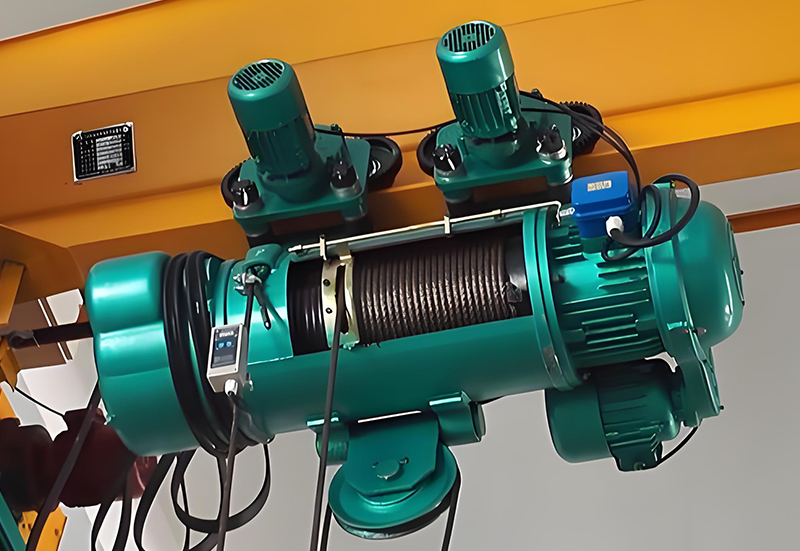
In the heavy lifting industry, we often talk about the massive steel structures—the beams, the runways, and the pillars—that define a facility’s layout. But the real work, the actual vertical movement of tons of material, happens within a singular, concentrated piece of machinery: the electric hoist.
If the crane structure is the skeleton of your material handling system, the electric hoist is the muscle. It is the component responsible for the safety of your load and the precision of your workflow. Whether you are running a small machining cell or managing a fleet of outdoor 【 Gantry Cranes】, choosing the right hoist is the difference between a seamless production line and a series of expensive bottlenecks.
This guide provides a technical and strategic deep dive into electric hoists, covering everything from the internal mechanics to the critical selection criteria for 2026 industrial environments.
1. What is an Electric Hoist?
An electric hoist is a motorized device designed to lift and lower heavy loads using a lifting medium—typically a metal chain or a steel wire rope. By converting electrical energy into high-torque mechanical force, these units allow a single operator to move several tons with the push of a button.
In most industrial setups, the hoist does not act alone. It is mounted onto a trolley that allows it to travel horizontally along a beam. This beam might be part of a localized jib crane or the main bridge of a massive rail-mounted system. For high-capacity outdoor lifting, such as in shipyards or steel yards, heavy-duty wire rope hoists are the standard lifting unit integrated into 【 Gantry Cranes】.
The Anatomy of the “Muscle”
To understand the reliability of a hoist, you have to look at its core components:
- The Motor: High-torque motors designed for intermittent “start-stop” cycles.
- The Gearbox: A precision-engineered reduction system that generates the torque needed to overcome gravity.
- The Braking System: The most critical safety feature. Modern hoists use electromagnetic or mechanical disc brakes that engage automatically the moment power is cut.
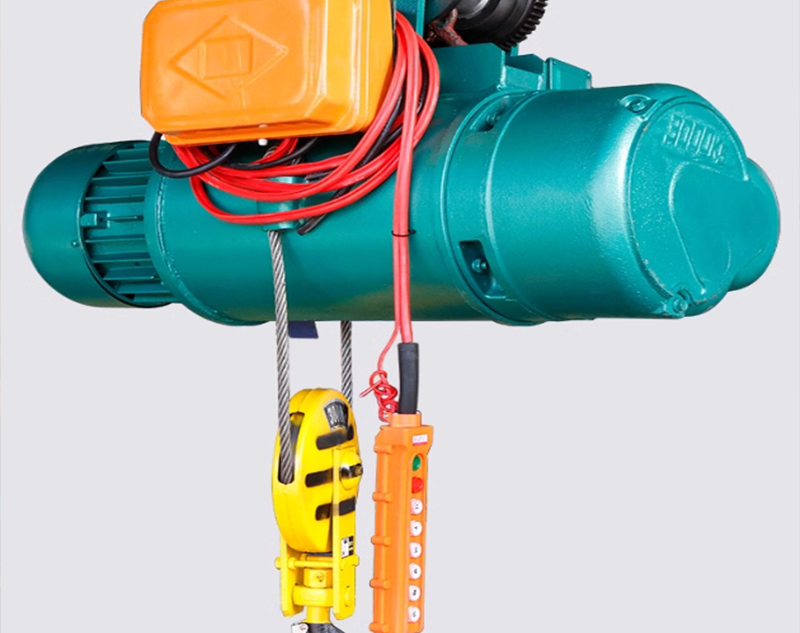
- The Controller: Usually a handheld pendant or a radio remote that governs speed and direction.
2. Electric Chain Hoists vs. Wire Rope Hoists

Weiyuan 1 Ton Remote Control Monorail Electric Hoist
The Weiyuan 1 Ton Remote Control Monorail Electric Hoist is designed for efficient material handling in workshops, warehouses, and light industrial environments. Equipped with wireless remote control and a monorail trolley system, it ensures precise load positioning, smooth travel, and safe lifting operations up to 1 ton.
View Product / Get QuoteThe most fundamental decision you will face is choosing between a chain and a wire rope medium. This choice dictates the crane’s capacity, its maintenance schedule, and its overall footprint.
Electric Chain Hoists
Chain hoists use a hardened steel load chain that passes over a sprocket. They are the go-to choice for capacities ranging from 125kg up to 5 tons.
- Why choose them? They provide “true vertical lift,” meaning the hook doesn’t drift sideways as it moves up. They are compact, easier to maintain, and significantly more cost-effective for workstation-level lifting.
- Best for: Jib cranes, light assembly lines, and maintenance bays.
Electric Wire Rope Hoists
Wire rope hoists use a galvanized steel cable that winds around a grooved drum. These are engineered for high-speed, high-capacity, and severe-duty applications.
- Why choose them? They are the industry standard for loads over 5 tons and for environments that require fast lifting speeds and long lifts (high lift height). They dissipate heat more effectively than chain hoists, making them ideal for high-duty cycles.
- Best for: Large bridge systems and heavy-duty 【 Gantry Cranes】 used in ports or precast concrete yards.
| Feature | Electric Chain Hoist | Electric Wire Rope Hoist |
| Common Capacity | 0.1t – 5t | 5t – 100t+ |
| Precision | Exceptional (No hook drift) | Moderate (Slight lateral movement) |
| Durability | High (Hardened chain) | High (Galvanized rope) |
| Maintenance | Simple/Low-cost | Moderate (Requires drum/rope care) |
3. The ROI of Powered Lifting: Beyond the Purchase Price
Investing in a high-quality electric hoist provides a measurable return on investment (ROI) by addressing three critical business metrics:
A. Ending the “Manual Labor” Bottleneck
Manual handling is slow and inconsistent. By providing a powered hoist, you ensure that the production pace is dictated by your schedule, not by the physical stamina of your workers. A hoist never gets tired in the eighth hour of a shift, ensuring that your output remains consistent from morning to night.
B. Drastic Reduction in Workplace Injuries (E-A-T Focus)
According to OSHA and global safety standards, back strains from improper lifting are the leading cause of lost workdays. An electric hoist removes 100% of the physical burden from the employee. From a financial perspective, the cost of a single workers’ compensation claim can often exceed the price of installing five high-quality hoists.
C. Precision Positioning and Product Safety
In industries like aerospace or mold-making, “close enough” isn’t an option. Modern hoists equipped with Variable Frequency Drives (VFDs) allow for “micro-positioning.” This allows the operator to lower a multi-ton load in 1mm increments, preventing expensive damage to machinery and materials.
4. Technical Selection: How to Specify the Right Hoist
Choosing a hoist based on the “cheapest price for the weight” is a recipe for premature equipment failure. You must evaluate the hoist through the lens of its Duty Cycle.
CMAA and HMI Classifications
Capacity is just a number; frequency is what breaks machinery.
- H2 (Light Duty): Maintenance shops where the hoist is used only a few times a day.
- H3 (Standard): General fabrication and machine shops with moderate lifting.
- H4 (Heavy Duty): Production lines where the hoist is working constantly at 50% or more of its capacity.
- H5 (Severe Duty): Foundries and steel mills where the hoist runs 24/7.
Pro Tip: If you are specifying a hoist for outdoor 【 Gantry Cranes】 in a high-volume logistics yard, always opt for at least an H4 or H5 rating. An underrated hoist in a severe environment will suffer from motor overheating and brake fade within months.
Lifting Speed and Height
Don’t just measure the weight; measure the time. If your hoist moves too slowly, it becomes a bottleneck. If it moves too fast without a VFD, it becomes a safety hazard due to load sway. Consider a Dual-Speed model: a fast speed for travel and a slow “creeping” speed for precise placement.
5. Advanced Features: The 2026 Industrial Standard
As we move deeper into the decade, “smart” features are becoming standard requirements for high-performance facilities.
- Variable Frequency Drives (VFDs): This technology eliminates the “jerk” of a standard motor start. It allows for smooth acceleration and deceleration, which drastically reduces mechanical wear on the gearbox and prevents the load from swinging like a pendulum.
- Overload Protection: Mechanical slip clutches or electronic sensors that instantly cut power if an operator tries to lift a load that exceeds the rated capacity.
- Usage Monitoring: Modern hoists can now track the total number of lifts and the cumulative weight handled. This data allows for Predictive Maintenance—performing service based on actual wear rather than just a calendar date.
- Wireless Radio Remotes: Moving away from wired pendants increases safety by allowing the operator to stand away from the load and choose the best vantage point.
6. Maintenance and Compliance: Protecting Your Asset
To maintain the “Expertise and Authoritativeness” (E-A-T) of your lifting operations, a rigorous inspection schedule is mandatory. A hoist is a long-term asset, but it requires consistent care to remain safe.
- Daily Pre-Shift Checks: Operators should visually inspect the chain/rope for nicks or frays and test the emergency stop button.
- Monthly Lubrication: Gearboxes and load chains require proper lubrication to prevent heat buildup and friction wear.
- Annual Load Testing: As per ASME B30.16 or CE standards, hoists should undergo an annual load test at 125% of their rated capacity to verify structural and braking integrity.
7. Industry Applications: Where They Excel
The versatility of the electric hoist allows it to serve almost every sector:
- Manufacturing: Loading raw materials into CNC mills and lathes.
- Logistics: Using a wire rope hoist on 【 Gantry Cranes】 to load containers or heavy crates onto flatbed trucks.
- Energy Sector: Maintenance of massive turbines and generators in power plants.
- Automotive: Pulling engines and transmissions for repair using workstation jib cranes.
- Steel Yards: Moving heavy coils and plates using high-duty cycle wire rope hoists.
Frequently Asked Questions (FAQ)
Q1: How long does an electric hoist typically last?
With a duty cycle that matches the workload and a solid preventative maintenance program, an industrial-grade electric hoist can reliably serve for 10 to 15 years. While the gearbox and frame are durable, the chain or wire rope may need replacement every 2-5 years depending on usage.
Q2: Can I use an electric hoist outdoors?
Yes, but you must specify a “Weather Package.” This includes NEMA 4/4X (IP66) electrical enclosures, anti-corrosive paint, and specialized covers to protect the motor and brake from rain, snow, and UV damage.
Q3: What is “True Vertical Lift”?
This is a feature of chain hoists and some specialized wire rope hoists. It means the hook travels straight up and down. In standard wire rope hoists, the hook may move slightly sideways as the rope winds along the length of the drum. True vertical lift is essential for high-precision assembly.
Q4: Is a wire rope hoist better than a chain hoist?
Not necessarily; it depends on the application. For loads under 5 tons and workstation lifting, a chain hoist is usually the better choice. For high-speed, high-capacity lifting over 10 tons, wire rope is the industry standard.
Q5: Can electric hoists be used on all crane types?
Yes. Electric hoists are the “lifting engine” for Jib Cranes, Bridge Cranes, and 【 Gantry Cranes】. They are highly adaptable and can be lug-mounted, hook-mounted, or integrated into a motorized trolley.