


What is the Most Durable Overhead Crane Used For?
In the world of heavy industry, equipment failure is not an option. When you are moving multi-ton loads of steel, concrete, or critical machinery, the term “durability” takes on a profound meaning. It’s not just about longevity; it’s about uncompromising reliability, structural integrity, and the ability to perform under the most punishing conditions imaginable. This leads to a critical question for any operations manager or engineer: what is the most durable type of overhead crane, and what demanding applications is it built for?
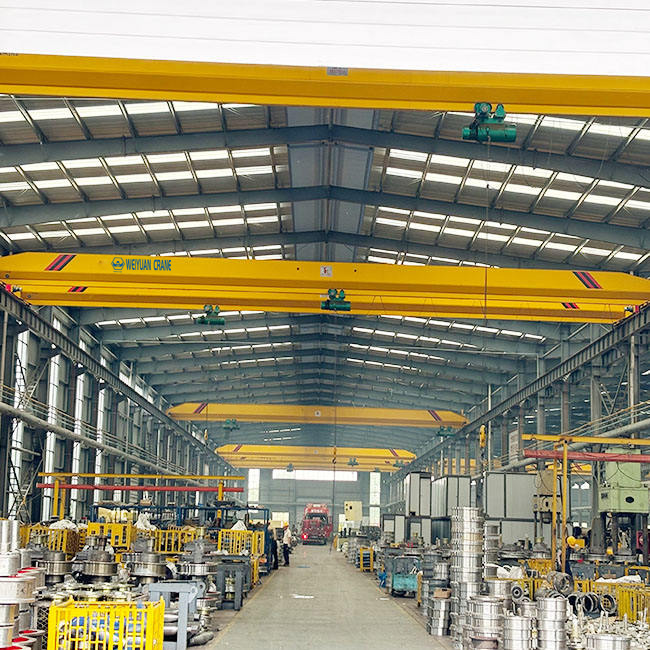
While many types of cranes offer impressive performance, the title of “most durable” is typically awarded to the Class E or Class F double-girder electric overhead traveling (EOT) crane. These are not your standard workshop cranes. They are highly engineered, custom-built machines designed for severe or continuous severe service in the world’s harshest industrial environments.
This guide will explore the specific features that make these cranes so robust and dive into the extreme applications where their durability is not just a benefit, but a fundamental requirement for operational survival.
Deconstructing Durability: What Makes a Crane “Severe-Duty”?
Durability in an overhead crane is not a single feature but a holistic engineering philosophy. It is the sum of many reinforced, upgraded, and specialized components all working in unison. A crane’s durability is officially defined by its service classification, with CMAA (Crane Manufacturers Association of America) Class E (Severe Service) and Class F (Continuous Severe Service) representing the pinnacle of robust design.
Here’s what sets these machines apart:
- Double-Girder Box Girder Design: The foundation of their strength is a double-girder bridge made from thick, full-length welded steel plates, forming a rigid box structure. This design provides maximum resistance to twisting and bending forces (torsional rigidity) under heavy, off-center loads.
- Heavy-Duty Hoist and Trolley: The hoist is a high-speed, high-capacity wire rope unit, often with redundant braking systems and a motor specifically designed for high heat dissipation. The trolley frame is exceptionally rigid to handle the dynamic forces of rapid acceleration and deceleration.
- Hardened Steel Wheels and Rails: The wheels on the end trucks and trolley are forged from hardened steel to withstand the immense pressure and continuous wear of moving along the runway and bridge rails.
- Robust Electrification Systems: Power is delivered through heavy-duty conductor bars or motorized cable reels designed for high speeds and continuous use, rather than the simple festoon cables found on lighter cranes.
- Advanced Control and Safety Systems: These cranes are equipped with state-of-the-art Variable Frequency Drives (VFDs) for smooth control, anti-sway technology, collision avoidance sensors, and often an air-conditioned, impact-resistant operator cab.
The Top 5 Applications Demanding the Most Durable Overhead Cranes
Severe-duty cranes are deployed where the cost of downtime is catastrophic and the operating environment is actively hostile to machinery.
1. Steel Mills and Foundries
The Environment: This is arguably the most brutal environment for any piece of industrial equipment. It’s a world of extreme heat, heavy shock loads, and an atmosphere filled with abrasive dust and metallic particles. Cranes here operate 24/7, moving everything from molten metal to finished steel coils.
The Application (Hot Metal “Ladle” Cranes): The most demanding application is handling ladles filled with molten steel or iron, where temperatures can exceed 2,900°F (1,600°C). A crane failure here is unthinkable. These Class F cranes feature:
- Extreme Heat Shielding: Reflective paint and specialized heat shields protect the girders and trolley from intense radiant heat.
- Redundant Systems: They have multiple, independent braking systems, dual hoist motors, and often redundant wire ropes.
- Laminated Ladle Hooks: Instead of a single forged hook, they use hooks made from multiple layers of steel plate. If one layer cracks, the others can still safely hold the load.
- Emergency Braking on the Drum: A critical safety feature that acts directly on the rope drum in case of a primary gearbox or motor failure.
2. Scrap and Recycling Yards
The Environment: Scrap yards are chaotic, high-impact environments. Cranes here are subjected to constant shock loads, swinging payloads, and the abrasive, dusty conditions of shredded metal and debris.
The Application (Scrap Handling Cranes): These cranes are typically Class E or F and are fitted with large electromagnets or multi-tined grapples. They run at high speeds, grabbing tons of jagged scrap metal and dumping it into shredders or rail cars. Their durability comes from:
- High-Strength Magnet and Grapple Attachments: The connections and power delivery systems for these attachments are built for extreme duty.
- Impact-Resistant Construction: The entire crane structure is designed to absorb the shock of magnets dropping onto piles of scrap and the violent swinging of the load. Similar robust designs are often needed for large outdoor Gantry Cranes used in port and rail intermodal applications.
- Operator Cabs: A protected, enclosed cab is essential to shield the operator from the hazardous environment and provide a clear view of operations.
3. Precast Concrete and Fabrication Yards
The Environment: These facilities, often outdoors, involve lifting massive, heavy, and often awkward concrete structures like bridge segments, wall panels, and pipes. The cranes are exposed to weather, UV radiation, and the abrasive nature of concrete dust.
The Application (Yard Cranes): While many outdoor yards use large Gantry Cranes, facilities that have an overhead runway structure rely on severe-duty bridge cranes. Their key durability features include:
- Full Weatherization: This includes corrosion-resistant epoxy paint, sealed motors and electronics (NEMA 4X), and protective “doghouse” covers over the hoist and motors.
- High Torsional Rigidity: Lifting long, heavy concrete beams with multiple pick points creates complex forces on the crane. The rigid box girder design prevents the crane from twisting under these loads.
- Synchronized Hoists: Often, two hoists on the same bridge (or two separate cranes) must work in tandem to lift a long segment. Their control systems must be perfectly synchronized to prevent dangerous load imbalances.
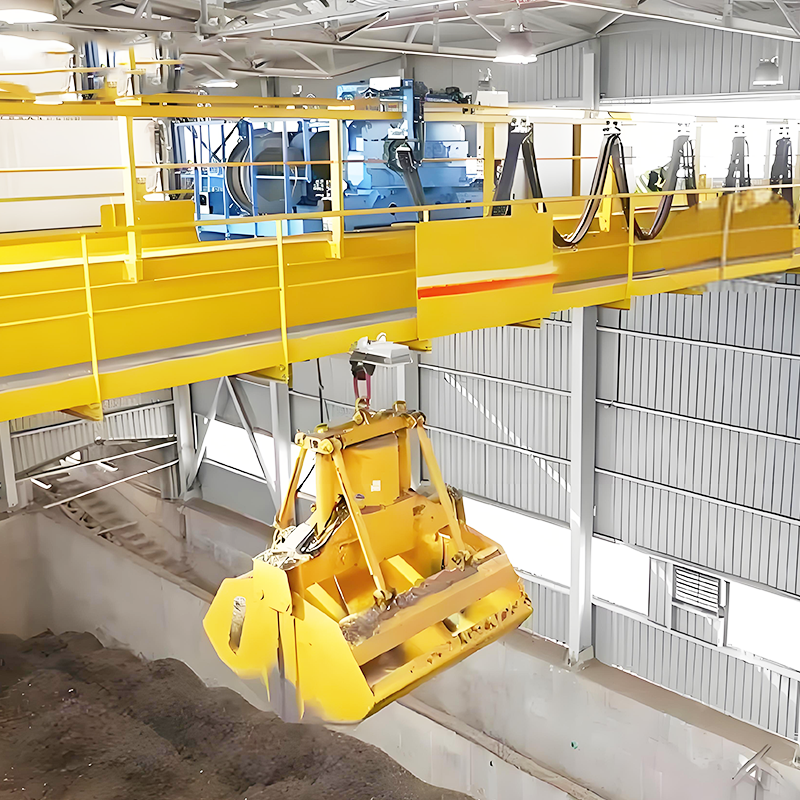
Weiyuan QZ Type Grab Crane for Steel Scrap | 30 Ton, Heavy-Duty, High-Efficiency
The Weiyuan QZ Type 30 Ton Grab Crane is engineered specifically for demanding steel scrap handling operations. Built on a heavy-duty double-girder platform with a high-strength orange peel grab, it delivers reliable performance and high efficiency in continuous scrap yard and foundry material handling environments. :contentReference
View Product / Get Quote4. Shipbuilding and Heavy Fabrication
The Environment: Shipyards and heavy fabrication shops build colossal structures, moving immense prefabricated modules that can weigh hundreds of tons. The scale is massive, and precision is paramount.
The Application (Assembly Cranes): These double-girder cranes are responsible for lifting and precisely positioning huge sections of a ship’s hull or other large assemblies. Durability is key because:
- Extreme Capacities: These are some of the highest-capacity indoor bridge cranes in the world. Every component, from the wire rope to the girder welds, is engineered for immense stress.
- Precision Control is a Safety Imperative: When positioning a 150-ton module, smooth, VFD-driven control is essential. Any sudden jerking could destroy the module and endanger dozens of workers. Large outdoor shipbuilding facilities often rely on enormous Gantry Cranes, which share the same principles of extreme capacity and precision control.
5. Automated High-Volume Warehousing (Coil and Paper Roll Handling)
The Environment: While not as gritty as a foundry, automated warehouses are relentless. Cranes here may run nearly 24/7, executing thousands of pick-and-place cycles per day with minimal human intervention.
The Application (Automated Stacker Cranes): These Class F cranes are essentially giant robots. They handle heavy, concentrated loads like 30-ton steel coils or massive paper rolls. Their durability is focused on reliability and precision for continuous operation.
- High-Cycle Components: Brakes, motors, and wheels are designed for millions of cycles, not thousands.
- Automation and Positioning Systems: They use advanced laser or RFID positioning systems to place loads with millimeter accuracy, cycle after cycle.
- Predictive Maintenance: They are fitted with sensors that monitor vibration, temperature, and performance, alerting maintenance teams to potential failures before they happen.