


Maximizing Efficiency with Bridge Cranes: A Complete Guide for Industrial Applications
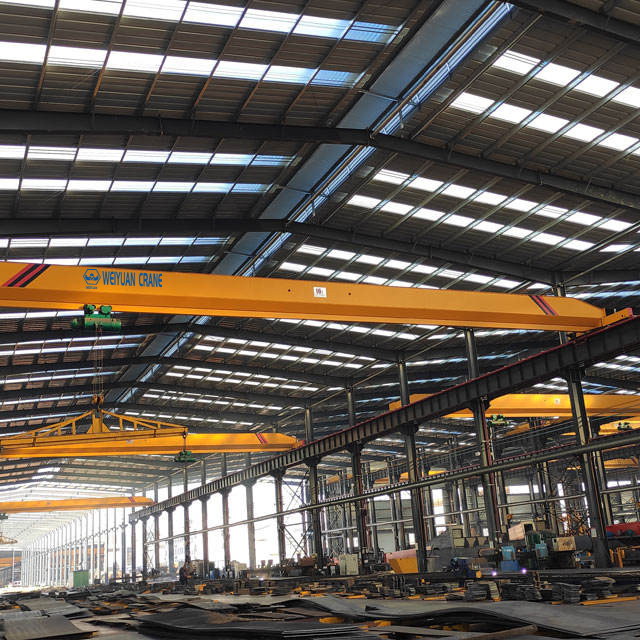
In any large-scale industrial operation, from steel fabrication to aerospace manufacturing, the movement of heavy materials dictates the pace of production. Inefficient material handling creates bottlenecks that ripple through your entire workflow, causing delays, increasing costs, and compromising worker safety. While various lifting solutions exist, the overhead bridge crane remains the undisputed champion for maximizing efficiency over large operational areas.
A properly specified bridge crane is more than just a lifting device; it is a strategic asset that transforms your facility’s logistics. It provides unrestricted, wall-to-wall coverage, eliminating the floor congestion caused by forklifts and other ground-based equipment. This guide offers a comprehensive look at how bridge cranes function, the different configurations available, and how you can leverage them to create a safer, faster, and more profitable operation.
What is a Bridge Crane?
A bridge crane, also known as an overhead traveling crane, is a material handling system that runs on an elevated runway supported by the building’s structure. It consists of three primary components:
- The Bridge: A horizontal girder (or pair of girders) that spans the width of the work area.
- The Hoist and Trolley: The hoist is the lifting mechanism (using wire rope or chain), and the trolley carries it horizontally along the bridge.
- The Runway: A set of parallel rails, supported by the building’s columns, on which the entire bridge travels.
This three-axis movement (X, Y, and Z) gives the crane complete coverage over a large rectangular area, allowing a single operator to safely lift and transport massive loads from one end of a facility to the other.
Single Girder vs. Double Girder: The Core Design Choice
The first major decision when specifying a bridge crane is choosing between a single or double girder configuration. This choice directly impacts the crane’s capacity, headroom, and overall cost.
Single Girder Bridge Cranes
As the name implies, this design uses one main girder to span the runway. The trolley and hoist are “underhung,” meaning they run along the bottom flange of the girder.
- Key Advantages: Single girder cranes are lighter, which places less stress on the building’s foundation and support columns. Their simpler design makes them more cost-effective to purchase and faster to install. They are the ideal choice for most light-to-moderate service applications.
- Best For: Capacities typically up to 20 tons and spans up to 60 feet. They are perfect for general manufacturing, maintenance bays, and assembly lines.
Double Girder Bridge Cranes
This heavy-duty configuration uses two main girders set parallel to each other. The trolley and hoist run on rails mounted to the top of the girders, a “top running” design.
- Key Advantages: The dual-girder design provides exceptional strength and rigidity, enabling much higher lifting capacities and wider spans. It also offers greater hook height because the hoist sits between the girders rather than below them. For high-speed, high-frequency use, this is the superior configuration.
- Best For: Heavy-duty applications with capacities from 20 tons to over 200 tons. They are the standard for steel mills, large machine shops, and precast concrete plants. Large indoor Gantry Cranes often share similar double-girder design principles for heavy loads.
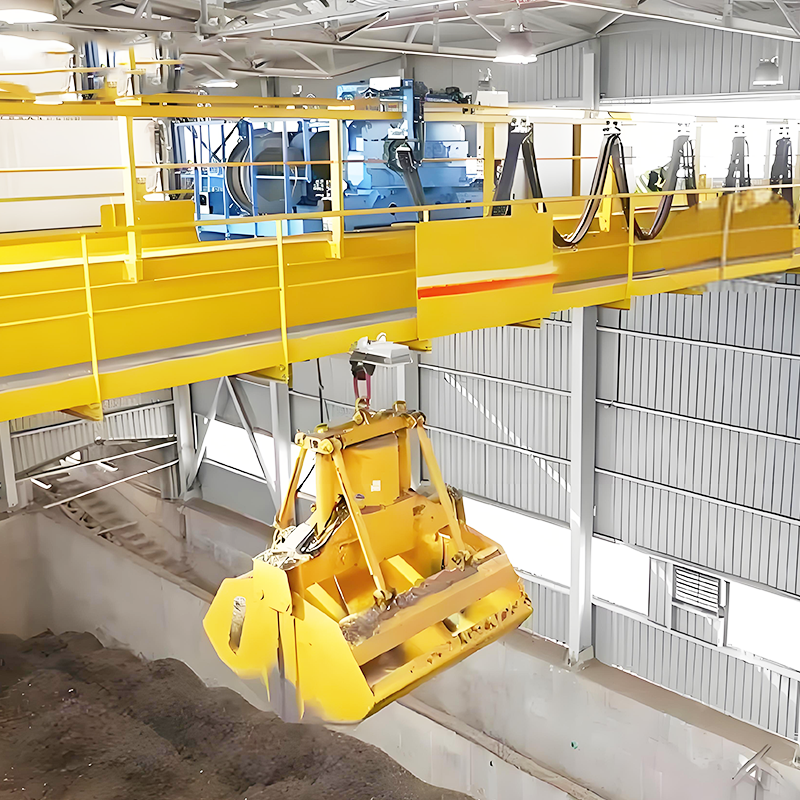
Weiyuan QZ Type Grab Crane for Steel Scrap | 30 Ton, Heavy-Duty, High-Efficiency
The Weiyuan QZ Type 30 Ton Grab Crane is engineered specifically for demanding steel scrap handling operations. Built on a heavy-duty double-girder platform with a high-strength orange peel grab, it delivers reliable performance and high efficiency in continuous scrap yard and foundry material handling environments. :contentReference
View Product / Get QuoteMaximizing Operational Efficiency with Bridge Cranes
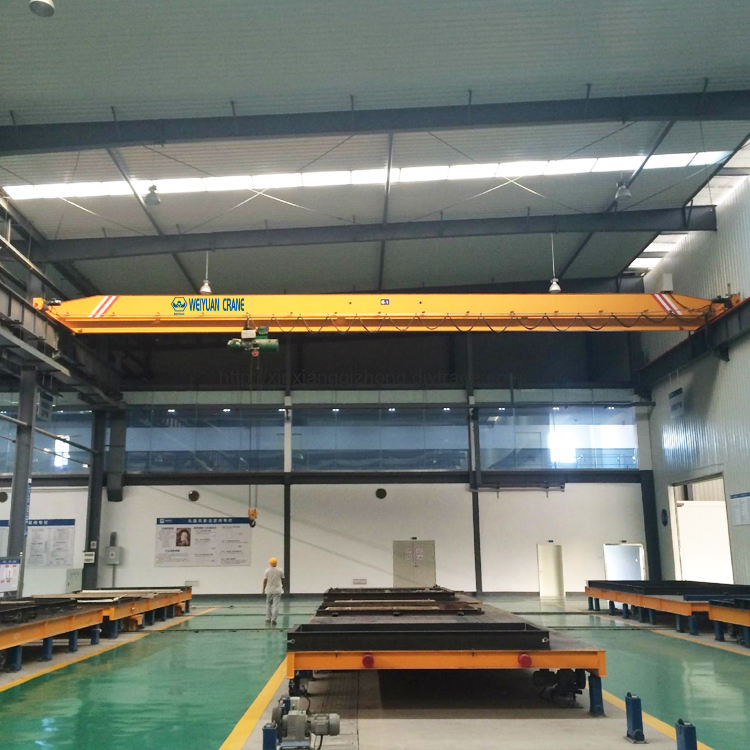
A bridge crane’s primary benefit is its ability to streamline workflow and eliminate logistical friction.
1. Unlocking Valuable Floor Space
Forklifts and other ground-based vehicles require wide, designated pathways to operate, consuming a significant amount of valuable floor space. A bridge crane moves materials overhead, completely freeing up the factory floor. This allows you to add more production machinery, reduce congestion, and create a safer, more open work environment.
2. Boosting Production Speed and Throughput
In a facility without an overhead crane, moving a heavy component might require multiple workers and a slow-moving forklift. A bridge crane allows a single operator to lift and transport a multi-ton load in a fraction of the time. By reducing travel time and eliminating the “waiting game” for material transport, you can significantly increase your production cycle speed.
3. Improving Workplace Safety
Manual lifting and ground-level vehicle traffic are two of the biggest sources of workplace accidents. Bridge cranes remove operators from the immediate vicinity of the load, allowing them to control movement from a safe distance via a radio remote or from within a protected operator cab. Modern cranes are equipped with anti-sway technology, overload limiters, and redundant braking systems, making them an exceptionally safe way to handle heavy materials.
4. Precision Handling of Heavy and Delicate Loads
Modern bridge cranes, equipped with Variable Frequency Drives (VFDs), offer incredibly precise control. VFDs allow for smooth, variable-speed operation, eliminating the sudden jerks that can damage sensitive equipment or cause a load to swing dangerously. This level of precision is critical when positioning heavy molds, assembling large machinery, or loading delicate aerospace components.
Key Components and Technological Advancements
Understanding the technology that powers a modern bridge crane helps you specify a system that meets your performance goals.
- Variable Frequency Drives (VFDs): This is perhaps the most important technological upgrade for any crane. VFDs provide total control over motor speed, enabling soft starts, micro-positioning capabilities, and reduced mechanical wear on the crane’s components.
- Radio Remote Controls: These have largely replaced dangling pendant controls. A wireless remote allows the operator to move freely, choose the best vantage point for visibility, and stay clear of the load path.
- Anti-Sway Technology: Sophisticated software algorithms automatically dampen load swing by making micro-adjustments to the bridge and trolley acceleration. This allows for faster, safer load transport.
- Collision Avoidance Systems: Using lasers or sensors, these systems prevent the crane from colliding with other cranes on the same runway or with fixed obstacles in the facility.
When to Consider Alternative Lifting Systems
While bridge cranes are incredibly versatile, they are not always the right solution.
- For Localized Lifting: If you only need to service a single workstation, a full bridge crane is overkill. A smaller, more cost-effective jib crane is the better choice for localized, repetitive lifting.
- For Outdoor or Temporary Needs: Bridge cranes rely on a building’s support structure. If you need to lift materials in an outdoor yard or at a temporary construction site, a Gantry Crane is the appropriate solution. Gantry Cranes are self-supporting structures on legs that run on ground-level tracks, requiring no building support.
- For Light, Repetitive Tasks: For moving small boxes or parts along a production line, a lighter-duty workstation crane or monorail system may be more efficient and cost-effective than a large process crane.
In many large facilities, an efficient material handling strategy involves a tiered system: large bridge or Gantry Cranes for heavy, facility-wide movements, and smaller jib or workstation cranes for localized tasks.
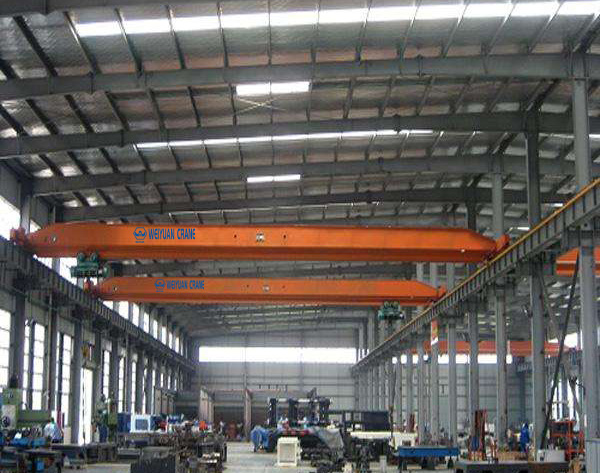
The Specification and Installation Process
Procuring a bridge crane is a major capital investment that requires careful planning and engineering expertise.
- Needs Analysis: The process begins with a thorough analysis of your lifting needs: maximum capacity, required span, lifting height, and operational frequency (duty cycle).
- Structural Engineering Review: A licensed structural engineer must analyze your building to ensure its columns and foundations can support the loads imposed by the crane runway. This is a critical safety and compliance step.
- Crane Design and Quoting: Crane manufacturers will use your specifications to design a system, selecting the appropriate girders, hoist, end trucks, and control systems.
- Fabrication and Installation: The crane components are fabricated and then installed by a team of certified technicians. The installation of the runway and the erection of the crane itself is a complex process that demands specialized expertise.
- Load Testing and Commissioning: After installation, the crane undergoes rigorous load testing (typically at 125% of its rated capacity) to verify its safety and performance. Only after passing these tests is the crane commissioned for operational use.