


5 Ways Gantry Cranes Supercharge Workplace Productivity
By the Equipment Editorial Team · 12 min read · Updated March 2026
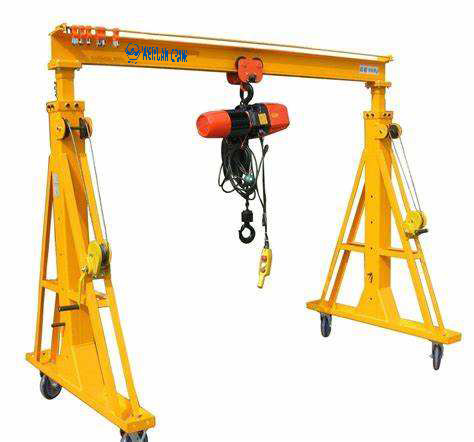
When floor space is tight, deadlines are unforgiving, and manual handling risks injury, smart operations managers turn to one proven solution: the gantry crane. These freestanding overhead lifting systems have transformed manufacturing floors, warehouses, and construction sites worldwide — and for good reason.
40%
Reduction in manual lifting injuries with overhead lifting equipment
3×
Faster average load cycle times vs. forklift-dependent workflows
60%
Less floor space consumed compared to traditional crane installations
From small fabrication shops handling a few hundred kilograms to shipyards moving structural steel beams weighing many tonnes, gantry cranes serve an extraordinarily wide range of industries. Yet many facility managers still underestimate the full scope of productivity gains these systems deliver. This guide breaks down five concrete, measurable ways a gantry crane investment pays for itself — and keeps paying.
01
Dramatically Faster Load Cycles and Throughput
Speed is the language of productivity, and gantry cranes speak it fluently. Unlike forklifts, which must navigate aisles, reposition, and travel long distances between pick-up and drop-off points, a gantry crane moves in a straight overhead path. The result is a dramatically shorter cycle time for every single lift.
In a typical mid-sized fabrication facility, a forklift might take three to five minutes to complete a single load transfer — including maneuvering time, clearance checks, and repositioning. A well-positioned gantry crane reduces that same operation to under ninety seconds. Over the course of a shift, those saved minutes compound into significant throughput gains.
Additionally, gantry systems can be equipped with motorized trolleys, variable-speed hoists, and remote pendant controls, giving operators precise, responsive control at every stage of the lift. The reduction in dwell time at each station directly translates into more jobs completed per shift.
Key Throughput Advantages
- Straight-line overhead travel eliminates floor-level navigation delays
- Motorized hoist options reduce manual positioning effort
- No need to wait for aisle clearance between lifts
- Single operator can manage loads that previously required two or three workers
02
Reducing Workplace Injuries and Costly Downtime
Workplace injuries are productivity killers in the most literal sense. Every lost-time incident means a skilled worker off the floor, potential regulatory scrutiny, workers’ compensation costs, and the hidden expense of retraining replacement staff. Manual material handling — lifting, carrying, and lowering heavy loads — consistently ranks among the leading causes of workplace musculoskeletal injuries across industries.
Gantry cranes remove the human body from the equation when it matters most. By mechanizing the lift-and-transfer phase, they eliminate the repetitive strain and acute injury risk associated with manual handling. OSHA data consistently shows that facilities which implement overhead mechanical lifting systems see measurable reductions in recordable incident rates, particularly for back injuries and shoulder strains.
Beyond the human cost, there is a direct financial impact. A single lost-time injury can cost a business tens of thousands of dollars when indirect costs such as investigation time, temporary staffing, reduced morale, and productivity loss are factored in. A gantry crane often pays back its purchase price in avoided injury costs alone within its first few years of service.
03
Flexible Deployment Across Multiple Work Zones
One of the most underappreciated advantages of a gantry crane over a fixed overhead bridge crane is its inherent portability. Portable and adjustable-height gantry systems can be repositioned throughout a facility in minutes, without any structural modification to the building. This flexibility is a genuine productivity multiplier.
Consider a facility that processes large fabricated components. In the morning, the crane may be needed at the receiving dock to unload incoming raw material. By midday, the same unit can be wheeled to the assembly bay. In the afternoon, it serves the finishing and inspection station. One piece of capital equipment is doing the work of three fixed installations — each of which would require engineering permits, structural surveys, and significant installation costs.
Even semi-gantry configurations — where one leg rides a floor-mounted rail and the other leg travels freely — offer tremendous flexibility in facilities where one side of the work area is bounded by an existing building wall or column row. This adaptability makes gantry cranes particularly well-suited to growing businesses whose production layouts evolve over time.
Where Gantry Cranes Flex Their Mobility
- Outdoor maintenance yards and precast concrete staging areas
- Shipbuilding and marine repair facilities with shifting work zones
- Aerospace MRO hangars requiring ad-hoc heavy component positioning
- Contract manufacturers handling a rotating variety of product types
04
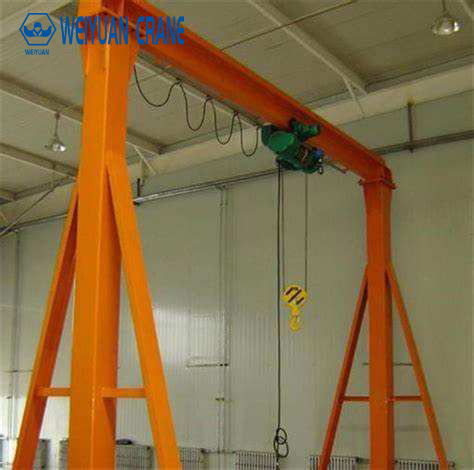
Lower Operational Costs vs. Comparable Lifting Solutions
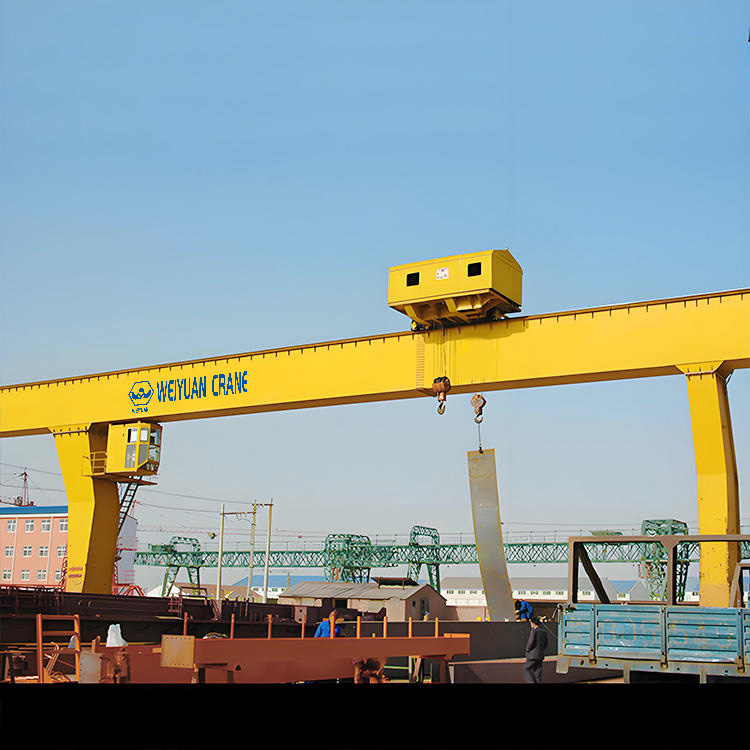
Weiyuan L-Shape Leg Walk Gantry Crane | Manufacturer Direct, Enhanced Mobility
The Weiyuan L-Shape Leg Walk Gantry Crane is a high-performance single-girder gantry crane with a distinctive L-shaped leg design that offers superior clearance for long and oversized loads, and smooth “walk” travel on ground rails — direct from the manufacturer for competitive pricing and reliable quality. :contentReference
View Product / Get QuoteCapital equipment decisions always come down to total cost of ownership, and gantry cranes compare favourably against nearly every alternative when that full picture is examined. Consider the ongoing costs of maintaining a forklift fleet: licensing requirements, regular certifications, fuel or battery charging infrastructure, tire replacement, hydraulic system maintenance, and operator insurance. These costs add up substantially over a five- to ten-year ownership cycle.
A quality steel or aluminium gantry crane, by contrast, has relatively simple mechanics. The hoist and trolley assembly are the primary moving components, and reputable manufacturers design these for high cycle longevity. Maintenance typically involves periodic inspection of the structural welds, hoist chain or wire rope, load blocks, and end stops — tasks that an in-house maintenance technician can perform without specialized service contracts.
Energy costs also favor the gantry crane. Electric chain hoists draw a fraction of the energy consumed by an internal combustion forklift and even compare favorably against electric forklifts on a per-lift-cycle basis, since the hoist only draws power during the actual lift — not during travel or idle time.
05
Streamlining Workflows and Empowering Lean Operations
Lean manufacturing principles are built on the relentless elimination of waste — wasted time, wasted motion, wasted effort. A properly integrated gantry crane supports every one of those goals simultaneously. When workers no longer need to wait for a forklift to become available, route requests through a vehicle dispatcher, or manually reposition heavy components with awkward tooling, the overall flow of work becomes smoother and more predictable.
Predictability is underrated in manufacturing productivity. When a production supervisor knows with confidence that a specific workstation will have full lifting capability available on demand, they can schedule more tightly, reduce work-in-process inventory buffers, and compress lead times. These are not marginal gains — in high-mix, low-volume production environments, reducing lead time variability often translates directly into the ability to take on more customer orders.
Modern gantry systems can also be integrated with weight management systems, anti-sway controls, and digital load monitoring, all of which contribute to more consistent, documented lifting operations. In regulated industries such as aerospace, defence manufacturing, and pharmaceutical production, this auditability has compliance value beyond its pure operational benefit.
Lean Productivity Wins from Gantry Integration
- Eliminates waiting waste caused by shared forklift resources
- Reduces motion waste through direct overhead transfer paths
- Supports takt time adherence by making lifts predictable and fast
- Digital load monitoring enables process documentation and quality traceability
“In material handling, the most expensive equipment is often the equipment you don’t have — because the cost shows up in overtime, injuries, and missed deadlines.”
Choosing the Right Gantry Crane for Your Operation
Not all gantry cranes are created equal, and selecting the right configuration for your specific workload is critical to realising the productivity gains described above. The key specification decisions revolve around three variables: span (the distance between legs), height under the beam, and rated capacity.
For indoor applications with stable floor surfaces, fixed-height aluminium gantry cranes offer excellent strength-to-weight ratios and are ideal for loads up to approximately two tonnes. For heavier industrial applications — think structural steel fabrication, heavy press tooling, or large diesel engine overhaul — a fabricated steel adjustable-height gantry with a motorized trolley is the more appropriate choice.
Outdoor applications introduce additional considerations: wind load ratings, corrosion-resistant coatings, and wheel locking mechanisms for operation on surfaces that may be uneven or sloped. Always ensure that any outdoor gantry specification includes adequate margin on the capacity rating, since outdoor lifts are frequently more dynamic and variable than controlled indoor environments.
For facilities considering a permanent installation, semi-gantry cranes — which combine a floor-level rail on one side with a freestanding leg on the other — provide fixed-path reliability while preserving aisle accessibility. Bridge crane systems provide similar coverage but require building-integrated runway beams, which represents a significantly higher capital investment and longer installation timeline.
Frequently Asked Questions
What industries benefit most from gantry cranes?
Gantry cranes deliver measurable productivity gains across a wide range of sectors. Manufacturing and metal fabrication operations benefit from faster load cycles and reduced forklift dependency. Construction and civil engineering sites use portable gantry systems for positioning precast concrete elements, structural steel, and heavy machinery. Aerospace and defence facilities rely on adjustable-height gantry cranes for engine and airframe component positioning, where precise control and documentation are critical. Shipbuilding, automotive production, utilities maintenance, and general warehousing are also major application areas. How much weight can a gantry crane typically lift?
Rated capacities vary enormously depending on the design and intended application. Portable aluminium gantry cranes are commonly available in capacities from 0.5 tonnes up to around 5 tonnes. Fabricated steel gantry cranes for heavier industrial use can be engineered for 10, 20, or even 50 tonnes and beyond. It is critical to always operate within the manufacturer’s rated working load limit and to factor in the weight of any lifting attachments — spreader bars, slings, shackles — which count toward the total load on the hoist and beam. Do gantry cranes require a building permit or structural inspection?
For portable, freestanding gantry cranes that are not anchored to the building structure, a building permit is typically not required. However, you should always verify local regulations and jurisdiction-specific requirements, as these vary. Any overhead lifting equipment in a workplace is subject to OSHA (in the United States) or equivalent national safety regulations, which mandate periodic inspection and load testing. It is best practice to involve a qualified rigging engineer when deploying heavier systems, even if a formal permit is not legally required. How does a gantry crane compare to a jib crane for productivity?
The right choice depends on the geometry of your workflow. A jib crane excels at repetitive lifts within a fixed circular work zone — it is ideal for machine loading and unloading, for example. A gantry crane, by contrast, offers a full rectangular coverage footprint across its entire span, and the portable versions can be repositioned as workflow demands change. For facilities handling large or irregularly shaped loads across a broad work area, the gantry system typically delivers superior coverage and flexibility. Many facilities use both types in a complementary arrangement. What maintenance does a gantry crane require to stay productive?
Regular maintenance is straightforward and mostly preventive. You should inspect the structural welds, bolted connections, and beam condition at least annually — or more frequently under heavy usage. The hoist chain or wire rope requires periodic lubrication and inspection for wear, kinks, or elongation. Load blocks, hooks, and shackles should be checked before each shift for deformation or cracks. Wheel assemblies on portable systems need lubrication and periodic bearing checks. Keeping a documented inspection log is not just good practice — it is a regulatory requirement in most jurisdictions and provides valuable evidence of due diligence in the event of an incident. Can a gantry crane be used outdoors?
Yes, many gantry cranes are specifically designed or rated for outdoor use. Key considerations include corrosion-resistant coatings or galvanized components, windage load allowances if the crane will be used in open or elevated locations, and wheel brake or locking mechanisms to prevent movement on slopes or in wind conditions. If outdoor operations involve significantly variable surfaces or gradients, ground conditions must be assessed to ensure stability during lifts. Always derate capacity accordingly for dynamic outdoor lifts where load swing or wind interference is possible.
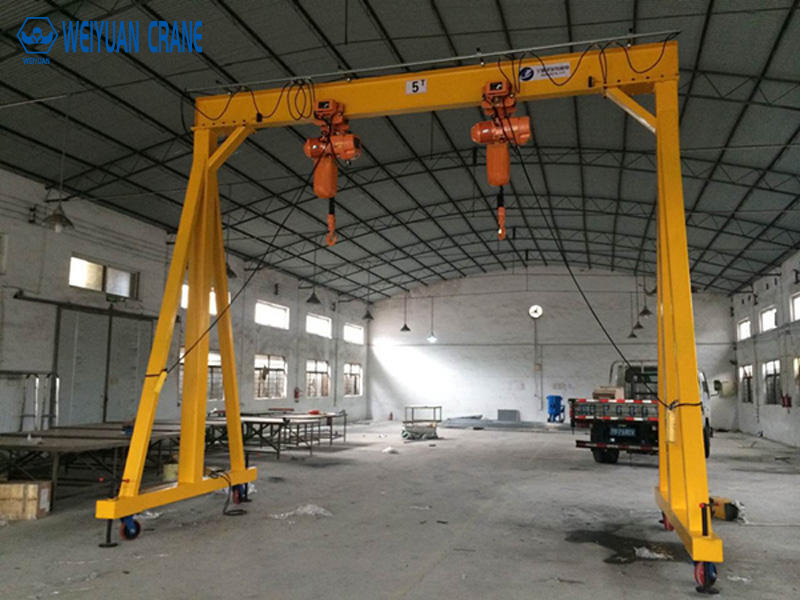
Ready to Lift Your Productivity?
Evaluating gantry crane options for your facility? Consult a qualified rigging specialist who can match the right span, capacity, and configuration to your specific workflow requirements.