


Electric Hoists vs. Pneumatic Hoists: Which One Fits Your Needs?
Selecting the right material handling equipment dictates the safety and efficiency of your entire operation. When you need to lift heavy loads repeatedly, manual chain blocks simply cannot keep up with production demands. You eventually face a critical choice between two powered options: an electric system or an air-powered system.
Both technologies offer incredible lifting power, but they operate on entirely different mechanical principles. Choosing the wrong system can lead to costly maintenance issues, workflow bottlenecks, or even serious safety hazards. You must match the equipment precisely to your facility’s environment and daily operational requirements.
This comprehensive guide will break down the differences between these two popular lifting solutions. We will explore the unique advantages and disadvantages of each technology. By the end of this article, you will understand exactly which system fits your operational needs and provides the best return on investment.
Understanding the Core Technologies
Before diving into a direct comparison, you must understand how each system generates its lifting power. The power source fundamentally changes how the equipment performs under stress, how it responds to the operator, and how it survives in different environments.
What Drives an Electric Hoist?
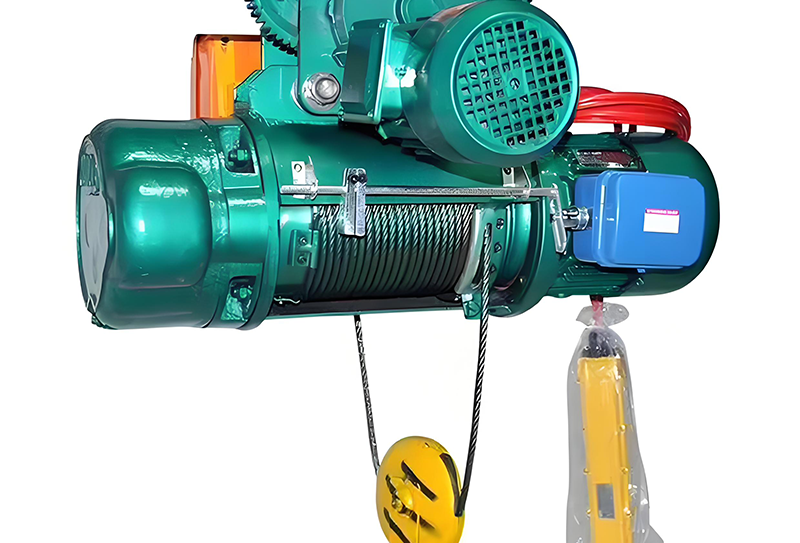
An electric hoist relies on an internal electric motor to drive a complex gear mechanism. This motor draws power from your facility’s electrical grid, usually requiring a standard 115V, 230V, or heavy-duty 460V three-phase connection. The motor turns a geared shaft, which then rotates a grooved drum to pull up a wire rope or turns a sprocket to lift a heavy metal chain.
These systems use internal limit switches, magnetic brakes, and sophisticated electronic controllers. Operators typically control them using a wired pendant station or a wireless radio remote. Because they rely on electricity, their performance is incredibly consistent, provided the power grid remains stable.
What Drives a Pneumatic Hoist?
A pneumatic hoist, commonly called an air hoist, does not use electricity. Instead, it relies on compressed air to generate mechanical motion. These systems connect directly to your facility’s industrial air compressor system via heavy-duty hoses.
The compressed air flows into a rotary vane or piston motor inside the unit. As the highly pressurized air expands, it forces the internal components to turn, generating massive torque. This mechanical energy transfers through a gear train to lift the chain or wire rope. Because they lack electronic components, they are entirely mechanical devices driven purely by fluid dynamics.
The Advantages of Electric Lifting Systems

Weiyuan 1 Ton Remote Control Monorail Electric Hoist
The Weiyuan 1 Ton Remote Control Monorail Electric Hoist is designed for efficient material handling in workshops, warehouses, and light industrial environments. Equipped with wireless remote control and a monorail trolley system, it ensures precise load positioning, smooth travel, and safe lifting operations up to 1 ton.
View Product / Get QuoteElectric lifting systems dominate the material handling industry for several excellent reasons. They offer a blend of consistency, technological integration, and cost-effectiveness that appeals to most standard manufacturing environments.
Unmatched Consistency and Speed
When you press the button on an electric hoist, it delivers immediate, predictable power. The lifting speed remains constant regardless of minor fluctuations in the load weight. This predictability allows operators to establish a rhythmic workflow, knowing exactly how long each lifting cycle will take.
Furthermore, these systems generally offer faster lifting speeds than their pneumatic counterparts. For high-volume assembly lines where seconds matter, this speed advantage translates directly to higher daily production numbers and increased revenue.
Advanced Technological Features
Because they run on electricity, these systems easily integrate with advanced digital technologies. Many modern units feature variable frequency drives (VFDs). A VFD allows the operator to control the lifting speed dynamically, starting slowly to prevent load swing and accelerating once the load clears the floor.
You can also equip them with digital load displays, automated cycle counters, and complex overload protection sensors. This level of technological integration gives facility managers valuable data regarding equipment usage and maintenance needs.
Lower Operating Costs
Electricity is generally cheaper to generate and distribute than compressed air. Industrial air compressors consume massive amounts of power to maintain pressure, and leaks in the air lines waste a significant portion of that energy. Electric motors simply draw the exact amount of power they need during the actual lift. Over a ten-year lifespan, the energy savings heavily favor electric models.
The Disadvantages of Electric Systems
Despite their popularity, electric models are not perfect for every situation. They possess specific vulnerabilities that make them unsuitable for certain extreme environments.
Susceptibility to Overheating
Electric motors generate heat. If an operator uses the equipment continuously without allowing the motor to cool down, the internal components will overheat. The system’s thermal overload protection will eventually trip, shutting down the equipment until it reaches a safe temperature. This downtime can cause severe bottlenecks in operations that require constant, non-stop lifting.
Environmental Vulnerabilities
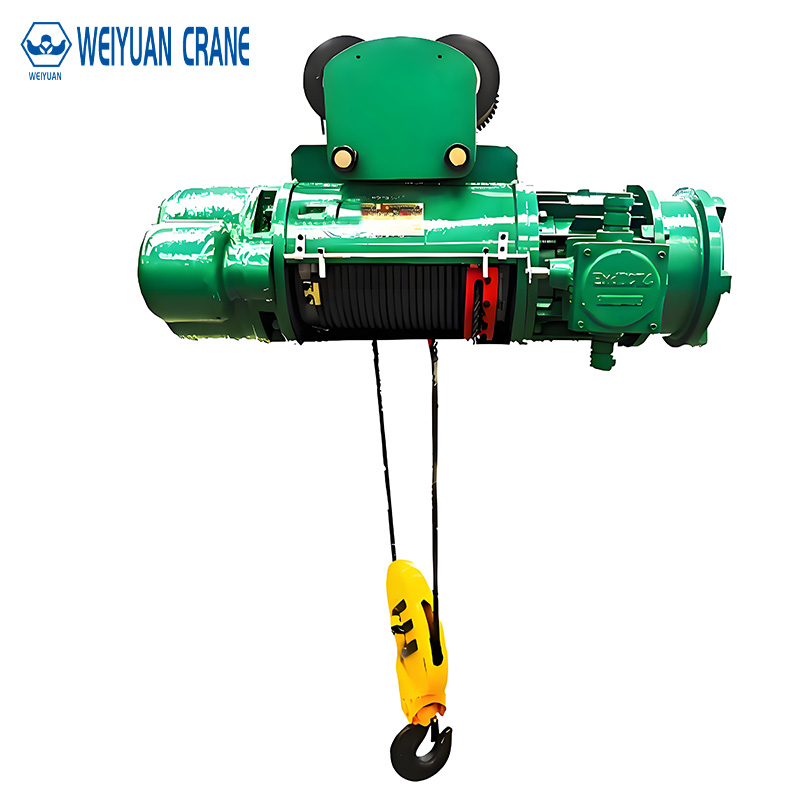
Standard electric models do not mix well with water, heavy dust, or extreme temperatures. Moisture causes electrical shorts, and corrosive environments eat away at the sensitive internal wiring. While you can purchase weather-resistant models, truly waterproof or explosion-proof electric units are incredibly expensive and complex to maintain.
The Advantages of Air-Powered Systems
Pneumatic lifting systems thrive exactly where electric models fail. They are rugged, relentless, and inherently safe in the world’s most dangerous industrial environments.
100% Duty Cycle
The most significant advantage of an air-powered system is its duty cycle. As compressed air expands inside the motor, it naturally cools the internal components. This means a pneumatic system literally cools itself as it works. You can run an air-powered system continuously, 24 hours a day, without ever worrying about it overheating or tripping a thermal sensor.
Unmatched Environmental Resilience
Air systems contain zero sensitive electronics. They do not generate sparks, making them the default choice for environments filled with combustible dust, explosive gases, or highly flammable chemicals. They are inherently explosion-proof. Furthermore, they easily survive extreme heat, freezing cold, and highly corrosive maritime environments that would destroy standard electrical wiring.
Incredible Durability
Pneumatic motors are remarkably simple and robust. They have fewer moving parts than complex electric motors and do not rely on delicate magnetic brakes or electronic circuit boards. This mechanical simplicity allows them to absorb heavy physical impacts and survive in rugged, dirty environments like foundries or underground mines.
The Disadvantages of Air-Powered Systems
While incredibly tough, pneumatic systems present unique logistical challenges that facility managers must carefully evaluate.
High Operational Costs
Generating compressed air is expensive. You need a massive, heavy-duty industrial compressor to provide the constant volume and pressure these systems demand. If your facility does not already have a robust compressed air infrastructure, the cost of installing one just to run a lifting system is usually prohibitive. Additionally, tiny leaks in the air hoses drastically reduce efficiency and drive up your utility bills.
Complex Speed Control
Unlike the precise, programmable VFDs found on electric units, speed control on an air system relies on the operator feathering a mechanical valve. While highly skilled operators can achieve precise movements, it requires a significant amount of practice. Novice operators often struggle to prevent sudden jerks or bouncy load movements.
Noise and Exhaust Considerations
Air motors are loud. The rapid expansion and exhaust of high-pressure air generate significant noise pollution on the factory floor. Additionally, the exhausted air often contains trace amounts of lubricating oil. In cleanroom environments or food processing facilities, this oily exhaust is completely unacceptable.
Ideal Use Cases: Matching Equipment to Your Environment
Understanding the technical differences helps you match the right equipment to your specific industry and daily operational workflow. Let us look at where each system truly shines.
When to Choose Electric Power
For the vast majority of standard manufacturing, warehousing, and assembly operations, an electric hoist is the superior choice. If your facility operates indoors, maintains a relatively clean environment, and requires precise, repeatable movements, electric power wins.
They are perfect for workstation lifting, where operators move heavy automotive parts, steel billets, or consumer goods. The lower operational costs, precise digital controls, and easy installation make them the backbone of modern indoor material handling.
When to Choose Pneumatic Power
You should choose pneumatic power when your environment demands extreme durability or strict explosion-proof safety. Chemical processing plants, oil refineries, and paint manufacturing facilities must use air-powered systems to prevent catastrophic explosions.
They are also the ideal choice for heavy-duty foundries where ambient temperatures melt standard wiring, or in fast-paced production lines where the equipment must run continuously without ever stopping to cool down. If your environment destroys standard equipment, an air-powered system will likely survive.
Cost Comparison and Total Cost of Ownership
Evaluating the financial impact requires looking beyond the initial purchase price. You must calculate the total cost of ownership over the equipment’s expected lifespan.
Initial Capital Investment
Standard electric models are generally more affordable upfront. The manufacturing processes for electric motors are highly optimized, and the sheer volume of units produced keeps prices low. High-quality pneumatic models often carry a steeper initial price tag due to their specialized mechanical construction and heavy-duty sealing requirements.
Long-Term Maintenance and Utilities
When you evaluate long-term costs, you must factor in your utilities. Running a massive air compressor consumes significantly more energy than drawing electricity directly from the grid. However, pneumatic systems often require fewer replacement parts over a twenty-year lifespan because they lack delicate electronics.
You must weigh the higher utility costs of an air system against the potentially higher repair costs of an electric system. For a clean, standard factory, the electric model usually provides a better financial return. For a dirty, harsh environment, the air system pays for itself by simply surviving where other equipment fails.
Making Your Final Decision
Do not rush your purchasing decision. Sit down with your production managers and maintenance team to evaluate your exact operational parameters.
Ask yourself about the specific environment where the equipment will operate. Consider whether you have combustible materials present, what your ambient temperatures reach, and how clean the air remains throughout the day. Evaluate your current infrastructure to determine if your electrical grid or compressed air system can handle the additional load.
Finally, think about your operators. Do they need precise, slow movements to align delicate parts, or do they simply need raw, continuous lifting power to move bulk materials? Answering these questions clearly points you toward the correct technology.
Frequently Asked Questions (FAQ)
Can I plug a standard electric system into a regular wall outlet?
Light-duty models (under 1/2 ton capacity) often run on standard 115V single-phase power. However, industrial models designed for heavy, continuous lifting typically require dedicated 230V or 460V three-phase wiring to handle the power draw safely.
Why do air-powered systems require an air lubricator?
The rapidly moving internal metal components of an air motor require constant lubrication to prevent friction and seizing. An inline lubricator injects a microscopic mist of oil into the compressed air stream, keeping the motor healthy as it runs.
What does “duty cycle” mean, and why does it matter?
Duty cycle refers to the amount of time a motor can run continuously before it must rest and cool down. A 30% duty cycle means the motor can run for 18 minutes out of every hour. Exceeding the duty cycle destroys the equipment.
Can I make an electric system explosion-proof?
Yes, but it is highly complex and extremely expensive. Manufacturers must seal every electrical contact, motor housing, and brake enclosure in heavy cast-iron boxes to contain any internal sparks. In most hazardous environments, switching to a pneumatic system is significantly more cost-effective.