


Jib Cranes in Action: Real-World Applications That Boost Productivity
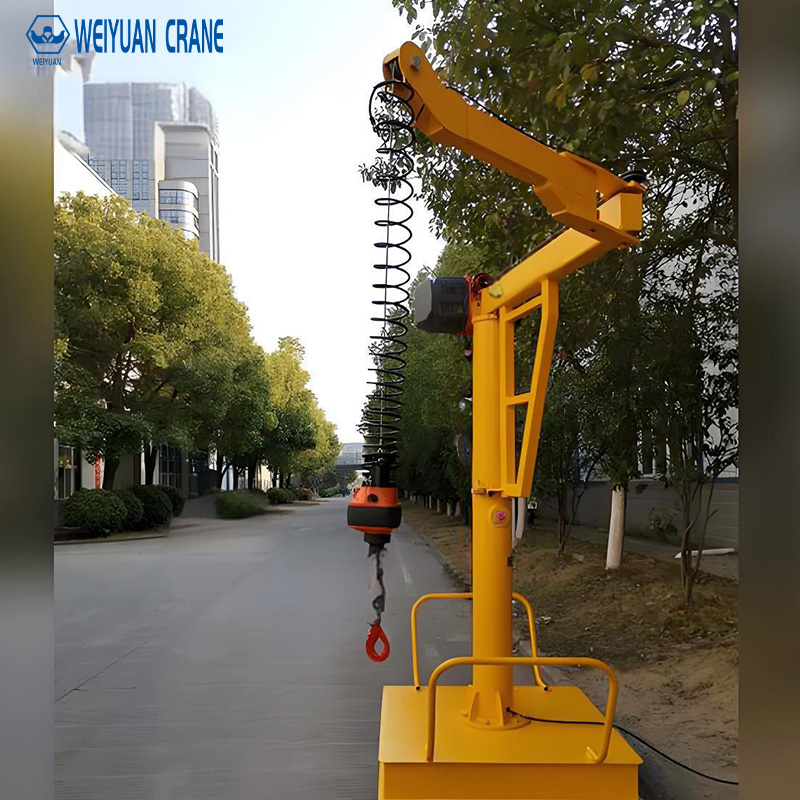
Moving massive materials safely requires precision, speed, and the right equipment. Relying heavily on manual labor slows down production lines and puts workers at high risk of severe physical injury. Even facilities equipped with massive overhead bridge systems often struggle with operational bottlenecks. When twenty employees share a single large lifting system, workers spend a significant portion of their shift waiting for their turn to lift.
You need a solution that empowers individual workers to handle their own heavy lifting exactly when their specific task requires it. A localized lifting station provides this essential autonomy. By installing dedicated equipment at specific workstations, you eliminate costly wait times and keep your production lines moving fluidly.
This article explores the practical, real-world applications of localized lifting technology across major industrial sectors. We will dive into specific use cases within manufacturing, warehousing, and heavy construction environments. You will learn exactly how integrating a jib crane into your daily workflow drives efficiency, protects your valuable workforce, and maximizes your facility’s true production potential.
The Power of Localized Lifting in Modern Industry
Traditional material handling systems often force you to choose between massive lifting power and operational flexibility. Large overhead setups handle incredible weights but lock your facility into a rigid grid. Forklifts offer mobility but require wide driving lanes that eat up your valuable floor space.
Rotational lifting systems bridge this gap perfectly. They provide dedicated, high-capacity lifting power exactly where you need it most, without dominating your factory floor. A standard freestanding unit occupies only a tiny concrete footprint, utilizing your vertical space instead. The horizontal boom swings overhead, leaving the ground completely clear for foot traffic and material staging.
This localized approach fundamentally changes how your facility operates. Workers gain immediate access to mechanical lifting power. They dictate their own working pace rather than operating at the mercy of shared facility equipment. This simple shift in material handling strategy unlocks massive gains in overall facility throughput.
Transforming Manufacturing Workflows
Manufacturing plants thrive on continuous, rhythmic movement. Raw materials must enter machining centers smoothly, and finished components must travel down the assembly line without delay. Localized rotational lifting provides the exact control and autonomy needed to maintain this delicate operational rhythm.
Precision Machining and CNC Loading
Computer Numerical Control (CNC) machines operate with incredible microscopic precision. However, physically loading the raw materials into these expensive machines remains a heavily physical, dangerous task. Workers often struggle to manually align heavy steel billets or cast iron blocks onto the machine beds.
This manual effort slows down the entire machining cycle and creates significant safety risks. Dropping a heavy metal block onto a precision machine fixture destroys expensive tooling and causes weeks of costly downtime. Positioning a dedicated jib crane directly over the CNC station solves this problem entirely.
The machine operator secures the raw material and lifts it smoothly using a motorized hoist. Variable-speed controls allow the operator to lower the heavy material at an absolute crawl. This precise control prevents any impact damage and drastically speeds up the loading process, allowing the machine to produce more parts per shift.
Streamlining Assembly Line Operations
Building oversized products, such as commercial HVAC units or agricultural machinery, requires manipulating incredibly bulky components. Standard forklifts simply cannot maneuver these oversized parts into the tight spaces required for complex final assembly. Workers need a targeted way to position parts securely while they install mounting hardware.
Localized lifting stations empower assembly line workers to handle these massive parts entirely on their own. An operator can lift a heavy steel chassis, rotate it precisely into alignment, and hold it firmly in place while another worker secures the bolts. Because the equipment supports the entire physical weight, the team works faster and produces a much higher quality final product.
Accelerating Warehousing and Logistics
Warehouses and distribution centers survive by moving freight constantly. Every delay at the loading dock creates a ripple effect that disrupts the entire global supply chain. Logistics managers rely on highly adaptable lifting equipment to keep their staging areas clear and outbound trucks moving on schedule.
Optimizing Loading Dock Transfers
Loading docks frequently handle awkward freight that defies standard palletization. Long bundles of industrial piping, heavy spools of copper wire, and crated machinery present major challenges for standard warehouse forklifts. Trying to balance these awkwardly shaped items on two steel forks creates a significant tipping hazard.
In these environments, rotational lifting equipment offers superior vertical lifting capabilities. Workers position the boom directly over the awkward freight, attach specialized rigging, and lift the load straight up securely. They can then back a flatbed transport truck directly underneath the suspended load and lower it gently into place, preventing product damage and reducing truck idling time.
Safe and Efficient Battery Maintenance
Electric forklifts power the vast majority of modern warehousing operations. However, their massive industrial batteries require regular swapping and dedicated maintenance. A standard electric forklift battery often weighs well over two thousand pounds.
Manually maneuvering these massive batteries is exceptionally dangerous and prone to causing severe chemical spills. Smart facilities set up dedicated battery changing stations equipped with a specialized lifting frame. A single warehouse worker can attach a lifting beam to the depleted battery, hoist it safely out of the forklift, and swing it onto a charging rack.
The worker then lifts a fully charged battery and slides it perfectly into the machine. This highly specialized application takes only minutes to complete safely. It keeps your primary warehouse fleet running around the clock with absolute minimal downtime.
Heavy-Duty Lifting in Construction Environments
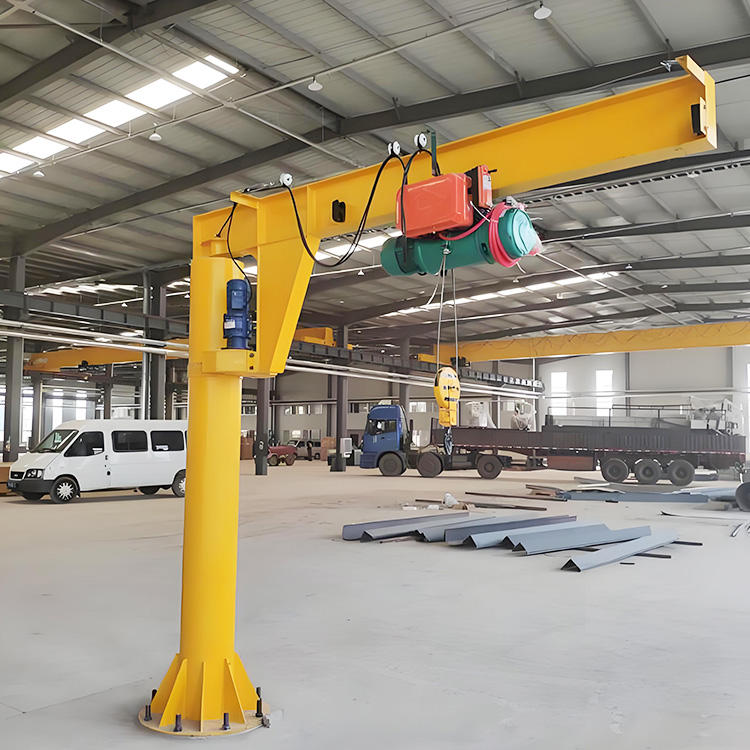
Construction sites represent some of the most chaotic, demanding work environments on the planet. Uneven dirt terrain, brutal weather conditions, and massive structural components push material handling equipment to its absolute limits. Localized lifting systems provide the rugged, dependable reliability needed to build heavy infrastructure.
Managing Staging and Fabrication Yards
Building modern concrete bridges and high-rise structures relies heavily on massive precast elements and steel I-beams. While towering overhead cranes handle the high-altitude lifting, ground-level staging requires equally robust equipment. Ironworkers need a reliable way to organize, flip, and prepare these heavy materials before they go up into the sky.
Setting up a heavy-duty rotational lifting station in the staging yard allows construction crews to maneuver these massive elements safely. Welders use the equipment to lift and rotate heavy steel beams effortlessly. This ensures they can safely access every joint for a perfect, structurally sound weld without risking a severe crush injury.
On-Site Equipment Maintenance and Repair
Heavy construction equipment takes a massive beating on the active job site. When a hydraulic pump fails or an excavator engine block cracks, contractors cannot always afford to tow the massive machine back to a central repair shop. They need to perform heavy mechanical maintenance directly in the dirt.
Deploying a rugged, weather-resistant jib crane to the job site allows mechanics to tear down massive machinery safely. Using this equipment, a small repair team can pull a broken engine out of a bulldozer and place it securely onto a portable work stand. The mechanic completes the repair on-site, getting the crucial earth-moving equipment back to work days faster.
The Universal Benefits of Rotational Lifting
Regardless of whether you build airplanes, ship consumer goods, or pour concrete foundations, implementing targeted lifting systems yields universal operational benefits. Facility managers who invest strategically in this technology see immediate, highly measurable improvements across their vital metrics.
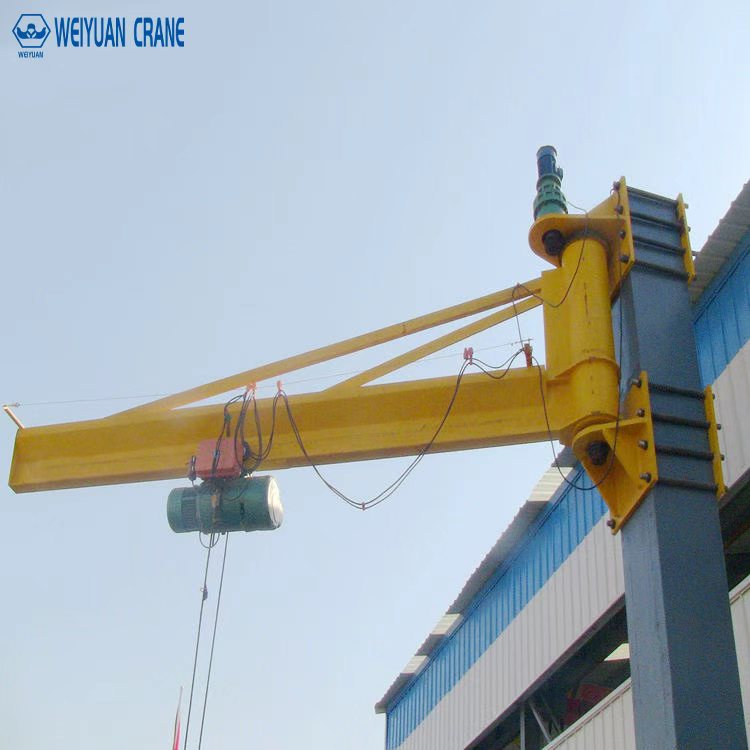
Weiyuan 500kg Wall Mounted Jib Crane
The Weiyuan 500kg Wall Mounted Jib Crane is a compact and efficient lifting solution designed for workshops, assembly lines, and warehouse operations. Mounted directly to a structural wall or column, it saves valuable floor space while providing smooth 180° slewing coverage for precise material handling up to 500 kg.
View Product / Get QuoteDrastically Improved Worker Safety
Manual lifting remains the leading cause of severe workplace injuries across every major industrial sector. Chronic back pain, muscle tears, and spinal compression ruin careers and cost companies millions of dollars in workers’ compensation claims. You have a direct responsibility to protect your team from these preventable physical hazards.
Motorized lifting solutions completely remove the physical burden from your operators. Instead of straining their backs to push heavy loads, workers use an ergonomic pendant remote to control the machinery. This massive mechanical advantage eliminates the deep fatigue that leads to secondary workplace accidents.
Reclaiming Valuable Floor Space
Industrial floor space represents a massive financial premium for any business. Every square foot dedicated to bulky, oversized equipment limits your overall production capacity. You need lifting machinery that provides immense power without dominating your valuable manufacturing real estate.
Wall-mounted rotational models offer the ultimate space-saving solution. You can bolt a wall-mounted system directly to your existing structural building columns. These units fold entirely flat against the wall when workers do not need them, completely eliminating overhead obstructions and leaving your floor totally clear.
Frequently Asked Questions (FAQ)
What is the maximum rotation I can get from these systems?
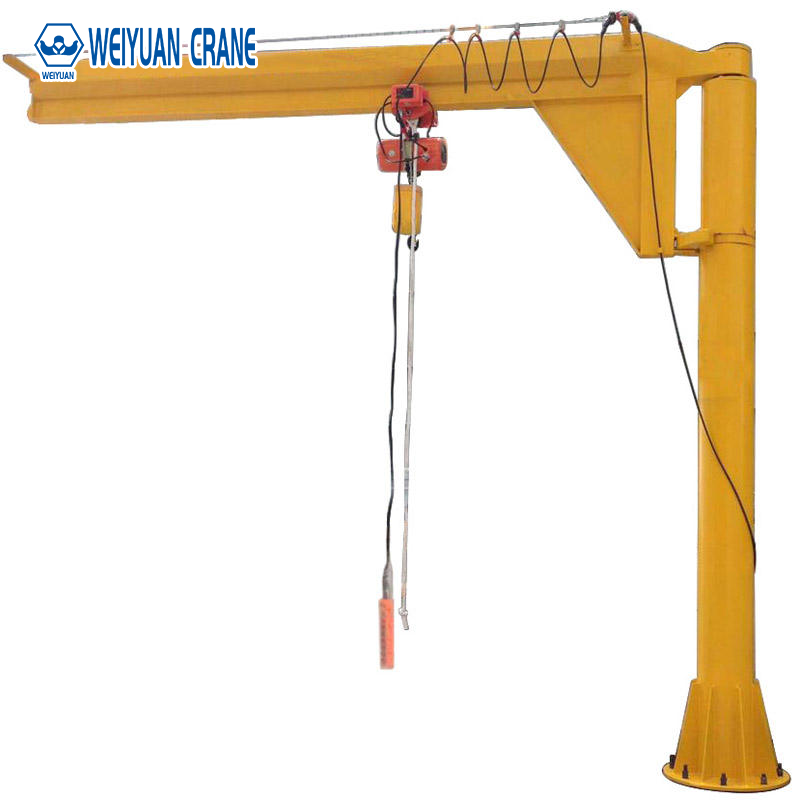
Freestanding pillar models generally offer a full 360-degree rotation, allowing you to service a massive circular work area seamlessly. Wall-mounted models typically provide 200 degrees of rotation because the physical building column blocks the horizontal boom from spinning entirely around.
Can I install a freestanding system on a standard concrete floor?
Light-duty models often bolt directly to standard six-inch reinforced industrial concrete slabs. However, heavy-duty models lifting several tons exert incredible point-load torque on the foundation. You must have a structural engineer evaluate your specific floor to determine if you need to pour a specialized concrete footing.
Do I need to buy a specific type of motorized hoist?
No. The horizontal booms accommodate a wide variety of standard trolleys and hoists. Whether your facility prefers electric chain hoists, pneumatic air balancers, or simple manual chain blocks, the structural system adapts easily to your preferred lifting accessory.
How do I stop the boom from swinging into nearby machinery?
If your workstation sits very close to sensitive machinery or structural walls, you can install heavy-duty mechanical rotation stops. These adjustable steel bumpers bolt directly onto the mast assembly. They physically prevent the horizontal boom from rotating past a specific point, protecting your facility infrastructure from accidental impact damage.