


Jib Crane vs Overhead Crane: Which Lifting Solution Is Right for Your Workspace?
Planning an industrial facility upgrade forces managers to make difficult equipment decisions. When your workers need to move heavy materials safely, you must provide them with the right mechanical support. Two of the most popular lifting systems often end up on the shortlist: localized rotational booms and elevated bridge systems.
On the surface, both machines perform the exact same basic function. They lift heavy items and position them safely. However, the way they operate, the infrastructure they demand, and the specific workflows they support remain fundamentally different. Choosing the wrong equipment can lead to severe production bottlenecks, wasted floor space, and blown capital budgets.
This comprehensive guide breaks down the core differences between a jib crane and an overhead crane. We will explore their specific coverage areas, load capacities, and long-term maintenance needs. By the end of this article, you will understand exactly which system fits your operational requirements, and why combining both might actually be your most profitable strategy.
Understanding the Fundamental Differences
Before we look at technical specifications, we must define how these two machines operate physically. Their distinct movement patterns dictate exactly where and how you can use them inside your facility.
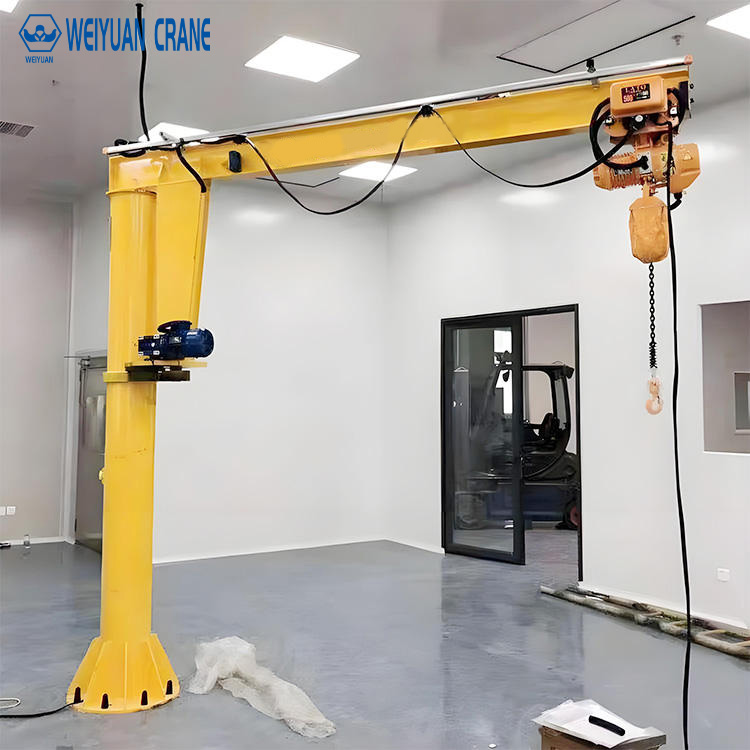
A localized lifting boom rotates around a fixed vertical axis. This axis is typically a heavy steel mast bolted to your floor, or a bracket mounted directly to a building column. The hoist travels back and forth along the horizontal arm. Together, the rotation of the arm and the travel of the hoist create a circular working area.
Conversely, a bridge lifting system travels along elevated runway rails suspended high above your factory floor. The main bridge beam moves forward and backward along the length of your building. Meanwhile, the hoist trolley moves left and right across the bridge. This combination of movements allows the equipment to cover a massive, rectangular working area.
Coverage Area: Precision versus Span
The shape of the working area represents the most critical difference between these two systems. You must match the equipment’s reach to the physical layout of your production line.
The Circular Reach of Localized Lifting
A rotational boom covers a circular sector centered entirely on its mounting point. The maximum reach depends directly on the length of the horizontal arm. For example, a freestanding unit with a 15-foot arm offering full 360-degree rotation effectively covers a 30-foot circular zone.
This concentrated coverage works perfectly for dedicated workstations. If you operate a busy CNC machining center, the operator only needs to lift raw materials from a nearby pallet and place them into the machine fixture. They do not need to transport the metal billet across the entire factory. A rotational boom gives them the exact, focused coverage they need without interfering with neighboring workstations.
The Rectangular Sweep of Elevated Bridges
Elevated bridge systems excel at covering massive physical footprints. A system running on a 150-foot runway with a 50-foot bridge span covers 7,500 square feet of usable floor space. It commands the entire bay.
You need this massive rectangular coverage when your material flow is dynamic and variable. In a heavy steel fabrication shop, workers might need to move a welded assembly from the welding station to a painting booth located hundreds of feet away. A bridge system picks up the load at point A and transports it seamlessly to point B, regardless of where those points sit within the runway grid.
Lifting Capacity and Hook Height
Your facility handles specific materials that dictate your weight requirements. You must also consider how high you need to lift those materials to clear obstacles on your factory floor.
Weight Limits for Dedicated Stations
Rotational booms handle light to medium-duty lifting tasks exceptionally well. Standard freestanding models easily manage weights up to five tons. Wall-mounted variations typically max out closer to three tons due to the physical limitations of the supporting building columns.
For the vast majority of individual assembly cells, packing stations, and machine loading tasks, a five-ton capacity is more than adequate. Workers handle engine blocks, standard steel coils, and palletized goods safely and efficiently within these limits.
Heavy-Duty Capabilities and Maximum Height
When you need to move massive, structural components, bridge systems stand completely unmatched. Standard single-girder models routinely handle up to 20 tons. Custom-engineered double-girder models can lift hundreds of tons, making them mandatory for steel mills, shipyards, and heavy equipment manufacturing.
Furthermore, bridge systems provide significantly better hook height. The hoist sits tucked tightly against the elevated bridge beams, near the ceiling of your facility. This allows you to lift tall loads over large obstacles. Rotational booms sit lower to the ground, and the hoist hangs below the horizontal arm, which limits your maximum vertical clearance.
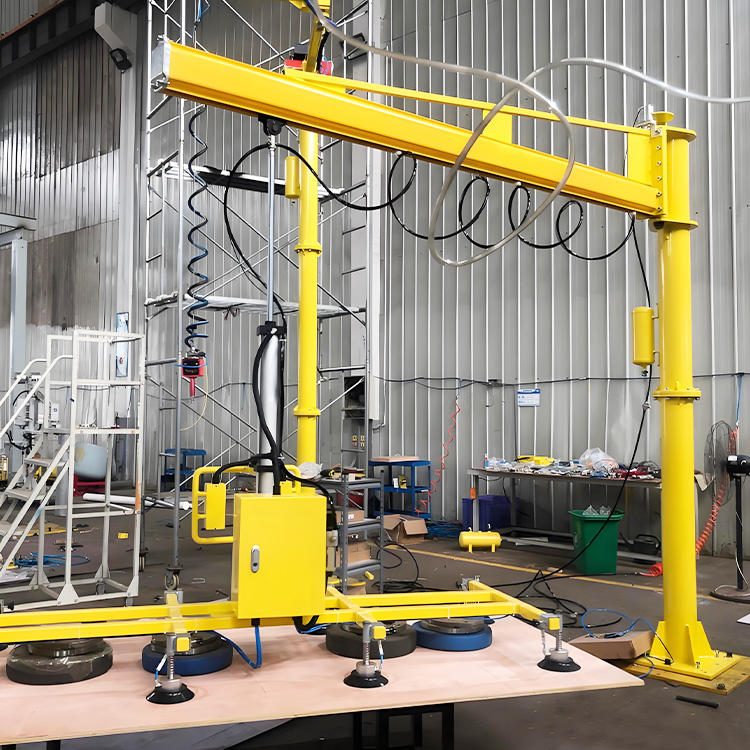
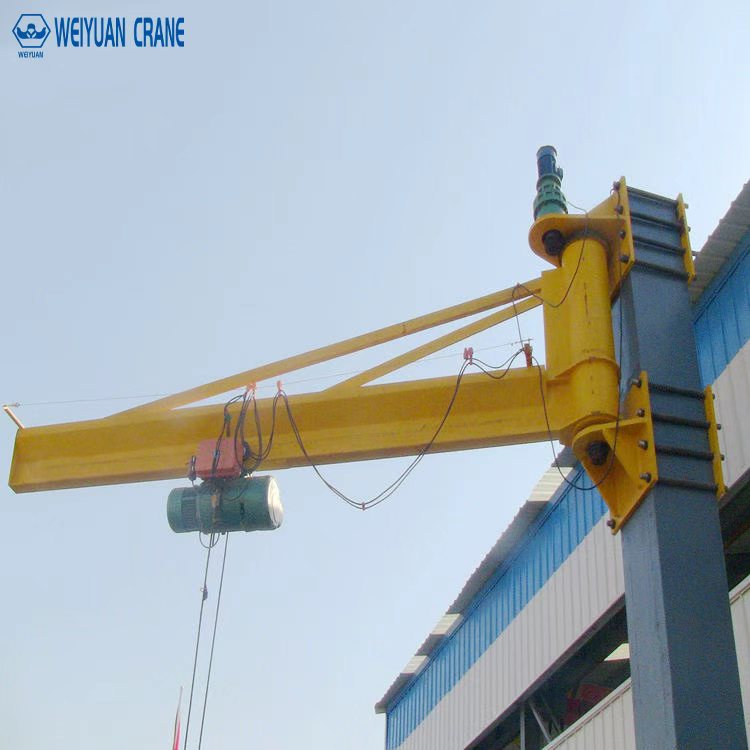
Weiyuan 500kg Wall Mounted Jib Crane
The Weiyuan 500kg Wall Mounted Jib Crane is a compact and efficient lifting solution designed for workshops, assembly lines, and warehouse operations. Mounted directly to a structural wall or column, it saves valuable floor space while providing smooth 180° slewing coverage for precise material handling up to 500 kg.
View Product / Get QuoteInfrastructure and Installation Requirements
Buying the equipment is only part of the financial equation. You must prepare your building to support the machinery, and these preparation costs vary wildly between the two systems.
Floor and Wall Mounting Needs
Installing a localized rotational system requires minimal building modification. For freestanding models, you primarily need a solid concrete foundation. If your current factory floor lacks the necessary thickness, contractors simply cut a small square, dig down, and pour a reinforced concrete footer to support the mast.
Wall-mounted units require even less infrastructure. Installers bolt the brackets directly to structurally sound building columns. Because they do not require runway beams or massive electrical busbars spanning the length of your building, installation takes days rather than weeks. The total installed cost remains highly affordable for most small to medium-sized businesses.
Runway Systems and Structural Demands
Elevated bridge systems demand serious structural support. You must install heavy steel runway beams running the entire length of your working area. Your building’s existing support columns must possess the engineering strength to carry the dead weight of the runway, the bridge, and the maximum rated load.
If your building cannot support this massive weight, you must build a completely independent, freestanding steel structure inside your factory to hold the runway. This requires extensive engineering assessments, massive amounts of raw steel, and weeks of disruptive construction. Consequently, the initial capital investment for a bridge system easily eclipses the cost of localized lifting equipment.
Operational Flexibility and Workflow
How your workers interact with the equipment directly impacts your daily productivity numbers. You must evaluate how lifting machinery affects the rhythm of your specific production lines.
Specialized Precision vs. Total Bay Access
A localized rotational system gives an individual worker total autonomy. They have dedicated lifting power right at their fingertips. They can rotate the arm smoothly, control the hoist precisely, and gently lower delicate components into complex assemblies. However, that load cannot leave the specific circular work zone without transferring to a forklift or cart.
A bridge system offers unmatched routing flexibility. It moves any load from any point within the runway grid to any other point. It connects multiple different workstations together. However, because one large machine serves the entire bay, workers often find themselves waiting in line for their turn to use it, which occasionally slows down individual assembly cells.
Maintenance Expectations and Long-Term Costs
Industrial machinery requires ongoing care to function safely. Understanding your preventative maintenance obligations helps you budget accurately for the lifetime of the equipment.
Keeping It Simple
Rotational booms feature incredibly straightforward mechanical engineering. The primary wear points include the hoist mechanism, the trolley wheels on the horizontal arm, and the main pivot bearings. Keeping these systems running smoothly usually only requires routine lubrication and basic visual inspections.
Because the design is so simple, your internal maintenance team can usually handle the upkeep. Annual maintenance costs remain exceptionally low. Even if a hoist motor fails, replacing it is a quick, inexpensive process that minimizes facility downtime.
Managing Complex Systems
Bridge systems utilize far more complex components. You must maintain end trucks, runway rail alignments, bridge drive motors, and intricate festoon electrification systems. If the runway rails fall out of alignment, the bridge will bind, causing severe damage to the wheel flanges and the building structure itself.
Maintaining this equipment requires specialized, highly trained technicians. Furthermore, federal safety regulations mandate strict, comprehensive annual inspections for bridge machinery. Your annual maintenance budget for these large-scale systems will significantly exceed the upkeep costs of smaller, localized equipment.
The Power of Combination: Using Both Systems
Many managers view this as an either-or decision. However, the most efficient, highly productive manufacturing facilities actually use both systems together to create a flawless material handling strategy.
Think of the bridge system as your heavy transport network. It moves massive sub-assemblies down the length of the bay, delivering heavy raw materials to individual production zones. It handles the macro-movements that keep the factory flowing.
Meanwhile, you install a localized jib crane at every critical workstation. When the large bridge drops off a bundle of steel, the individual worker uses their dedicated rotational boom to lift individual pieces from that bundle. This relieves the massive bridge equipment from performing small, repetitive tasks.
By combining forces, your operators never wait for shared equipment to become available for their basic daily tasks. The large equipment remains free to handle major facility transport, while the localized booms provide the ergonomic, high-speed precision needed at the assembly level. This dual approach maximizes productivity and virtually eliminates material handling bottlenecks.
Making the Final Decision
Choosing the right equipment requires a brutally honest assessment of your daily operations. You must look closely at your floor plan, your heaviest loads, and your available capital.
If your facility requires workers to lift five tons or less at specific, fixed workstations, localized rotational equipment is your best option. It provides exceptional precision, installs quickly, and costs a fraction of the price of elevated runway systems. It solves workstation bottlenecks immediately.
If you regularly lift massive components weighing 20 tons or more, and those components must travel across the entire length of your building, you absolutely need an overhead crane. Despite the higher installation costs, it is the only machine capable of handling dynamic, heavy-duty facility transport safely.
Frequently Asked Questions (FAQ)
Can a rotational boom and a bridge system operate in the same area?
Yes, this is a highly recommended strategy. You simply ensure that the elevated bridge runway sits higher than the top of the localized mast systems. The large equipment passes safely over the smaller equipment without any collision risks.
Which system poses a greater safety risk to operators?
Neither system is inherently dangerous if operated correctly. Both machines must comply with strict federal safety standards. Workplace accidents almost always stem from poor operator training, ignored load limits, or neglected preventative maintenance schedules.
Can I install localized lifting arms on my existing building columns?
Usually, yes. However, a licensed structural engineer must evaluate your specific building columns first. They need to calculate the pulling forces generated by the lifting arm to ensure your building framework will not buckle or warp under a heavy load.
How long does it take to order and install these systems?
Standard localized lifting equipment typically ships within a few weeks and installs in one or two days. Large bridge systems require complex structural engineering, custom manufacturing, and extensive runway construction, which can easily take several months to complete.