


Overhead Crane Inspection Guide: OSHA Requirements, Checklists & Compliance Schedule
Introduction
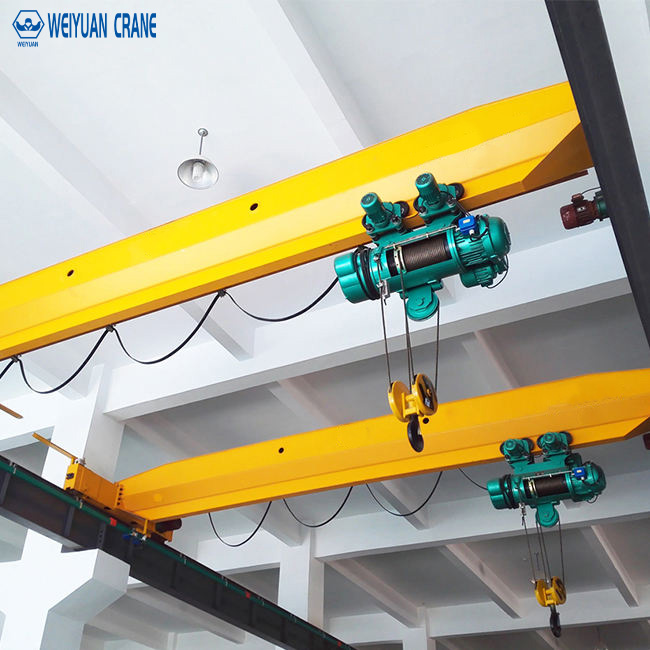
If your facility operates an overhead crane, you are legally obligated to maintain a structured inspection program. This is not optional guidance — it is a direct regulatory requirement under OSHA 29 CFR 1910.179, the federal standard governing overhead and gantry cranes in general industry. Failure to comply exposes your facility to OSHA citations and fines, increases the risk of equipment failure and worker injury, and creates serious liability exposure in the event of an incident.
Yet despite the clarity of the regulatory requirement, overhead crane inspection programs are among the most frequently deficient areas identified during OSHA inspections of industrial facilities. The reasons are consistent: maintenance teams are stretched thin, inspection records are incomplete, and many facilities apply an informal inspection approach that satisfies no one and protects no one.
This guide cuts through the complexity. We provide a complete, plain-language breakdown of OSHA’s overhead crane inspection requirements, a practical inspection checklist covering all required items, guidance on how to structure your inspection schedule based on crane duty class, and the documentation practices that demonstrate compliance to OSHA, your insurer, and your legal counsel.
Whether you are establishing a new overhead crane inspection program or auditing an existing one, this is the reference your team needs.
The Legal Framework: What OSHA Actually Requires
OSHA 29 CFR 1910.179 establishes the baseline inspection requirements for all overhead and gantry cranes used in general industry settings. The standard is organized around three distinct inspection classifications, each with different scope, frequency, and qualification requirements.
It is important to understand that OSHA’s requirements represent the minimum legally mandated inspection standard. ASME B30.2 (Overhead and Gantry Cranes) and CMAA Specification 70 provide additional engineering-based guidance that goes beyond OSHA’s minimum requirements and represents industry best practice. Many facilities that meet OSHA minimums still fall short of ASME B30.2 recommendations — which matters when an incident occurs and legal counsel evaluates whether the facility exercised reasonable care.
The Three Classifications of Overhead Crane Inspection
Classification 1: Initial Inspection
Requirement: Prior to initial use, all new and altered overhead cranes must be inspected to confirm compliance with OSHA 1910.179.
What this covers:
- All structural components including bridge beams, end trucks, and runway connections
- All mechanical components including hoist, trolley, brake systems, and hook assembly
- All electrical components including motors, controls, limit switches, and conductor systems
- Runway rail alignment and end stop installation
- Load test at 125% of rated capacity per ASME B30.2
Documentation: A written inspection record and load test certificate must be created before the crane is placed in service. These records must be retained and available for OSHA review.
When this also applies:
- After any major structural repair or modification
- After relocation of a crane to a new facility or runway
- After a crane has been idle for more than six months (OSHA requires a complete inspection meeting both frequent and periodic requirements)
Classification 2: Frequent Inspections
Requirement: Frequent inspections must be performed at daily to monthly intervals, depending on the crane’s service conditions.
Frequency guidelines by duty class:
- CMAA Class A and B (standby/light service): Monthly frequent inspections
- CMAA Class C (moderate service): Bi-weekly to monthly
- CMAA Class D and E (heavy/severe service): Weekly to daily
- CMAA Class F (continuous severe): Daily before each shift
Who performs it: A trained, designated operator or maintenance person who is qualified to identify the conditions listed in OSHA 1910.179(j)(2).
Documentation: OSHA does not explicitly mandate written records for frequent inspections, but written logs are strongly recommended and considered a best practice by ASME B30.2. In the event of an incident, documented frequent inspection records are among the most important evidence of a facility’s compliance effort.
What the frequent inspection must cover per OSHA 1910.179(j)(2):
Operating mechanisms: All functional mechanisms — hoist, trolley travel, bridge travel — tested for proper operation. Note any unusual sounds, jerky motion, hesitation, or unexpected behavior.
Hoist chain or rope: Chain hoists inspected for bent or cracked links, corrosion, and visible stretch. Wire rope hoists inspected for broken wires (rejection criterion: more than two broken wires in any six-rope-diameter length), kinking, crushing, corrosion, or diameter reduction exceeding 1/3 of the original diameter.
Hook condition: Inspect for cracks, twisting, deformation, and throat opening wear. OSHA 1910.179 specifies that no part of the hook shall show more than 10% wear of the original cross-section at the critical wear point. Any hook with a throat opening exceeding 15% of the original dimension must be taken out of service. Verify that the safety latch is present, functional, and closes fully.
Limit switches: Test upper limit switch by slowly raising the unloaded hook to confirm power cuts before the hook block contacts the hoist body. Test lower limit switch similarly. Both must function correctly — a failed limit switch requires immediate hoist removal from service.
Brake performance: With no load, raise the hook approximately 12 to 18 inches, release the pendant, and observe for downward drift. Any drift under no-load conditions indicates a brake problem requiring immediate service.
Controls: Verify all pendant buttons are correctly labeled and return to neutral when released. Test emergency stop function if equipped.
Warning devices: Verify travel warning bell or signal device operates correctly.
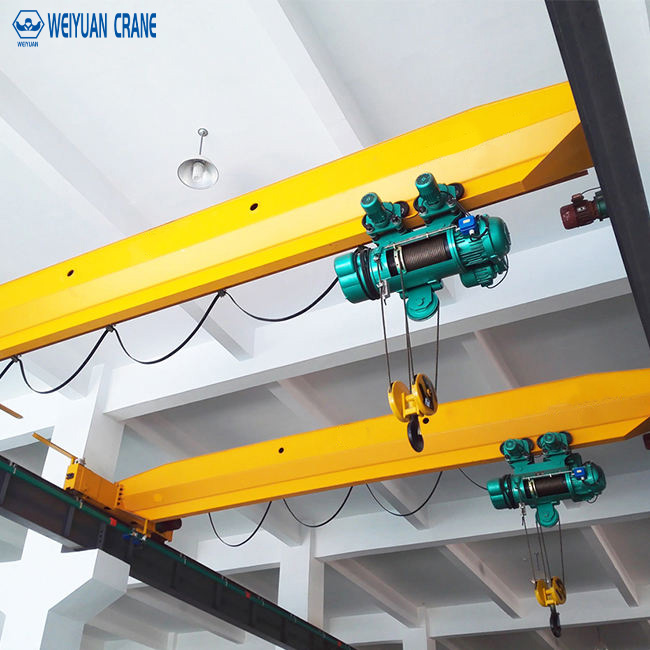
Classification 3: Periodic Inspections
Requirement: Complete inspections at intervals from monthly to annually, depending on activity, severity of service, and environment.
Frequency guidelines:
- Light service cranes (Class A/B) in clean, mild environments: Annually
- Moderate service cranes (Class C): Semi-annually to annually
- Heavy service cranes (Class D/E): Quarterly to semi-annually
- Severe service cranes (Class F) or cranes in harsh environments: Monthly to quarterly
Who performs it: A qualified person — defined under OSHA as someone with specific training, knowledge, and experience to identify hazardous conditions. For periodic inspections, this typically means a certified crane inspector, a qualified crane service technician, or an in-house qualified person with documented formal crane inspection training.
Documentation: Written inspection reports are required per OSHA 1910.179(j)(3). Reports must include the date of inspection, identification of the crane inspected, findings, and the signature of the qualified person who performed the inspection. Records must be retained.
What the periodic inspection must cover in addition to all frequent inspection items per OSHA 1910.179(j)(3):
Structural members: All bridge beams, girders, legs (for gantry cranes), and connecting members inspected for deformation, cracking, and corrosion. End truck mounting connections checked for cracked welds and loose hardware.
Loose bolts and rivets: All structural fasteners checked for proper torque and signs of loosening. Loose fasteners in crane structural connections are a safety hazard requiring immediate correction.
Sheaves and drums: All rope sheaves and wire rope drums inspected for cracks, groove wear, and proper alignment. Worn sheave grooves accelerate rope deterioration dramatically.
Worn or distorted mechanical components: Pins, bearings, shafts, gears, rollers, and locking devices inspected for wear and distortion beyond manufacturer rejection criteria.
Brake system: Complete brake inspection including lining thickness measurement, spring condition, and adjustment verification. Brake lining worn to less than 50% of original thickness requires replacement.
All safety devices: All limit switches, overload protection, and interlocks tested under representative operating conditions.
Runway rails: Full rail length inspected for wear, joint gaps, loose clips, and alignment. Rail wear measured and compared to previous inspections to track wear rate.
Electrical system: Conductor bars or festoon cable inspected for wear and damage. Motor connections and control panel inspected for overheating, moisture, and loose connections.
Overhead Crane Pre-Use Inspection Checklist
The following checklist covers the items required at each shift before the crane is placed in use. Laminate this checklist and post it at the crane controls.
AREA INSPECTION:
- [ ] Area beneath crane travel path is clear of personnel and obstructions
- [ ] Load travel path is clear from pickup point to destination
- [ ] Location of crane disconnect switch is known and accessible
- [ ] No warning tags or lockout/tagout devices on the crane or controls
STRUCTURAL VISUAL:
- [ ] Bridge beam and end trucks show no visible cracks, deformation, or unusual corrosion
- [ ] No loose hardware visible on bridge or end trucks
- [ ] Runway rails clear of debris for full travel length
HOIST AND HOOK:
- [ ] Hook safety latch present, functional, and closes fully
- [ ] Hook shows no visible cracks, deformation, or throat opening beyond limits
- [ ] Wire rope shows no broken wires, kinking, or crushing (wire rope hoists)
- [ ] Chain shows no bent, cracked, or corroded links (chain hoists)
- [ ] Hook block and sheaves show no unusual wear or damage
CONTROLS AND SAFETY DEVICES:
- [ ] Pendant buttons labeled correctly and return to neutral when released
- [ ] Upper limit switch tested and functional (slow, no-load test)
- [ ] Lower limit switch tested and functional
- [ ] Hoist brake holds load without drift (no-load hover test)
- [ ] Warning signal device operational (for travel-equipped cranes)
- [ ] Emergency stop tested and functional (if equipped)
ELECTRICAL:
- [ ] No visible damage to pendant cord or connectors
- [ ] No unusual sounds from motors during test operation
- [ ] All travel functions respond correctly to controls
ACTION IF ANY ITEM FAILS: Tag the crane out of service. Do not operate until the deficiency is corrected and verified by a qualified person.
Inspection Records: What to Keep and How Long
OSHA’s record-keeping requirements for crane inspections are sometimes misunderstood. Here is what is explicitly required and what represents best practice:
Required by OSHA:
- Written record of periodic (annual) inspections per 1910.179(j)(3)
- Load test records (date, findings, signature of qualified person)
- Wire rope certification records when rope has been idle for one month or more per 1910.179(j)(4)
Best practice (strongly recommended):
- Written log of all frequent inspections, even when no deficiencies are found
- Written log of all pre-use inspections
- Written records of all repairs, adjustments, and component replacements with dates and description of work
- Maintenance manual and original crane documentation retained on file
Retention period: OSHA does not specify a mandatory retention period for crane inspection records under 1910.179. However, given that crane-related incidents can result in litigation years after the event, retaining all inspection and maintenance records for the full service life of the crane plus five years is strongly recommended by most crane industry legal advisors.
Structuring Your Overhead Crane Compliance Program
A compliant overhead crane inspection program has four components that work together:
- Pre-use operator inspections: Performed by trained, designated operators before every shift. Supported by a laminated checklist at the crane controls. Recorded in a shift log.
- Frequent inspections: Performed by a qualified designated person on a schedule calibrated to the crane’s CMAA duty class. Documented in writing.
- Periodic annual inspections: Performed by a qualified crane inspector or certified crane service technician. Full written report with findings, photos of any deficiencies, and corrective action documentation.
- Maintenance and repair records: All work performed on the crane documented with date, description, parts replaced, and name of person performing the work.
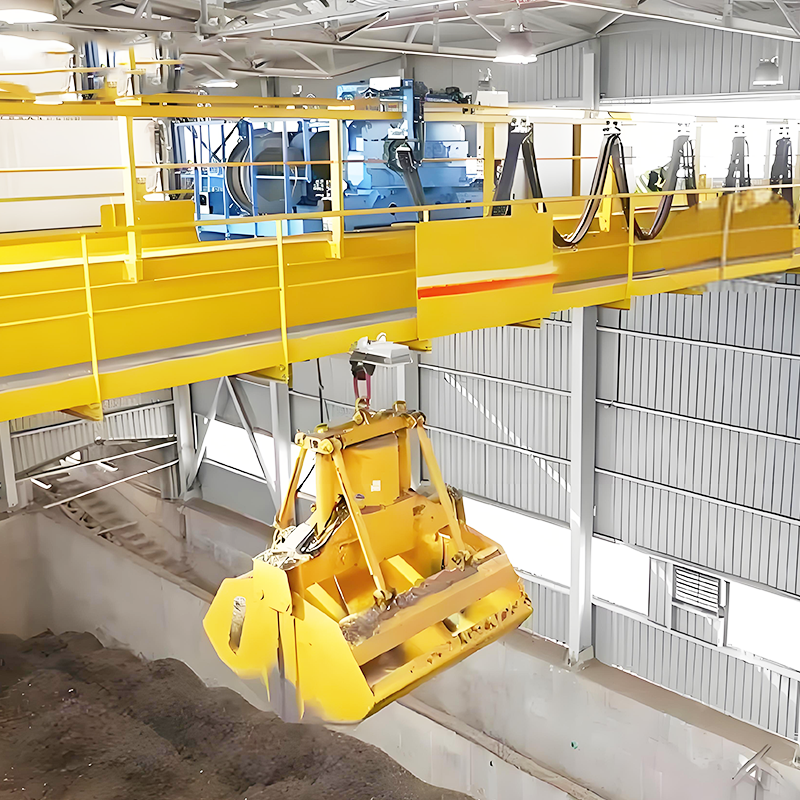
Weiyuan QZ Type Grab Crane for Steel Scrap | 30 Ton, Heavy-Duty, High-Efficiency
The Weiyuan QZ Type 30 Ton Grab Crane is engineered specifically for demanding steel scrap handling operations. Built on a heavy-duty double-girder platform with a high-strength orange peel grab, it delivers reliable performance and high efficiency in continuous scrap yard and foundry material handling environments. :contentReference
View Product / Get Quote
Frequently Asked Questions
Q: What is the penalty for failing an OSHA crane inspection?
A: OSHA penalties for serious violations under 1910.179 can reach $16,550 per violation under current penalty structures, with willful or repeated violations up to $165,514 per violation. Beyond fines, a facility that experiences a crane-related injury while operating out of compliance with 1910.179 faces dramatically elevated civil liability exposure.
Q: Can the crane operator perform the periodic annual inspection?
A: No. OSHA requires that periodic inspections be performed by a qualified person — someone with specific training and experience to identify hazardous conditions. In most facilities, this means either a third-party certified crane inspector or an in-house person with documented formal crane inspection training and certification. The crane operator does not meet this standard unless they hold specific crane inspection qualifications.
Q: What happens if an overhead crane fails a periodic inspection?
A: The crane must be taken out of service until all identified deficiencies are corrected. The correction must be made by designated qualified personnel. A re-inspection of repaired items is required before returning the crane to service. If a structural deficiency is found, an engineer’s assessment may be required before the crane can be returned to use.
Q: Does OSHA require overhead crane operators to be certified?
A: OSHA 1910.179 requires that crane operators be trained and designated as qualified by the employer. Unlike construction crane operations (covered by 1926 Subpart CC, which requires third-party operator certification), general industry overhead crane operators do not face a federal mandate for third-party certification — but employer-provided training and designation as a qualified operator are required, and many states have additional requirements.