


Bridge Crane Cost Guide: How Much Does an EOT Crane Cost to Buy, Install & Maintain in 2026?
Published by: [Your Brand] Engineering Team | Last Updated: March 2026 | Reading Time: 8 min
Introduction
“How much does a bridge crane cost?” is the first question most buyers ask — and it is also the question that receives the least useful answers from most sources. Generic price ranges that span $10,000 to $500,000 provide no practical guidance for a buyer trying to budget a real project. The actual cost of a bridge crane installation depends on a specific combination of capacity, span, duty class, building conditions, hoist type, control features, and geographic market that varies dramatically from one project to the next.
This guide provides an honest, structured breakdown of bridge crane costs in 2026: what the primary cost drivers are, realistic price ranges for the most common configurations, what installation and commissioning actually costs beyond the crane itself, how to estimate annual maintenance costs, and the total cost of ownership framework that allows a true apples-to-apples comparison between different crane specifications and suppliers.
The goal is to give you the pricing framework to build a credible project budget, understand where the cost comes from, and identify the specification choices that deliver the best value for your specific application — rather than the cheapest initial price.
Part 1: What Drives Bridge Crane Cost
Bridge crane cost is determined by six primary variables. Understanding each one helps explain why two seemingly similar cranes can differ in price by 50 to 200%.
1. Lifting Capacity
Capacity is the most visible cost driver and the one buyers focus on most. Heavier capacity requires larger structural sections, larger motors, heavier wire rope or chain, larger hooks, and more robust end trucks and wheels — all of which increase material cost and manufacturing complexity.
Approximate capacity-related cost scaling (double girder bridge crane, 20-meter span, CMAA Class C, base reference):
- 5 ton: 100% (base)
- 10 ton: 130 to 150%
- 20 ton: 175 to 210%
- 50 ton: 300 to 380%
- 100 ton: 500 to 700%
Cost does not scale linearly with capacity — the structural engineering challenges of heavy cranes require disproportionately heavier and more complex designs.
2. Span
Longer spans require deeper, heavier bridge girders to maintain deflection within CMAA allowable limits (L/600 to L/800 depending on duty class). Runway beams must also be deeper for longer column spacings.
Cost impact of span (5-ton double girder crane, CMAA Class C):
- 10-meter span: Low baseline
- 20-meter span: 30 to 50% more than 10-meter
- 30-meter span: 80 to 120% more than 10-meter
- 40-meter span: 150 to 200% more than 10-meter
The structural material and fabrication cost increase is not linear — the relationship between span and cost accelerates at longer spans where deflection control becomes the governing design criterion.
3. Duty Class
CMAA duty class (A through F) determines the engineering standard applied to every component in the crane system. Higher duty class requires larger motors with greater thermal capacity, more robust brakes, higher-quality gearboxes, heavier wire rope specifications, and more stringent structural fatigue design — all of which increase cost.
Approximate duty class cost premium (5-ton crane, 20-meter span):
- CMAA Class B: Base (lowest cost)
- CMAA Class C: 10 to 20% premium over Class B
- CMAA Class D: 30 to 50% premium over Class B
- CMAA Class E: 60 to 90% premium over Class B
- CMAA Class F: 100 to 150%+ premium over Class B
Under-specifying duty class to reduce initial cost is the most common and most costly procurement error in the bridge crane market. The maintenance and replacement cost penalties for a Class B crane in Class D service consistently and substantially exceed the initial savings.
4. Single Girder vs Double Girder Configuration
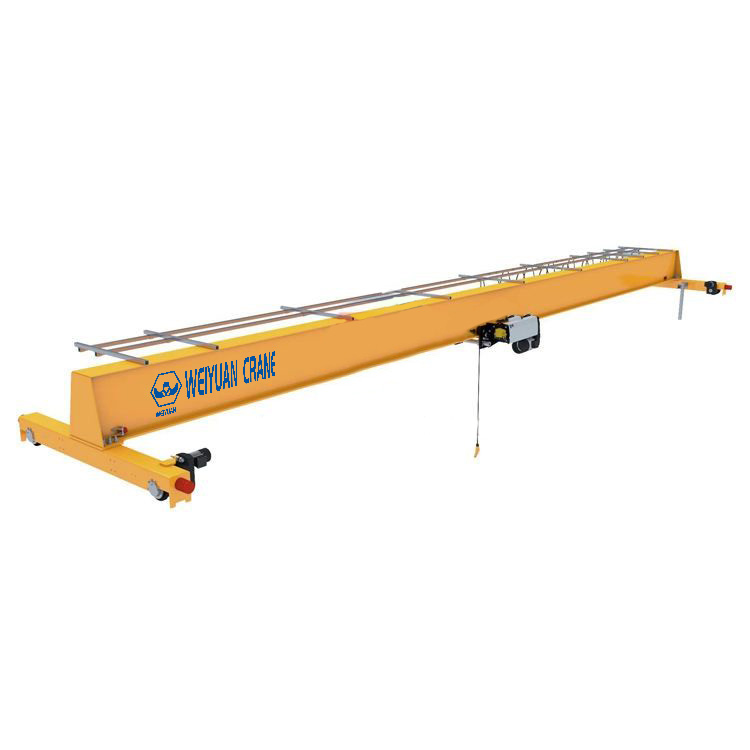
Single girder bridge cranes cost 40 to 60% less than double girder cranes at equivalent capacity and span — making configuration selection the single largest cost lever for capacities between 5 and 20 tons where both configurations are technically viable.
The cost difference reflects both the structural material difference (one beam vs two) and the hoist/trolley difference (underhung electric hoist vs top-running crab assembly). For applications within the single girder design envelope (up to 20 tons, up to 30-meter span, CMAA Class B through light C), single girder is almost always the better value proposition.
5. Hoist Type
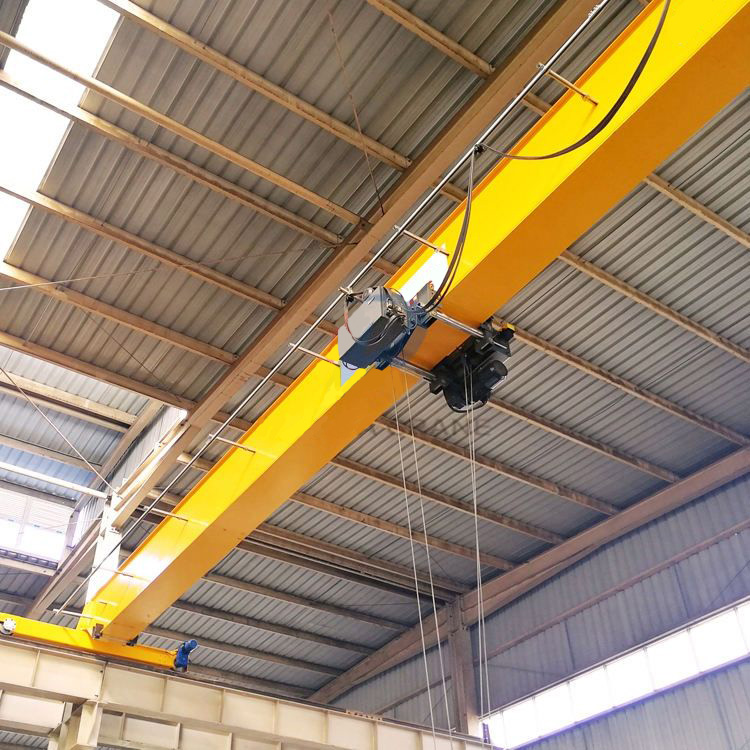
The hoist accounts for 25 to 40% of the total crane cost and is a significant specification variable:
Electric chain hoist (for single girder cranes up to 5 to 10 tons): Lower cost, compact body, limited top speed. Appropriate for light to moderate duty applications.
Electric wire rope hoist (standard for capacities above 5 tons): Moderate cost, wider speed range, suitable for all duty classes.
Built-up open winch trolley (standard for double girder cranes above 20 tons): Highest cost — a purpose-engineered crab assembly with open frame, drum hoist, and full VFD control. Provides maximum performance, hook height, and reliability for heavy production applications.
6. Controls and Features
Standard pendant control with across-the-line starter: Minimum cost baseline.
VFD (Variable Frequency Drive) control: Adds $2,000 to $8,000+ to the crane cost depending on motor sizes. Reduces maintenance costs, extends service life, and improves productivity — typically the highest-ROI specification upgrade available.
Wireless radio remote: Adds $800 to $2,500. Recommended for any production application.
Anti-collision system (for multi-crane runways): $3,000 to $8,000 per crane pair. Required when two cranes share the same runway.
Cab control: Adds $15,000 to $40,000 for the cab structure, control station, and operator access provisions. Standard for cranes above 30 to 50 tons in production service.
Load monitoring and data logging: $2,000 to $6,000. Increasingly standard for production cranes — provides overload protection, usage data for maintenance planning, and incident investigation capability.
Part 2: Crane Purchase Price Ranges by Configuration (2026)
The following ranges represent typical market pricing from established manufacturers for standard industrial bridge cranes. Prices are FOB manufacturer’s facility and do not include freight, installation, or runway.
Single Girder Bridge Crane (top-running, electric chain hoist, pendant control):
- 1 ton, 10-meter span, Class B: $4,000 – $8,000
- 3 ton, 15-meter span, Class B: $7,000 – $14,000
- 5 ton, 20-meter span, Class C: $12,000 – $22,000
- 10 ton, 20-meter span, Class C: $20,000 – $38,000
- 20 ton, 25-meter span, Class C: $38,000 – $65,000
Double Girder Bridge Crane (top-running crab, VFD control, pendant + wireless remote):
- 5 ton, 20-meter span, Class C: $22,000 – $40,000
- 10 ton, 20-meter span, Class C: $35,000 – $62,000
- 20 ton, 25-meter span, Class D: $65,000 – $115,000
- 50 ton, 30-meter span, Class D: $150,000 – $280,000
- 100 ton, 35-meter span, Class E: $350,000 – $650,000+
Note: Chinese-manufactured cranes (from established, certified manufacturers) typically price 25 to 45% below equivalent European or North American manufactured units at equivalent specification. The quality gap has narrowed substantially for standard industrial applications — established Chinese crane manufacturers producing to GB/T, FEM, and CE standards deliver reliable performance at significantly lower cost.
Part 3: Runway System Cost
The runway — the two parallel elevated beams and rails on which the bridge crane travels — is a separate cost component that is frequently omitted from initial budget estimates and then discovered as a significant addition.
Runway costs depend on:
- Number of runway bays (column spacing × number of columns per side)
- Runway beam size (determined by crane wheel loads and column spacing)
- Crane rail size (ASCE 25 through A150, depending on wheel load)
- Whether the building structure can support the runway beams or new columns are required
- Runway electrical system (conductor bars or festoon cable for power supply to the crane)
Typical runway cost estimates:
- Light-duty runway (5-ton crane, 6-meter column spacing, 30-meter runway length): $8,000 – $18,000 total runway (both sides)
- Medium-duty runway (20-ton crane, 6-meter spacing, 60-meter runway length): $25,000 – $55,000
- Heavy-duty runway (100-ton crane, 9-meter spacing, 90-meter runway length): $80,000 – $180,000
Building structural reinforcement — required when existing building columns cannot carry the added crane runway loads without modification — adds $10,000 to $80,000 or more depending on the scope of structural work required.
Part 4: Installation and Commissioning Costs
Bridge crane installation involves multiple trades and typically costs 20 to 40% of the crane’s purchase price for standard installations. Breakdown:
Mechanical installation (crane erection team): $3,000 to $15,000 for light to medium cranes; $15,000 to $50,000 for heavy cranes requiring specialized rigging equipment.
Electrical installation (licensed electrician): Branch circuit wiring from the facility’s electrical panel to the crane runway conductor system, conductor bar installation, and grounding. Typically $2,000 to $8,000 for light cranes; $8,000 to $25,000 for larger systems.
Runway beam installation (structural steel erection): If the runway is being installed new (rather than using existing building steel): $8,000 to $40,000 depending on runway weight and access conditions.
Load test and commissioning: Required by ASME B30.2 before placing the crane in production service. Test load (125% of rated capacity), limit switch verification, brake testing, and documentation: $1,500 to $5,000.
Total installed cost (crane + runway + installation) as a percentage of crane-only price:
- Light cranes (1 to 5 ton): Total installed typically 180 to 250% of crane price
- Medium cranes (10 to 30 ton): Total installed typically 150 to 200% of crane price
- Heavy cranes (50 ton+): Total installed typically 130 to 170% of crane price
Part 5: Annual Maintenance Cost
Annual maintenance cost for a bridge crane in normal industrial service is typically 3 to 8% of the original purchase price per year for a well-maintained crane, increasing to 8 to 15% as the crane ages beyond 15 years without major refurbishment.
Maintenance cost components:
- Routine preventive maintenance (lubrication, adjustments, minor replacements): $1,500 to $5,000/year for light to medium cranes
- Annual third-party periodic inspection (ASME B30.2 / CMAA requirement): $400 to $1,500 per crane
- Wire rope or chain replacement: Every 2 to 6 years depending on duty class; $500 to $5,000 per replacement
- Brake lining replacement: Every 2 to 7 years depending on duty class; $300 to $1,500 per replacement
- Hoist motor replacement or rewind: Every 8 to 15 years for correctly specified cranes; $1,500 to $8,000
- Gearbox overhaul: Every 10 to 20 years; $2,000 to $12,000
10-year total cost of ownership (5-ton, 20-meter span, CMAA Class C single girder crane):
- Crane purchase: $15,000
- Runway and installation: $25,000
- 10-year maintenance (average $3,000/year): $30,000
- Total 10-year TCO: approximately $70,000
Frequently Asked Questions
Q: Is it cheaper to buy a used bridge crane?
A: Used bridge cranes can be significantly cheaper on initial purchase — typically 30 to 60% of new crane price for good-condition units. However, the true cost comparison must account for: inspection and certification cost before putting used equipment into service (ASME B30.2 requires a complete inspection and load test for used cranes placed in a new facility), likely required maintenance and component replacement to bring the crane to serviceable condition, and the shorter remaining service life. For light-duty maintenance cranes, used equipment can offer excellent value. For production cranes in heavy service, new equipment with full warranty and known service history is almost always the better long-term investment.
Q: How long does a bridge crane procurement and installation typically take?
A: Standard catalog single girder cranes (1 to 10 tons, standard spans): 4 to 8 weeks from order to delivery; 1 to 2 additional weeks for runway installation and crane erection. Custom or heavy double girder cranes (20 tons and above): 12 to 24 weeks from order to delivery; 2 to 4 weeks for installation and commissioning. Plan for a minimum 3-month project schedule for any crane installation involving structural runway work in an existing building, and 6 months or more for major cranes requiring building structural assessment and modification.
Q: Should I buy directly from a manufacturer or through a crane dealer?
A: Both are viable. Buying directly from a manufacturer (particularly Asian manufacturers with export experience) typically provides the lowest purchase price. Buying through a local crane dealer or systems integrator adds cost but provides local project management, faster service response, and a single point of contact for the complete project — runway, crane, electrical, and commissioning. For complex installations or buyers without in-house crane engineering expertise, the dealer markup is often justified by the project management value provided.