



Cranes
Top Factors to Consider When Choosing an Overhead Crane for Your Facility in 2026
Upgrading your facility’s material handling capabilities is a significant decision. In 2026, the demand for efficiency and safety in industrial environments is higher than ever. Whether you run a bustling automotive assembly line, a steel processing plant, or a heavy machinery workshop, the right equipment can boost productivity by over 20%. Conversely, the wrong choice can lead to bottlenecks and safety hazards.
At the heart of many modern operations lies the overhead crane. These powerful machines are designed to lift heavy loads vertically and move them horizontally across a facility, optimizing floor space and ensuring smooth workflows. But with various configurations like single girder, double girder, and customized automation features available, how do you choose the right one?
This guide breaks down the critical factors you need to consider to make an informed investment for your facility.
1. Load Capacity and Technical Specifications
The most fundamental starting point is understanding your lifting requirements. It’s not just about what you need to lift today, but what you might need to lift five years from now.
Determine Your Maximum Load
Your crane’s Rated Lifting Capacity must exceed the heaviest load you intend to move. Standard capacities range from 1 ton to 80 tons, but heavy industries often require customization up to 400 tons. Overloading is a primary cause of overhead crane accidents, so accurate calculation is non-negotiable.
Span and Lifting Height
- Span: This is the horizontal distance between the runway rails. It determines how much of your facility width the crane can cover. Standard spans range from 7.5m to 34m.
- Lifting Height: Consider the vertical distance from the floor to the highest point the hook needs to reach. If your facility has low ceilings, you might need a low-headroom hoist design to maximize lift within the available space.
2. Structural Design: Single vs. Double Girder
Choosing between a single girder and a double girder overhead bridge crane significantly impacts both cost and functionality.
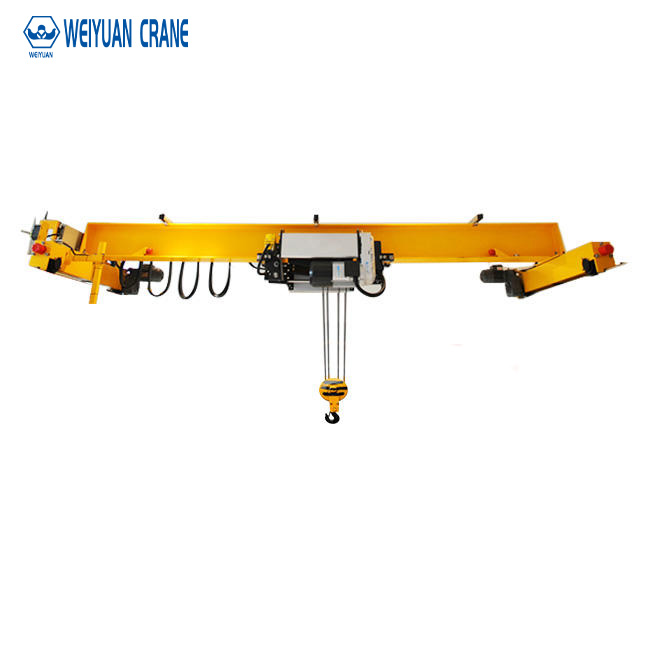
Single Girder Overhead Crane
- Best for: Light to medium duty cycles (1–20 tons).
- Advantage: Cost-effective and lighter, reducing the load on your building’s structure.
- Design: The hoist typically hangs below the main beam.
Double Girder Overhead Crane
- Best for: Heavy-duty applications (20+ tons) and wider spans.
- Advantage: Offers greater hook height because the hoist sits on top of the girders. It is more rigid and durable for intensive use.
- Design: Ideal for factories requiring high speed and high frequency of operation.
3. Safety Features and Compliance
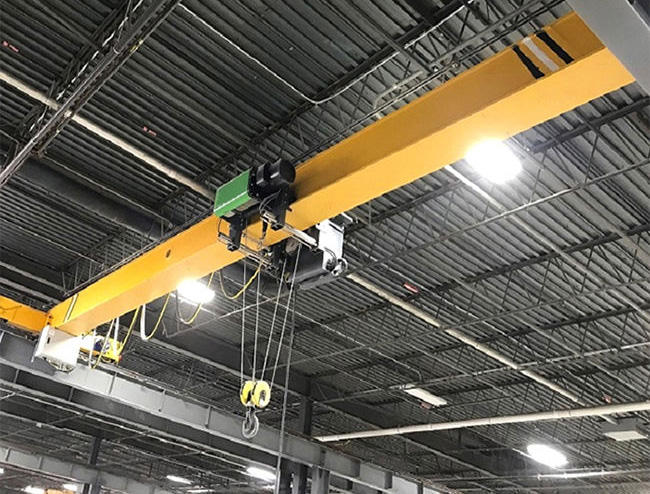
Safety is paramount. In 2026, smart safety systems are no longer optional luxuries; they are essential standards. When selecting a crane, ensure it complies with national and industry standards (such as ISO or FEM) and includes robust safety mechanisms.
Essential Safety Components
- Overload Limiters: Automatically cut off lifting power if the load exceeds the rated capacity.
- Limit Switches: Prevent the hoist from traveling past the safe ends of the rail or lifting too high.
- Emergency Stop Systems: Immediate braking capability in case of operational anomalies.
- Collision Avoidance: For runways with multiple cranes, laser or infrared sensors prevent accidental impacts.
At Weiyuan, we integrate these features as standard protocols. Our designs prioritize operator safety, ensuring that every overhead crane system protects both your personnel and your valuable inventory.
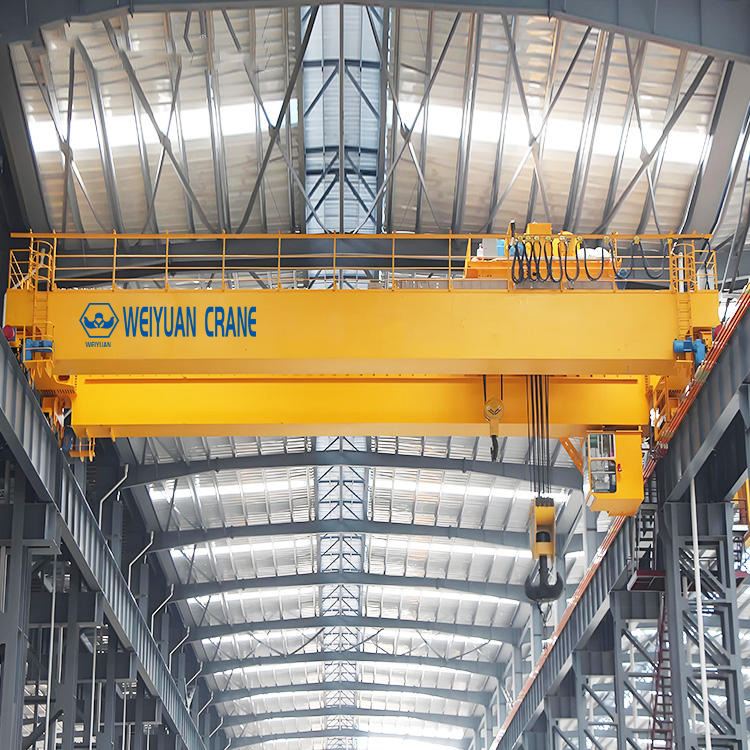
Weiyuan Double Girder Overhead Crane – High Performance, Customizable
The Weiyuan double girder overhead crane is a high-performance and fully customizable industrial lifting solution designed for heavy-duty applications with strong rigidity, reliable lifting precision and adaptability to various span and load requirements. :contentReference
View Product / Get Quote4. Duty Cycle and Environment
Not all cranes work equally hard. The “Duty Class” (e.g., ISO M5 to M8) defines how frequently the crane is used and under what load conditions.
- Light Duty: Maintenance workshops where the crane lifts occasionally.
- Heavy Duty: Steel mills or foundries where the crane operates near maximum capacity 24/7.
Environmental Considerations
Is your facility dusty, humid, or prone to extreme temperatures?
- Foundries: Require heat shields and high-temperature wiring.
- Outdoor Storage: Needs weather-resistant coatings and wind locks.
- Chemical Plants: May require explosion-proof motors and spark-resistant wheels.
Ignoring environmental factors is a leading cause of premature overhead crane repair needs. Customizing the crane for its specific environment ensures longevity and reliability.
5. Control Systems and Automation
How your operators interact with the crane affects efficiency and fatigue.
- Pendant Control: The operator walks alongside the load. Simple and cost-effective.
- Remote Control: Allows the operator to stand at a safe distance, offering better visibility and safety.
- Cabin Control: Necessary for high-speed, heavy-duty cranes where the operator needs a bird’s-eye view.
Modern systems often feature Variable Frequency Drives (VFD). This technology allows for “stepless” speed control, meaning the crane starts and stops smoothly without jerking. This precision is crucial for assembling delicate machinery or positioning heavy dies.
6. Maintenance and After-Sales Support
An overhead crane is a long-term asset. Its lifecycle cost depends heavily on ease of maintenance and the availability of parts.
Overhead Crane Maintenance
Routine inspections are vital. Look for designs that offer easy access to key components like the hoist, motor, and electrical panel. A “maintenance-friendly” design reduces downtime significantly.
Spare Parts Availability
Before buying, ask the manufacturer about their spare parts inventory. Can you get a replacement motor or brake coil within 24 hours? At Weiyuan, we provide a one-year warranty and ensure that critical overhead crane parts are readily available to support our global clients.
7. Choosing the Right Manufacturer
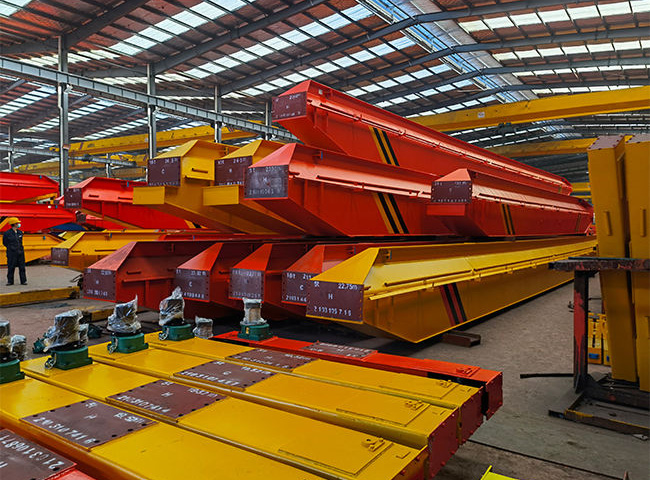
Finally, the quality of the equipment is only as good as the company behind it. You need a partner who offers more than just metal fabrication.
Look for a manufacturer that provides:
- Consultation: Free structural analysis of your plant to optimize crane layout.
- Customization: Ability to tailor lifting height, span, and special attachments (like grabs or magnets).
- Installation: Professional on-site installation and commissioning services.
- Training: Comprehensive overhead crane training for your operators to ensure safe and efficient usage.
Conclusion
Investing in the right lifting equipment requires balancing technical specifications with operational reality. By carefully considering load capacity, structural design, safety features, and the operating environment, you can select an overhead crane that serves as the backbone of your production for decades.
Don’t settle for a one-size-fits-all solution. Whether you need a standard 10-ton hoist or a custom 100-ton double girder giant, choose a partner who understands your industry.
Ready to optimize your facility’s material handling? Contact Weiyuan today for a free consultation and let our engineers design the perfect lifting solution for your needs.