


Beyond Manual Lifting: The Role of Smart Anti-Sway & AI-Integrated Control in Overhead Crane Safety
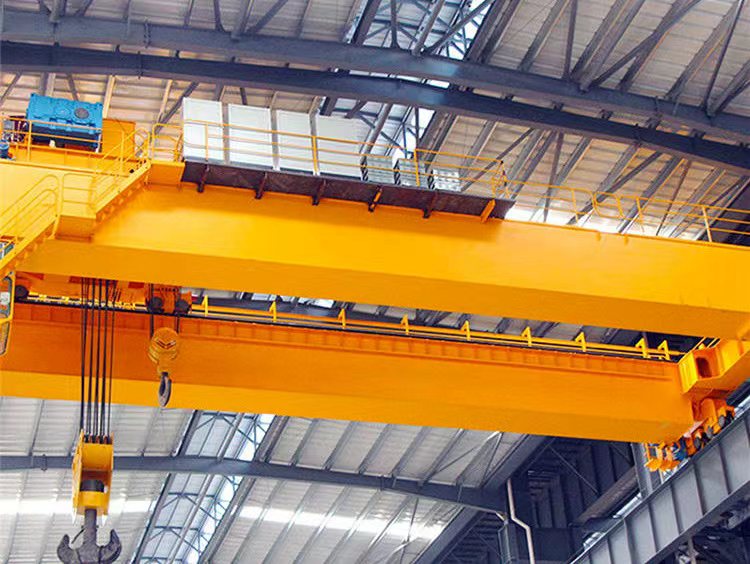
In the high-stakes environment of heavy industry, the swing of a load—known as “sway”—is more than just a nuisance; it is a critical safety hazard and a major bottleneck for productivity. For decades, controlling this sway relied entirely on the skill and steady hand of the overhead crane operator. But as production speeds increase and loads become heavier and more valuable, reliance on manual skill alone is no longer sufficient.
Enter the era of smart lifting. By integrating Anti-Sway technology and Artificial Intelligence (AI) into control systems, modern overhead crane solutions are transforming how industries handle materials. This article explores how these advanced technologies are moving the industry beyond manual limitations, delivering a new standard of safety and precision.
The Evolution of Load Control
An overhead crane—the backbone of manufacturing and logistics—is traditionally a simple machine: a bridge, a trolley, and a hoist. However, the physics of lifting are complex. When a crane accelerates or stops, the suspended load naturally acts like a pendulum. This sway forces operators to wait for the load to stabilize before positioning it, wasting valuable seconds with every lift. Worse, uncontrolled sway can lead to collisions, property damage, or injury.
Smart Anti-Sway systems and AI-integrated controls solve this by automating the physics of stability. Instead of reacting to sway after it happens, these systems predict and counteract it in real-time. This shift from reactive manual control to proactive automated stability is the single biggest leap in crane safety technology in recent years.
Features and Advantages: The Intelligence Inside
Modern smart cranes are equipped with sophisticated algorithms and sensors that function as an invisible co-pilot for the operator.
- Electronic Anti-Sway Technology: By calculating the pendulum length (hoist cable length) and the acceleration of the crane, the system micro-adjusts the motor speed to counteract sway. The result is a load that stays rock-steady, even during rapid stops.
- AI-Integrated Precision: Advanced systems use AI to “learn” from lift patterns. Over time, the system optimizes acceleration and deceleration curves for specific loads, ensuring the smoothest possible transport.
- Automated Positioning: Smart controls allow for semi-automatic movement. An operator can select a destination, and the overhead travelling crane will navigate there via the optimal path without swaying, stopping exactly on target.
- Collision Avoidance: Integrated sensors detect obstacles in the crane’s path and automatically slow or stop the equipment, preventing accidents in crowded facilities.
- User-Friendly Interface: Despite the complex technology, the operator interface remains simple. The intelligence works in the background, allowing even less experienced operators to perform like veterans.
Technical Specifications
The foundation of a smart crane is robust hardware capable of executing these precise commands.
- Capacity: Available for all standard capacities, from a 5 ton overhead crane for workshops to 80-ton heavy-duty models.
- Control Response: Micro-second processing speeds ensure real-time adjustments to motor torque and speed.
- Drive System: High-performance Variable Frequency Drives (VFD) are essential for executing the subtle speed changes required for anti-sway.
- Sensors: High-resolution encoders and laser positioning systems provide the data needed for AI calculations.
- Power Supply: Compatible with standard 380V/400V/415V, 50-60Hz, 3-phase industrial power.
Customization Options: Weiyuan’s Smart Solutions
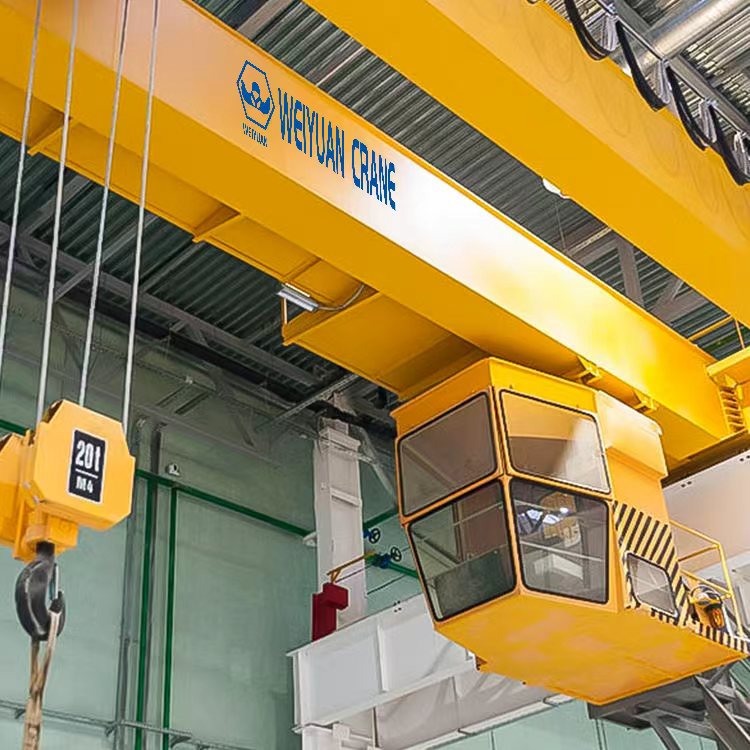
Implementing AI and anti-sway technology isn’t a one-size-fits-all process. Weiyuan specializes in integrating these smart features into custom-built cranes tailored to your specific workflow.
Our customization services include:
- Retrofit Solutions: We can often upgrade your existing overhead crane systems with smart control panels and VFDs, provided the mechanical structure is sound.
- Process Automation: We can program the crane to perform specific repetitive tasks automatically, such as “pick and place” operations in a dipping tank.
- Environment Adaptation: Smart sensors can be shielded for use in dusty, hot, or humid environments like foundries.
- Dual-Hoist Synchronization: For lifting long objects with two hoists, our AI controls ensure perfect synchronization to prevent the load from tilting.
Application Areas
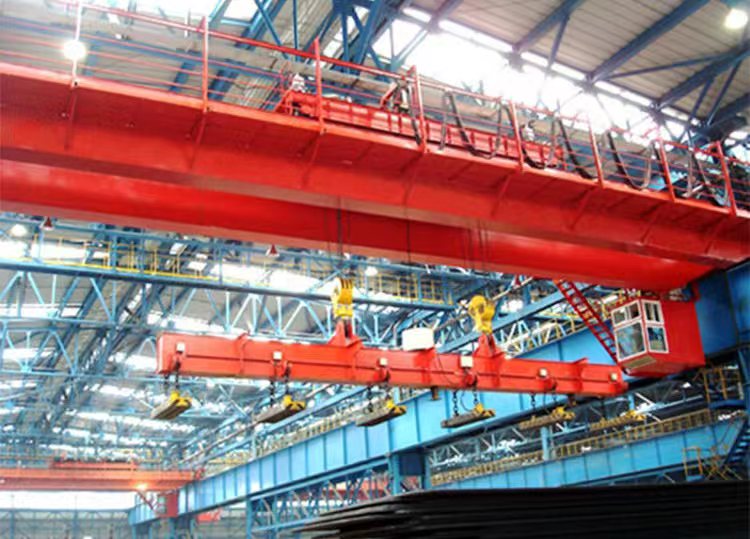
Smart lifting technology is essential in industries where precision is paramount and the cost of error is high.
- Automotive Stamping: Handling expensive dies requires absolute stability to prevent damage to the die or the press. A double girder overhead crane with anti-sway is the standard here.
- Steel Coil Handling: Moving massive coils quickly without sway prevents damage to the coil edges and ensures safe stacking.
- Paper and Film Rolls: These fragile materials require gentle handling that only precise, automated control can provide.
- Nuclear and Energy: In environments where safety is critical, AI-assisted controls remove the variable of human error from dangerous lifts.
- Automation Warehouses: Cranes integrated into fully automated storage and retrieval systems (AS/RS) rely entirely on these technologies.
Safety and Compliance
While AI enhances performance, safety compliance remains the bedrock of our engineering. Weiyuan’s smart cranes adhere to strict international safety standards, including CE certification and relevant machinery directives.
Safety features include:
- Fail-Safe Braking: If power is lost or a fault is detected, mechanical brakes engage immediately.
- Operator Override: The human operator can always take manual control instantly in an emergency.
- Data Logging: The system records lift data, which is invaluable for overhead crane inspections and incident analysis.
- Load Limiting: AI systems cross-reference the lifted weight with the crane’s rated capacity and reach, preventing overload scenarios dynamically.
Case Study: Precision in Aerospace Manufacturing
An aerospace components manufacturer faced a bottleneck in their assembly wing. Moving delicate fuselage sections required extreme caution, forcing operators to move slowly to avoid sway.
- The Challenge: Increase throughput while reducing the risk of impact damage to multi-million dollar components.
- Our Solution: Weiyuan installed a 20-ton overhead crane featuring closed-loop anti-sway technology and auto-positioning.
- The Result: Cycle times for moving components were reduced by 40% because operators could move at full speed without waiting for sway to dampen. “The crane drives itself,” the production manager noted. “Our operators can focus on the placement, not the transport.”
Installation and Support
Advanced technology requires expert setup. Weiyuan provides comprehensive support to ensure your smart crane delivers on its promise.
- Calibrated Installation: Our technicians precisely calibrate the sensors and drives during installation to match your facility’s dimensions.
- Operator Training: We provide specialized training, distinct from a standard overhead crane course, to teach operators how to leverage AI features effectively.
- Remote Diagnostics: Smart control systems can often be accessed remotely by our engineers to troubleshoot issues or update software without a site visit.
Pricing and Quotes
The overhead crane cost for a smart system is higher initially than a traditional manual crane due to the advanced drives and sensors. However, the ROI—delivered through faster cycle times, reduced product damage, and lower maintenance costs—is substantial.
Whether you need a 10 ton overhead crane with basic anti-sway or a fully automated system, Weiyuan offers factory-direct pricing. Contact us for a consultation and a detailed quote.
Delivery Timeline
- Standard Smart Cranes: 3-5 weeks for manufacturing and software configuration.
- Highly Custom Automated Systems: 6-8 weeks, allowing time for extensive testing and programming before shipment.
FAQ
Q: Can anti-sway technology be turned off?
A: Yes. Operators can usually toggle the feature on or off via the overhead crane controls, allowing for manual operation when necessary (e.g., during maintenance or complex rigging scenarios).
Q: Do I need a specialized operator for these cranes?
A: While the technology assists the operator, basic competence is still required. However, overhead crane operator hiring becomes easier because the system lowers the skill floor required to operate the crane safely and smoothly.
Q: Is smart control available on a single girder crane?
A: Yes. We can integrate anti-sway and VFD controls onto a 5 ton overhead gantry crane or single girder bridge crane just as easily as larger double girder models.
Q: How does this affect overhead crane servicing?
A: Smart cranes have self-diagnostic capabilities that can alert maintenance teams to specific issues (like motor overheating or sensor drift), often making troubleshooting faster than with traditional electromechanical systems.