


Beyond the Lift: Enhancing Workplace Safety and Operator Longevity through Ergonomic Jib Solutions
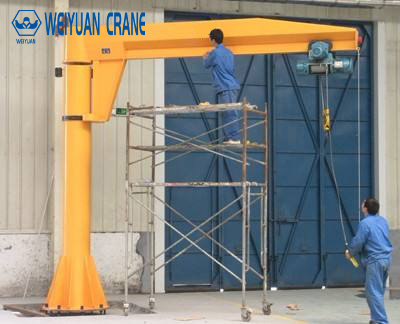
In any industrial setting, productivity is often measured by output. However, true operational excellence goes beyond simple numbers. It encompasses the well-being of the workforce, the safety of the environment, and the sustainability of the operation. Repetitive manual lifting, even of moderately heavy loads, is a leading cause of musculoskeletal injuries, operator fatigue, and costly downtime. An ergonomic lifting solution is not just an equipment upgrade; it’s an investment in your most valuable asset: your people.
A jib crane is a powerful tool for lifting, but an ergonomically designed jib solution transforms the entire work process. It moves beyond the lift itself to create a safer, less strenuous, and more efficient workspace. By minimizing physical strain and optimizing movement, these systems protect employees from injury, enhance focus, and contribute to long-term operator longevity and satisfaction.
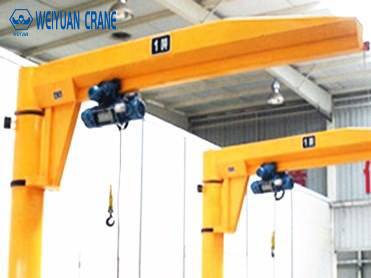
Weiyuan 2-Ton Ceiling Traveling Monorail Electric Hoist
The Weiyuan 2-Ton Ceiling Traveling Monorail Electric Hoist is a specialized lifting solution with integrated electric trolley, smooth horizontal movement and robust 2-ton lifting capacity for workshops and light industry applications.:contentReference[oaicite:0]{index=0}
View Product / Get Quote1. Product Description
Our ergonomic jib solutions are engineered with the operator at the center of the jib crane design. These systems are designed to make material handling feel effortless, reducing the physical demands of lifting, pushing, and pulling loads. Whether it’s a lightweight wall mount jib crane for a component assembly station or a robust freestanding model for a machine shop, the focus is on smooth, fluid motion that minimizes operator effort.
This ergonomic approach means designing a jib crane that is easy to rotate, positions loads with precision, and integrates seamlessly with the user’s workflow. By taking the strain out of repetitive tasks, you not only comply with health and safety standards but also foster a more positive and productive work environment. Operators can work more consistently and comfortably, leading to fewer errors, reduced fatigue, and a significant decrease in work-related injuries.
2. Features and Benefits
Our ergonomic jib solutions are packed with features designed to improve safety, reduce physical stress, and boost efficiency.
Key Ergonomic Features:
- Low-Friction Bearing Systems: High-quality, precision-engineered bearings in the pivot points ensure the crane jib boom rotates smoothly with minimal force, even when under load.
- Lightweight Boom Construction: Utilizing high-strength, low-weight steel profiles reduces the boom’s inertia, making it easier for the operator to start and stop the motion.
- Articulating Jib Arms: Our articulating jib cranes feature a secondary arm that can bend, allowing operators to easily navigate around columns, equipment, and other obstacles without repositioning the entire load.
- Motorized and Automated Options: For heavier loads or high-cycle applications, powered rotation and powered hoists eliminate nearly all physical effort from the lifting process.
- Ergonomic Pendant Controls: Lightweight, intuitively designed controllers that fit comfortably in the hand and reduce wrist strain during operation.
Core Benefits:
- Enhanced Workplace Safety: Drastically reduces the risk of musculoskeletal disorders (MSDs), back injuries, and sprains associated with manual material handling.
- Increased Operator Longevity: By creating a less physically demanding work environment, you help retain experienced operators and reduce employee turnover.
- Improved Productivity and Quality: Operators who are not fatigued can maintain a consistent pace and focus more on the quality of their work, leading to fewer defects.
- Higher Employee Morale: Providing safe and comfortable tools shows a commitment to employee well-being, which boosts morale and job satisfaction.
3. Technical Specifications
Our ergonomic jib solutions are available in a variety of configurations to meet your specific needs.
- Lifting Capacity: From 50 kg up to 5 tons. Lighter capacities like the 1/2 ton jib crane are very popular for ergonomic applications.
- Arm Length (Span): Standard spans range from 2 meters to 8 meters.
- Rotation: Up to 360° for freestanding models; 180°-270° for wall-mounted models.
- Materials: High-tensile structural steel for strength; optional aluminum booms for extremely low-inertia applications.
- Control Systems: Ergonomic pendant control, variable speed drives (VFDs) for smooth acceleration/deceleration, and wireless remote options.
- Mounting Options: Freestanding, wall-mounted, and even specialized foundationless jib crane models that bolt to a suitable existing concrete slab (6-inch minimum).
4. Customization Options
A truly ergonomic solution is one that is tailored to the task. WEIYUAN is a manufacturing enterprise that integrates design, production, and installation, providing complimentary design services to create a system that fits your exact needs.
Customizable ergonomic features include:
- Articulating Arms: We can design a two-part boom to provide the reach and flexibility required to work around obstructions.
- Push/Pull Force Tuning: For manual cranes, we can select components to ensure the force required to move the boom meets your specific ergonomic standards.
- Hoist Integration: We can pair the crane with an advanced hoist featuring soft-starts, variable speeds, or auto-positioning technology.
- Specialty End Effectors: Integration of custom grippers, vacuum lifters, or magnets to handle unique product shapes.
- Marine Jib Crane: For applications in corrosive or marine environments, we offer stainless steel construction and specialized coatings.
5. Application Areas
Ergonomic jib solutions are essential in any industry where operators perform repetitive lifting tasks.
- Automotive and Aerospace: Handling delicate and valuable components with precision during assembly.
- Manufacturing: Loading and unloading CNC machines, presses, and molds.
- Warehousing and Distribution: Palletizing and depalletizing products, reducing manual lifting.
- Food and Pharmaceutical: Utilizing stainless steel jib boom cranes for sanitary and wash-down environments.
- Maintenance and Repair: A shop jib crane provides safe lifting for motors, pumps, and other heavy parts in maintenance areas.
6. Safety and Compliance
Our commitment to safety goes beyond the lift itself to include the long-term health of the operator. Our designs adhere to strict international ergonomic and safety standards.
- Compliance: Our jib solutions can be designed to comply with local and international standards, including CE (Europe), ensuring they meet rigorous safety requirements.
- Ergonomic Design Standards: We design with guidelines from organizations like OSHA in mind, focusing on reducing push/pull forces and eliminating awkward postures.
- Load Testing and Certification: Every crane is rigorously tested to ensure it meets its rated capacity with a significant safety factor.
7. Case Studies
Case Study 1: Electronics Assembly Line
An electronics company was experiencing a high rate of shoulder and back complaints from operators who had to manually lift and position chassis units weighing 20 kg. WEIYUAN installed a series of lightweight, wall-mounted articulating jib cranes with enclosed track booms. The extremely smooth and easy movement allowed operators to guide the chassis into place with just their fingertips. Within six months, reported injuries dropped by 90%, and production efficiency increased by 10% due to reduced operator fatigue.
Case Study 2: Machine Shop Application
A busy machine shop used a shared overhead crane for loading heavy chucks and workpieces into lathes. This created significant downtime as operators waited for the crane. They installed a freestanding 1/2 ton jib crane at each CNC lathe. The easy rotation and precise control allowed a single operator to safely and quickly perform changeovers, reducing machine downtime by an average of 30 minutes per shift and eliminating the ergonomic risks of trying to manually handle the heavy items.
8. Installation and Support
A proper installation is key to an ergonomic system’s performance. We offer comprehensive support to ensure your system functions perfectly from day one.
- Installation Services: Our expert technicians can manage the full installation process, ensuring the crane is set up for optimal smoothness and safety. For those who prefer self-installation, we offer detailed manuals and video-based guidance.
- Ergonomic Training: We provide on-site training for your operators, teaching them how to use the crane in a way that maximizes safety and minimizes physical effort.
- After-Sales Support: Our team is always available for maintenance advice, troubleshooting, and providing any necessary jib crane components to keep your system running smoothly for years to come.
9. Pricing and Quotes
The jib crane price for an ergonomic solution varies based on capacity, span, features, and level of customization. While an ergonomic system may represent a slightly higher initial investment, it delivers a rapid return through reduced injury costs, lower insurance premiums, and increased productivity.
To get a personalized quote, please contact our team. We will provide a free ergonomic consultation to analyze your needs and propose a solution that delivers the best value for your operation.
10. Delivery Timeline
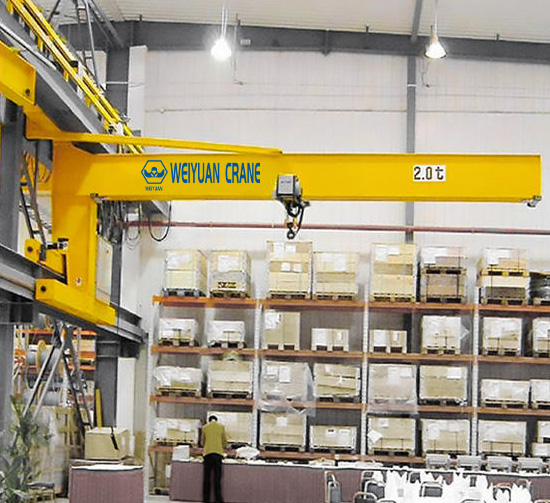
Our standard lead time for ergonomic jib solutions is approximately 20-35 working days after design confirmation. Highly customized systems may require additional time. We will provide a firm delivery schedule with your formal quotation and keep you informed throughout the process.
11. FAQ: Common Questions Answered
Q1: What makes a jib crane “ergonomic”?
An ergonomic jib crane is designed to be easy for the operator to use. This means it requires very little force to rotate the boom and position the load, minimizing physical strain. Features like high-quality bearings, lightweight booms, and articulating arms contribute to this.
Q2: What is a foundationless jib crane?
A foundationless jib crane is a type of freestanding jib that can be bolted directly to a suitable existing concrete floor (typically 6 inches or thicker, reinforced), avoiding the time and expense of pouring a new foundation.
Q3: Are portable jib cranes also ergonomic?
Portable jib cranes offer flexibility, but their primary benefit is mobility, not necessarily ergonomics for high-repetition tasks. For a fixed workstation, a permanently installed wall-mounted or freestanding jib will offer a much smoother and less strenuous user experience.
Q4: Can I build my own DIY jib crane?
We strongly advise against a DIY jib crane. Lifting equipment must be professionally engineered and tested to comply with safety standards. The risks associated with a failure of a homemade crane are severe.
Q5: What is the difference between the crane boom and jib?
In the context of a jib crane, the terms “boom” and “jib” are often used interchangeably to refer to the horizontal arm that the hoist travels on. “Crane boom and jib” is a term more commonly used with larger mobile or tower cranes, where the jib is an extension of the main boom.