


Custom Bridge Crane Solutions: Maximize Workshop Efficiency & Load Capacity
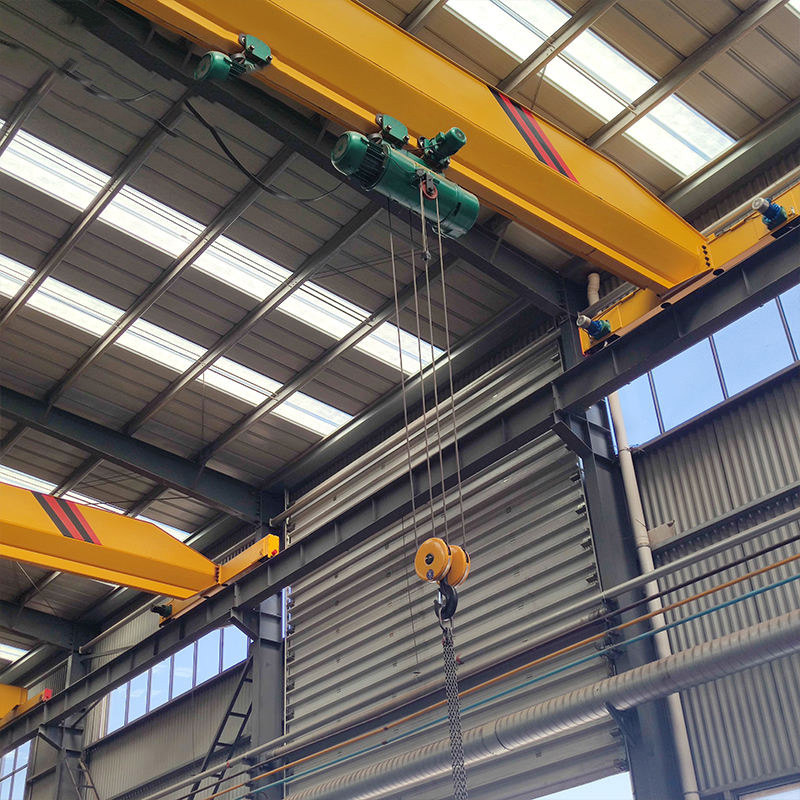
In the current industrial landscape, efficiency is no longer defined solely by the speed of material movement. True operational excellence is measured by how safely, precisely, and consistently loads are handled within the physical constraints of a facility. As production pressures mount and safety regulations become more stringent, the limitations of “one-size-fits-all” equipment become glaringly apparent.
This is where custom bridge crane solutions transition from a luxury to a strategic necessity. Unlike off-the-shelf lifting units, a bespoke bridge crane is engineered around your specific workshop layout, load characteristics, and long-term business goals. This investment directly translates into higher throughput, minimal downtime, and a significantly safer environment for your team.
1. Why Standard Lifting Equipment Often Falls Short
Standard bridge cranes are built for broad market averages. While they serve generic lifting tasks adequately, many specialized workshops operate under conditions that demand high precision and durability.
Common bottlenecks seen with standard models include:
- Wasted Space: Mismatched spans or runway lengths that leave “dead zones” in the workshop.
- Structural Stress: Excessive dead weight that puts unnecessary strain on the building’s support columns.
- Reduced Headroom: Bulky standard hoists that limit how high you can actually lift a load.
- Coarse Controls: Inflexible systems that make the delicate positioning of expensive components difficult and risky.
By contrast, a custom-engineered solution aligns with your real-world operating environment, ensuring every dollar spent contributes to productivity.
2. Defining the Modern Custom Bridge Crane
A true custom solution is an integrated system designed from the ground up based on a rigorous site assessment. It is not merely a modified catalog product. Effective customization happens across three primary dimensions:
Structural Integrity & Design
Choosing between a single girder and a double girder is just the beginning. Customization involves optimizing girder height to maximize vertical lift and utilizing finite element analysis (FEA) to reduce the crane’s self-weight without compromising strength.
Precision Lifting Mechanisms
Whether your application requires a wire rope hoist for heavy-duty cycles or a chain hoist for lighter, high-precision tasks, the mechanism should be matched to your specific duty class (such as FEM 2M or 3M). This ensures the hoist doesn’t overheat or wear prematurely under your specific workload.
Smart Control Systems
The integration of Variable Frequency Drives (VFD) allows for smooth acceleration and deceleration, virtually eliminating the “load swing” that plagues older systems. Advanced logic can even integrate the crane directly with your Manufacturing Execution System (MES).
3. Elevating Efficiency through Spatial Intelligence
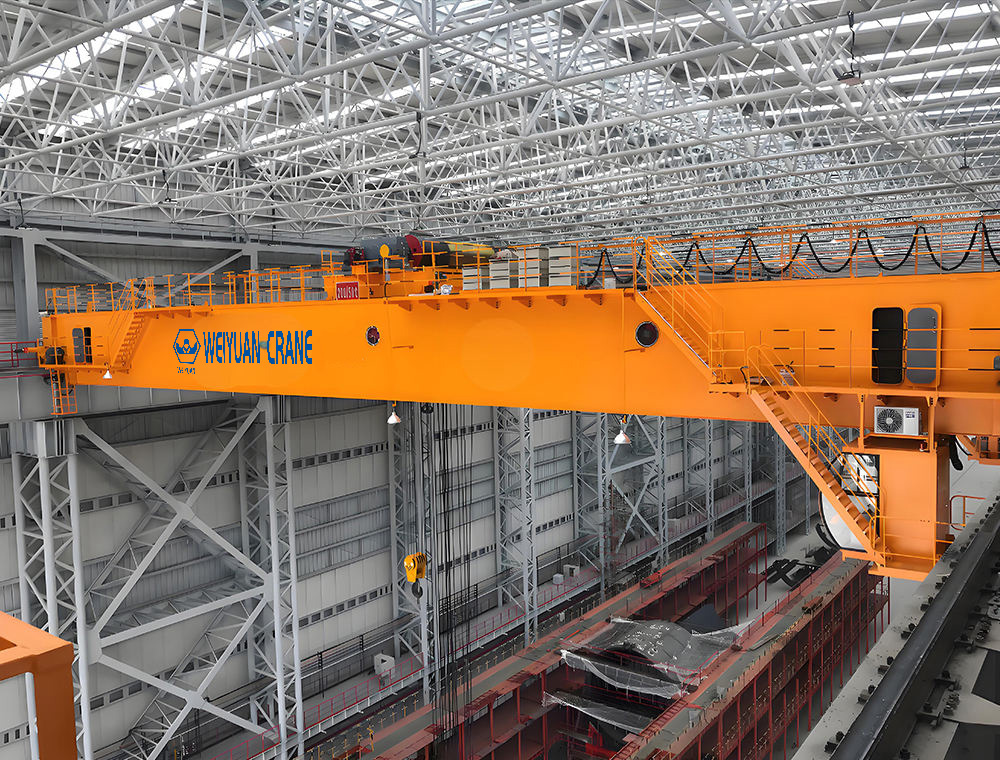
Weiyuan QD Type Overhead Crane for Steel Mills – Heavy Duty & Heat-Resistant
The Weiyuan QD Type Overhead Crane is engineered for demanding steel mill environments, offering heavy-duty load handling, enhanced heat-resistant components, and rugged performance. Designed for continuous operation under elevated temperatures, this crane delivers reliable material handling for intense industrial applications. ([chengduweiyuan.com](https://chengduweiyuan.com/cranes/bridge-crane/weiyuan-weiyuan-qd-type-overhead-crane-for-steel-mills-heavy-duty-heat-resistant-high-performance/))
View Product / Get QuoteOne of the most immediate benefits of a custom bridge crane is the optimization of your facility’s “cube.” Custom low-headroom designs can increase your lifting height significantly without requiring you to raise the roof or modify the building’s steel structure.
While a mobile 【Gantry Crane】 is an excellent tool for specific tasks, it requires clear floor paths and dedicated storage space. A bridge crane, however, utilizes the “air rights” of your workshop. By moving the material handling to the ceiling, you free up the floor for uninterrupted production flow and safer pedestrian movement.
4. Scaling Load Capacity Without Structural Overhaul
A common misconception in the industry is that “bigger is always better.” However, oversizing a crane introduces unnecessary costs and energy consumption.
A custom bridge crane achieves a higher “effective capacity” by:
- Matching the rated load to your actual maximum working requirements.
- Designing for dynamic forces (the stress of moving a load) rather than just static weight.
- Selecting high-performance components that allow for a higher duty cycle.
In facilities where indoor space is at a premium but heavy staging is required outdoors, managers often pair their indoor bridge cranes with a heavy-duty outdoor 【Gantry Crane】. This hybrid approach ensures that the indoor system remains agile while the outdoor unit handles the bulk staging.
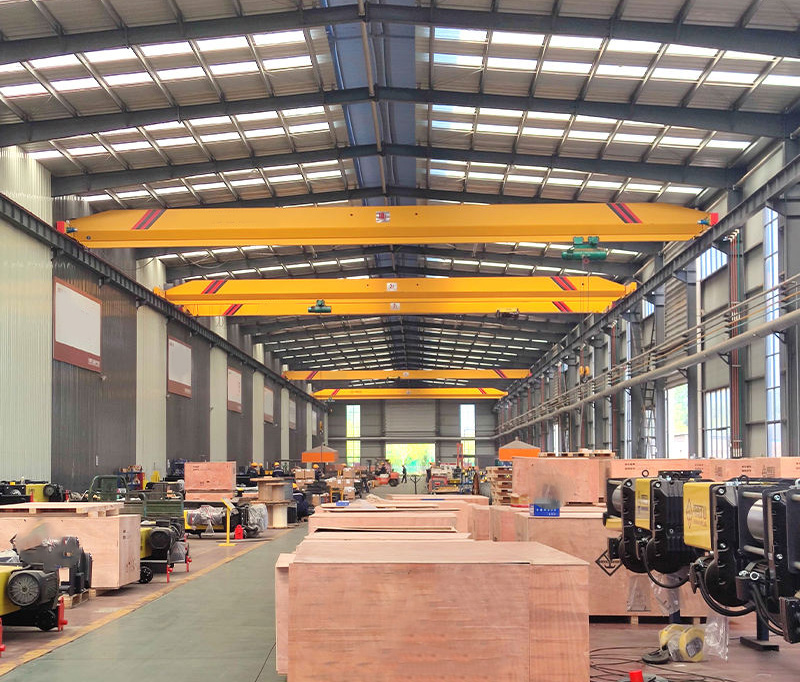
5. Safety as a Driver of Productivity
In a high-output environment, safety and productivity are two sides of the same coin. A single safety incident can halt production for days and damage your company’s reputation.
Modern custom cranes incorporate safety features that actively assist the operator:
- Electronic Overload Protection: Automatically prevents lifts that exceed the crane’s safe limit.
- Anti-Sway Technology: Algorithmic control that compensates for the pendulum effect during travel.
- Coordination Zones: Logic that prevents collisions when multiple cranes, or a bridge crane and an adjacent 【Gantry Crane】, share a overlapping handling zone.
6. The Long-Term Economics: Maintenance & TCO
When you choose a custom-engineered solution, you are designing for “maintainability.” This means placing electrical panels where they are easy to access and using modular components that can be swapped quickly.
Compared to temporary lifting setups or certain 【Gantry Crane】 configurations, a fixed bridge crane typically offers a longer service life and a lower Total Cost of Ownership (TCO). With built-in diagnostic systems, maintenance teams can shift from reactive repairs to predictive care—identifying a worn rope or a degrading brake before it causes a failure.
7. Bridge Crane vs. Gantry Crane: Making the Right Choice
The choice between these systems depends on your infrastructure and operational flexibility.
| Feature | Custom Bridge Crane | 【Gantry Crane】 |
| Primary Location | Permanent Indoor Facilities | Outdoor Yards or Flexible Indoor Cells |
| Floor Space | Zero Impact (Ceiling Mounted) | Requires Floor Rails or Clear Paths |
| Installation | Tied to Building Structure | Independent Support Legs |
| Long-term Value | Highest Productivity for Fixed Lines | High Versatility for Changing Layouts |
Frequently Asked Questions (FAQ)
How long does the design process for a custom crane take?
Depending on the complexity and the specific requirements of your site, the engineering and design phase typically spans 2 to 6 weeks. This includes load-bearing analysis, clearance checks, and compliance verification.
Is the initial cost of a custom crane much higher than a standard model?
While the upfront investment may be higher, the lifecycle cost is lower. Custom cranes experience fewer mechanical failures, require less structural modification to your building, and provide higher throughput, often paying for the difference within the first year of operation.
Can I upgrade my crane’s capacity later?
Many custom designs are built with “future-proofing” in mind. It is often possible to upgrade hoists or control systems later, provided the original bridge and runway structure were designed with a sufficient safety factor.
When is a gantry crane better than a bridge crane?
A 【Gantry Crane】 is the ideal choice if your building cannot support the weight of a runway system, if you are operating in an outdoor yard, or if you need the flexibility to move the lifting equipment to a different part of the facility in the future.