


Efficient and Versatile Bridge Cranes for Industrial Success
In the world of industrial operations, efficiency and versatility are the cornerstones of success. From manufacturing plants and assembly lines to warehouses and shipyards, the ability to move heavy materials safely and quickly is non-negotiable. This is where overhead lifting systems come into play, and among the most reliable and effective solutions is the bridge crane. These powerful machines are engineered to streamline workflows, enhance safety, and boost productivity across a multitude of applications.
Understanding the right lifting solution for your specific needs is crucial for optimizing your operations. This article will provide a comprehensive guide to bridge cranes, exploring their design, benefits, applications, and key considerations for selection. We will also touch upon related equipment, like the Gantry Crane, to help you differentiate and choose the best system for your facility. By the end, you’ll have a clear understanding of how these versatile cranes can drive industrial success.
What is a Bridge Crane?
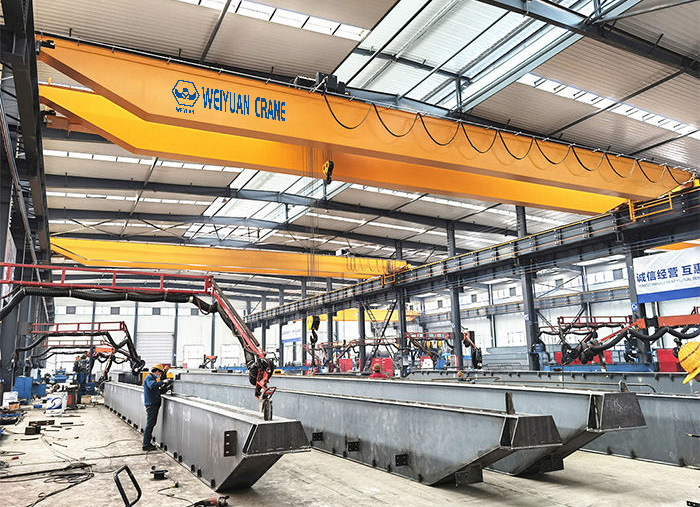
A bridge crane, also known as an overhead crane, is a type of crane that features a horizontal beam (the bridge) that travels along a runway. The runway itself is typically mounted along two long walls of a building or on freestanding columns. A lifting component, called a hoist, moves horizontally along the bridge. This dual-motion capability allows the crane to access and lift loads from nearly any point within its rectangular operating area.
The core components of a bridge crane work in harmony to provide precise and powerful lifting:
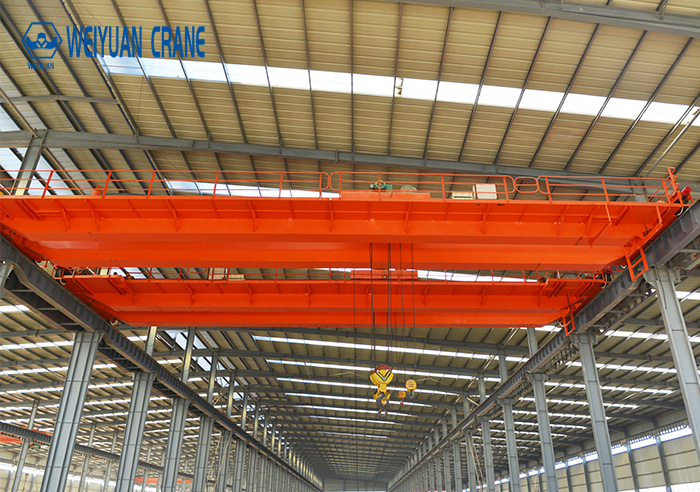
- The Bridge: The main structural beam that spans the width of the area. It can be a single girder or a double girder design, depending on the required capacity and span.
- The Runway: The tracks, beams, and columns that support the bridge and allow it to move longitudinally down the length of the bay.
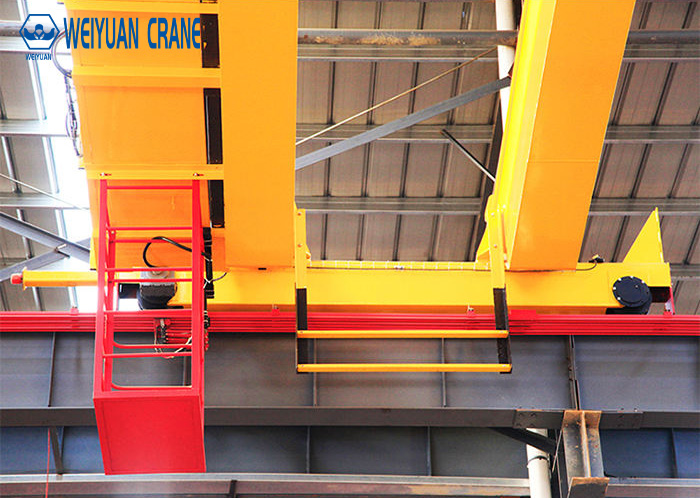
- The Hoist and Trolley: The hoist is the mechanical unit that performs the actual lifting and lowering of the load via a hook attached to a wire rope or chain. The trolley is the wheeled mechanism that carries the hoist and allows it to move side-to-side across the bridge.
- End Trucks: Located on either end of the bridge, these contain the wheels that travel along the runway beams.
This configuration provides exceptional stability and control, making bridge cranes a preferred choice for permanent installations that require repetitive and heavy lifting tasks within a fixed area.
The Unmatched Advantages of Bridge Cranes
Integrating a bridge crane into your facility is an investment in long-term efficiency and safety. Their design offers several key advantages over other material handling methods.
Enhanced Safety and Control
Safety is the primary concern in any industrial environment. Bridge cranes significantly reduce the risks associated with floor-based material handling, such as forklift accidents or manual lifting injuries. By moving loads overhead, they clear up valuable floor space, reduce congestion, and minimize the potential for collisions. Modern bridge cranes are equipped with advanced safety features, including overload protection, emergency stop buttons, and variable frequency drives (VFDs) for smooth acceleration and deceleration, giving operators precise control over heavy and often delicate loads.
Increased Operational Efficiency
Imagine your workflow without the bottlenecks caused by slow or inefficient material transport. Bridge cranes can lift and move massive loads far faster than ground-based equipment. With direct point-to-point travel, they eliminate the need to navigate around floor obstacles. This speed translates directly into reduced cycle times for manufacturing, faster loading and unloading of trucks, and a more streamlined production process overall. The result is a significant boost in productivity and output.
Maximized Vertical and Floor Space
One of the most significant benefits of a bridge crane is its ability to utilize overhead space. This frees up the factory or warehouse floor for production, storage, or other essential activities. Unlike a mobile crane or a Gantry Crane, which requires a clear floor path, a bridge crane operates above the action. This design allows you to maximize the vertical storage capacity of your facility and create a more organized and efficient workspace.
Versatility Across Industries
Bridge cranes are not a one-size-fits-all solution. They are highly customizable to meet the specific demands of various industries. From light-duty single girder cranes in assembly workshops to heavy-duty double girder cranes in steel mills and shipyards, there is a configuration for nearly every application. Hoists can be fitted with different attachments like magnets, grabs, or specialized C-hooks to handle a wide range of materials. This adaptability makes them one of the most versatile pieces of industrial equipment available.
Single Girder vs. Double Girder: Which is Right for You?
When selecting a bridge crane, one of the first decisions you’ll face is whether to opt for a single girder or a double girder design. Each has its own set of advantages suited for different operational needs.
Single Girder Bridge Cranes
As the name suggests, this design uses one main bridge beam. The trolley and hoist typically run on the bottom flange of the girder, a design known as “under-running.”
Advantages of Single Girder Cranes:
- Cost-Effective: With less material and a simpler fabrication process, single girder cranes are generally more economical to purchase and install.
- Lighter Weight: The reduced dead weight puts less stress on the building’s support structure, which can be a critical factor in older buildings or facilities not originally designed for a heavy crane.
- Faster Installation: The simpler design often allows for quicker and easier installation, minimizing operational downtime.
Single girder cranes are ideal for light to medium-duty applications, such as general manufacturing, assembly lines, and warehouse operations, typically with capacities up to 20 tons and shorter spans.
Double Girder Bridge Cranes
This design utilizes two parallel bridge beams with the trolley and hoist traveling on rails mounted to the top of the girders. This is known as a “top-running” design.
Advantages of Double Girder Cranes:
- Higher Lifting Capacity: The dual-girder construction provides superior strength and rigidity, allowing these cranes to handle extremely heavy loads—often exceeding 100 tons.
- Greater Hook Height: Because the hoist runs on top of the girders rather than below, it provides more headroom and a higher hook height. This is crucial in facilities with lower ceilings where maximum lifting height is needed.
- Longer Spans: The robust design enables double girder cranes to span much wider distances without compromising stability.
- Higher Speeds: They can be engineered for faster bridge, trolley, and hoist speeds, making them suitable for high-volume, demanding applications.
Double girder cranes are the go-to solution for heavy-duty industries like steel production, large-scale fabrication, foundries, and shipping ports.
Bridge Cranes vs. Gantry Cranes: Understanding the Difference
While discussing overhead lifting, it is important to distinguish between bridge cranes and their close relative, the Gantry Crane. Although they perform similar functions, their structural design and applications differ significantly.
A bridge crane’s runway is attached to the building’s structure. In contrast, a Gantry Crane is supported by its own legs that travel on wheels or along a track on the floor. This self-supporting structure means a gantry crane does not rely on the building for support and can be used outdoors in yards, ports, or in facilities where modifying the building structure is not feasible.
Choose a bridge crane when:
- You have a permanent, indoor facility with a structure that can support a runway.
- Your lifting needs are confined to a specific bay or area.
- You need to keep the floor clear of all obstructions.
Consider a Gantry Crane when:
- Your application is outdoors (e.g., in a stockyard or at a port).
- The building structure cannot support a bridge crane runway.
- You need the flexibility to move the entire crane to a different location in the future.
Key Applications Driving Industrial Success
The versatility of bridge cranes makes them indispensable across a wide range of sectors. Here are just a few examples of how they empower industrial operations:
- Manufacturing and Assembly: In automotive plants and heavy equipment manufacturing, bridge cranes are used to move large components like engines, chassis, and body parts along the assembly line with precision.
- Warehousing and Logistics: They are used to load and unload heavy goods from trucks and to stack materials in high-bay storage areas, optimizing warehouse capacity and throughput.
- Steel Mills and Foundries: Double girder cranes are essential for handling molten metal ladles, moving large steel coils, and loading finished products onto rail cars or trucks. The environment is harsh, and the loads are extreme, demanding the highest level of durability and safety.
- Power Generation: In power plants, bridge cranes are used for the installation and maintenance of heavy equipment like turbines, generators, and transformers.
- Waste Management: Cranes equipped with grapples are used in waste-to-energy plants to mix and feed refuse into incinerators.
Selecting the Right Bridge Crane: A Step-by-Step Guide
Choosing the right bridge crane is a critical decision that will impact your operations for years. A systematic approach ensures you select a crane that is safe, efficient, and perfectly suited to your needs.
- Define Your Lifting Requirements: The first step is to determine the maximum weight you need to lift. Always factor in a safety margin and consider future needs.
- Measure Your Space: Accurately measure the span (width), runway length, and available headroom. This will determine the crane’s dimensions and whether a single or double girder design is more appropriate.
- Determine the Duty Cycle: How often will the crane be used? The Crane Manufacturers Association of America (CMAA) classifies cranes from Class A (infrequent use) to Class F (continuous severe service). An accurate duty cycle classification ensures your crane’s components are robust enough for the job.
- Consider the Environment: Will the crane operate in a corrosive atmosphere, a clean room, or an explosion-proof environment? Special materials, coatings, and electrical components may be required.
- Evaluate Hoist and Speed Requirements: Determine the necessary lifting speed and travel speeds for the bridge and trolley. VFD controls are highly recommended for smooth operation and precise load positioning.
- Partner with a Trusted Manufacturer: Expertise matters. Work with an experienced and reputable crane manufacturer who can provide expert consultation, custom engineering, professional installation, and reliable after-sales support. A good partner will help you navigate the complexities and ensure your investment delivers maximum value.
The Future of Overhead Lifting
The technology behind bridge cranes continues to evolve. Automation and smart features are becoming more common, offering even greater levels of efficiency and safety. Fully automated cranes can perform repetitive tasks with no human intervention, while semi-automated systems provide operator assistance for precise positioning and sway control.
Features like remote diagnostics, predictive maintenance sensors, and integrated control systems are helping businesses minimize downtime and manage their assets more effectively. As industries move towards smart manufacturing and Industry 4.0, the role of the intelligent bridge crane will only become more critical.