


Electric Hoists for Industrial Lifting: A Comprehensive Buyer’s Guide 2026
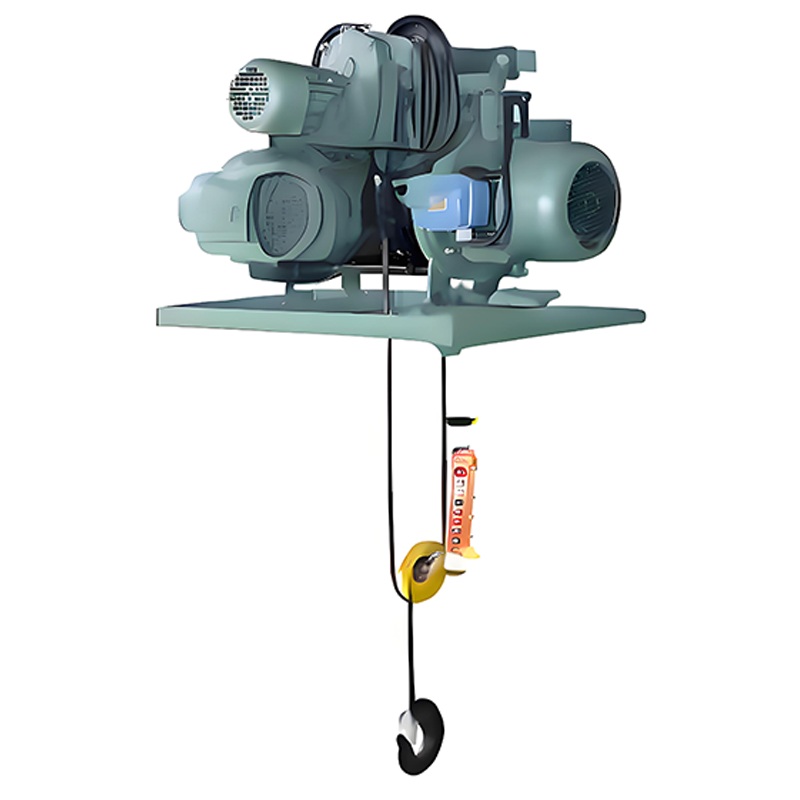
Industrial lifting is no longer just a matter of moving loads from point A to point B. As we enter 2026, electric hoists are increasingly expected to contribute to operational efficiency, risk control, and long-term asset stability. For plant managers, engineers, and procurement teams, choosing the right hoist has become a strategic decision rather than a simple equipment purchase.
This guide brings together practical engineering considerations and current market trends to help buyers navigate electric hoist selection in 2026. The focus is not on brand promotion, but on understanding how technology, safety standards, and infrastructure compatibility work together in real industrial environments.
The 2026 Shift in Electric Hoist Design Philosophy
The most noticeable change in recent years is the transition from reactive maintenance to condition-based monitoring. Modern electric hoists are increasingly designed as data-generating assets, not isolated mechanical tools.
Smarter Monitoring, Fewer Failures
Many industrial-grade hoists now integrate sensors that continuously track:
- Motor temperature
- Load cycles and operating hours
- Brake wear and abnormal vibration
Instead of waiting for visible failure, maintenance teams receive early warnings, allowing planned intervention rather than emergency shutdowns.
Smoother Motion Through Advanced Control
Variable Frequency Drives (VFDs) have moved from optional upgrades to near-standard configurations. By enabling soft starts and soft stops, VFD-controlled hoists significantly reduce shock loads on both the hoist mechanism and the supporting structure—particularly important when installed on large-span systems such as a heavy-duty Gantry Crane.

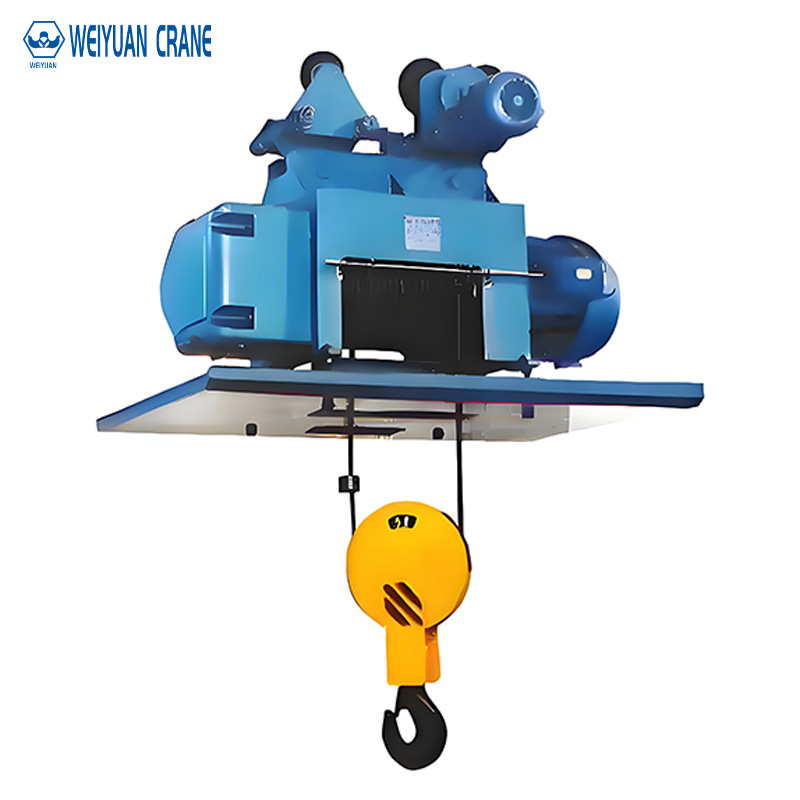
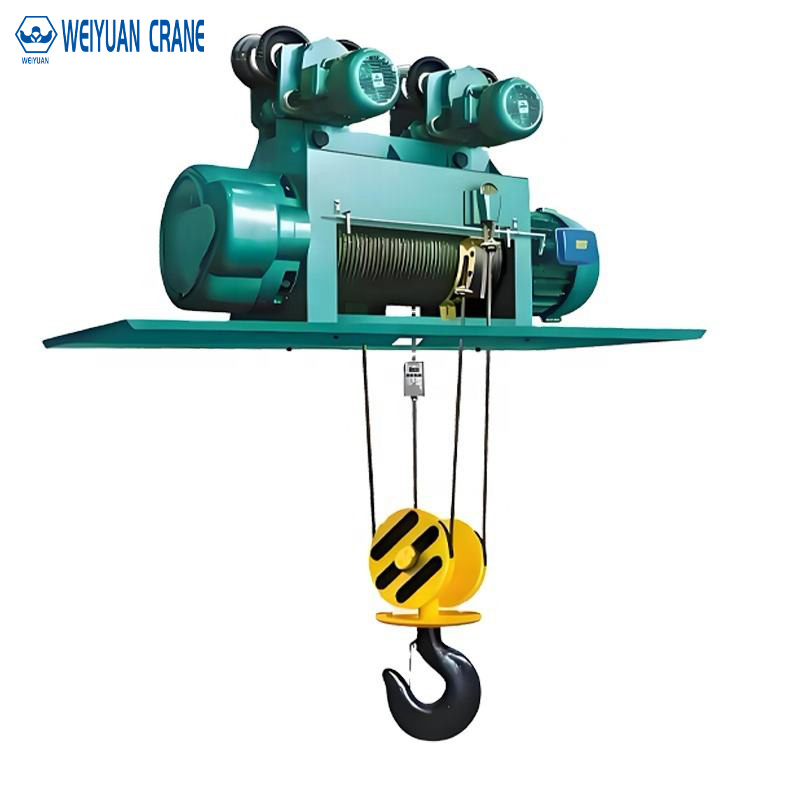
Weiyuan CD/MD Electric Hoist
The Weiyuan CD/MD Electric Hoist is a universal steel wire rope hoist designed for durability, reliability and broad industrial applications. Available in single-speed (CD) and dual-speed (MD) versions, it is suitable for workshops, warehouses and assembly lines, and can be mounted on overhead equipment including single beam cranes and gantry cranes for efficient material handling. :contentReference View Product / Get Quote
Core Technical Parameters That Still Matter Most
Despite digital upgrades, the fundamentals of hoist selection remain unchanged. The difference in 2026 is how rigorously these fundamentals are evaluated.
Rated Load Capacity and Duty Classification
Specifying a hoist solely based on maximum lifting weight is a common mistake. Industry best practice now recommends building in a minimum 25% safety margin.
For example, if your operation routinely lifts 4 tons, a 5-ton hoist is not oversized—it is properly specified.
Duty class is equally critical:
- H4 / M5 ratings are increasingly treated as the baseline for industrial environments with frequent cycles.
- Light-duty classifications are better suited to maintenance or occasional lifting, not production workflows.
Lifting Speed and Available Headroom
Higher lifting speeds improve throughput but place greater demands on braking systems and motor control. Balance is key: speed without control leads to wear, noise, and safety risks.
Headroom has also become a decisive factor, especially in retrofit projects. Low-headroom electric hoists allow facilities with limited ceiling height to maximize lifting travel without structural modification.
Suspension and Mounting Configuration
How the hoist is mounted directly affects system performance:
- Hook-suspended hoists suit fixed-point lifting.
- Lug-mounted designs are common for permanent trolley integration.
- Trolley-mounted hoists are essential when horizontal travel is required, such as on overhead crane bridges or portable Gantry Crane beams.
Misalignment between hoist type and mounting method often leads to premature wear and unstable load movement.
Safety Compliance as a Non-Negotiable Standard
In 2026, safety is no longer framed as a feature—it is an expectation embedded in design and procurement.
Key safety elements to prioritize include:
- Reliable overload protection (mechanical or electronic)
- Upper and lower limit switches to prevent over-travel
- Emergency stop functions compliant with international control standards
- Fail-safe braking systems capable of holding static loads under power loss
For buyers, documented compliance with ISO, CE, or ASME standards is now a baseline requirement, not a differentiator.
Aligning the Hoist With Your Supporting Structure
An electric hoist cannot be evaluated in isolation. Its performance and service life depend heavily on the structure that carries it.
Why Structural Compatibility Matters
In fixed indoor facilities, overhead cranes often define the load path. In contrast, outdoor yards, temporary work zones, and modular workshops frequently rely on Gantry Crane systems for their flexibility and mobility.
When pairing a hoist with a gantry system, additional factors come into play:
- Combined weight of hoist, trolley, and maximum load
- Beam deflection limits under dynamic conditions
- Power supply management for moving systems
Ignoring these interactions can result in uneven wear, unstable travel, and higher maintenance costs.
Chain Hoists vs. Wire Rope Hoists in 2026
Advances in materials and manufacturing have narrowed the gap between chain and wire rope hoists, but their core differences remain relevant.
| Aspect | Electric Chain Hoist | Electric Wire Rope Hoist |
|---|---|---|
| Typical Capacity | Up to 5–10 tons | Up to 80+ tons |
| Best Fit | Precision assembly, workshops | Heavy industry, high-duty cycles |
| Maintenance | Simpler component replacement | Requires skilled inspection |
| Initial Cost | Lower | Higher |
For operations involving high lifting heights, fast speeds, or continuous use—especially on large Gantry Crane installations—wire rope hoists remain the preferred solution.
Environmental and Application-Specific Requirements
Standard hoists are not suitable for every environment. In 2026, specialized models are increasingly common due to stricter regulations and diversified industrial applications.
Common specialized configurations include:
- Explosion-proof hoists for hazardous zones
- Corrosion-resistant designs for marine and coastal sites
- Cleanroom-compatible hoists for pharmaceutical and electronics manufacturing
Selecting a hoist without accounting for environmental exposure often results in accelerated degradation and compliance risks.
Looking Beyond Purchase Price: Total Cost of Ownership
The true cost of an electric hoist extends far beyond its initial price tag.
Key contributors to total cost of ownership include:
- Energy efficiency and regenerative braking performance
- Planned maintenance intervals
- Spare parts availability and lead time
- Technical documentation and after-sales support
Buyers increasingly favor suppliers that can demonstrate long-term service capability, particularly for critical lifting systems integrated into Gantry Crane or overhead crane infrastructure.
A Practical Buyer’s Checklist for 2026
Before finalizing procurement, experienced buyers typically confirm the following:
- Compliance with relevant international standards
- Suitable duty class for actual operating conditions
- Safe control voltage for operators
- Compatibility with existing crane or gantry structures
- Warranty coverage for both mechanical and electronic components
This final review step often prevents costly post-installation adjustments.
Frequently Asked Questions (FAQ)
What is the most common mistake when selecting an electric hoist?
Underestimating duty cycle requirements and focusing solely on rated load capacity.
Are smart monitoring features necessary for all applications?
Not always, but they provide clear value in high-cycle or critical operations where downtime is costly.
Can one hoist model work across different crane systems?
Only if the mounting, load path, and control interfaces are compatible. Structural evaluation is essential.
How long should an industrial electric hoist last?
With proper specification and maintenance, 10–15 years of service life is common in industrial settings.