


Essential Lifting: What Are the Three Basic Types of Overhead Cranes?
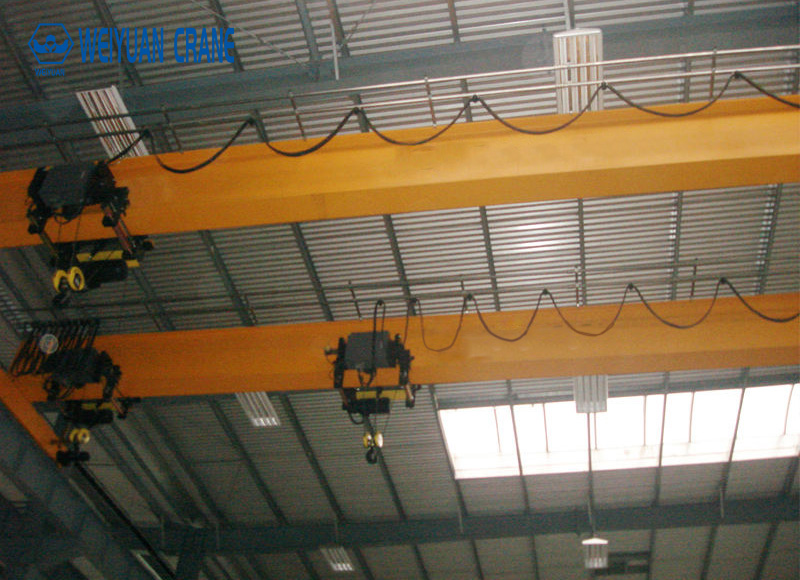
The overhead crane is the backbone of heavy material handling in countless industrial environments worldwide. Far more than just a simple lifting device, a properly specified and installed overhead crane system is a strategic investment that can boost your operational efficiency by over 20%, dramatically improve spatial utilization, and ensure the precise, safe movement of heavy and large-sized cargo.
Choosing the correct type of overhead crane is crucial for optimizing your workflow and achieving maximum return on investment. While the market offers several specialized variations, the industry generally recognizes three core classifications that form the foundation of all overhead material handling systems: Bridge Cranes, Gantry Cranes, and Monorail Cranes.
This guide breaks down these three essential types, their applications, and the features that make them indispensable for a modern factory, warehouse, or shipyard.
1. Overhead Bridge Cranes: The Workhorse of Indoor Facilities
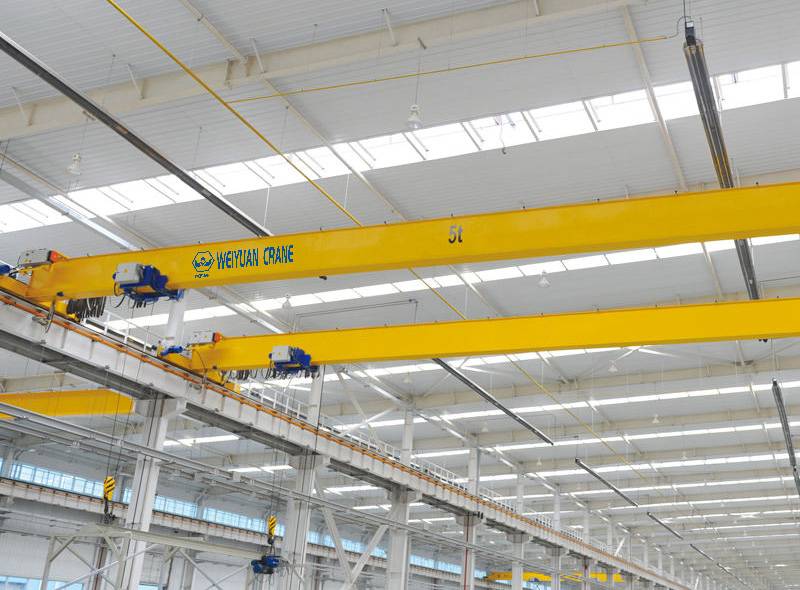
An overhead bridge crane is perhaps the most ubiquitous type of industrial lifting equipment, typically spanning a building’s width and running on parallel runways fixed to the structure.
Key Characteristics and Design Variations
Bridge cranes are designed for the core purpose of heavy-duty vertical lifting and horizontal relocation of materials across the entire span of a manufacturing bay or warehouse floor.
- Top Running vs. Under Running:
- Top Running: The bridge runs on rails situated on top of the runway beams. This design is ideal for facilities with higher lifting capacity requirements (often up to 400 tons upon customization) and is the most common and versatile type.
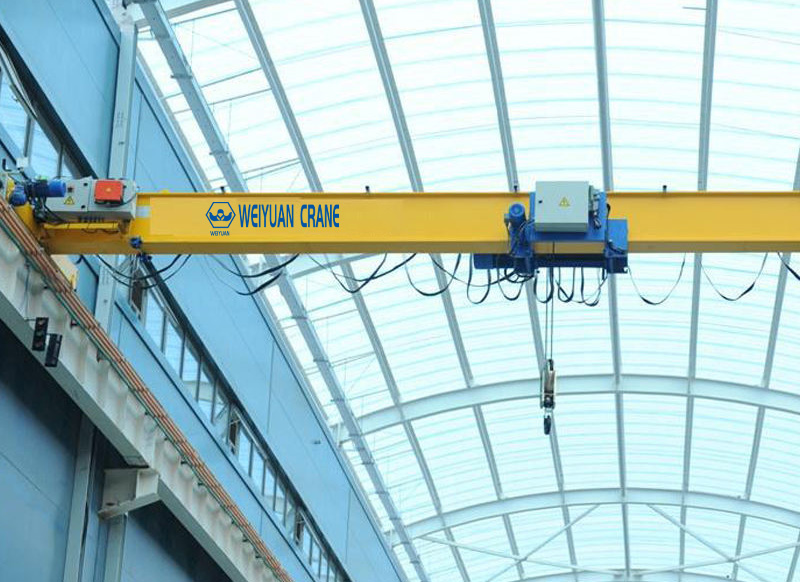
- Under Running (Underhung): The bridge is suspended from underneath the runway beams, which are supported by the building’s structure. This design is better suited for lighter-duty applications (typically 1 to 10 tons), offering better side clearance and space utilization, especially for buildings with lower clearances.
- Single Girder vs. Double Girder:
- Single Girder Overhead Crane: Utilizes one main beam. It is a simpler, more economical choice for lighter loads and smaller capacities (e.g., 1 to 20 tons), yet it is still designed with optimized box-type main beams for light self-weight and minimal wheel pressure.
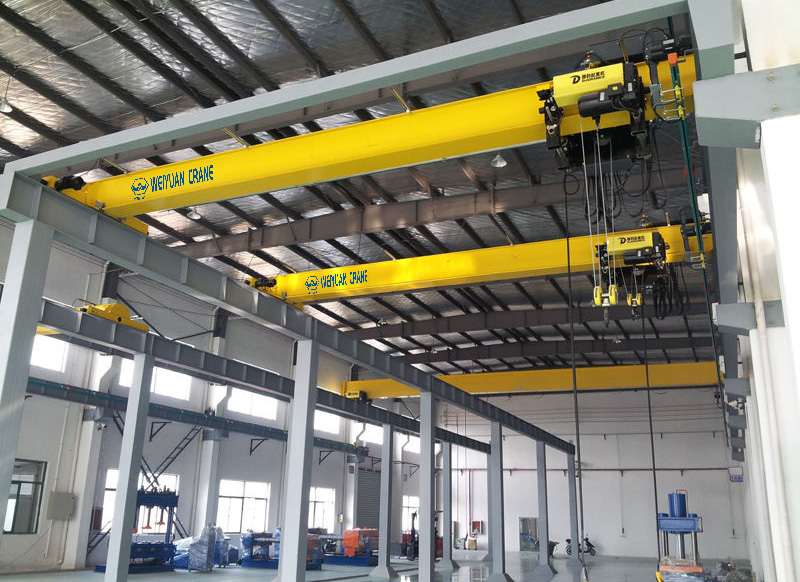
- Double Girder Overhead Crane: Features two main beams. This configuration is structurally sturdier, handles the heaviest lifting tasks (e.g., over 20 tons), and allows for a greater lift height, making it the choice for demanding environments like steel mills and large factories.
Applications
- Automotive manufacturing (e.g., mould loading and unloading)
- Heavy machinery component assembly
- Steel coil and plate handling in metal processing plants
2. Gantry Cranes: Mobility and Flexibility
A gantry crane is fundamentally similar to a bridge crane, but with one critical distinction: it is supported by legs or a movable framework that runs on the floor or ground-level rails, rather than being suspended from the building’s structure.
Why Choose a Gantry Crane?
Gantry cranes are prized for their independence and mobility. They do not rely on the structural integrity of the building for support, making them an excellent choice for outdoor yards, shipyards, or facilities where installing overhead runways is impractical. They offer versatile capacity, ranging from small portable versions to massive units used for moving shipping containers.
Common Uses
- Outdoor storage and freight yards
- Ports and intermodal container terminals
- Construction sites
- Rented facilities where permanent structural modifications are not feasible
3. Monorail Cranes: Specialized Path Efficiency
Unlike bridge or gantry cranes that offer complete X-Y axis coverage, a Monorail crane is designed to move loads only along a single, fixed path. The hoist and trolley run along a single overhead beam or track, which can often be configured with curves and switches.
Key Advantages in Production Lines
The monorail system is highly efficient for dedicated, repetitive tasks where materials must travel from one specific point to another.
- Fixed-Path Movement: The hoist only moves in the up/down (Z-axis) direction, while the trolley travels along the fixed rail.
- Space Adaptation: The ability of the rail to incorporate curves makes it highly useful for navigating around existing structures and obstacles within a factory.
H4: Ideal Applications
- Assembly lines and manufacturing processes that require fixed material flow
- Paint booths or dip tanks where parts follow a set route
- Transportation of materials over long distances within a facility
Partnering for Optimal Overhead Crane Solutions
Selecting the appropriate overhead crane system requires a detailed analysis of your operational needs, facility layout, and future growth projections. This is where expertise matters.
As a professional manufacturer that integrates production, sales, design, and installation, WEIYUAN specializes in providing high-value, optimized lifting solutions. We offer complimentary structural analysis and crane layout optimization design to ensure your system perfectly aligns with your operational goals.
Our standard product line boasts capacities from 1 ton to 80 tons, with customizable options that can reach up to 400 tons. Our commitment to quality is backed by advanced features:
- High Precision Drive: Utilizing a three-in-one reducer system (hard-tooth surface gear reducer and variable-frequency braking motor) for smooth operation and precise positioning.
- VFD Control: Variable Frequency Drive control provides stepless speed regulation, significantly improving operating efficiency while reducing mechanical wear and tear.
- Reliability: Our cranes typically operate at A4 or A5 working classifications, ensuring medium-to-heavy duty durability.
For environments with unique challenges, we provide comprehensive customization, including non-standard capacities, ultra-long spans, explosion-proof or anti-corrosion designs, and specialized lifting attachments like grabs or electromagnets to meet 100% of your specific requirements.
Safety and Compliance: The Non-Negotiable Core
Safety is paramount in heavy lifting operations. Every overhead crane supplied by WEIYUAN is built to comply with stringent national and industry safety standards, such as TSG Q0002-2008.
Critical Safety Features and Technical Specifications
- Overload Protection: A mandatory weight limiter automatically cuts off the lifting power if the load exceeds the rated capacity.
- Comprehensive Safety Suite: Includes limit switches, an emergency stop button, reliable braking systems, and main power cut-off devices.
- Low-Voltage Control: The control circuit voltage for suspended devices is maintained at a safe level, not exceeding 50V.
Technical Snapshot (Standard Model Range)
| Specification | Standard Range | Customization Note |
| Standard Capacity | 1 ton to 80 tons | Maximum customizable up to 400 tons |
| Span Length | 7.5 meters to 34 meters | Non-standard available |
| Lifting Height | 6 meters to 50 meters | Customized upon request |
| Control Voltage | $\le 50V$ (Suspension control) | Safety standard |
| Rated Power Supply | 380V / 400V / 415V, 50-60Hz, 3-Phase AC | Standard industrial voltage |
Installation, Support, and Proven Results
The lifecycle of an overhead bridge crane extends far beyond the sale. Our support systems ensure longevity and operational success.
Installation and After-Sales Support
We offer comprehensive support from the moment of purchase, including:
- Online Guidance: Detailed manuals and video tutorials, with remote technical team support for your on-site installers.
- On-Site Assistance: Our senior engineers can travel to your location to provide installation guidance and operator training services.
- Warranty: A standard one-year quality guarantee is provided for use within standard operational limits.
Case Study: Automotive Manufacturing
A major automotive parts manufacturer recently deployed five sets of our 10-ton double-girder overhead bridge cranes in their final assembly workshop.
- Project Outcome: The optimized handling system resulted in an 8% reduction in production line cycle time.
- Reliability: The cranes have since accumulated over 8,000 hours of operation with zero safety incidents.
Frequently Asked Questions (FAQ)
1. What information is needed for a precise quote?
The more detail you provide, the better. Key information includes: A: Lifting capacity; B: Crane span; C: Lifting height/hook travel; D: Material being lifted; E: Power source, and any other special operating requirements.
2. What control methods are available for the overhead crane?
Standard operation methods include: A: Handheld controller with push-buttons (Pendant Control); and B: Wireless remote controller.
3. Can this equipment operate in hazardous environments?
Absolutely. We specialize in customizing anti-acid and explosion-proof designs to ensure the safety and compliance of the crane in demanding or dangerous conditions.
4. What is the typical lead time for an order?
Standard models are usually available from stock and ship within 3-5 working days. Customized models, depending on the complexity of the design, generally require a lead time of 2-4 weeks.
Would you like to explore a factory visit or receive a personalized, no-obligation quotation for a specific overhead crane model?