


Future Trends in Automation for Warehouse Overhead Cranes
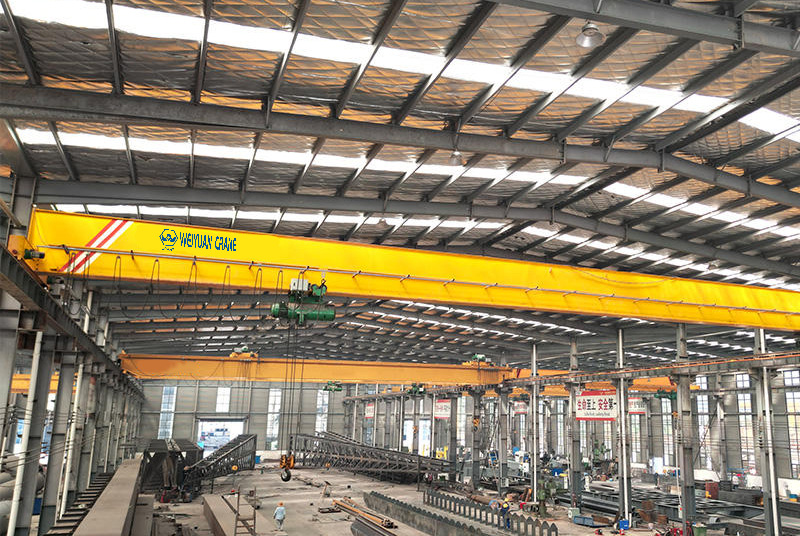
The industrial world is racing toward total connectivity. In modern warehouses and smart factories, the overhead crane is no longer just a manual lifting tool; it is becoming a data-driven terminal that anchors the entire logistics chain. For businesses across Asia and Europe, adopting these automated trends is the key to staying competitive in a high-speed market.
Automation in material handling is not just a luxury—it is a necessity for optimizing shop floor utilization and increasing efficiency by more than 20%. Whether it is handling massive automotive molds or stacking steel coils with millimeter precision, the future of the overhead crane lies in its ability to operate safely, autonomously, and with extreme reliability.
Redefining Utility: The Core of Modern Overhead Cranes
As manufacturing facilities evolve, the fundamental purpose of lifting equipment has expanded. Modern overhead shop cranes are now designed to handle the vertical lifting and horizontal movement of heavy loads in diverse environments, from metallurgy plants to logistics centers.
The primary value of these systems is the optimization of workspace. By utilizing an overhead rail crane, companies can reclaim floor space that would otherwise be occupied by forklifts, allowing for a more streamlined production flow. This is particularly evident in sectors like:
- Automotive Manufacturing: Precision loading and unloading of heavy stamping molds.
- Steel Processing: Moving heavy coils safely through high-temperature zones.
- Heavy Machinery: Assembling complex components with high positioning accuracy.
At WEIYUAN, we understand these evolving needs. As a professional manufacturer integrating design, production, and installation, we focus on creating systems that aren’t just powerful, but also future-ready.
Smart Hardware: Features and Advantages
The hardware of a modern crane must be robust enough to handle automated duty cycles. Reliability starts with a deep understanding of the parts of an overhead crane and how they interact under stress.
Advanced Structural and Drive Design
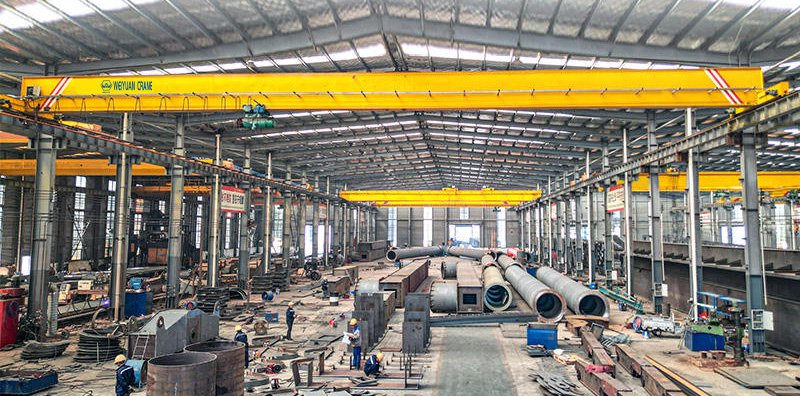
Modern designs favor optimized box-type girders or I-beams. These provide a lightweight structure with low wheel pressure, ensuring maximum space utilization without compromising strength.
The drive system is the heart of automation. We utilize “three-in-one” reducers—integrating the overhead crane motor, hardened gear reducer, and brake into a single unit—to provide smooth operation and high positioning accuracy. This is further enhanced by Variable Frequency Drive (VFD) technology, which allows for stepless speed regulation, reducing mechanical impact and extending the life of the overhead crane rail.
Intelligent Safety Awareness
Safety is being automated through better visual and sensory feedback. The inclusion of overhead crane safety lighting and overhead crane warning lights provides clear visual boundaries on the warehouse floor, alerting personnel to the crane’s movement even in noisy environments. These features are critical as the overhead crane work environment becomes increasingly shared between humans and autonomous machines.
Technical Specifications for Next-Gen Warehousing
To ensure a crane can meet the rigors of an automated facility, it must meet specific technical baselines.
| Specification Item | Standard Range | Customization Potential |
| Lifting Capacity | 1 to 80 Tons | Up to 400 Tons |
| Span Length | 7.5m to 34m | Tailored to facility layout |
| Lifting Height | 6m to 50m | Adjustable per site needs |
| Duty Class | A4 to A5 | Intermediate to Heavy Duty |
| Power Supply | 380V / 400V / 415V | 50-60Hz, 3-Phase AC |
Control methods are also shifting. While cabin operation still exists for extreme conditions, most modern facilities prefer overhead crane remote control or fully autonomous logic to improve operator safety and vantage points.
Customization: Meeting 100% of Industrial Needs
Future-proofing your facility means choosing equipment that can adapt. Professional overhead crane services must go beyond selling a product; they must offer a free plant structure analysis and layout optimization to ensure the overhead gantry crane systems are a perfect fit for the specific workspace.
Customization options now include:
- Specialized Attachments: Grabs for bulk materials or electromagnetic suction cups for steel plates.
- Environmental Protections: Explosion-proof or anti-corrosion designs for chemical and metallurgy industries.
- Logistics Integration: Double trolley configurations and maintenance platforms for high-uptime operations.
Safety, Compliance, and the Evolving Workforce
As automation increases, safety standards like TSG Q0002-2008 become even more critical. Every automated overhead crane must feature a load limiter to cut power if weight thresholds are exceeded, alongside redundant limit switches and emergency stop systems.
While the machines become more autonomous, the human element remains vital. The demand for a certified overhead crane technician is rising as maintenance moves from simple mechanical fixes to digital diagnostics. This shift is creating new overhead crane technician jobs and overhead crane vacancies for those who understand the digital side of heavy lifting.
Furthermore, training is evolving. To meet overhead crane training requirements, operators must now understand both manual safety and automated logic. For those looking at overhead crane operator jobs near me, having an overhead crane operator certification that includes modern remote and automated systems is a major competitive advantage.
Case Study: Automotive Manufacturing Efficiency
In a major automotive parts factory, WEIYUAN deployed five 10-ton double-girder bridge cranes. By implementing VFD controls and high-efficiency motors, the client achieved:
- An 8% reduction in production cycle time.
- Over 8,000 hours of safe operation with zero accidents.
- Seamless integration into their existing assembly line rhythm.
Installation, Support, and FAQ
We provide comprehensive support for our clients, from providing an overhead crane parts diagram for maintenance to on-site commissioning by senior engineers.
- Installation: We offer detailed online video tutorials and manuals, with professional teams available for on-site assistance.
- Support: Every unit comes with a one-year warranty and dedicated parts support.
- Delivery: Standard models ship in 3-5 business days; custom designs take 2-4 weeks.
Frequently Asked Questions
1. What info do I need for an overhead crane price quote?
Please provide the lifting capacity, span, lifting height, type of material, and power source.
2. Can these cranes work in hazardous environments?
Yes, we can customize units with explosion-proof or anti-acid features.
3. How do we ensure long-term reliability?
Regular overhead cranes inspection and utilizing qualified technicians are key. We provide all the training and documentation needed for your team to succeed.
4. Are there career opportunities in this field?
Yes, as the industry grows, there is a constant need for skilled workers. You may find overhead crane vacancies on our corporate portals or specialized job boards.