


High-Efficiency Semi-Gantry Crane Systems: Space-Saving Material Handling for Manufacturing Plants
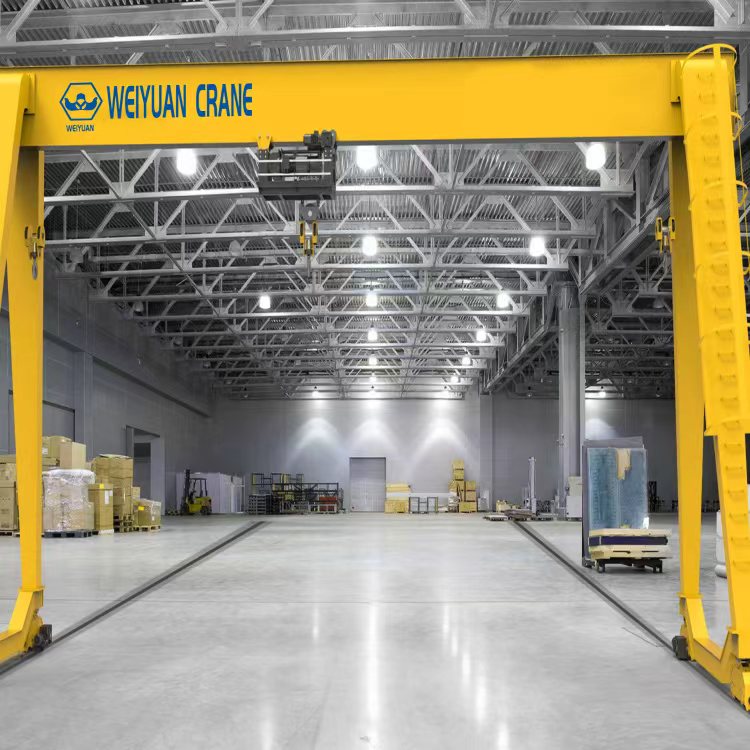
Manufacturing plant managers are constantly seeking ways to optimize floor space while improving material handling efficiency. In facilities where a full overhead crane system is impractical or too costly, and where a standard gantry crane would obstruct workflow, finding the right lifting solution can be a complex puzzle. This is where the unique design of a semi-gantry crane system offers a powerful, space-saving alternative.
A semi-gantry crane provides the strength and reliability of a full gantry system but with a much smaller footprint. By leveraging a building’s existing structure, it clears valuable floor space for production, assembly, or storage. This article will explore the features, benefits, and applications of these highly efficient systems and how they can resolve your facility’s unique material handling challenges.
What is a Semi-Gantry Crane?
A semi-gantry crane is a hybrid lifting solution that combines features of a bridge crane and a full gantry crane. It consists of one end of the main girder (the bridge) supported by a single leg that runs on a ground-level rail, while the other end is supported by an end truck that travels along an elevated runway beam, often attached to the building’s support columns.
This clever design is its primary advantage. By using only one leg, the semi-gantry crane leaves the area under the elevated runway completely open, providing unobstructed floor space for machinery, traffic, or workstations. It is the ideal solution for workshops, warehouses, and manufacturing plants looking to add heavy lifting capabilities without sacrificing valuable square footage. This makes it a highly efficient industrial lifting tool.
Key Features and Advantages
The design of a semi-gantry crane is focused on maximizing efficiency in constrained environments. It blends robust engineering with intelligent, space-saving features.
- Space-Saving Design: Its most significant advantage is freeing up floor space on one side, allowing for greater operational flexibility compared to a full gantry crane.
- Cost-Effective Installation: By utilizing an existing building column for one runway, it reduces the material and civil engineering costs associated with installing a second ground rail.
- Versatile Indoor/Outdoor Use: These systems can be installed inside a plant, running along a building wall, or outdoors, with one leg in a yard and the other on a building-mounted rail.
- Customizable Structure: Can be designed as a single or double girder model to match specific load capacity and headroom requirements.
- Efficient Workflow: A semi-gantry crane can serve a specific work cell without interfering with the main overhead crane, creating a more efficient and layered material handling system.
Technical Specifications
Matching the crane’s specifications to your facility’s layout and lifting needs is crucial for a successful installation.
- Load Capacity: Typically ranges from 2 tons up to 32 tons. A gantry crane 3 ton model is common for general workshop use.
- Span: Custom-engineered spans, generally from 5 to 20 meters, to fit the width of your working bay.
- Lifting Height: Varies based on facility height and hoist type, designed to maximize vertical lift under the girder.
- Travel Speed: Both crane travel and hoist trolley speeds can be configured as single-speed, dual-speed, or with variable frequency drives (VFD) for ultimate control.
- Duty Classification: Rated for various service classes (e.g., ISO M4-M7) based on the intensity and frequency of use.
- Power Supply: Typically powered by a 3-phase system (e.g., 380V/50Hz) via a festoon cable system or an enclosed conductor bar.
Customization Options: A WEIYUAN Specialty
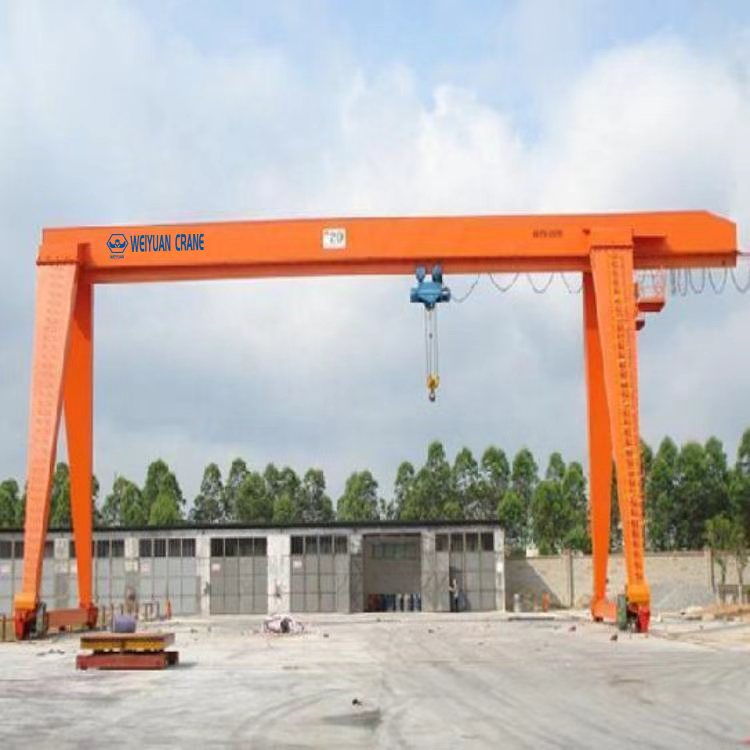
A standard industrial gantry crane doesn’t always fit. WEIYUAN, a manufacturer with integrated design, production, and installation services, excels at creating bespoke lifting solutions. We offer complimentary design consultations to ensure your semi-gantry crane is a perfect fit for your operational needs.
Customization options include:
- Tailored Dimensions: We precisely engineer the span and lifting height to match your building’s unique geometry.
- Cantilever Design: An overhang can be added to the girder, extending the hoist’s reach beyond the rails to service areas outside the main bay.
- Specialized Hoists: We can integrate various lifting devices, from standard hooks to magnets, grabs, or rotating mechanisms.
- Environmental Protection: Custom designs for outdoor use, corrosive environments, or explosion-proof (ATEX) applications are available.
Application Areas
The semi-gantry crane is a versatile workhorse found in a variety of industries across Europe and Asia, particularly where space and efficiency are top priorities.
- Manufacturing Plants: Ideal for loading parts into CNC machines or moving components along an assembly line adjacent to a wall.
- Warehousing & Logistics: Servicing loading docks or specific storage bays without obstructing forklift traffic in the main aisles.
- Steel Processing: Handling plates and coils in facilities where a full gantry would be too intrusive.
- Maintenance Workshops: A shop gantry crane of this type allows for heavy engine or machinery repair without dedicating a full bay to a permanent crane.
Safety and Compliance
When considering the bridge crane vs gantry crane debate, safety is a universal priority. Our semi-gantry cranes are manufactured to meet rigorous international standards, including ISO 9001 quality systems and CE certification for the European market.
Every crane is equipped with a suite of safety features:
- Overload protection devices to prevent lifting beyond rated capacity.
- Limit switches for hoist and travel motions.
- Emergency stop buttons on all control devices.
- Durable rail sweeps and anti-collision devices.
- Warning alarms for crane movement.
Case Study: Optimizing a Manufacturing Cell
A European automotive parts manufacturer needed a dedicated lifting solution for a new robotic welding cell located along the side of their main production hall. A full gantry crane would block a key access aisle, and the main overhead crane was already over-utilized.
- Our Solution: WEIYUAN designed and installed a 5-ton single girder semi-gantry crane. The elevated rail was mounted directly to the building’s existing support columns, while the single leg ran on a ground rail neatly tucked against the wall.
- Customer Benefit: The solution provided the dedicated lifting capacity the welding cell required without impeding the flow of traffic in the adjacent aisle. This localized efficiency boosted the cell’s productivity by 25% and reduced the load on the facility’s main crane.
Installation and Support
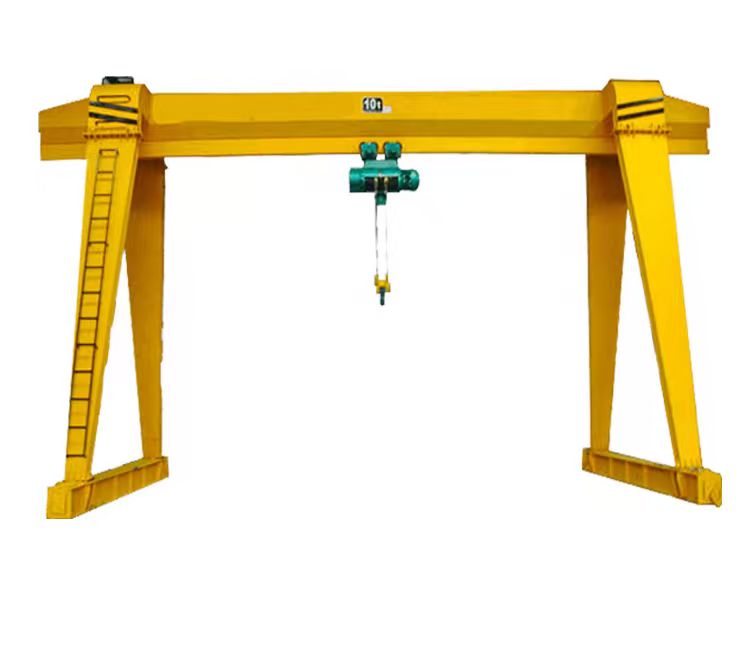
A precision installation is key to the long life and smooth operation of your crane. We provide end-to-end support.
- Expert Installation: Our certified engineering teams can manage the complete on-site installation, from the runway beams to final commissioning.
- Technical Guidance: For clients with their own installation crews, we provide detailed drawings, manuals, and remote technical support.
- After-Sales Service: We offer a one-year warranty and provide lifetime technical support, maintenance advice, and readily available spare parts.
Pricing and Quotes
The gantry crane cost is highly dependent on its capacity, span, and features. A semi-gantry system is often more cost-effective than a full gantry crane due to reduced civil works and materials. While you might find a used gantry crane, a new, custom-engineered system from a manufacturer like WEIYUAN ensures perfect integration and full warranty support.
To get a precise, no-obligation quote, contact our team with your specifications.
Delivery Timeline
We are committed to meeting your project deadlines.
- Standard Models: Production typically takes 2-4 weeks.
- Custom Designs: More complex, custom-engineered systems may have a 3-5 week delivery schedule.
- Shipping: We coordinate global logistics to ensure your crane arrives at your facility safely and on time.
FAQ
Q: When should I choose a semi-gantry over a full gantry crane?
A: A semi-gantry crane is the ideal choice when you need to perform lifting operations adjacent to a building or wall and want to keep the floor space on one side of the working area clear for other activities.
Q: Can this crane be used outdoors?
A: Yes, they are frequently used outdoors. The elevated runway is mounted to the exterior of a building, and the crane services an adjacent yard. We provide weatherproofing for all outdoor components.
Q: What information is needed for a quote?
A: Please provide: A) Lifting capacity; B) Crane span; C) Lifting height; D) The length of the runway (crane travel distance); E) Your power source details and any special environmental conditions.
Q: Do you offer rentals?
A: Due to their custom, semi-permanent nature, we do not offer gantry crane rental near me services for these systems. We specialize in the sale of new, custom-built equipment.
Q: What is the main difference between a gantry crane vs bridge crane?
A: A bridge crane (or overhead crane) runs on an elevated runway supported by the building’s structure, leaving the floor entirely clear. A full gantry crane is completely self-supported by two legs running on ground rails. A semi-gantry is a hybrid of the two.
Q: Can I build my own gantry crane?
A: We strongly discourage DIY or gantry crane wood constructions for industrial loads. Professional systems are engineered and certified for safety, and failure of a homemade device can have catastrophic consequences.