


How to Choose the Best Gantry Crane for Your Industrial Needs
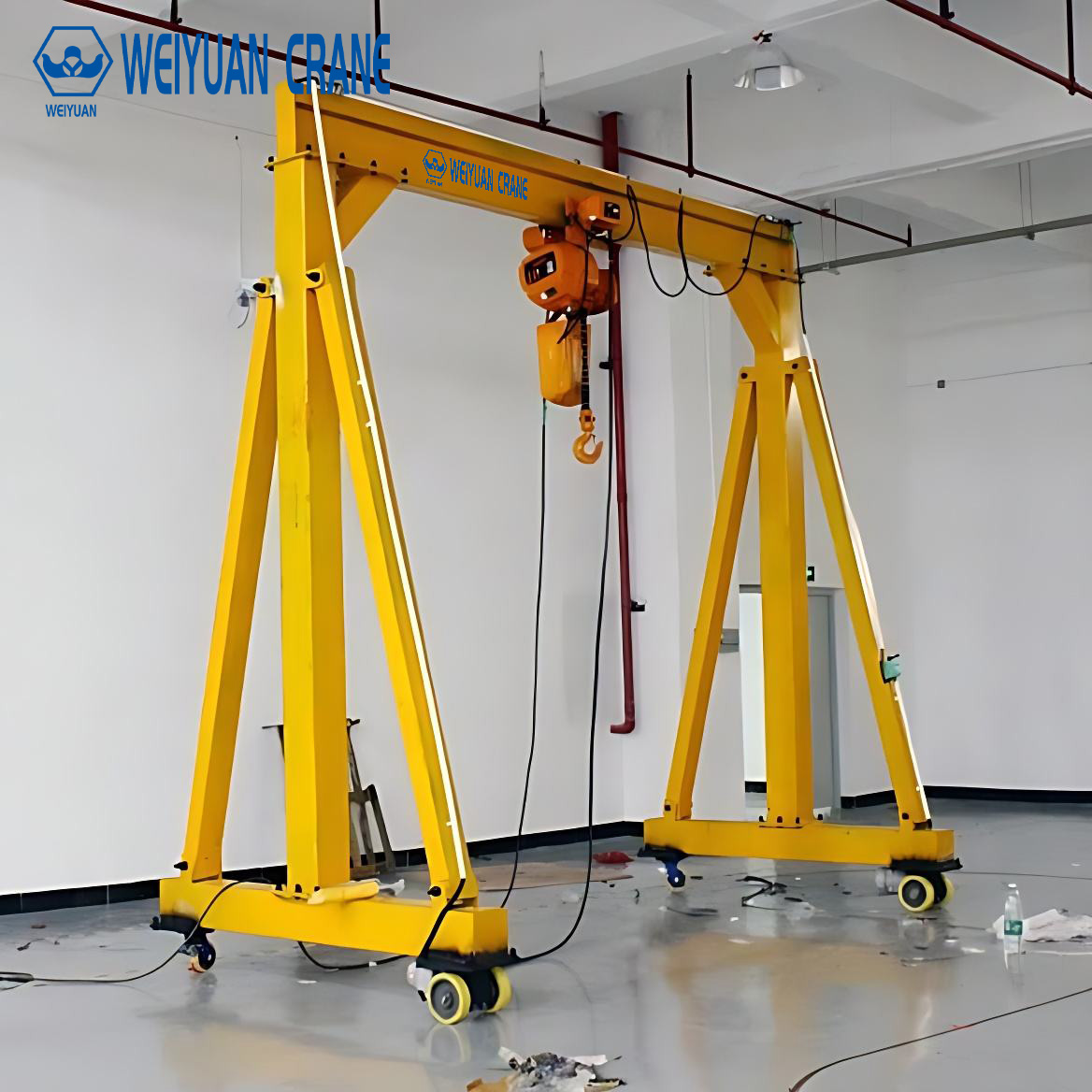
In the world of heavy industry, a capital investment is rarely just about “buying a machine.” It is about engineering a workflow that will dictate your facility’s output, safety, and operational costs for the next twenty to thirty years. When it comes to versatile lifting, the 【Gantry Crane】 has become a cornerstone for businesses that prioritize flexibility. Unlike overhead bridge cranes, which are permanently married to a building’s skeleton, a gantry system stands on its own legs—literally—offering power and mobility that can adapt as your business evolves.
However, the sheer variety of options on the market in 2026 can be overwhelming. Choosing the wrong configuration isn’t just a minor inconvenience; it can lead to structural bottlenecks, safety risks, and wasted capital. This guide is designed to move past the sales brochures and dive into the technical and operational realities of selecting the perfect gantry crane for your specific needs.
1. Environment and Application: The “Where” Dictates the “What”
Before looking at load charts, you must analyze your workspace. The environment where the crane will live is the single greatest factor in determining its long-term durability.
Outdoor vs. Indoor Realities
- Outdoor Operations: If you are operating in a shipyard, a precast concrete yard, or a rail terminal, your 【Gantry Crane】 is at the mercy of the elements. Standard industrial paint won’t suffice. You need epoxy-based, corrosion-resistant coatings. Furthermore, electrical components must be housed in NEMA 4 or 4X (IP65/66) enclosures to withstand driving rain and dust. Wind-load calculations are also non-negotiable; for outdoor gantries, we always recommend automated wind-speed sensors (anemometers) that can trigger rail clamps or storm locks to prevent the crane from “sailing” during a gust.
- Indoor Operations: Indoors, the focus shifts to clearance and floor conditions. Are you in a cleanroom, a food-processing plant, or a high-heat foundry? These environments require specialized materials—such as stainless steel or explosion-proof motors—to meet strict safety and hygiene regulations.
Fixed Path vs. Floor Mobility
- Rail-Mounted Systems: Ideal for repetitive, heavy-duty lifting along a straight line (like a production bay). They offer the highest stability and can handle massive capacities, but they require a precisely leveled and installed track.
- Portable/Wheel-Mounted Systems: If your facility layout changes frequently, or if you only need the crane for occasional maintenance, a portable gantry on casters or a rubber-tired system offers the freedom to move the crane exactly where the work is. This is particularly valuable for maintenance shops where a “fixed” crane would often be in the way.
2. Technical Specifications: The Numbers That Matter
Accuracy in your initial measurements is the difference between a system that works and one that becomes a liability.
Rated Capacity: The “Future-Proof” Buffer
The biggest mistake procurement managers make is buying for today’s heaviest load. If your heaviest lift is 10 tons, do not buy a 10-ton crane. Industry veterans always recommend a 15–25% buffer. Why? Because over-stressing a crane at its maximum limit every day leads to rapid component wear and higher maintenance costs. A 12.5-ton or 15-ton crane working at 70% capacity will last significantly longer and offer far better ROI than a 10-ton crane working at 100% capacity.
Span and Height Under Beam (HUB)
- Span: This is the distance between the legs. Ensure this covers not just your current machinery, but also the “maneuvering room” needed for rigging.
- Height Under Beam (HUB): This is your actual vertical “working room.” You must account for the height of the load, the length of the slings or lifting beams (below-the-hook attachments), and the height of any obstacles you need to clear. If your HUB is too low, your crane becomes a decorative archway rather than a lifting tool.
- Overall Height: Especially indoors, check for overhead obstructions like HVAC ductwork, lighting, or fire sprinklers.
3. Single Girder vs. Double Girder: The Structural Choice
The “bridge” of your 【Gantry Crane】 is its backbone. Choosing between one or two beams depends on your capacity and duty cycle.
- Single Girder Gantry: The hoist typically hangs from the bottom of a single beam.
- Pros: Lighter, more affordable, faster to install, and puts less pressure on the floor or rails.
- Cons: Limited capacity (usually up to 20 tons) and a lower hook height because the hoist hangs below the beam.
- Double Girder Gantry: The hoist and trolley travel on rails mounted to the top of two beams.
- Pros: Exceptional stability for heavy-duty (20 tons to 500+ tons) and long spans. Crucially, the hoist sits between the beams, providing a much higher “hook height” in buildings with limited ceiling room.
- Cons: Heavier structural weight and higher initial cost.
4. Leg Configurations: Full Gantry, Semi-Gantry, or Cantilever?
The way the crane stands can be customized to fit your specific floor plan.
- Full Gantry: The standard “A-frame” look with two sets of legs. It is entirely self-contained and independent of the building.
- Semi-Gantry: This is a brilliant space-saver. One side of the crane travels on a floor rail, while the other end is supported by an elevated runway beam attached to the building’s wall or columns. This keeps one side of the floor completely free of rails and legs.
- Cantilever Design: We often suggest adding a cantilever—where the bridge extends beyond the legs on one or both sides. This allows you to pick up a load from a truck parked outside the crane’s rails and move it into the main work zone without the truck ever entering the facility.
5. Power, Control, and the “Brain” of the Crane
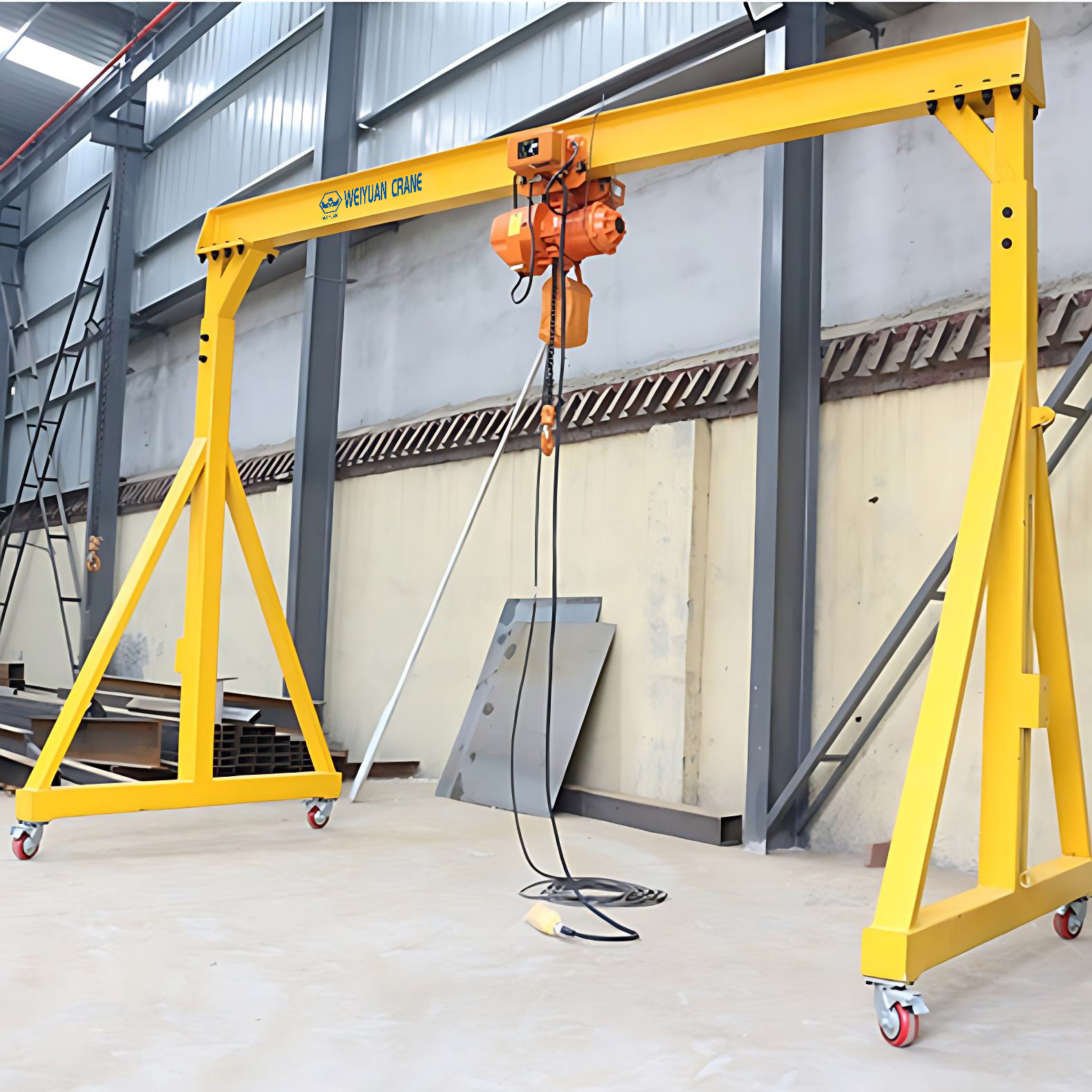

Weiyuan Heavy Duty MG Type Gantry Crane for Outside Lifting
The Weiyuan Heavy Duty MG Type Gantry Crane is a powerful and resilient outdoor lifting solution engineered for demanding outside lifting operations, combining a robust A-frame double-girder structure with weatherproof components for reliable performance in outdoor stockyards, construction and industrial environments. :contentReference
View Product / Get QuoteModern lifting is about precision, not just raw power.
Power Delivery
- Cable Reels: Simple and reliable for shorter runs.
- Conductor Bars (Busbars): The professional standard for long runways. They provide continuous, safe power without the wear and tear of dragging cables.
The Control Interface
- Pendant Control: Wired to the crane. It’s reliable but keeps the operator close to the load, which can be a safety risk.
- Radio Remote Control: This is the 2026 industry standard. It gives the operator the freedom to move around and find the safest, clearest vantage point.
- Variable Frequency Drives (VFDs): If you only take one piece of advice from this guide, let it be this: Insist on VFDs. They allow for smooth acceleration and deceleration. Without them, the crane starts and stops with a “jerk,” causing the load to swing (sway), which is both dangerous and hard on the gears.
6. ROI and the Total Cost of Ownership (TCO)
A cheap crane is often the most expensive asset you will ever own once you factor in downtime. When comparing quotes, look at the “hidden” costs:
- Component Standardisation: Does the crane use motors and brakes from reputable brands (like Siemens, ABB, or SEW)? If they use proprietary, “no-name” parts, you will wait weeks for spares when something breaks.
- Duty Cycle Classification: A “Class A” crane (infrequent use) is much cheaper than a “Class D” crane (heavy production). If you use a Class A crane in a Class D environment, the motors will burn out in months. Always match the “class” to your actual hourly lift count.
Frequently Asked Questions (FAQ)
Q1: Can a gantry crane be installed on a regular concrete floor?
A: For smaller, portable gantries, a standard 6-inch reinforced concrete floor is usually sufficient. However, for large rail-mounted systems, a structural engineer must calculate the “wheel loads” to ensure the foundation won’t crack under the pressure.
Q2: What is the main advantage of a 【Gantry Crane】 over a bridge crane?
A: Structural independence. Gantry cranes do not require you to reinforce your building’s columns or add new ones. They are also easier to dismantle and relocate if your business moves to a new facility.
Q3: Are gantry cranes safe to use in high winds?
A: Yes, provided they are engineered for it. Outdoor gantries should include anemometers, rail clamps, and “parking” anchors to prevent the wind from moving the crane when not in use.
Q4: How long does it take to install a gantry system?
A: A small portable gantry can be set up in a few hours. A large, double-girder rail system usually takes 1–3 weeks for installation, rail alignment, and load testing.
Q5: What kind of maintenance is required?
A: Daily visual checks of the wire rope and hooks are standard. Beyond that, quarterly inspections of the brakes, lubrication of the trolley/bridge wheels, and an annual structural audit by a certified technician are essential for compliance and safety