


How to Choose the Right Gantry Crane in 2026: Portable vs. Fixed Systems Compared
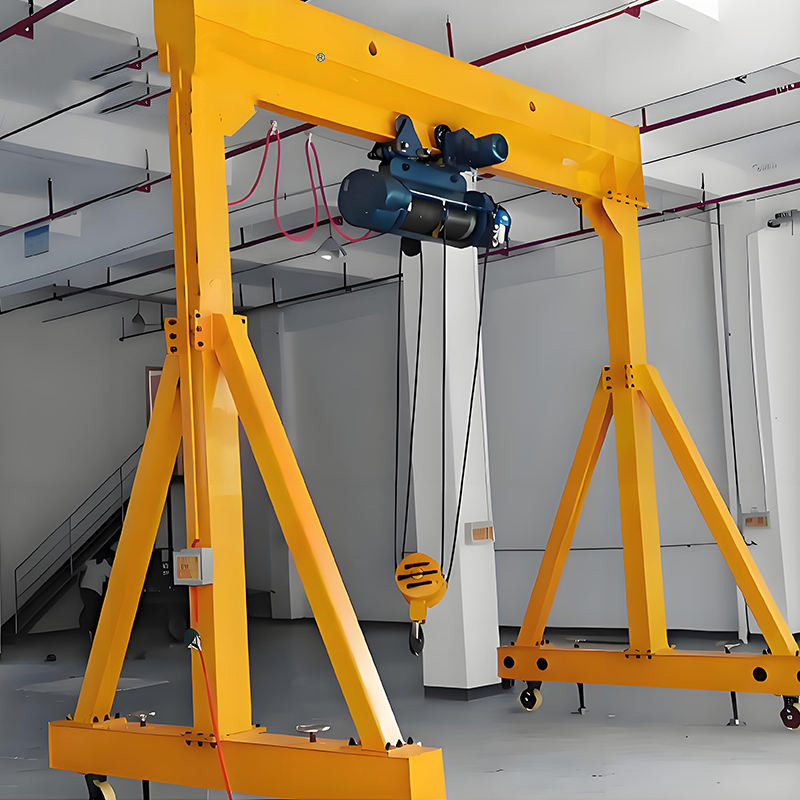
In 2026, industrial lifting decisions are no longer made on capacity charts alone. Facility managers today are balancing safety compliance, automation readiness, space efficiency, and long-term return on investment—often within tight operational constraints.
Among all heavy lifting solutions, the 【Gantry Crane】 continues to stand out for its independence from building structures and its adaptability across indoor and outdoor environments. Yet one critical question defines nearly every procurement discussion:
Is a portable gantry system sufficient, or does the operation demand a fixed, rail-mounted installation?
This article takes a practical, engineering-driven approach to comparing both options—helping decision-makers align equipment choice with real operational needs rather than assumptions.
1. What Defines a Modern Gantry Crane in 2026?
At its core, a gantry crane consists of a bridge supported by freestanding legs that travel on wheels or rails. Unlike overhead cranes, it does not rely on roof beams or columns, making it ideal for open yards, temporary facilities, and workshops with structural limitations.
What has changed by 2026 is not the concept—but the capability.
Modern 【Gantry Crane】 systems now integrate:
- Variable Frequency Drives (VFDs) for smooth acceleration
- Load monitoring sensors for real-time safety control
- Anti-sway logic to reduce positioning time
- Remote diagnostics for predictive maintenance
This evolution has widened the gap between light-duty, flexible solutions and high-duty, permanent installations.
2. Portable Gantry Cranes: Designed for Flexibility, Not Permanence
Portable gantry systems are engineered around one priority: mobility. Constructed from aluminum or lightweight structural steel, they are typically mounted on heavy-duty casters and assembled in modular sections.
Where Portable Systems Excel
- Rapid setup and relocation
In many workshops, equipment layout changes faster than infrastructure planning. Portable gantries can be repositioned within minutes without civil work or permits. - Lean manufacturing compatibility
For facilities using cellular production or temporary workstations, a mobile lifting frame supports workflow without locking the floor plan. - Lower upfront investment
Initial capital expenditure is minimal compared to fixed systems, making portable gantries attractive for maintenance departments and smaller operations.
Practical Limitations
Mobility comes at a cost. Portable systems typically operate within a 0.5–10 ton range and are not designed for continuous, high-frequency lifting. Floor conditions also matter—uneven surfaces directly affect stability and positioning accuracy.
Best suited for:
Maintenance bays, light fabrication shops, HVAC servicing, and intermittent lifting tasks.
3. Fixed & Rail-Mounted Gantry Cranes: Built for Authority and Scale
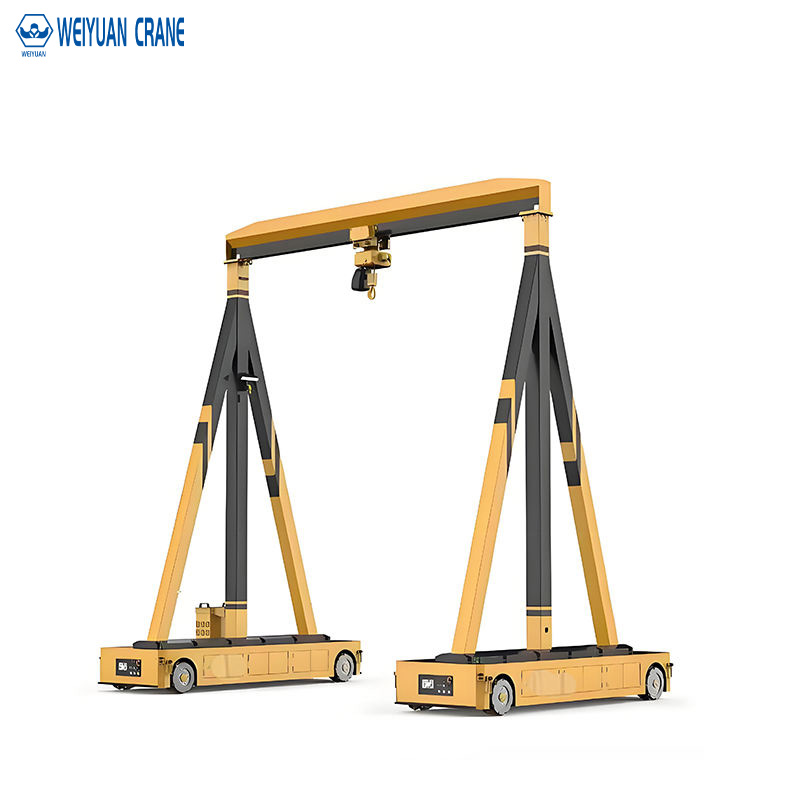
When lifting becomes part of the production backbone rather than a support task, fixed gantry systems take over.
A rail-mounted 【Gantry Crane】 is engineered for structural rigidity, repeatable precision, and long service life—often exceeding two decades under proper maintenance.
Why Fixed Systems Dominate Heavy Industry
- Superior load stability
Rail guidance eliminates lateral drift, allowing precise placement of heavy or high-value loads. - High duty-cycle performance
Designed for frequent operation, these systems handle 20 tons to several hundred tons without accelerated fatigue. - Automation readiness
Fixed installations integrate seamlessly with PLC controls, collision avoidance systems, and plant-wide digital monitoring platforms.
The Trade-Off
Fixed systems require foundations, rail alignment, and upfront planning. Relocation is costly, and installation timelines are longer—but the payoff is consistency, safety, and throughput.
Best suited for:
Ports, steel mills, precast yards, shipyards, and high-volume manufacturing plants.
4. Side-by-Side Technical Comparison
| Aspect | Portable Systems | Fixed / Rail-Mounted Systems |
|---|---|---|
| Typical Capacity | 0.5–10 tons | 5–500+ tons |
| Mobility | Full floor mobility | Fixed travel path |
| Installation | No foundation | Rails & civil work required |
| Precision | Moderate | High |
| Automation | Limited | Advanced |
| Service Life | Short to mid-term | Long-term asset |
This comparison highlights a key reality: the right choice depends less on budget and more on how lifting fits into your operation.
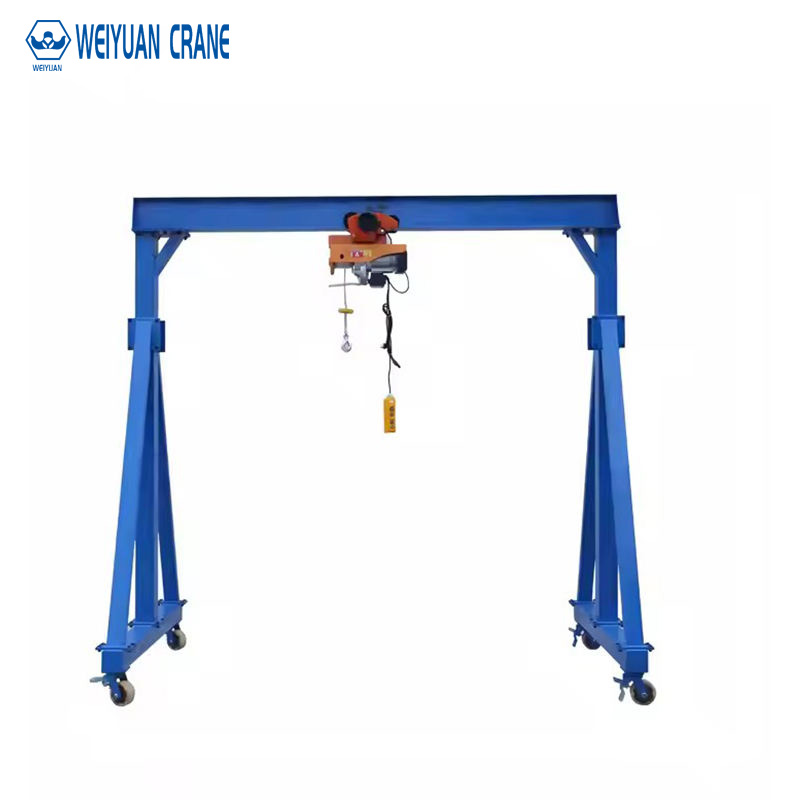
Portable A-Frame Gantry Crane
A highly versatile, portable A-frame gantry crane featuring a single main beam supported by steel legs with durable polyurethane wheels, movable for workshops, garages, and warehouses, providing a flexible and economical lifting solution.:contentReference
View Product / Get Quote5. Selection Criteria That Actually Matter (Beyond Specifications)
Experienced engineers rarely select lifting equipment based on capacity alone. In 2026, four deeper considerations define a sound investment:
1. Safety & Compliance
Verify conformity with international standards such as CE, CMAA, or ASME. Certification is not a formality—it reflects fatigue design, braking redundancy, and overload protection.
2. Total Cost of Ownership
A portable gantry may cost less upfront, but frequent repositioning, manual handling, and limited automation can increase labor costs over time. Fixed systems often justify their price through efficiency gains.
3. Environmental Conditions
Outdoor exposure, humidity, dust, or corrosive air dramatically influence component life. Fixed gantries can be engineered with marine-grade coatings and sealed drives, while portable systems are more environment-sensitive.
4. Growth and Scalability
Will lifting demands double in three years? A fixed 【Gantry Crane】 allows hoist upgrades and automation add-ons without replacing the structure.
6. Making the Final Decision
There is no universal answer—only alignment.
- Choose portable systems if flexibility, short-term use, and low commitment define your operation.
- Choose fixed gantry systems if lifting is mission-critical, repetitive, and central to production efficiency.
In many mature facilities, the most effective strategy is a hybrid one: a fixed gantry for core operations, supported by portable units for auxiliary tasks.
7. Closing Thoughts
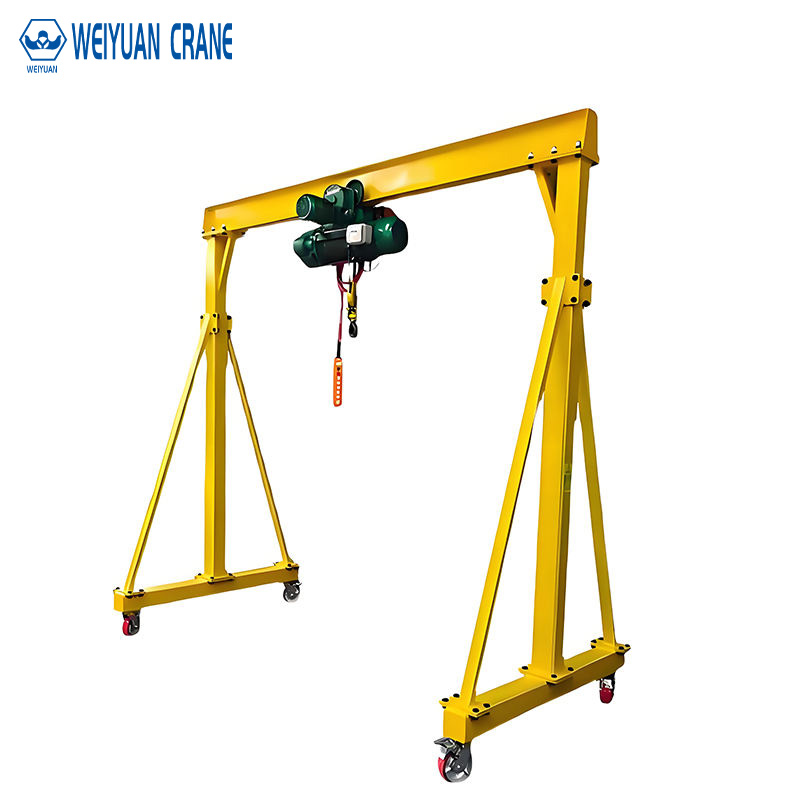
Selecting the right gantry crane in 2026 is less about choosing a machine and more about choosing an operating philosophy. Flexibility and authority each have their place—but only when matched correctly to workflow, environment, and long-term goals.
A well-selected 【Gantry Crane】 does more than lift loads—it stabilizes operations, protects people, and supports growth.
Frequently Asked Questions (FAQ)
Q1: Can a portable gantry crane be used outdoors?
Yes, but only on level surfaces and typically for short-term or light-duty tasks. Weather exposure and wind load should be carefully evaluated.
Q2: How long does a fixed gantry crane typically last?
With proper maintenance, a rail-mounted system can operate reliably for 20–30 years, even in demanding industrial environments.
Q3: Is automation possible on portable systems?
Automation is limited. Most advanced control features are designed for fixed installations due to stability and power requirements.
Q4: Which option offers better ROI over five years?
For high-frequency lifting, fixed systems usually deliver a lower total cost of ownership despite higher initial investment.