


How to Make a Crane Stable? Ensuring Safety and Efficiency in Industrial Lifting
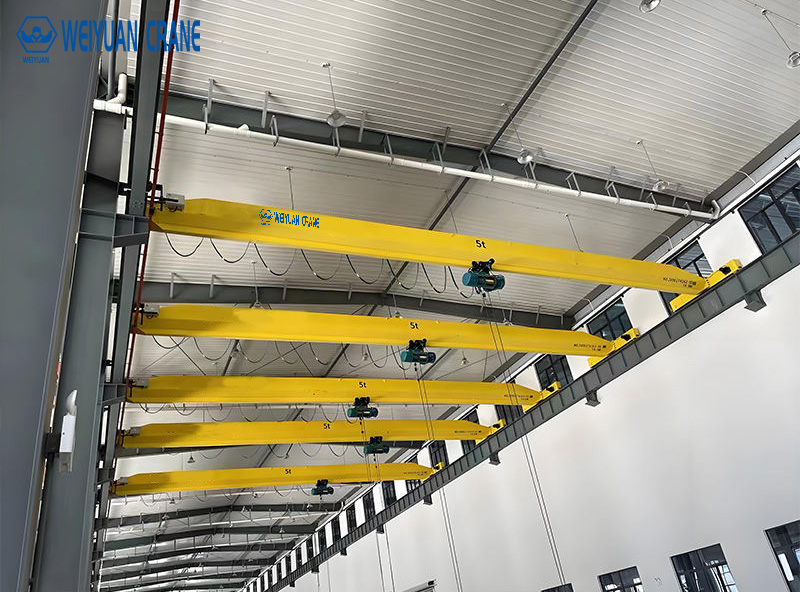
In modern industrial environments—ranging from automotive assembly lines to heavy steel processing plants—the stability of lifting equipment is not just a technical requirement; it is a fundamental safety pillar. A stable overhead crane is the backbone of efficient material handling, helping optimize workshop space and improving productivity by more than 20%.
When lifting heavy loads, instability can lead to structural wear or, in the worst cases, catastrophic accidents. As a professional manufacturer integrating design, production, and installation, WEIYUAN prioritizes stability through rigorous engineering and high-quality overhead crane components.
The Foundations of Crane Stability: Engineering and Design
Optimized Structural Integrity
Stability begins at the drawing board. A high-performance overhead bridge crane utilizes an optimized box-type main beam or I-beam design. These structures are engineered to provide high rigidity while remaining lightweight, which reduces wheel pressure on the building’s runway beams. WEIYUAN provides free structural analysis of your facility to ensure the crane layout perfectly matches your factory’s load-bearing capacity.
Advanced Drive and Control Systems
The way a crane starts and stops significantly affects its balance. Utilizing a “three-in-one” reducer—combining a hard-tooth surface gear reducer with a frequency-converting brake motor—ensures smooth operation and precise positioning.
By implementing Variable Frequency Drive (VFD) control, the overhead crane achieves stepless speed regulation. This technology minimizes mechanical impact and swaying during the vertical lifting and horizontal movement of loads, which is critical when handling delicate or oversized items in metallurgy or assembly sectors.
Essential Safety Components and Inspections
To maintain long-term stability, the integration of high-quality overhead crane parts and safety devices is non-negotiable.
- Weight Limiters: These systems automatically cut off lifting power if the load exceeds the rated capacity, preventing structural overstress.
- Limit Switches: These ensure the hoist and bridge stop before reaching physical boundaries, preventing collisions.
- Emergency Stop Systems: Critical for immediate power disconnection during unforeseen operational shifts.
- Regular Overhead Crane Inspection: Stability is maintained through routine checks of the braking systems, gear wear, and structural bolts.
The Human Factor: Operator Expertise and Training
A machine is only as stable as the person controlling it. A professional overhead crane operator must undergo comprehensive overhead crane training to understand load balancing and safety protocols. Obtaining an overhead crane certification ensures the operator knows how to avoid dangerous “side-pulling” and how to manage the inertia of a moving load safely.
Tailored Solutions for Global Industries
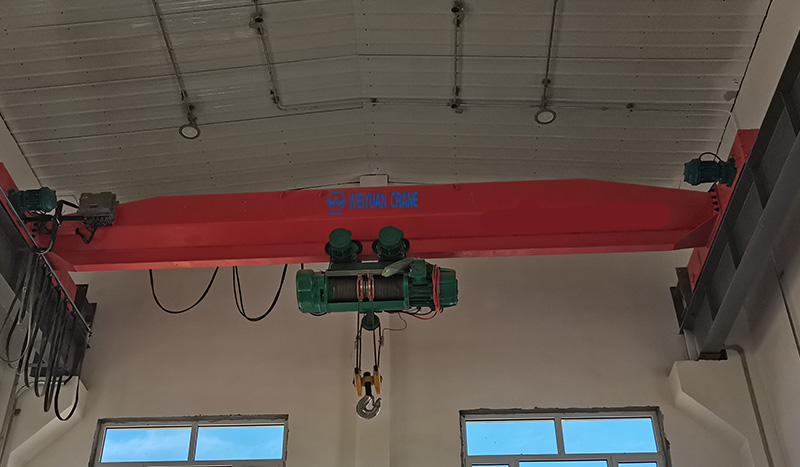
Industrial needs in Asia, Europe, and Africa vary greatly depending on the environment. While a single girder overhead crane might be ideal for a standard warehouse, a heavy-duty double girder model may be required for 400-ton capacities in specialized sectors. WEIYUAN offers standard spans from 7.5 meters to 34 meters and lifting heights up to 50 meters, ensuring that every unit is perfectly tailored to its specific job site.
Case Study: Automotive Parts Excellence
In a large-scale automotive component manufacturing plant, five 10-ton bridge cranes were deployed to handle mold loading and assembly. By focusing on precision VFD controls and rigid beam design, the factory shortened production cycle times by 8%. Over 8,000 hours of operation were recorded with zero safety incidents, proving that stability directly correlates with operational success.
Frequently Asked Questions (FAQ)
1. What information should I provide when inquiring about a crane? To design a stable system, we need the lifting capacity, span length, lifting height, type of material being handled, and power source (e.g., 380V/415V).
2. Can these cranes work in hazardous or specialized environments? Yes. For industries like steel or chemical processing, we can customize cranes with anti-acid, explosion-proof, or electromagnetic features to ensure safety under 100% duty conditions.
3. What are the available control methods for better stability? You can choose between a standard pendant controller, wireless remote control, or a dedicated operator’s cabin. Remote and cabin controls often allow for better visibility, helping the operator maintain load stability.
4. How is installation handled to ensure the crane is stable? WEIYUAN provides comprehensive support, including detailed installation manuals and video tutorials. For complex projects, our senior engineers provide on-site guidance and training to ensure the equipment is perfectly calibrated.
5. What is the typical lead time for an overhead crane for sale? Standard models are usually available within 3–5 working days, while customized models tailored to specific factory dimensions typically take 2–4 weeks for delivery.
Conclusion
Ensuring that an overhead crane remains stable requires a combination of precision engineering, advanced control technology, and disciplined maintenance. By choosing a manufacturer that offers integrated design and installation services, you ensure that every component—from the overhead crane hoist to the smallest gear—is optimized for safety.
If you are looking to upgrade your heavy lifting capacity with a focus on reliability, contact the technical team at WEIYUAN today for a free design consultation and quote.