


The Complete Guide to Gantry Cranes: Types, Benefits, and Applications
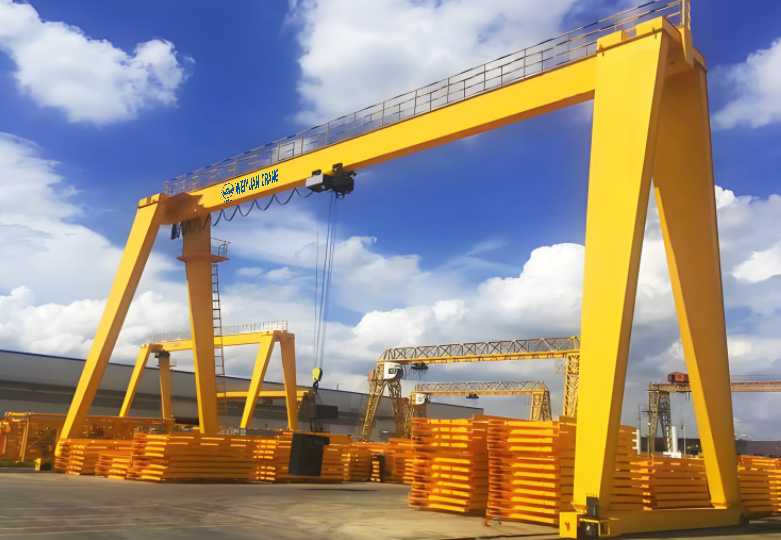
In the high-stakes world of heavy industry, logistics, and infrastructure, efficiency is rarely accidental. It is engineered. Whether you are moving 50-ton steel beams across a shipping yard, precisely positioning a concrete pillar on a construction site, or swapping out massive dies in a manufacturing plant, the limitations of ground-based vehicles like forklifts quickly become apparent. When the load is too heavy, the space too tight, or the environment too harsh for indoor overhead systems, you need a material handling solution that brings immense lifting power directly to the source.
This is exactly where 【 Gantry Cranes】 excel. These freestanding lifting powerhouses serve as the backbone for the world’s most demanding sectors. They offer incredible versatility, extreme weight capacities, and the unique ability to operate independently of a building’s internal support structure.
This comprehensive guide serves as a technical and strategic deep dive into gantry systems. We will explore their structural designs, core benefits, and the technical specifications required to make an informed, authoritative decision for your business infrastructure in 2026.
1. What is a Gantry Crane? (The Structural Revolution)
At its core, a gantry crane is an overhead lifting system built with a horizontal bridge beam supported by two or more freestanding legs. The fundamental difference between this and a traditional bridge crane is the “legs.” While a bridge crane rides on elevated runways attached to a building’s walls or columns, a gantry crane travels on wheels or a rail system situated at ground level.
This structural distinction is monumental for facility managers. Because the legs support the entire weight of the bridge, the hoist, and the load, the crane does not rely on the building’s structural integrity. This “structural independence” means you can install a gantry system almost anywhere with a flat, stable surface—indoors or outdoors—without investing millions in building reinforcements.
2. Anatomy of the Machine: The Core Components
To understand how these machines safely handle loads that exceed hundreds of tons, one must look at their engineering. A standard industrial 【 Gantry Cranes】 setup relies on five primary components:
- The Bridge (Girder): The horizontal beam that spans the width of the work area. Depending on the capacity and span, this can be a single beam (Single Girder) or a heavy-duty double-beam configuration (Double Girder).
- The Legs: Rigid vertical supports that transfer the load’s weight directly to the ground. In some designs, these are “A-frame” structures for maximum stability.
- The Hoist and Trolley: The “business end” of the crane. The trolley rolls across the bridge beam, carrying the hoist. The hoist uses heavy-duty wire rope or lifting chains to perform the vertical lift.
- End Trucks (or Casters): Located at the base of the legs, these house the wheels. Heavy-duty models use steel wheels on embedded ground rails, while portable versions use high-capacity polyurethane casters.
- Power Delivery System: Typically a festoon cable system, a motorized cable reel, or a conductor bar (busbar) that provides electrical power to the moving hoist and drive motors.
3. Major Types of Gantry Cranes
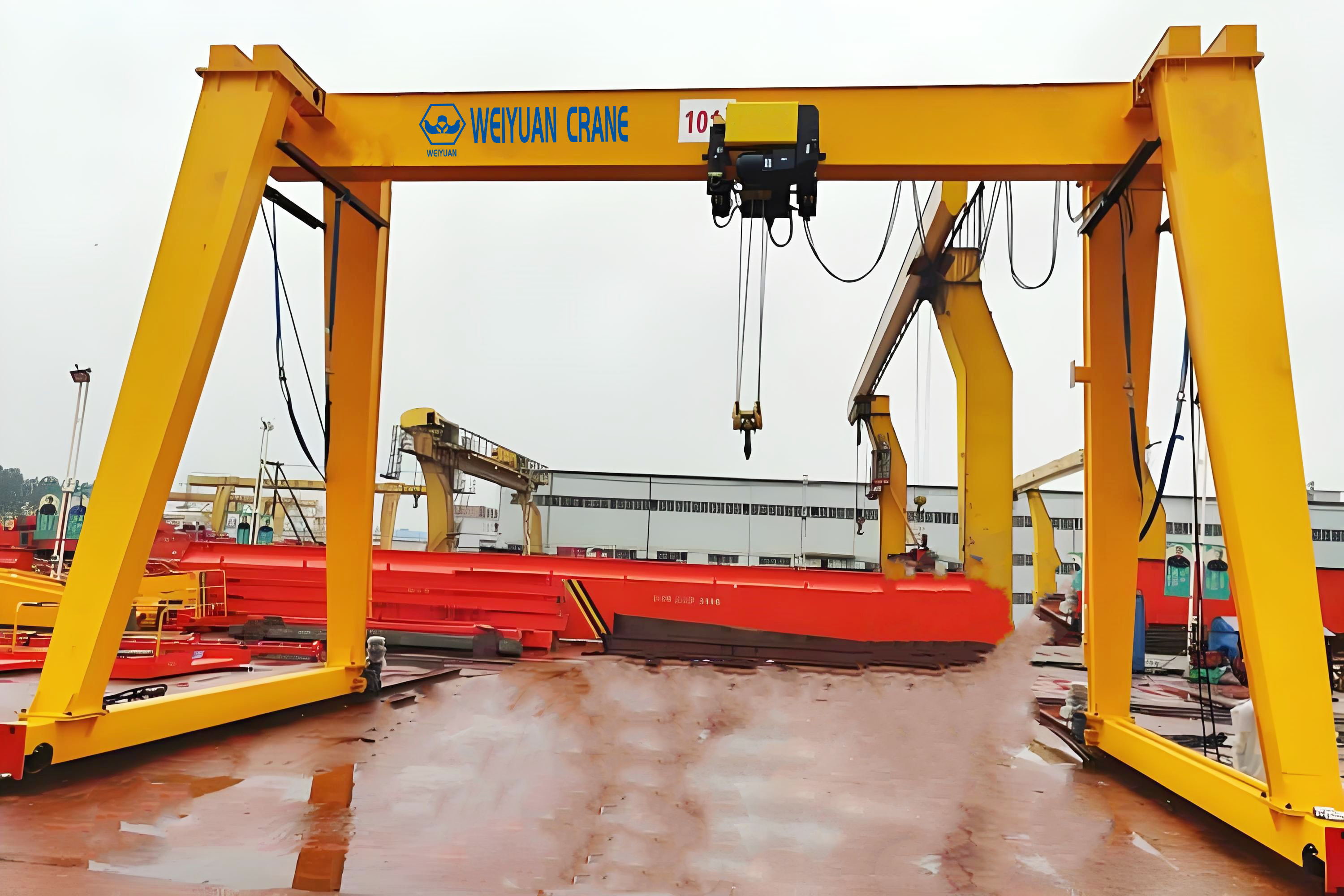
No two industrial sites are identical, and the market has evolved to provide several distinct variations of the gantry design to solve specific logistical challenges.
Full Gantry Cranes
This is the standard heavy-duty configuration. Two large legs support the bridge, and the entire system runs in a straight line along rails embedded in a concrete floor or outdoor yard.
- Best For: Heavy fabrication yards, rail terminals, and steel processing.
- Advantage: They offer massive capacities (up to 500+ tons) and can span incredibly wide distances without relying on external structures.
Semi-Gantry Cranes
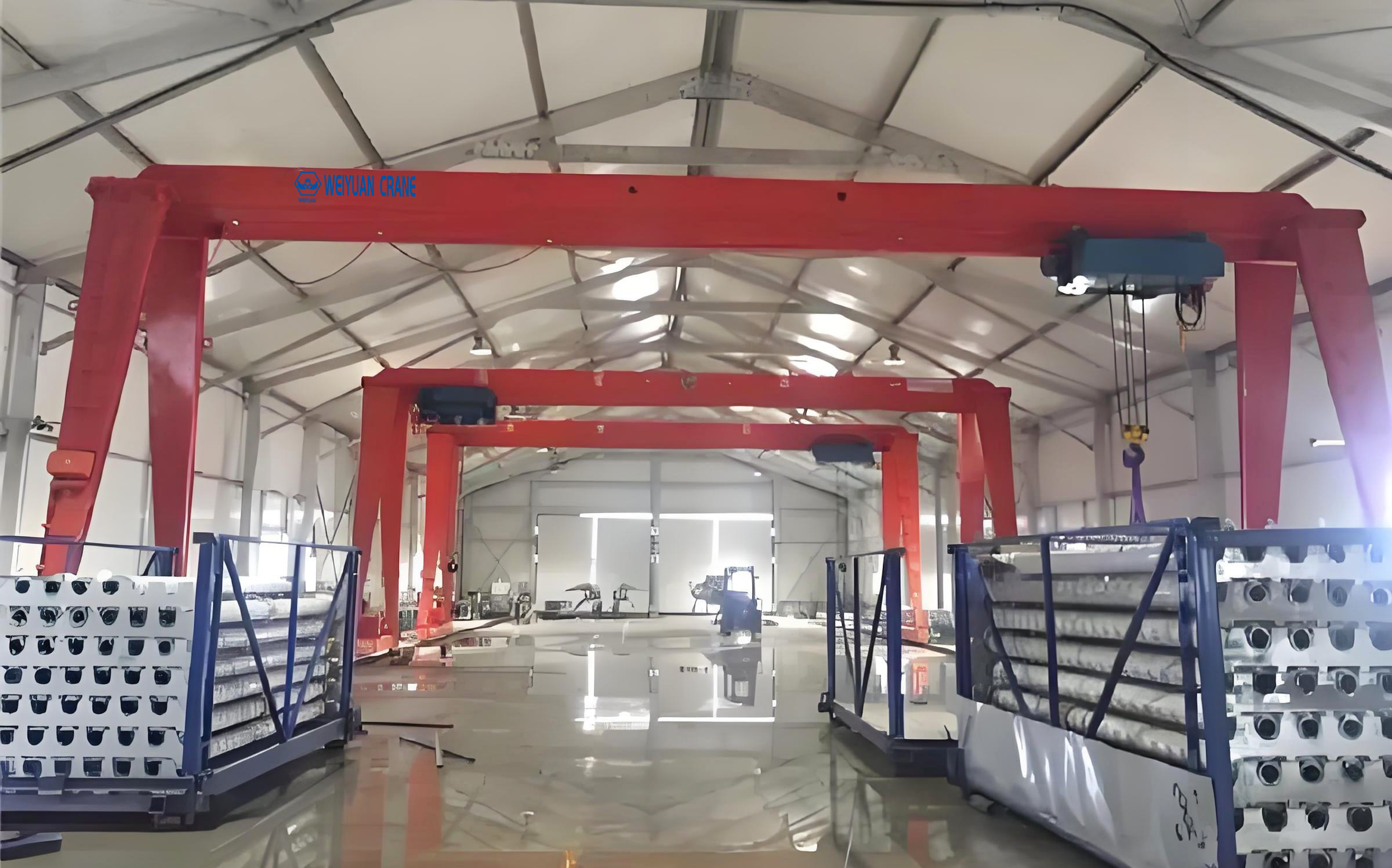
A brilliant space-saving hybrid. One side of the bridge rides on a floor leg, while the other side rides on an elevated runway attached to a building column or wall.
- Best For: Narrow workshops or assembly lines along a building’s perimeter.
- Advantage: They reclaim floor space on one side and can work underneath larger overhead bridge cranes to handle localized workstation lifts.
Portable Gantry Cranes
Lightweight, mobile units that run on heavy-duty casters rather than fixed rails. These are often made of steel or high-grade aluminum.
- Best For: Maintenance bays, auto repair, and light assembly.
- Advantage: Extreme flexibility. You can roll the crane to the load, perform the lift, and tuck the crane into a corner when finished.
Rubber-Tired Gantry (RTG) Cranes
Instead of steel rails, these massive systems ride on large, heavy-duty rubber tires, often powered by onboard diesel generators or battery banks.
- Best For: Shipping ports and intermodal freight yards.
- Advantage: They are not restricted to a fixed track. They can “crab” or change paths to move between different rows of containers or materials.
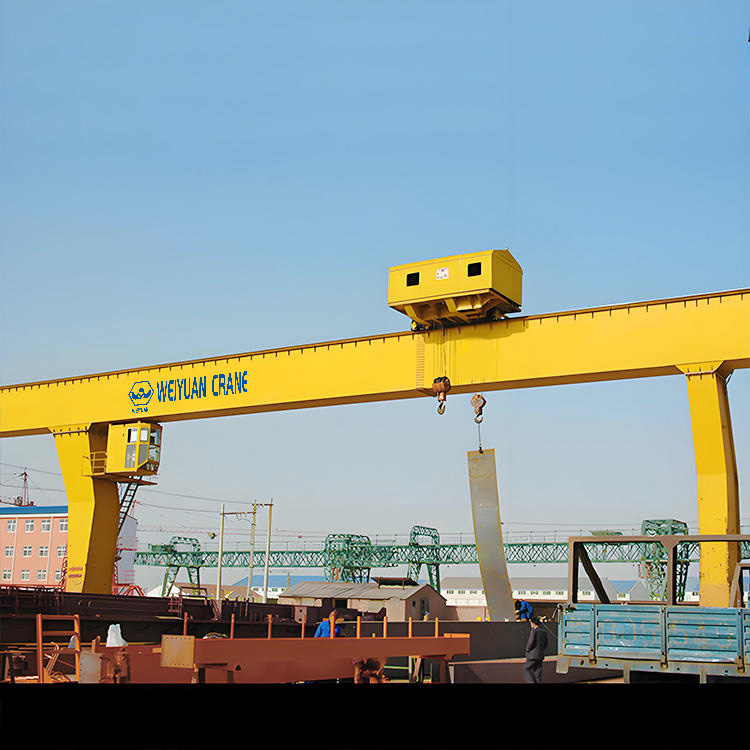
Weiyuan L-Shape Leg Walk Gantry Crane | Manufacturer Direct, Enhanced Mobility
The Weiyuan L-Shape Leg Walk Gantry Crane is a high-performance single-girder gantry crane with a distinctive L-shaped leg design that offers superior clearance for long and oversized loads, and smooth “walk” travel on ground rails — direct from the manufacturer for competitive pricing and reliable quality. :contentReference
View Product / Get Quote4. The Strategic Business Case: Key Benefits
Integrating a 【 Gantry Cranes】 system into your workflow provides immediate, measurable advantages that go beyond simple lifting.
A. Zero Dependency on Building Architecture
If you lease your facility or operate in a building with a lightweight roof structure, a gantry crane is often your only option. You do not have to pay structural engineers to redesign your building, nor do you need permission to weld massive supports to the building’s skeleton.
B. Outdoor Weather Resilience
Indoor cranes are trapped. If you need to unload flatbed trucks in a heavy equipment yard, you need a machine designed for the elements. Modern gantry cranes feature specialized weatherization:
- Epoxy Coatings: To prevent rust in high-humidity or coastal environments.
- IP66/NEMA 4X Enclosures: To protect electrical components from rain, snow, and dust.
- Motor Covers: To ensure the “heart” of the crane remains dry and functional.
C. Drastic Infrastructure Savings
When calculating Total Cost of Ownership (TCO), a gantry setup is often 30-50% cheaper than a comparable bridge crane when building reinforcements are factored in. The installation is faster, less disruptive, and easier on the capital budget.
5. Technical Depth: Duty Cycles and Classifications
In the lifting industry, expertise is demonstrated by understanding that weight isn’t everything; frequency is what kills machines. The Crane Manufacturers Association of America (CMAA) classifies cranes based on their intensity of use.
| CMAA Class | Service Type | Operational Intensity |
| Class A | Standby/Infrequent | Maintenance, power plants; lifts a few times a month. |
| Class C | Moderate | General manufacturing; 5-10 lifts/hour at 50% capacity. |
| Class D | Heavy | Steel warehouses, foundries; 10-20 lifts/hour near max capacity. |
| Class E | Severe | Scrap yards, cement mills; 24/7 continuous operation. |
| Class F | Continuous Severe | Custom-designed for non-stop, maximum capacity work. |
Pro Tip: If you buy a Class C crane for a Class E application, you will face motor overheating and structural fatigue within a year. Always match the “Class” to your expected shift patterns.
6. Real-World Applications: Where Power Meets Purpose
- Shipbuilding: Massive double-girder gantries straddle dry docks, lifting pre-fabricated hull sections and engine blocks with millimeter precision.
- Precast Concrete: Moving 40-ton bridge spans from pouring forms to curing yards requires the steady, reliable power of a rail-mounted gantry.
- Aviation Maintenance: Mechanics use adjustable-height portable gantries to pull engines from commercial aircraft for routine overhauls.
- Steel & Lumber: Gantries straddle wide rows of inventory, allowing operators to pick and load materials onto flatbeds without the maneuvering space required by forklifts.
7. Safety, Maintenance, and Compliance
To maintain trust in your operational standards, you must treat your 【 Gantry Cranes】 with rigorous care. Adhering to OSHA 1910.179 and ASME B30.17 guidelines is essential.
The Inspection Hierarchy
- Daily Visual Checks: Operators check the wire rope for fraying, test E-stops, and ensure limit switches are active before every shift.
- Monthly Hardware Checks: Maintenance teams inspect hooks for deformation, check gearbox oil, and examine wheels for uneven wear.
- Annual Audits: A certified third-party technician performs a comprehensive tear-down of brakes, electrical contactors, and structural welds.
Wind Loads: The Outdoor Factor
Wind is a critical safety factor for outdoor systems. A high wind can turn a massive steel load into a “sail.” Modern gantries must include Anemometers (wind sensors) that trigger alarms or auto-lock the crane when speeds exceed safe limits (typically 15-20 m/s).
Frequently Asked Questions (FAQ)
Q1: Can I move a gantry crane while it is carrying a load?
A: Rail-mounted industrial gantry cranes are specifically engineered to travel under full load. However, most small, portable gantries on casters are NOT designed to be moved while loaded, as this can cause the casters to fail or the frame to tip. Always refer to the manufacturer’s specific guidelines.
Q2: How do I know if my concrete floor can support a gantry crane?
A: For heavy systems, a structural engineer must calculate the “Wheel Loads.” This involves determining the maximum pressure $P$ on a single wheel:
$$P = \frac{(W_{crane} + W_{load})}{n_{wheels}}$$
If the floor cannot handle the point load, you may need a dedicated concrete “rib” or foundation under the rails.
Q3: What is the benefit of a cantilever on a gantry crane?
A: A cantilever is an extension of the bridge beam beyond the legs. This allows the hoist to reach outside the crane’s rail path—for example, picking up a load from a truck parked next to the rails and moving it into the main bay.
Q4: Is a wire rope hoist better than a chain hoist?
A: For capacities over 5 tons and for high-speed, high-cycle environments, wire rope hoists are superior as they dissipate heat better. Chain hoists are excellent, cost-effective choices for lighter loads and workstation-level lifting.
Q5: Can the height of a gantry crane be adjusted?
A: Yes, many portable models feature telescoping or adjustable-height legs. This allows the crane to pass through low doorways and then expand to its full lifting height once in position.