


The Strategic Sourcing Guide: How to Select a Reliable Gantry Crane Manufacturer for Bulk Procurement
1. Defining the Gantry Crane: Why Engineering Matters
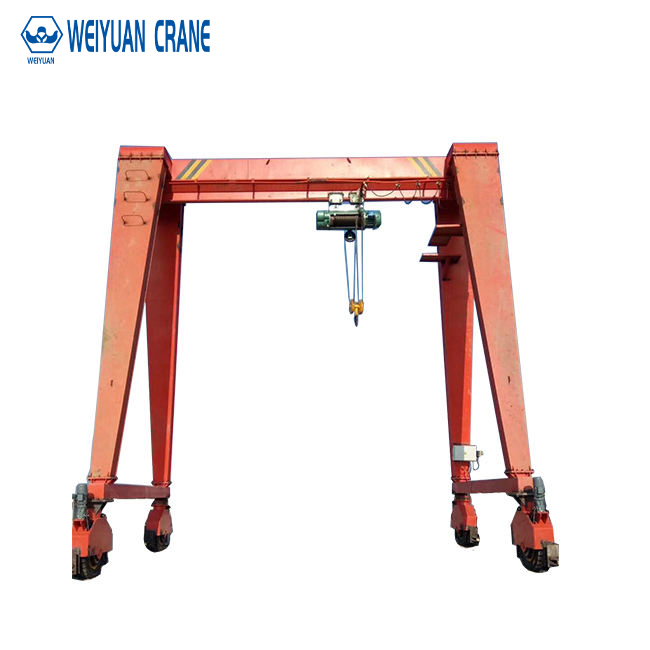
Unlike overhead bridge cranes that rely on a building’s structure, a Gantry Crane is a self-supporting system moving on floor-level rails or wheels. This independence makes them the workhorse of outdoor yards and precast concrete plants. However, because they are exposed to the elements and carry loads often exceeding 300 tons, the engineering “DNA” of the manufacturer is the first thing you must audit.
The Precision of Application
A reliable partner doesn’t just sell you a machine; they analyze your environment. Whether it is a Single Girder Gantry Crane for lighter fabrication or a Rail-Mounted Gantry (RMG) for container ports, the design must account for:
- Wind Loading: Essential for outdoor stability in coastal regions.
- Duty Class (FEM/ISO): Ensuring the motor and structure can handle the specific frequency of your work cycles.
- Seismic Resistance: For projects in geologically active zones.
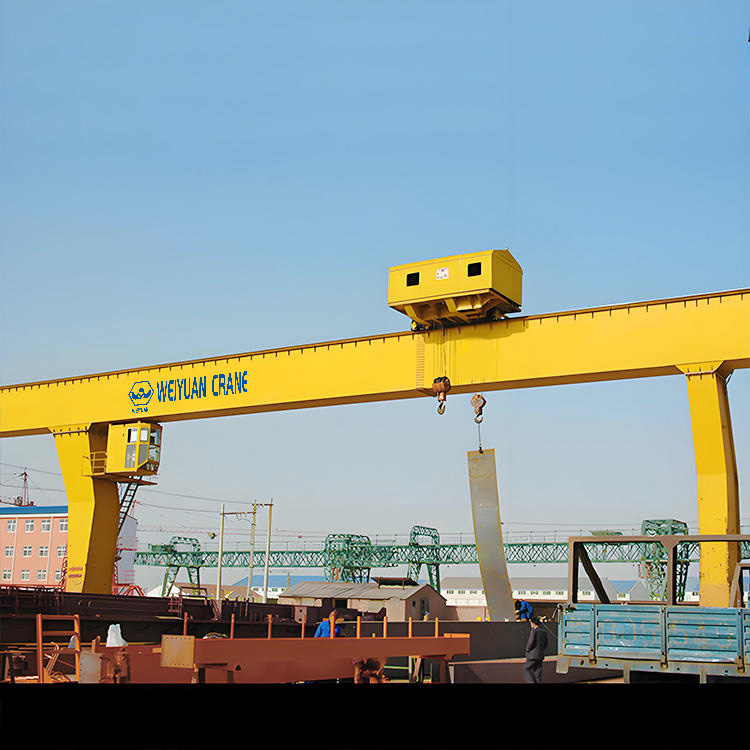
Weiyuan L-Shape Leg Walk Gantry Crane | Manufacturer Direct, Enhanced Mobility
The Weiyuan L-Shape Leg Walk Gantry Crane is a high-performance single-girder gantry crane with a distinctive L-shaped leg design that offers superior clearance for long and oversized loads, and smooth “walk” travel on ground rails — direct from the manufacturer for competitive pricing and reliable quality. :contentReference
View Product / Get Quote2. The Pillars of E-A-T in Crane Manufacturing
Google’s standards for Expertise, Authoritativeness, and Trustworthiness (E-A-T) are a perfect mirror for industrial sourcing. You aren’t looking for a middleman; you are looking for a manufacturer with deep “Industrial Soil.”
Engineering Capability (Expertise)
Does the manufacturer utilize Finite Element Analysis (FEA)? In-house engineering teams who can provide customized load calculation reports are far superior to factories that only produce “catalog models.” Ask to see technical drawings from past projects that match your required span and capacity.
International Compliance (Authoritativeness)
For global bulk buyers, compliance is your legal shield. A manufacturer’s authority is proven by their adherence to:
- ISO 9001:2015: For quality management.
- CE & EN 13001: For European safety and structural integrity.
- CMAA: For North American standards.
- ISO 3834: Specifically for welding quality, which is the most critical point of failure in a Gantry Crane.
3. Auditing the Factory Floor: Beyond the Brochure
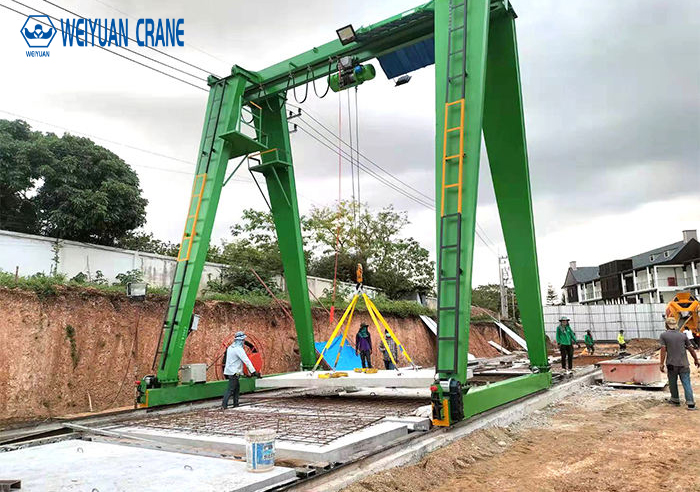
When sourcing in bulk, you must look at the infrastructure. A factory’s “lifting capacity” for its own production often dictates the quality of the cranes they build for you.
- Material Traceability: Can they provide mill certificates for the steel? Standard Q345B steel is the benchmark for structural girders.
- Automated Production: Look for CNC cutting and robotic welding. Human error in welding main girders is a leading cause of fatigue cracks over time.
- Pre-commissioning: Does the factory have a test track to assemble and run the crane before it is crated? This prevents “site-fit” disasters that delay projects by months.
4. Total Cost of Ownership (TCO) vs. The “Low-Price” Trap
The most expensive crane you will ever buy is a “cheap” one. For bulk procurement, the initial purchase price is only about 30% of the total lifecycle cost.
| Factor | High-Quality Manufacturer | Low-Cost Supplier |
| Component Origin | Standardized (Schneider, ABB, SEW) | Generic or in-house brands |
| Maintenance | Predictive (IoT Sensors) | Reactive (Break-fix) |
| Energy Use | VFD Controlled (30% Savings) | Direct-on-line (High Surge) |
| Lifespan | 20+ Years | 7–10 Years |
5. Lifecycle Support: The Mark of a Partner
The relationship with a Gantry Crane manufacturer truly begins after the cargo ships arrive. Bulk buyers require a “Service Ecosystem”:
- Spare Parts Legacy: A guarantee that motors, brakes, and electrical components will be available for at least 10–15 years.
- Global Supervisions: Providing on-site engineers for the critical commissioning phase.
- Digital Integration: In 2026, a reliable manufacturer should offer remote diagnostics, allowing their HQ to troubleshoot software issues in real-time via the cloud.
6. Common Pitfalls in Global Sourcing
- Ignoring the Duty Cycle: Buying an A3 (light duty) crane for an A6 (heavy process) environment leads to structural failure within 24 months.
- Standardization Failures: Buying different brands for different sites, which triples your spare parts inventory costs.
- Customization Resistance: If a manufacturer refuses to adapt the span or height to your specific yard layout, they are likely a mass-assembler rather than an engineer.
FAQ: Sourcing a Gantry Crane
Q: Why should I prefer a manufacturer that uses VFD (Variable Frequency Drives)?
A: VFDs allow for “soft starts” and “soft stops.” This significantly reduces mechanical stress on the gears and prevents the load from swaying, which is the primary cause of crane-related accidents.
Q: What is the most critical certification for a Gantry Crane?
A: While ISO 9001 is standard, ISO 3834 (Welding Quality) is more critical for cranes. Since the crane’s integrity depends on the welds between steel plates, this certification ensures the factory’s welding processes meet international safety levels.
Q: How do I verify a manufacturer’s export history?
A: Ask for a “Reference List” filtered by your region. A manufacturer with successful installations in your country will already be familiar with your local power grid requirements (e.g., 380V vs. 480V) and local regulatory inspections.
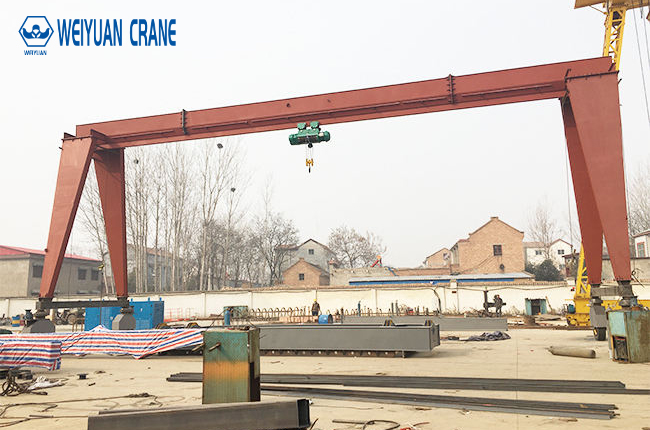
Q: Can a Gantry Crane be used indoors?
A: Absolutely. While they are famous for outdoor use, Semi-Gantry Cranes are often used in indoor workshops to provide lifting coverage under a larger bridge crane without needing wall-mounted brackets.