


The Ultimate Guide to Jib Cranes: Types, Benefits, and Buying Tips
Meta Title: The Ultimate Guide to Jib Cranes: Types, Specs & Buying Tips | Weiyuan
Meta Description: Looking for the right lifting solution? Explore our comprehensive guide to jib cranes, covering types, technical specs, safety benefits, and customization options for global industries.
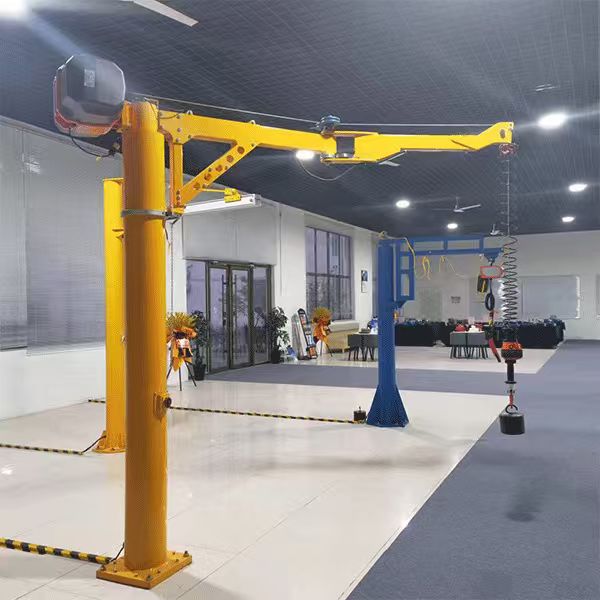
Efficient material handling is the backbone of any productive facility. Whether you operate a busy shipping port in Asia, a manufacturing plant in Europe, or a logistics hub in Africa, the ability to move heavy loads safely and quickly determines your operational success.
Enter the jib crane. Compact, versatile, and powerful, this equipment serves as an essential partner in streamlining workflows. This guide covers everything you need to know about selecting the right lifting equipment, from technical specifications to customization options offered by manufacturers like Weiyuan.
What Is a Jib Crane?
A jib crane definition is straightforward: it is a type of overhead lifting device that utilizes a mounted arm (the jib) to lift, move, and lower loads. The arm is typically mounted to a wall or a floor-mounted pillar and can rotate to varying degrees—often up to 360 degrees—to cover a circular work area.
Unlike massive overhead bridge cranes that cover entire bays, jib cranes are station-specific. They are perfect for individual workstations, loading docks, or assembly lines where workers need to move heavy components repeatedly over short distances.
Types of Jib Cranes: Finding Your Fit
Selecting the right crane depends entirely on your facility’s layout and lifting requirements. Here are the most common configurations.
1. Pillar Jib Crane (Floor Mount Jib Crane)
This is the most popular style for heavy-duty tasks. A pillar jib crane features a vertical mast anchored securely to a concrete foundation.
- Best for: 360-degree rotation and heavier loads (e.g., jib crane 2 ton capacities and above).
- Installation: Requires a solid foundation or a chemical bolt fixing on an existing reinforced floor (base mounted jib crane).
2. Portable Jib Crane on Wheels
Flexibility is the main advantage here. A portable jib crane on wheels allows you to move the lifting power exactly where it is needed.
- Best for: Maintenance workshops or facilities where a permanent installation isn’t feasible.
- Note: Also frequently searched as “what is a portable jib crane” by facility managers looking for non-permanent solutions.
3. Wall-Mounted Jib Crane
These systems utilize existing building columns or walls for support. They take up zero floor space.
- Best for: Crowded factories where floor space is at a premium.
4. Articulating Jib Crane
An articulating jib crane features a two-part arm that can fold in on itself. This allows the hook to reach around corners, columns, or into machinery openings.
- Best for: Complex maneuvering in tight spaces.
5. Telescoping Jib Crane
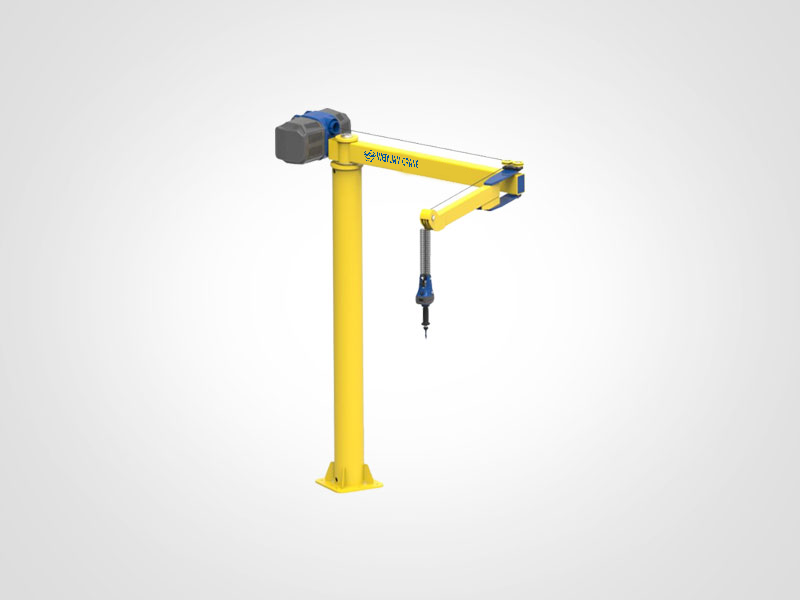
This type features a boom that can extend and retract, offering variable reach.
- Best for: Reaching into racking systems or adjusting reach for different workstations.
Key Features and Technical Specifications
When evaluating a hoist and jib crane system, you need to look beyond just the lifting capacity. High-quality cranes are defined by their durability and precision.
Standard Technical Specifications:
| Specification | Typical Range |
|---|---|
| Lifting Capacity | 0.25 Ton to 20 Ton (Customizable) |
| Span (Arm Length) | 2m to 12m |
| Rotation | 180°, 270°, or 360° |
| Lifting Height | 3m to 10m |
| Power Supply | 3-Phase AC (220V/380V/440V/480V) |
| Control Method | Pendant control or Remote control |
| Working Duty | A3 (Light) to A5 (Heavy) |
Materials and Durability
Weiyuan cranes are constructed using high-grade structural steel. The pillars typically use seamless steel pipes or fabricated steel plates for maximum rigidity. The jib arm often utilizes I-beams or enclosed track profiles, ensuring the jib crane hoist trolley moves smoothly without jamming.
Customization: Designed for Your Workflow
One size rarely fits all in industrial environments. While standard models work for many, specific challenges require specific solutions. Weiyuan specializes in providing free design and personalized customization services.
Customization Options Include:
- Dimensions: Adjusting arm length and pillar height to clear low ceilings or span wide machinery.
- Capacity: Engineering a jib crane for tractor maintenance (heavy duty) versus a diy camera jib crane style setup for light tools.
- Environment: Special coatings for outdoor usage (boat jib crane applications) or explosion-proof components for hazardous areas (air jib crane systems).
- Branding: Custom paint colors to match your company branding or safety standards.
Applications and Industry Use Cases
Jib cranes are ubiquitous across sectors due to their adaptability.
- Warehousing: Quickly moving pallets from packing areas to conveyors.
- Manufacturing: Assisting workers in lifting heavy workpieces onto CNC machines or assembly benches.
- Ports and Marine: A boat jib crane is often installed on docks or vessels for loading supplies.
- Construction & Agriculture: A heavy-duty jib crane for tractor repair shops allows mechanics to lift engines and transmissions safely.
Safety and Compliance
For buyers in Europe, Asia, and Africa, compliance with local safety standards is non-negotiable.
- Certification: High-quality cranes should meet international standards such as CE certification (essential for Europe) and ISO quality management standards.
- Safety Features: Look for limit switches (preventing over-travel), emergency stop buttons, and overload protection devices.
- Outdoor Use: If you are installing a crane outside, ensure it has weatherproofing ratings suitable for your climate.
Case Study: Boosting Efficiency in a Machining Plant
The Challenge:
A mid-sized automotive parts manufacturer in Southeast Asia faced a bottleneck. Their overhead bridge crane was too slow for small, frequent lifts at individual lathe stations. Operators waited up to 15 minutes for the main crane to become available.
The Solution:
The facility installed four pillar jib cranes (1-ton capacity) directly at the workstations. Weiyuan provided the design specifications to ensure the pillars fit within the tight aisle space.
The Result:
- Downtime Reduced: Operators could lift parts instantly without waiting.
- Safety Improved: Manual lifting injuries dropped to zero.
- ROI: The increase in daily output covered the cost of the cranes within six months.
Installation and Support
Proper installation is critical for the longevity of your jib and crane system.
- Installation: Weiyuan provides comprehensive online guidance for installation. For complex projects, arrangements can be made for site guidance.
- After-Sales Support: Access to technical teams for troubleshooting and parts replacement is vital. Whether you need a replacement motor or specific gorbel jib crane parts equivalents for retrofitting, reliable support keeps your operations running.
Pricing and Delivery
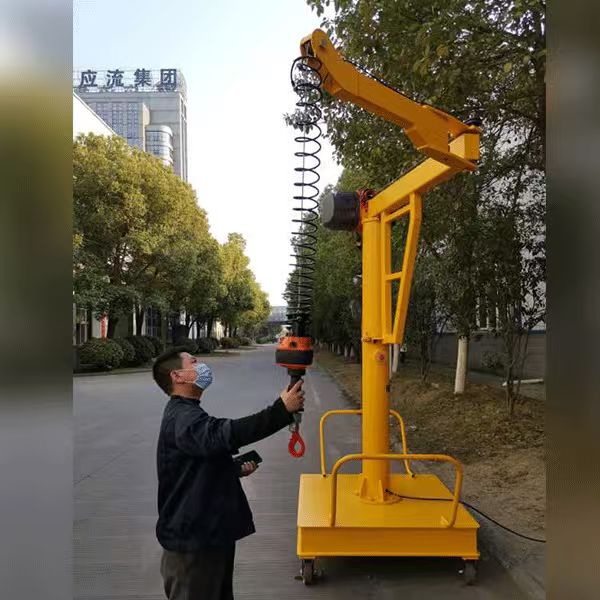
Jib crane prices vary significantly based on capacity, span, and customization. A simple floor mount jib crane will cost less than a fully motorized telescoping jib crane.
How to Get a Quote:
To receive an accurate proposal, provide the following details:
- Required lifting capacity (e.g., 2 ton, 5 ton).
- Arm length (Span).
- Lifting height.
- Power voltage (e.g., 380V 50Hz 3Phase).
Delivery:
Weiyuan offers competitive production lead times. Standard models are often ready for shipment within 15-20 days, ensuring your project stays on schedule.
Frequently Asked Questions (FAQ)
How do I choose a portable jib crane?
To know how to choose a portable jib crane, consider the weight of your heaviest load and the floor surface. Since these cranes are not bolted down, they require a flat, smooth, and reinforced concrete floor to remain stable under load.
What is included in jib crane maintenance?
Routine jib crane maintenance involves checking the lubrication of pivot points, inspecting the hoist chain or wire rope for wear, and testing the limit switches. Regular jib crane inspection ensures safety and compliance with OSHA or local regulations.
Can I buy a used jib crane?
While a used jib crane might save money upfront, it often lacks the safety certification and warranty of a new unit. Investing in a new customized crane ensures the metal has no fatigue history and fits your exact specifications.
What is the difference between a jib crane and a gantry crane?
A jib crane is fixed at one end (or mounted on a single pillar) and rotates. A gantry crane typically straddles the load with legs on both sides. Jib cranes are better for station-specific circular coverage