


Understanding the Bridge Crane: Engineering a Vertical Lift for Complex Workspaces
1. Understanding the Bridge Crane: Engineering a Vertical Lift for Complex Workspaces
Why is a bridge crane called a bridge crane?
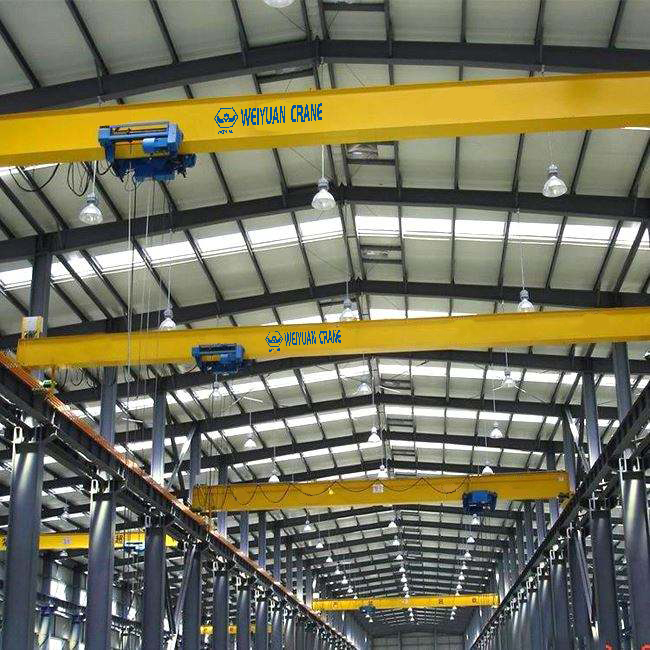
The name “bridge crane” comes from its key feature: the horizontal bridge, or beam, that spans the width of a workspace, supported by end trucks on either side. Just like a bridge spans a river, this crane spans a factory floor, providing critical support for heavy lifting across an entire work zone.
Bridge cranes have evolved from traditional shipyard cranes and have become integral in many manufacturing, warehousing, and logistics operations. While often used in larger facilities, their design principles apply to various industries where heavy, repetitive loads need to be moved with precision.
1. Product Description: The Power of Horizontal Movement
The bridge crane operates on rails or runways installed along the length of a building. A trolley or hoist, mounted on the crane bridge, travels horizontally along the beam and can lift and lower materials with high precision. The advantage of this crane is its ability to cover a vast area and move loads over long distances, all within a confined space.
The Anatomy of a Bridge Crane:
- The Bridge: This is the horizontal beam that carries the hoist or trolley and spans across the workspace.
- The Runway: Rails or beams mounted along the floor on which the bridge crane moves.
- The Trolley/Hoist: The lifting mechanism that moves along the bridge and raises or lowers materials.
2. Features and Advantages: Engineered for Heavy Lifting
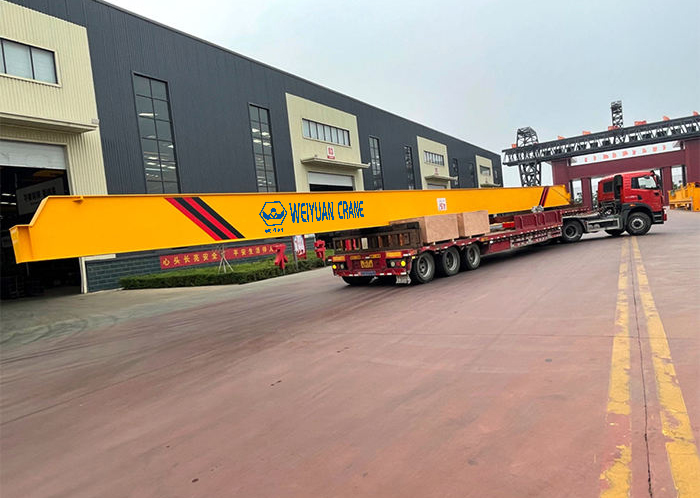
- Long Reach: The bridge crane’s ability to span a wide area is perfect for large-scale manufacturing.
- Heavy Load Capacity: Designed to handle loads ranging from a few tons to over 100 tons, depending on the design.
- Precision Control: Advanced motorized controls ensure smooth and precise load movement.
Benefits:
- Efficiency: Faster than manual labor, reducing the time to move materials.
- Space Optimization: No need for additional large equipment or multiple cranes.
- Safety: Reduces human handling of heavy objects, lowering the risk of injury.
3. Technical Specifications
| Specification Item | Standard Range | Customization Options |
|---|---|---|
| Capacity | 1 Ton to 100+ Tons | Custom solutions for heavy-duty lifts |
| Span (Reach) | 10m to 40m | Tailored to factory size |
| Lifting Height | 3m to 30m | Can be adapted for tall or low-ceiling areas |
| Rotation | 360° | Options for manual or motorized controls |
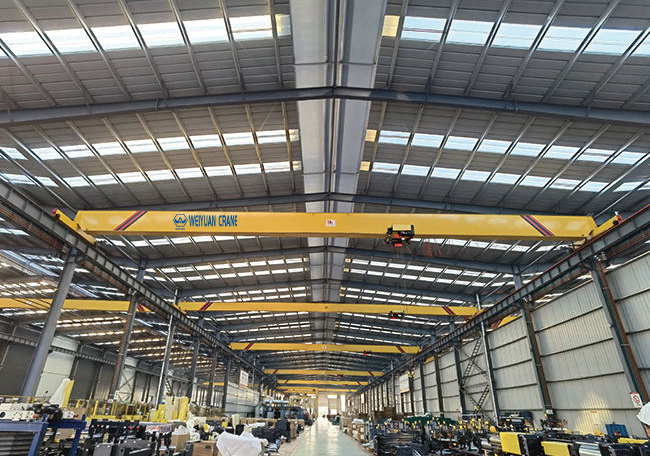
4. Customization Options: Tailored Solutions for Your Facility
WEIYUAN understands that no two facilities are the same. Our bridge cranes come with customized solutions for:
- Low Clearance: Special adaptations for facilities with low ceilings.
- Radio Remote Control: Allowing operators to safely control the crane from a distance.
- Heavy Duty Designs: For industries like steel manufacturing and aerospace.
5. Application Fields
- Heavy Manufacturing: Ideal for factories with high-volume production needs.
- Warehousing: Efficiently handles materials across large warehouses.
- Construction: Used for lifting heavy components on large building sites.