


What Are the Different Types of Bridge Cranes? A Comprehensive Guide
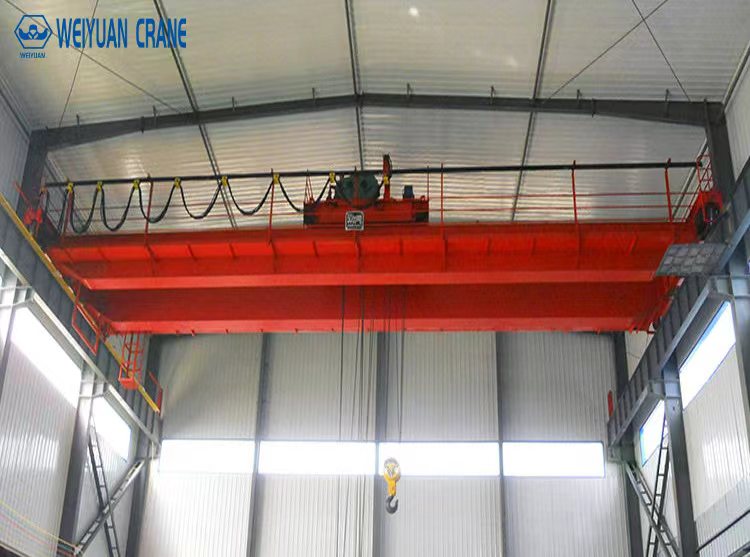
In the world of modern industrial logistics, the ability to move heavy loads safely and efficiently is a cornerstone of productivity. An overhead crane serves as the primary artery for material handling, utilizing a cross-shop structure to maximize floor space and operational coverage. Whether you are managing a high-output automotive plant or a heavy-duty steel warehouse, choosing the right bridge crane system is a strategic decision that directly impacts your workflow and worker safety.
At WEIYUAN, we operate as a specialized manufacturer, designer, and installer, providing integrated lifting solutions to clients across Asia, Europe, and Africa. We believe that a well-designed crane should do more than just lift; it should optimize your entire facility layout.
1. Understanding the Modern Bridge Crane System
The primary function of a bridge crane is the vertical lifting and horizontal transport of heavy materials in environments like factories, warehouses, docks, and metallurgical plants1. By moving materials through the air rather than along the floor, these systems improve material handling efficiency by more than 20% compared to traditional ground-based methods2.
Real-World Applications
- Automotive Industry: Rapid loading and unloading of heavy molds in assembly lines3.
- Steel Processing: Frequent lifting and stacking of steel coils and plates4.
- Heavy Machinery: Precise assembly and positioning of large-scale industrial components5.
2. Key Features and Performance Advantages
A high-performance overhead crane must find the perfect balance between structural strength and lightweight design.
- Optimized Girder Design: Whether utilizing a single girder bridge crane for lighter tasks or a robust box-girder for heavier loads, the design focuses on reducing dead weight and wheel pressure to maximize building space6.
- Smooth Drive Systems: Integrated “three-in-one” reducers (combining the motor, brake, and gearbox) provide exceptionally smooth operation and high-precision positioning7.
- Advanced Control: By incorporating Variable Frequency Drives (VFD), these cranes achieve stepless speed control8. This not only boosts efficiency but also minimizes mechanical shock, significantly extending the service life of the equipment9.
- High Duty Cycles: Our systems are typically rated for A4 or A5 (medium to heavy) duty classes, ensuring they can handle continuous operation in demanding environments10.
3. Technical Specifications and Customization
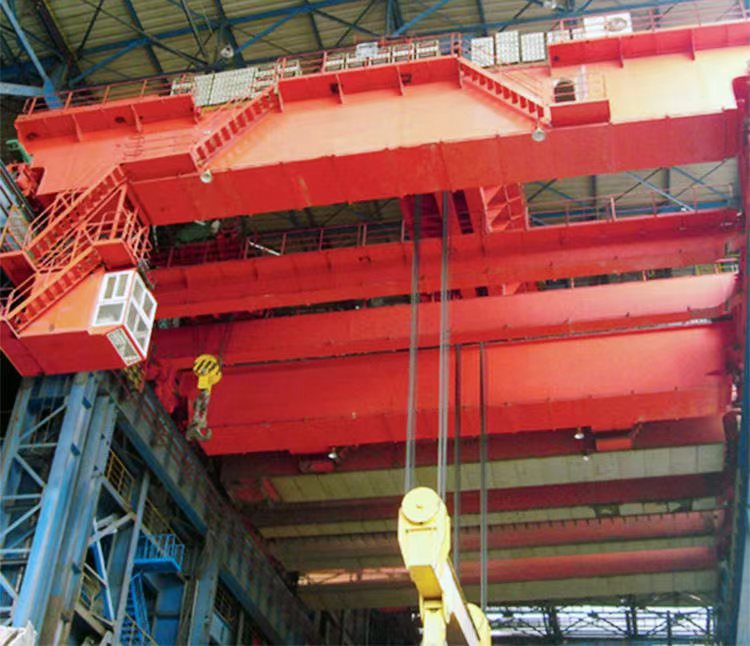
Technical precision is the first step in selecting the right tool for the job. Below are the standard reference specifications for an industrial overhead crane:
| Specification Item | Standard Range / Parameters | Application Considerations |
| Lifting Capacity | 1 Ton to 80 Tons (Customizable up to 400 Tons) 11 | Covers everything from a 2 ton bridge crane to heavy industrial needs. |
| Span Length | 7.5 Meters to 34 Meters 12 | Fits most standard and non-standard factory widths. |
| Lifting Height | 6 Meters to 50 Meters 13 | Tailored to your specific ceiling clearance and stacking needs. |
| Rated Voltage | 380V / 400V / 415V, 50-60Hz 14 | Compatible with power grids in Asia, Europe, and beyond. |
| Control Methods | Pendant / Wireless Remote / Cabin Control 15 | Selected based on operational complexity and safety requirements. |
Bespoke Design Services
We understand that every facility has unique constraints. WEIYUAN offers free factory structure analysis to help you decide between a ceiling mounted bridge crane to save space or a freestanding bridge crane (also known as a free standing bridge crane) if your building cannot support overhead rails16.
4. Bridge Crane vs Gantry Crane: Which is Best?
A common question for overhead bridge crane manufacturers is the debate between gantry crane vs bridge crane.
- Bridge Crane: Runs on high-level rails, keeping the floor completely clear. It is ideal for permanent indoor production lines17.
- Gantry Crane: Features a self-supporting leg structure. It is often the preferred choice for outdoor yards or temporary workstations where installing overhead rails is not feasible18.
If you require flexibility without permanent structural changes, a freestanding bridge crane provides a perfect middle ground19.
5. Safety Standards and Global Compliance
Safety is the absolute priority for any lifting operation. Every overhead crane we produce adheres to rigorous international safety standards.
- Overload Protection: Every unit is equipped with an automatic weight limiter that cuts power if a load exceeds safe limits20.
- Emergency Systems: Comprehensive safety packages include limit switches, emergency stop buttons, and robust braking systems21.
- Safe Operation: For pendant-controlled models, the control circuit voltage is maintained below 50V to protect operators from electrical hazards22.
6. Case Study: Optimization in Automotive Parts Manufacturing
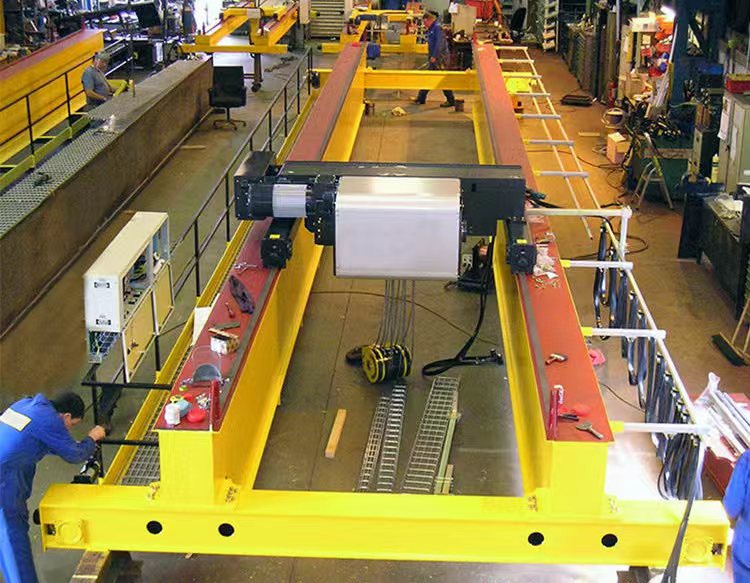
A major automotive component manufacturer recently modernized their assembly workshop by deploying five 10-ton double-girder systems.
- The Result: The production line cycle time was reduced by 8%23.
- The Reliability: The equipment has surpassed 8,000 hours of safe operation with zero accidents, showcasing the durability of our bridge crane system24.
7. Professional Installation and Global Support
WEIYUAN provides a turnkey experience that extends far beyond the point of sale.
- Installation Support: We offer detailed manuals, high-definition video tutorials, and on-site technical assistance to ensure your bridge crane installation is seamless25.
- Warranty: All equipment includes a 12-month warranty with guaranteed access to genuine spare parts26.
- Flexible Delivery: Standard models typically ship within 3 to 5 business days, while custom-engineered systems generally have a lead time of 2 to 4 weeks27.
8. Frequently Asked Questions (FAQ)
Q: What information do bridge crane suppliers need for a quote?
A: To provide an accurate bridge crane cost, please provide the lifting capacity, span length, lifting height, the material being handled, and your local power source28.
Q: Are there used bridge crane options?
A: While a used bridge crane for sale or a used bridge crane may seem cost-effective initially, we recommend new, customized systems to ensure modern safety compliance and long-term reliability29.
Q: Can these cranes operate in hazardous environments?
A: Yes. We can design explosion-proof and acid-resistant configurations specifically for chemical plants or metallurgical facilities30.
Q: What is the benefit of a bridge crane trolley?
A: A high-quality bridge crane trolley (the mechanism that moves the hoist) ensures smooth horizontal movement across the bridge, allowing for millimeter-perfect load placement31.
Would you like us to conduct a free structural analysis of your workshop or provide a detailed technical proposal for a custom double girder bridge crane?