


What Does a Jib Look Like? Visualizing the Industrial Jib Crane
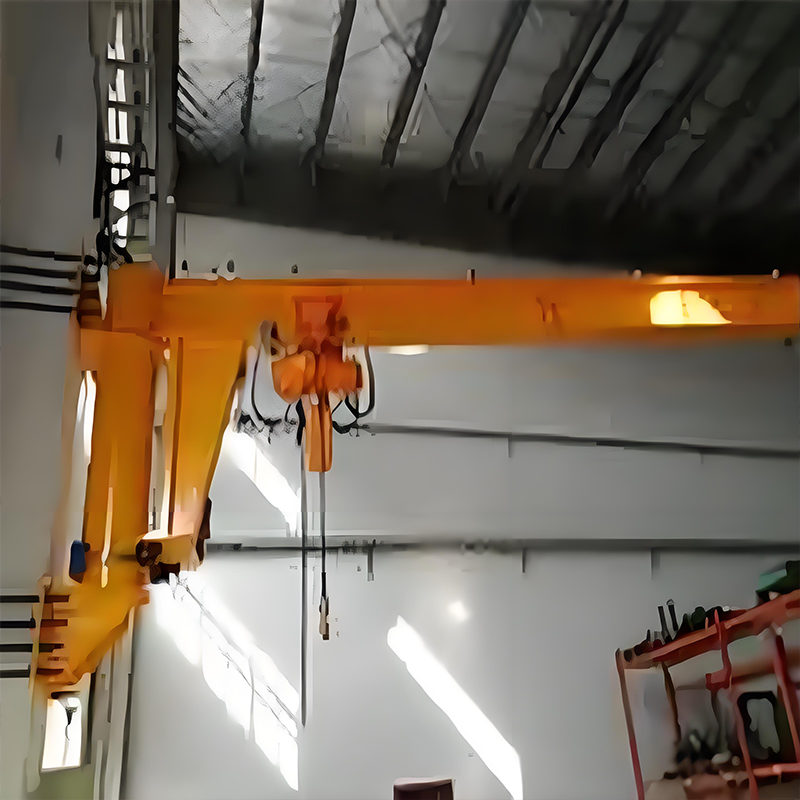
When asked “What does a jib look like?”, the answer depends on the context, but in the industrial world, the silhouette is unmistakable. A jib crane typically looks like an inverted “L” or a horizontal arm extending from a vertical pillar or wall. This arm—the “jib”—is the defining feature, acting as the skeletal limb that reaches out to lift and move heavy materials.
While the term “jib” can refer to the projecting arm of any crane, including the massive lattice structures seen on luffing jib tower cranes at construction sites, the industrial jib crane is a distinct, compact powerhouse designed for localized lifting.
This guide provides a comprehensive visual and functional breakdown of the jib crane, exploring its structure, variations, and why WEIYUAN, as a professional production manufacturer integrating production, sales, design, and installation, is the preferred partner for heavy lifting solutions across Europe, Asia, and Africa.
1. Product Description: The Anatomy of a Jib Crane
Visually, a jib crane is defined by simplicity and strength. It consists of three primary components that determine what it looks like and how it functions.
- The Mast (Pillar): For a free standing jib crane, this is the vertical steel column anchored to the floor. It looks like a robust pipe or square tube that provides the backbone for the system.
- The Jib (Boom): This is the horizontal beam that cantilevers from the mast or wall. It looks like a steel I-beam or a specialized enclosed track. This arm is what rotates, providing the “reach” of the crane.
- The Hoist and Trolley: Suspended from the jib, the jib crane trolley holds the hoist. It looks like a motorized carriage that slides back and forth along the arm, allowing for precise positioning of the hook.
Product Purpose:
The primary role of the jib on a crane is to create a dedicated lifting zone. Unlike overhead bridge cranes that cover an entire building, a jib crane services a specific workstation, machine, or loading bay. It handles repetitive lifting tasks, freeing up the main plant crane and reducing worker fatigue.
Core Advantages:
- High Adaptability: The cantilever jib crane design allows it to fit into tight corners or under larger overhead cranes.
- Cost Efficiency: It provides high-capacity lifting without the need for expensive building modifications required by bridge cranes.
- Reliability: Designed to handle loads from a light 1 2 ton jib crane to heavy industrial weights, ensuring continuous production flow.
2. Features and Advantages: Engineering for Efficiency
The visual simplicity of a jib crane belies its advanced engineering. WEIYUAN designs focus on maximizing the “working envelope”—the area the hook can reach.
- Rotation Flexibility: A floor mount jib crane typically offers 360-degree continuous rotation, looking like a spinning arm that covers a full circle. A jib crane wall mounted unit typically offers 180-200 degrees of rotation, covering a semi-circle against a wall.
- Space Optimization: The profile is sleek. Articulating jib cranes feature a “knuckle” in the boom, allowing the arm to fold in on itself. This looks like a human arm bending at the elbow, enabling the crane to reach around columns or into machines.
- Precision Control: Modern systems use Variable Frequency Drives (VFD) for smooth starting and stopping, preventing the load from swinging dangerously.
3. Technical Specifications
Understanding the specifications helps visualize the scale of the equipment.
| Specification Item | Standard Range | Applicability Consideration |
| Capacity (SWL) | 0.25 Ton $\sim$ 5 Ton (Standard) | 1 2 ton jib crane is popular for workshops; custom up to 20 Ton. |
| Span (Arm Length) | 2 Meters $\sim$ 12 Meters | Defines the radius of the working circle. |
| Lifting Height | 3 Meters $\sim$ 6 Meters | Customizable based on ceiling clearance (Under-Boom Height). |
| Rotation Angle | 180° / 270° / 360° | Wall-mounted vs. Free-standing pillar designs. |
| Power Supply | 380V / 50Hz (3-Phase) | Can be adapted to local voltage (e.g., 415V, 220V). |
| Material | Q235B / Q345B Steel | High-strength structural steel for durability. |
4. Customization Options: Tailored to Your Facility
One size does not fit all. WEIYUAN provides complimentary design and personalized customization services to ensure the jib boom crane fits your specific operational constraints.
- Structural Customization: We can engineer a bayonet jib crane for areas with limited headroom, where the boom is mounted close to the ceiling. For extended reach requirements, a telescoping jib crane allows the boom to extend and retract like a telescope.
- Specialized Environments: For marine or outdoor use, we produce marine jib crane units with anti-corrosion coatings and galvanized components to withstand saltwater.
- Control and Mobility: We can integrate wireless remote controls or design portable jib cranes that are mounted on heavy bases, allowing them to be moved via forklift.
5. Application Fields: Versatility in Action
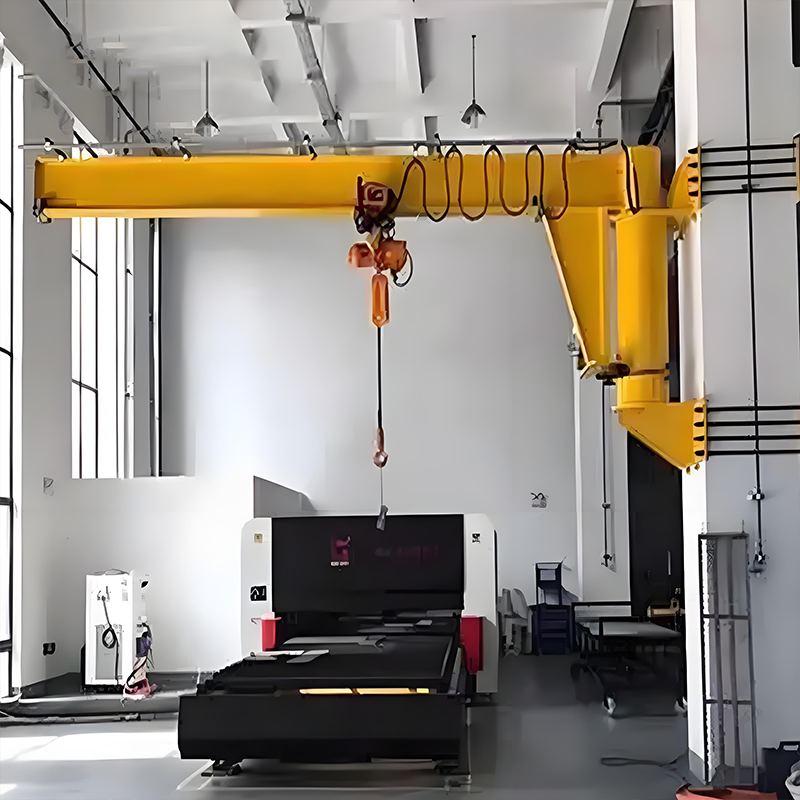
The jib crane is a chameleon of the industrial world, adapting its look and function to various sectors.
- Manufacturing: Used as a workstation crane for loading heavy workpieces into CNC machines and lathes.
- Warehousing & Logistics: Facilitates the loading and unloading of trucks at bay doors. Industrial jib cranes are often installed on loading docks to handle pallets.
- Marine & Ports: A marine jib crane is standard equipment for lifting tenders, jet skis, and supplies on docks and vessels.
- Construction Support: While different from a massive luffing jib tower crane used in skyscrapers, smaller jib cranes handle materials in precast yards and fabrication shops.
6. Safety and Compliance: The Foundation of Trust
Safety is the absolute priority. While a homemade jib crane might seem like a cost-saver, it lacks the certified engineering required to prevent catastrophic failure.
- Certification: WEIYUAN products comply with CE, ISO, and can be built to meet UL standards. This ensures regulatory compliance in your region.
- Safety Features: Every unit includes overload protection, emergency stop buttons, and travel limit switches.
- Risk Mitigation: Unlike a harbor freight jib crane designed for light hobbyist use, our industrial units are built for rigorous, continuous duty cycles and are tested to 125% of their rated capacity.
7. Case Study: Solving Reach Issues with Articulation
Case: Automotive Assembly Plant
- Challenge: The plant needed to lift 500kg engine blocks into a chassis, but a large building column blocked the path of a standard straight-boom crane.
- The Solution: WEIYUAN designed and installed a 1 ton articulating jib crane.
- Visual Difference: Unlike a straight beam, this crane looked like a folding arm. The “knuckle” allowed the operator to reach around the column and position the engine precisely.
- Result: Production efficiency increased by 30%, and manual handling injuries were eliminated.
8. Installation and Support
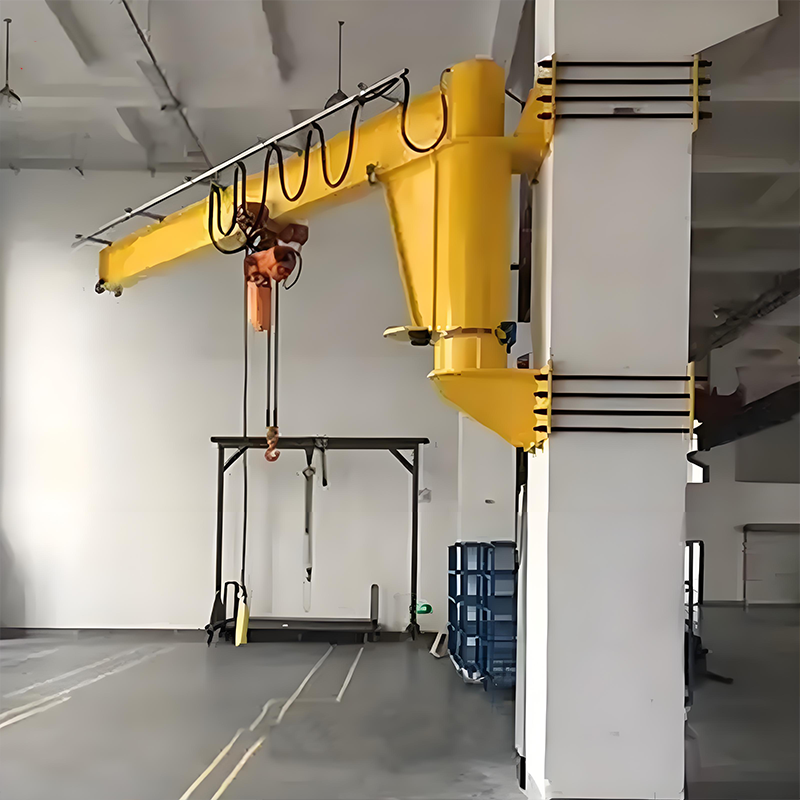
We view the sale as the beginning of a partnership. WEIYUAN provides comprehensive support to ensure your equipment is installed correctly.
- Installation Guidance: We supply detailed foundation drawings and video tutorials. For floor mount jib crane installations, the concrete footing is critical for stability.
- Maintenance: We advise on lubrication and bolt tightening schedules. We also stock replacement parts for the jib crane trolley and hoist to minimize downtime.
- On-Site Support: Our senior engineers are available for remote guidance or on-site supervision for complex projects.
9. Pricing and Quotation
The jib crane price varies based on capacity, span, and motorization.
- Get a Quote: Contact us for a personalized proposal. A manual 1 2 ton jib crane will be significantly lower in cost compared to a fully motorized 5-ton unit.
- Competitive Value: As a direct manufacturer, WEIYUAN offers factory-direct pricing, eliminating dealer markups. We provide transparent quotes that include the hoist, electrics, and mounting hardware.
10. Delivery Cycle
- Standard Models: 7 to 10 working days for standard specifications.
- Customized Models: 15 to 25 working days, depending on the complexity of the design (e.g., specialized bayonet jib crane fly jib attachments).
- Logistics: We handle professional packaging and can arrange freight to major ports globally.
11. FAQ: Common Questions
Q: What is a portable jib crane and what does it look like?
A: A what is a portable jib crane question often leads to our mobile units. It looks like a standard jib crane but is mounted on a heavy concrete or steel base with fork pockets. It allows you to move the crane around your shop with a forklift, offering extreme flexibility.
Q: What is the difference between a jib crane and a tower crane?
A: A jib crane is typically smaller, used indoors or on docks for localized lifting. A luffing jib tower crane is the massive, tall structure seen at construction sites, used to build skyscrapers. They look completely different in scale and structure.
Q: Can I build a homemade jib crane?
A: We strongly advise against a homemade jib crane for industrial loads. The engineering required to calculate stress loads, moment forces, and welding integrity is complex. A failure can be catastrophic. Certified manufactured cranes come with load tests and warranties.
Q: Do you sell crane jibs separately?
A: Yes, if you have an existing column, we can sell crane jibs for sale (the boom arm and hinge kit) to mount onto your existing structure, provided it is structurally sound.
Ready to optimize your workflow? Contact WEIYUAN today for a consultation and let us design a jib crane solution that fits your facility perfectly.