


What is a Gantry Crane? A Closer Look at the Different Types and Design
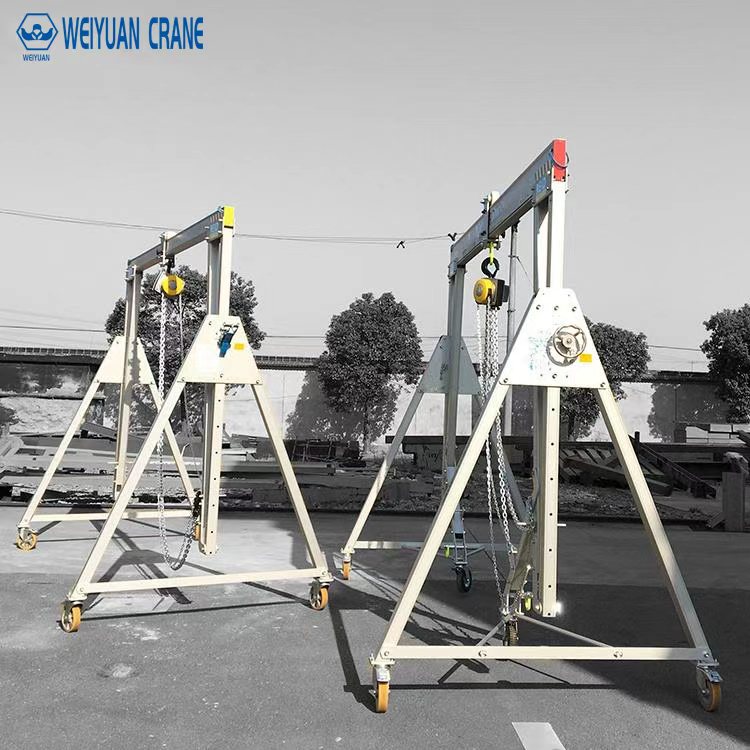
If you walk into a massive shipyard or an open-air steel yard, the first thing you notice is likely the giant steel structure straddling the workload. This is the gantry crane—the heavy-lifter of the industrial world.
Unlike overhead cranes that are fixed to the ceiling or walls of a building, a gantry crane stands on its own legs, moving along a track or on tires. For facility managers and business owners, understanding how does a gantry crane work and which type fits your operation is the difference between a smooth workflow and a logistical bottleneck.
At WEIYUAN, where we integrate design, production, and installation, we believe in empowering our clients with technical knowledge. This guide breaks down the mechanics, types, and operational value of these systems.
The Core Design: How Does a Gantry Crane Work?
In simple terms, a gantry crane consists of a bridge beam supported by two or more legs. This “door-frame” shape moves over the workload.
- The Movement: The hoist travels horizontally along the bridge to lift loads, while the entire structure moves along a gantry crane rail track embedded in the ground (or on rubber tires for mobile versions).
- The Value: Because they don’t rely on your building’s structural columns, they are the perfect solution for outdoor yards or rented facilities where you cannot modify the walls. A heavy-duty gantry crane allows you to maximize vertical space without expensive building renovations.
Exploring Gantry Crane Types: From Portable to Port Giants
Not all gantries are created equal. Finding the right fit depends on whether you are running a small gantry crane workshop or a massive shipping terminal.
1. Full Gantry vs. Semi-Gantry
- Full Gantry: The standard design where the crane rides on two rails on the floor. Ideal for outdoor use.
- Semi-Gantry: One leg runs on the floor rail, while the other side runs on an elevated runway attached to your factory wall. This saves floor space and is excellent for maximizing efficiency in crowded workshops.
2. Portable and Small Gantry Cranes
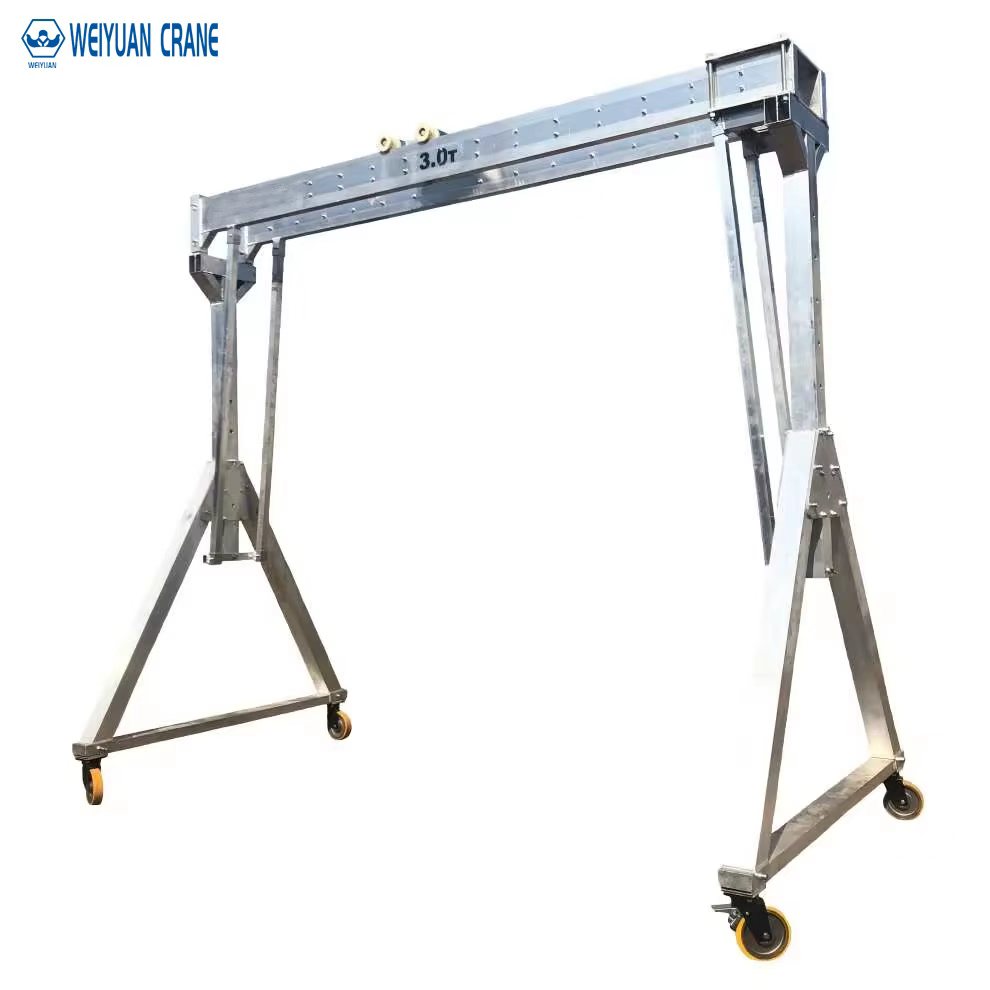
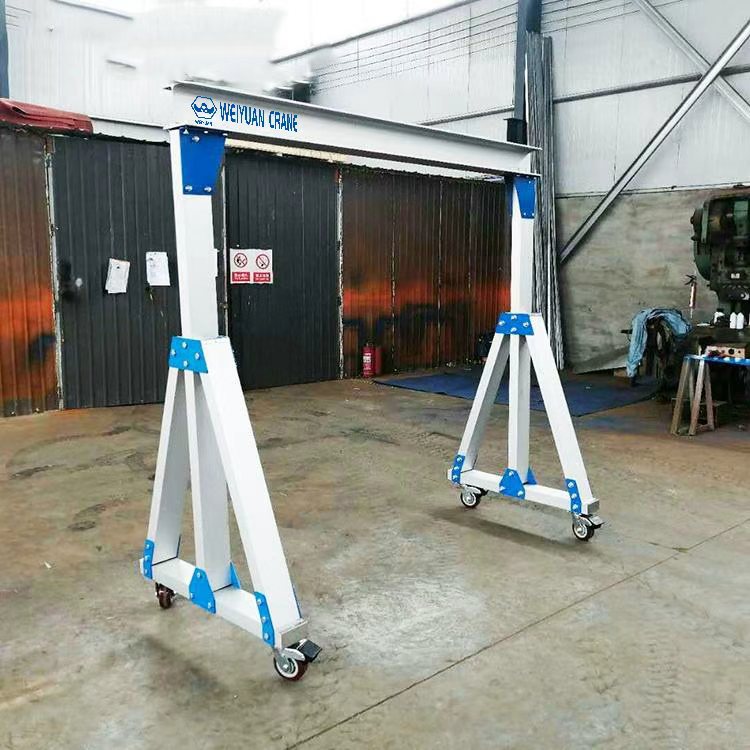
For lighter tasks, such as lifting an engine in a garage, a gantry crane small enough to be pushed by hand is common. While you might see a basic gantry crane rental home depot offers for DIY tasks, industrial operations require robust gantry crane portable units. These are typically aluminum or steel A-frames designed for flexibility maintenance crews.
3. Rubber Tyred (RTG) & Rail Mounted (RMG)
These are the giants used in logistics. An intermodal gantry crane at a port needs to stack containers high and fast. RTGs offer the flexibility to change lanes, while RMGs offer precision on fixed tracks.
4. Specialized Designs
- Hydraulic Gantry Crane: Used for extremely heavy lifting in tight spaces where overhead clearance is limited.
- Cantilever Design: We can extend the bridge beyond the legs, allowing you to pick up loads from outside the tracks—perfect for loading trucks parked on the side.
Technical Specifications: Built for Durability
When selecting a gantry crane manufacturer, look for specs that match your duty cycle. WEIYUAN cranes are built with Q235/Q345 structural steel to withstand harsh environments.
- Capacity: 5 Ton to 500+ Ton.
- Span: 10m to 50m (Customizable).
- Control: We use Variable Frequency Drives (VVVF) for smooth handling, which is crucial for gantry crane operators handling fragile loads.
- Duty Class: ISO A5 (Medium) to A8 (Extra Heavy).
Installation and Safety: What You Need to Know
Safety starts before the crane is even turned on. It starts with the installation.
Installation & Inspection
Professional gantry crane installation is non-negotiable. The rail foundation must be perfectly level to prevent wear. Once operational, regular gantry crane inspection is required by law in most regions. This includes checking limit switches, wire ropes, and the electrical systems.
Maintenance & Repair
We often hear customers searching for local quick fixes like “gantry crane repair NJ” or “gantry crane service NJ” and “gantry crane repair NY“. While local support is good for minor issues, partnering with a global manufacturer like WEIYUAN ensures you have access to original OEM parts and technical guidance no matter where you are located. We support our clients remotely and can dispatch engineers for complex issues, ensuring you aren’t reliant solely on local availability.
Case Study: 300-Ton Shipyard Project
The Challenge: X Shipyard needed to move massive ship hull sections. The environment was seaside (high corrosion), and precision was critical for hull alignment.
The Solution: WEIYUAN designed a 300-ton Double Girder Gantry Crane with marine-grade anti-corrosion paint and high-precision VVVF controls.
The Result: The shipyard improved assembly speed by shortening the docking cycle, proving that the right equipment pays for itself.
FAQ: Common Questions from Buyers
Q: Can I build my own gantry crane?
A: We see searches for “how to build a gantry crane” often. For industrial loads, do not do this. The dynamic stresses require certified engineering. A DIY failure can be fatal. Always buy from a certified supplier.
Q: Where can I find a gantry crane near me?
A: WEIYUAN ships globally. Whether you are looking for gantry crane manufacturers in India, Europe, or America, we handle the logistics to deliver directly to your site.
Q: What info do I need for a quote?
A: Capacity, Span, Lifting Height, and Power Source. The more detail, the better.
Q: Do you offer rentals?
A: We focus on manufacturing new equipment for long-term value. While gantry crane hire is an option for short-term construction, owning your equipment is usually more cost-effective for factories.