What Is a Gantry? Types, Parts, and More
The Gantry Crane: An Essential Heavy-Lifting Solution
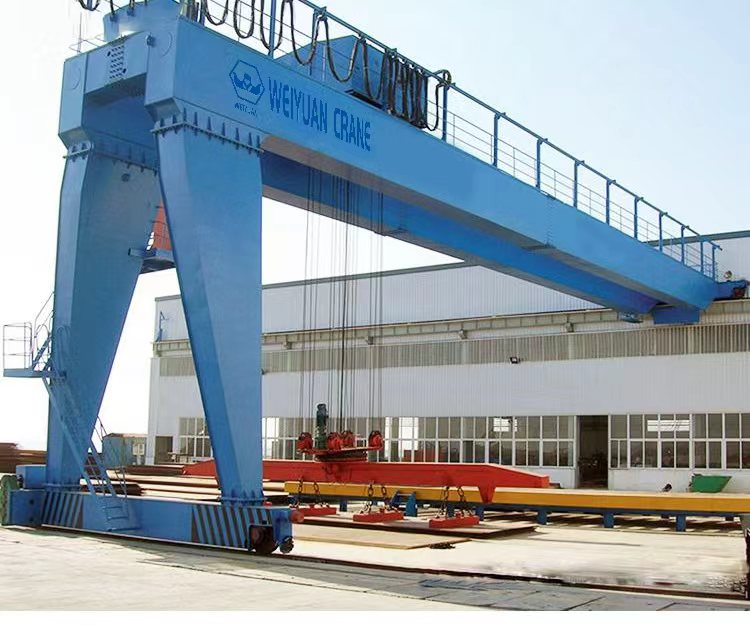
A gantry crane is one of the most vital pieces of equipment in the industrial world, immediately recognizable by its “door” or “A-frame” structure1. Unlike an overhead bridge crane, which relies on a building’s structure for support, a gantry crane is self-supporting. It stands on legs that run on wheels or a track along the ground, making it an incredibly versatile solution for both indoor and outdoor heavy-lifting needs2.
At its core, a gantry system allows for the vertical lifting and horizontal movement of incredibly heavy loads, ranging from small engine parts to massive ship components3. This independent, mobile design is why it remains the go-to choice for shipyards, railways, construction sites, and container terminals globally.
Understanding the Core Components of a Gantry Crane
While the overall structure of a gantry crane may seem simple, its efficiency relies on the precise function of several key parts:
The Load-Bearing Structure
- The Bridge (Girder): This is the main horizontal beam that spans the width of the work area. It supports the trolley and the hoisting mechanism4. Depending on the capacity, the crane may have a single girder or a double girder.
- Legs (Uprights): These vertical supports hold the bridge high above the ground. They are the defining feature of the gantry system5.
- End Trucks/Wheels: These components are attached to the bottom of the legs and allow the entire structure to travel along the ground or fixed rails, moving the load across the work area6.
The Lifting Mechanism
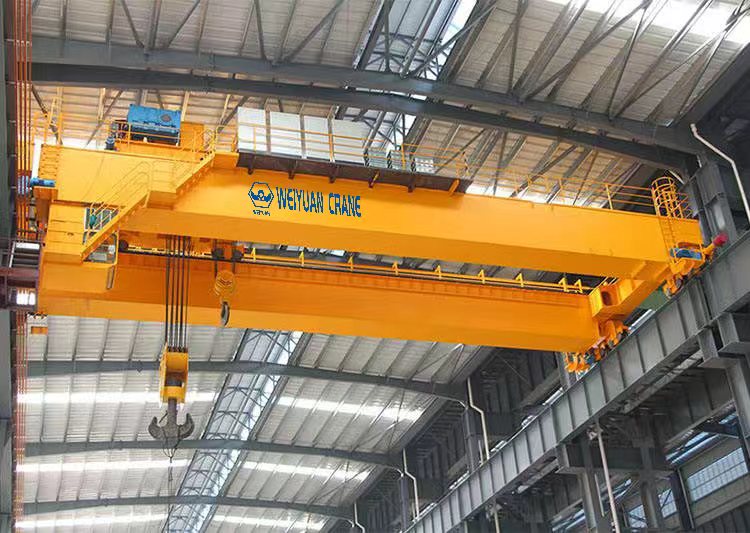
- Trolley: This unit travels horizontally along the bridge beam7.
- Hoist: The hoist is mounted on the trolley and performs the vertical lifting action. Hoists can be electric or manual, and common types include wire rope hoists or chain hoists8. (Common searches include “hoist gantry crane” and “portable gantry crane with electric hoist”).
The Wide World of Gantry Cranes: Types and Their Ideal Applications
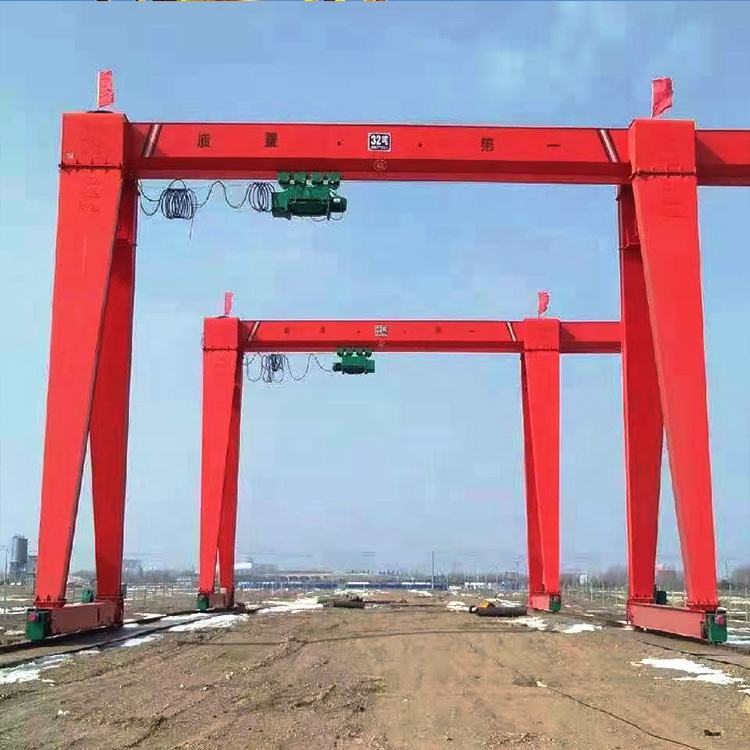
The term gantry crane covers a broad range of machines, each engineered for specific environments and lifting capacities. Choosing the right type is critical for maximizing safety and operational efficiency.
1. Portable Gantry Cranes (Light-Duty)
- Description: Often feature an adjustable height and simple A-frame design, these cranes are highly flexible and manually wheeled9. They are essential for maintenance work and are popular in small workshops and garages (“shop gantry crane”).
- Key Advantage: Unmatched portability and versatility, making them ideal for tasks that require lifting heavy loads (like an engine) at various locations within a facility.
- Capacity Example: Typically ranging from 1 ton up to 5 tons (“2 ton gantry crane harbor freight,” “5 ton overhead gantry crane”).
2. Full Gantry Cranes (Heavy-Duty)
- Description: These massive structures run on fixed rails (or tracks) embedded in the ground10. They are designed for extreme loads and large spans.
- Ideal Application: Shipyards and factories handling pre-fabricated concrete or heavy machinery components (“10 ton gantry crane”). They can also be known as a rolling gantry crane when on wheels.
- Focus on WEIYUAN Expertise: For industrial-grade solutions requiring high capacity and precision, manufacturers like WEIYUAN, who specialize in the design, manufacture, and installation of these complex systems, are essential partners. WEIYUAN is a professional production manufacturer integrating production, sales, design, and installation, ensuring custom solutions meet rigorous heavy-duty demands.
3. Semi-Gantry Cranes
- Description: A cost-effective hybrid solution. One side of the bridge is supported by a leg running on a ground rail, while the other side runs on a runway beam mounted high on a building wall or column11.
- Ideal Application: Facilities that need to extend lifting operations from an indoor workspace (supported by the building) out into an adjacent yard (supported by the leg).
4. Rubber-Tyred Gantry Cranes (RTG)
This type is specifically tailored for high-volume, repetitive work environments, dominating the global shipping industry.
- Product Description: An RTG is a highly efficient, mobile heavy-lifting device that uses rubber tires instead of fixed rails, providing superior field adaptability and operational flexibility12.
- Usage: Primarily used in container terminals, rail transfer centers, and large prefabrication yards for stacking, loading, and transferring heavy components and containers13.
- Core Advantages: Excellent mobility, high-density stacking, and options for diesel or electric/battery power for greener operations14.
Solving Your Biggest Lifting Challenges: Technical Specifications and Customization
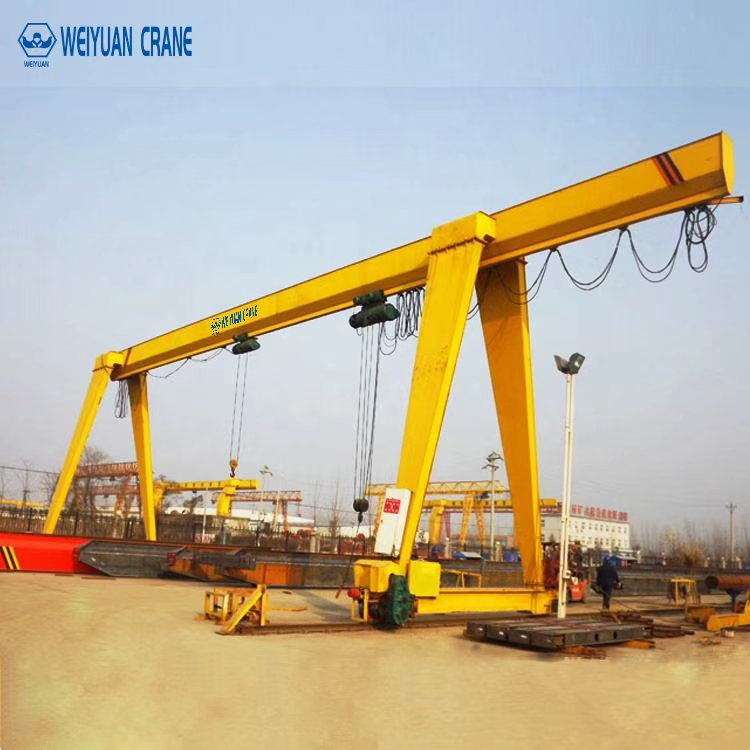
When considering a gantry crane, the technical details are non-negotiable. Getting the specifications right ensures safety, longevity, and peak performance.
Key Technical Specifications to Consider
| Specification Item | Technical Parameter Range (Example) | Critical Applicability Consideration |
| Lifting Capacity (SWL) | 1ton-500tons | Must meet the maximum expected load weight. Popular options include the “5 ton overhead gantry crane” or “10 ton gantry crane.” |
| Span | 5meters- 50 meters | Defines the working area width and the distance between the vertical legs. |
| Lifting Height | 3 meters-35meters | The required vertical distance from the ground to the maximum hook height. |
| Duty Cycle (ISO/FEM) | A5 (Medium)- A8 | Based on the frequency and intensity of use (e.g., a port RTG requires a very high duty cycle). |
| Power Requirements | 380/50Hz or local standards | Determines the required electrical configuration. |
Customization is Key: Tailored Solutions
Generic lifting equipment rarely provides optimal efficiency. This is where customized design becomes essential.
WEIYUAN offers comprehensive engineering services, including free design consultations and personalized customization, to ensure the equipment integrates seamlessly with your existing layout and operational needs. This includes:
- Dimensions and Configuration: Precisely customizing the span, lifting height, and (for RTGs) the number of container rows crossed (“cross rows”) to maximize your existing yard space.
- Automation & Control: Upgrading to advanced features like Remote Control Mode (RCM) or full Automated RTG (ARTG) for 24-hour, unmanned operations.
- Advanced Safety Systems: Integrating features like the highly accurate Anti-Sway System, which uses smart sensors to minimize load oscillation and speed up positioning20.
Applications and Compliance: Where Gantry Cranes Excel
Gantry cranes are the workhorses of global logistics and manufacturing, excelling in environments where heavy loads and vast outdoor spans are common.
Key Application Areas
- Container Terminals and Ports: RTGs and Rail-Mounted Gantry Cranes (RMGs) are fundamental for container stacking and transfer.
- Rail Intermodal Centers: Handling the transshipment of containers between rail and road transport.
- Construction Sites and Precast Yards: Used for lifting and moving large concrete segments, steel beams, and other massive structural components.
- Heavy Fabrication: Moving components in shipbuilding, steel mills, and power plants.
Prioritizing Safety and Compliance
Given the substantial weights involved, safety is paramount. Any reputable supplier, including WEIYUAN, adheres to the highest local and international safety standards.
- International Certification: Equipment and key components are compliant with certifications like CE certification (European standards) and/or relevant regional industrial safety codes.
- Proactive Safety Features: Standard safety features include overload limiters, anti-collision systems, emergency stop buttons, and robust wind-speed monitoring for outdoor units. This diligence addresses user concerns related to “gantry crane training.”
Case Study Snapshot: Enhancing Efficiency in High-Volume Operations
The Challenge: Optimization at a Major Asian Terminal
A large port faced challenges with operational efficiency due to the limitations of older, traditionally operated RTGs, leading to high fuel consumption and slow turnaround times.
The WEIYUAN Solution
The port invested in 10 electric RTGs equipped with automated upgrade interfaces and energy feedback systems. This move was driven by the need to increase throughput and reduce their environmental footprint.
The Results
The deployment resulted in a 15% improvement in yard efficiency and a 30% reduction in annual diesel consumption. The ability of the electric cranes to recover energy during lowering and braking cycles significantly contributed to a lower environmental impact, demonstrating that efficiency and sustainability can go hand-in-hand21.
Final Thoughts: The gantry crane, in its many forms—from the smallest portable “strongway gantry crane” to the largest rail-mounted port structures—remains the backbone of heavy material handling. Partnering with a comprehensive manufacturer like WEIYUAN ensures that your investment is supported by expertise across design, installation, and long-term maintenance