


What is an Electrical Hoist? Powering Efficiency in Material Handling
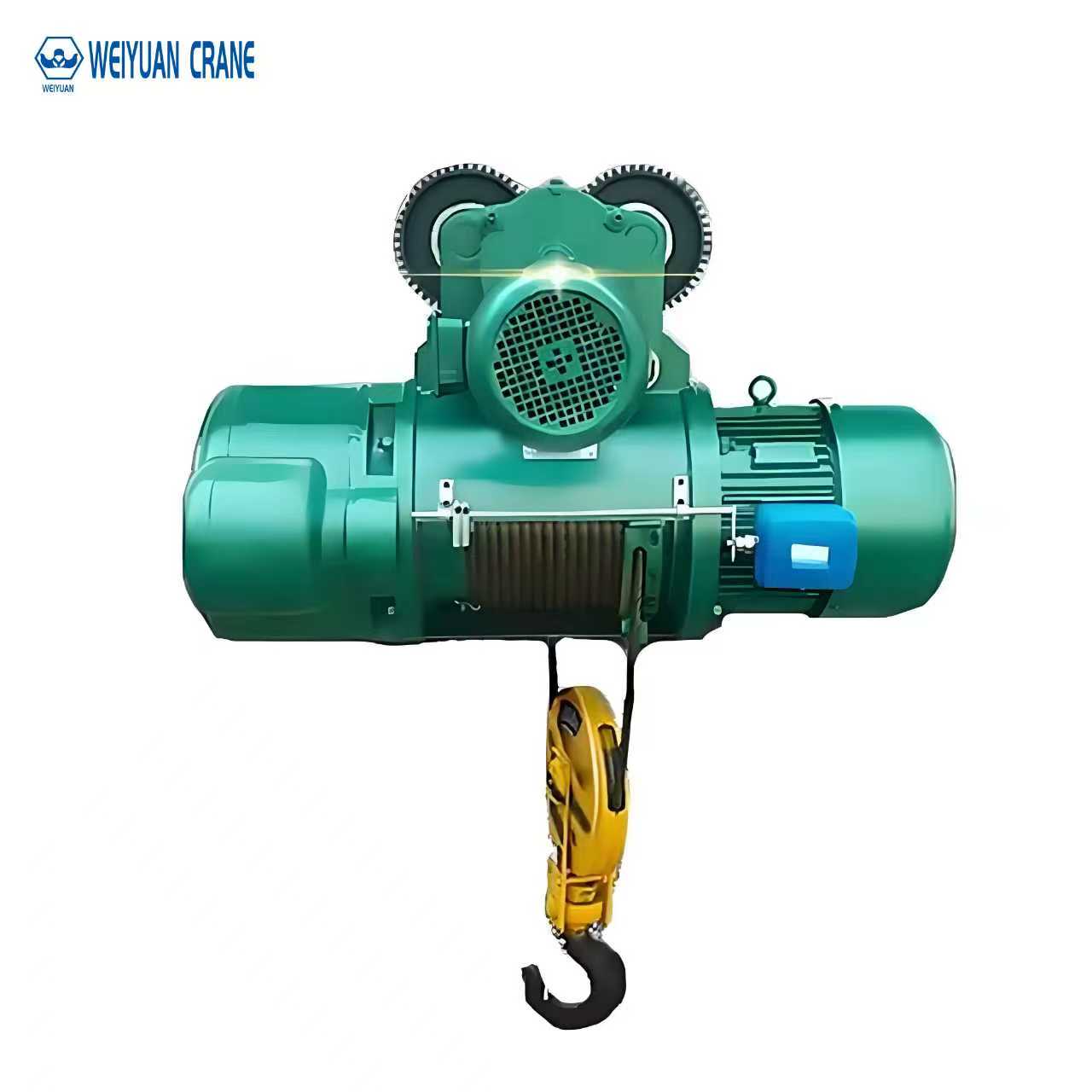
An electric hoist is the definitive answer to manual lifting challenges in modern industrial environments. It’s a motor-driven machine designed to lift, lower, and sometimes traverse heavy loads with precision, speed, and minimal physical effort from the operator1. Whether handling bulky components in a factory or organizing inventory in a vast warehouse, the electric hoist converts electrical power into lifting force, dramatically increasing productivity and safety across virtually every sector of heavy material handling.
The Role of the Electric Hoist in Modern Operations
What is an Electric Hoist and Why is it Essential?
At its most fundamental, an electric hoist is a mechanized upgrade to manual lifting2. It comprises an electric motor, a transmission system (gearbox), a braking mechanism, and the lifting medium—either chain or wire rope. The operator controls the movement via a pendant or electric hoist with remote control. This automation allows a single worker to safely manage weights far exceeding human capacity, streamlining operations and reducing labor costs.
Advantages and Attraction: Transforming Work Efficiency
The adoption of a high-quality electric hoist system delivers tangible benefits to any operation:
- Elevated Worker Safety: By eliminating strenuous manual lifting, the risk of back injuries, strains, and accidents is drastically reduced.
- Rapid Load Handling: Compared to time-consuming manual chain hoist electric operation, an electric unit handles loads faster, directly impacting throughput and minimizing bottleneck delays in production.
- Optimized Labor Deployment: Workers are freed from exhausting physical tasks, allowing them to focus on higher-value activities, significantly boosting overall work efficiency.
- Site Versatility: Units, especially those equipped with an electric hoist trolley, can move along I-beams, covering large floor areas and making them ideal for assembly lines, loading docks, and maintenance bays.
Features That Define a Superior Electric Hoist
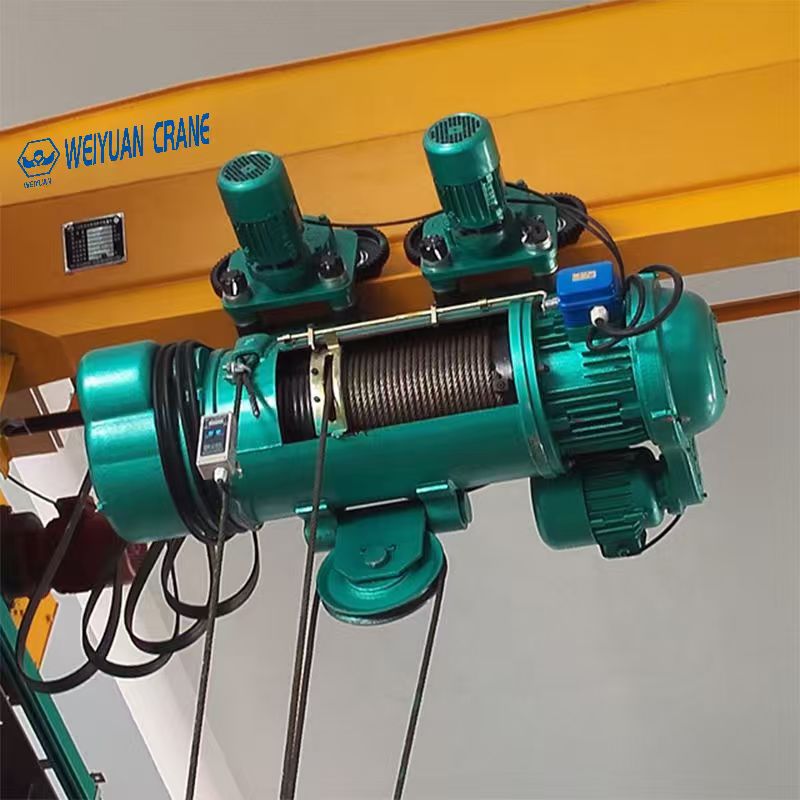
When investing in lifting equipment, key features related to safety, durability, and performance should be prioritized.
Construction and Durability
- Robust Housing: The hoist motor and gear casing are constructed from high-strength aluminum alloy or reinforced cast iron, offering superior wear resistance and rapid heat dissipation.
- Lifting Medium: Depending on the application, the hoist uses either industrial-grade wire rope or high-tensile, heat-treated alloy steel chain (for electric chain hoists)3. Chains, often Grade 80 or higher, are crucial for demanding, repetitive lifts.
- Corrosion Resistance: Components are typically treated with special coatings to withstand harsh environments like moisture, dust, or mild chemical exposure, enhancing longevity.
Performance and Control
- Variable Lifting Speed: Many modern hoists feature two-speed or variable speed controls, allowing for rapid movement of the load (“high speed”) and slow, precise positioning (“micro speed”), which is essential for accurate assembly work.
- Ergonomic Control: Standard control features include a robust pendant station for wired operation, or a dependable electric hoist with remote for freedom of movement and enhanced visibility during lifts.
- Integrated Overload Protection: Essential for safety, these mechanisms prevent the motor from attempting to lift a load exceeding the rated capacity, protecting both the equipment and the surrounding structure.
Technical Specifications: Matching the Hoist to the Task
Understanding the technical data is critical before procurement. Specifications dictate the hoist’s fitness for purpose and its compatibility with your existing crane system or structure.
| Specification Item | Common Range | Applicability Consideration |
| Lifting Capacity (SWL) | 0.5 tonnes (1,000 lbs) $\sim$ 20 tonnes or more | Popular models include the 1 ton electric chain hoist and 2 ton electric chain hoist for standard workshop use. |
| Lifting Height | $3 \text{ meters} \sim 50 \text{ meters}$ | Must exceed the maximum required distance from the ground to the lifting point. Custom cable lengths are available (e.g., 20 ft electric cable hoist). |
| Lifting Speed | Dual Speed ($0.8/5.0 \text{ m/min}$) or Single Speed ($6.6 \text{ m/min}$) | Higher speeds increase productivity, while dual speeds ensure precision during placement. |
| Power Requirements | $380 \text{V}/50 \text{Hz}$ (3-phase) or $110/220 \text{V}$ (Single-phase) | Must be compatible with the facility’s existing electrical supply. |
| Operating Temperature | $-20^\circ \text{C} \sim +40^\circ \text{C}$ | Necessary for compliance in extreme environments (e.g., cold storage or foundry applications). |
Customization and Tailored Solutions
Generic solutions rarely provide optimal workflow. As a specialized electric hoist provider, we recognize that every facility has unique constraints and processes.
WEIYUAN is a professional production manufacturer integrating production, sales, design, and installation, and we commit to providing fully customized lifting solutions. We offer complimentary design consultation and personalized customization services:
- Performance Tuning: Customization of lifting and traversing speeds to match specific assembly line requirements.
- Specialized Environmental Housing: Custom color or coating finishes (e.g., anti-corrosion for coastal areas or food-grade stainless steel) and logo integration.
- Tailored Dimensions and Fit: Ensuring the electric hoist trolley and hook block dimensions fit perfectly onto existing bridge beams or monorail systems.
Diverse Application Fields
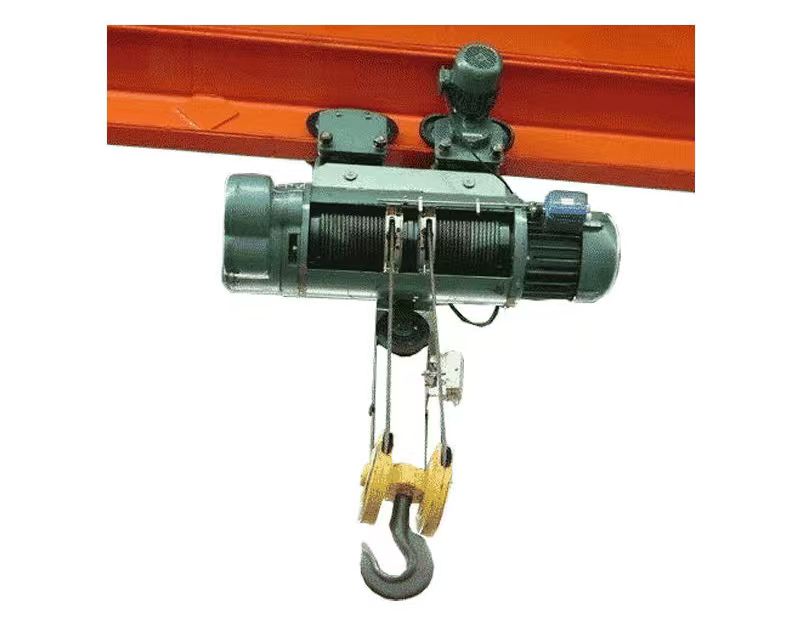
The versatility and adaptability of the electric hoist make it a fundamental tool across many industries:
- Factories and Manufacturing: Essential for moving heavy dies, tools, and components along production lines.
- Warehousing and Logistics: Used for efficient loading, unloading, and organizing inventory in large electric hoist and trolley systems.
- Automotive Industry: Used for engine installation, body assembly, and tool maintenance.
- Construction Sites: Small, heavy-duty portable units (electric winch hoist style) are often used for vertical material transport.
Safety, Compliance, and Trust
Safety is paramount in lifting operations. We guarantee that every electric hoist system adheres to the most stringent international standards.
- Certification Guarantee: Our products and critical components are certified to meet CE certification (European standards) and/or other relevant international safety marks (such as UL in North America), ensuring compliance.
- Built-in Safety Features: All units feature robust electromagnetic brakes for immediate load security, upper and lower limit switches to prevent dangerous over-travel, and thermal protection against motor overheating.
- Professional Installation and Training: Proper electric hoist safety is achieved through correct installation and operator training, which we strongly support.
Case Study: Logistical Efficiency Revolution
Case: Major Logistics Company (Europe)
- Project Challenge: A major European logistics distribution center relied heavily on manual labor and forklifts for sorting and loading oversized freight. This resulted in high labor costs, significant delays, and frequent worker fatigue, limiting overall throughput.
- WEIYUAN Solution: We installed a networked system of 1 tonne electric chain hoist units integrated with an overhead monorail system. This enabled workers to manage heavy pallets and crates using the electric hoist with remote controls without physical strain.
- Client Benefits: The implementation immediately reduced manual lifting requirements by 80%. This allowed the logistics company to reallocate labor to sorting and packing, resulting in a 35% increase in operational throughput and a reduction in worker injuries. The hoists effectively “freed the workers,” allowing them to be more productive.
Installation and Comprehensive Support
Choosing a supplier means selecting a long-term partner dedicated to system performance.
- Installation: We provide clear, comprehensive technical documentation and detailed video tutorials for efficient on-site setup. Our professional technical team is available to assist with on-site installation and commissioning where required, minimizing downtime.
- After-Sales Support: We offer a standard one-year warranty on all systems and provide ongoing support, including technical diagnostics and expedited replacement of specified spare parts.
Pricing and Getting a Personalized Quote
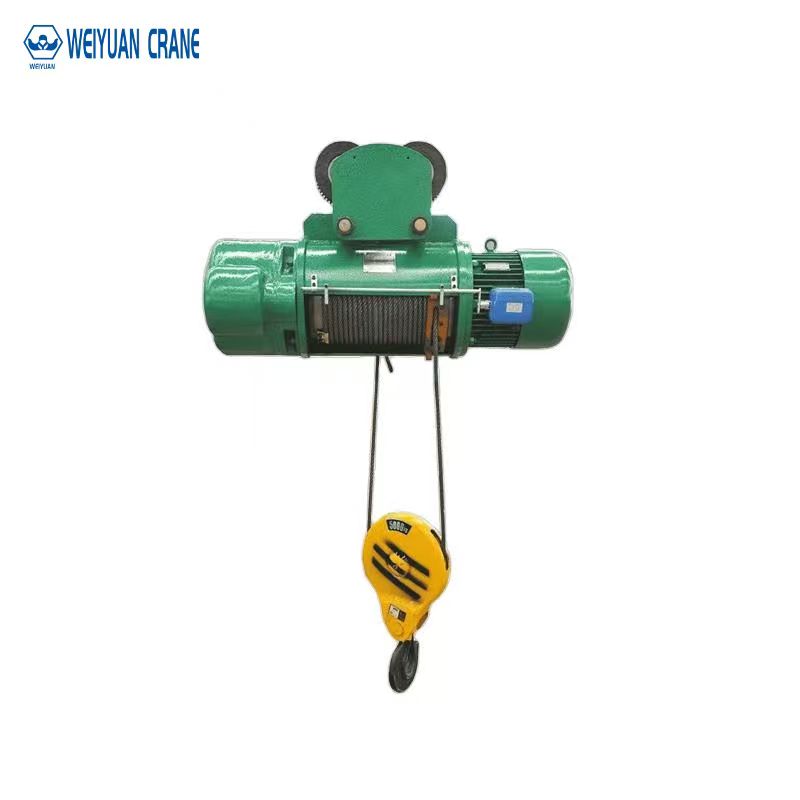
We believe in providing transparent, value-driven pricing. Since the cost of an electric hoist is determined by its lifting capacity, height, speed, and specific control requirements, a custom quote ensures you pay only for the features you need.
To obtain a fast, personalized solution and quotation, please contact our sales team with the following details: capacity, lifting height, desired speed (single or dual), and power supply voltage.
Delivery Cycle
- Standard Models: For common configurations (e.g., harbor freight electric hoist equivalent capacities), delivery is typically fast, estimated at 3–5 working days for in-stock units.
- Customized Models: Based on the complexity of the engineering required (special speeds, heights, or environmental modifications), the delivery timeline is usually 2–4 weeks.
FAQ (Frequently Asked Questions)
- What information should I provide when requesting a quote? The more detail, the better. Key data points are: A) Lifting capacity; B) Lifting height and cable length (e.g., 20 ft electric cable hoist); C) Power source (voltage/phase); D) Desired operating speed.
- What control options are available? Standard control methods include a wired pendant controller or a wireless electric hoist with remote control.
- Are these hoists suitable for outdoor or corrosive environments? Absolutely. We can customize the hoist with special coatings or materials and higher IP ratings for use in challenging environments.
- What is the warranty period? We offer a 12-month warranty, assuming standard usage and proper electric hoist maintenance.
- Can your engineers assist with installation and training? Yes, our senior engineers can travel to your site to provide installation guidance and training services for your operational team.