


What is Another Name for a Jib Crane? Understanding Industrial Workstation Cranes
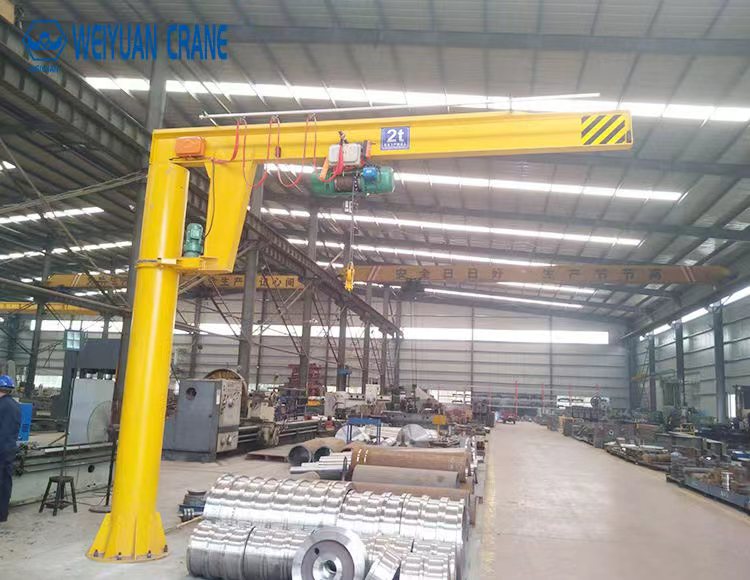
If you have ever heard the terms “swing arm crane,” “pillar crane,” or “boom crane,” you are likely looking for the same essential piece of equipment: the jib crane. In the material handling industry, these names are often used interchangeably to describe a versatile lifting system designed for localized tasks.
Understanding what is the jib of a crane is the first step in selecting the right tool for your facility. Essentially, the “jib” refers to the horizontal arm (the crane jib boom) that extends from a vertical support, providing the path along which the hoist travels. Whether you are managing a busy shipping port in Africa or a high-tech manufacturing cell in Europe, knowing the right terminology helps you communicate effectively with jib crane manufacturers.
At WEIYUAN, we operate as a professional manufacturer, designer, and installer, providing integrated lifting solutions across the globe. We don’t just sell equipment; we help you optimize your entire workflow with the right industrial jib crane.
Product Description: Why Your Workflow Needs a Jib Crane
A jib crane and hoist setup is the ultimate “workstation assistant.” Unlike massive overhead bridge cranes that move across an entire factory floor, these units are designed to handle repetitive, heavy lifting within a specific radius.
Why the Name Matters
In the film industry, you might hear about a jib camera crane or camera cranes and jibs, but in the world of heavy industry, a small jib crane is used to lift engines, steel plates, or shipping crates. This equipment is a game-changer for shipyard companies and factory managers who need to move loads up to a 2 ton jib crane capacity without tying up the main facility crane.
By decentralizing your lifting, you significantly reduce idle time for workers and increase overall shop-floor efficiency.
Features and Advantages of Professional Lifting Systems
When looking for jib cranes for sale, it is important to focus on the structural integrity and the flexibility of the design.
- Versatile Mounting: From a freestanding jib crane that stands on its own foundation to a foundationless jib crane that can be bolted to a standard thick floor, the mounting options are vast.
- Articulated Movement: An articulated jib crane features two sets of arms that allow it to reach around corners or into machinery, providing unparalleled access in tight spaces.
- High-Quality Materials: We use high-tensile structural steel for the jib boom cranes, ensuring they withstand the rigors of 24/7 industrial use.
- Efficiency Gains: Most facilities report a 30-50% increase in workstation productivity after installing a dedicated industrial jib crane.
Technical Specifications
Our engineering team at WEIYUAN ensures every piece of equipment meets rigorous technical standards.
| Feature | Specification Details |
| Capacity | 250kg up to 20 Tons (Standard 2 ton jib crane is a top seller) |
| Rotation | 180°, 270°, or full 360° for freestanding jib crane models |
| Arm Length | Customizable from 2m to 12m |
| Power Supply | 220V/380V/440V, 50/60Hz, 3-Phase |
| Lifting Speed | Single or Variable Frequency (VFD) options |
| Materials | Q235B/Q345B Steel |
Customization and Personalized Design
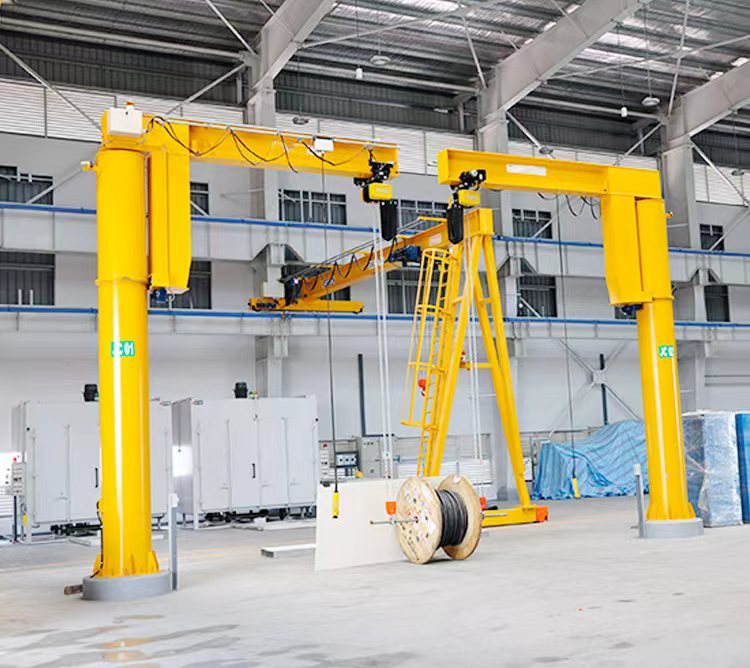
Standard equipment doesn’t always fit a non-standard problem. WEIYUAN provides free design services and personalization to ensure your jib of a crane fits your ceiling height and floor space perfectly.
- Custom Tonnage: We can engineer a small jib crane for light assembly or a heavy-duty system for 10-ton loads.
- Color & Logo: We offer custom powder coating in your corporate colors and can apply your company logo directly to the crane jib boom.
- Environmental Protection: For outdoor use in ports, we offer galvanized finishes and specialized motor covers to prevent corrosion.
Application Fields: From Ports to Plants
Where do you typically find these jib boom cranes?
- Manufacturing: Serving CNC machines or assembly stations.
- Warehousing: Moving heavy pallets from racks to loading docks.
- Ports & Shipyards: Utilizing the jib of a crane to move equipment onto vessels.
- Workshops: Often where a diy jib crane or jib crane homemade project is replaced by a professional, certified system for safety.
Safety and Compliance
Safety is the cornerstone of industrial lifting. All WEIYUAN equipment complies with global standards, including CE and UL certifications. Every jib crane and hoist undergoes load testing before leaving our factory. This is especially critical for industrial jib crane units used in high-traffic areas, where worker safety depends on precise engineering and reliable jib crane parts.
Case Study: Boosting Output in a Machinery Plant
A machinery manufacturer in Asia recently struggled with bottlenecks at their welding stations. Workers were waiting 20 minutes for the overhead crane to move heavy frames.
- The Solution: WEIYUAN designed and installed four 2 ton jib crane units—one for each station.
- The Result: Wait times were eliminated. The plant saw a 25% increase in weekly output, and the project paid for itself in less than six months through labor savings.
Installation and Technical Support
We believe in a “turnkey” approach. WEIYUAN offers:
- Online Guidance: Detailed video tutorials and real-time technical support for your local installation team.
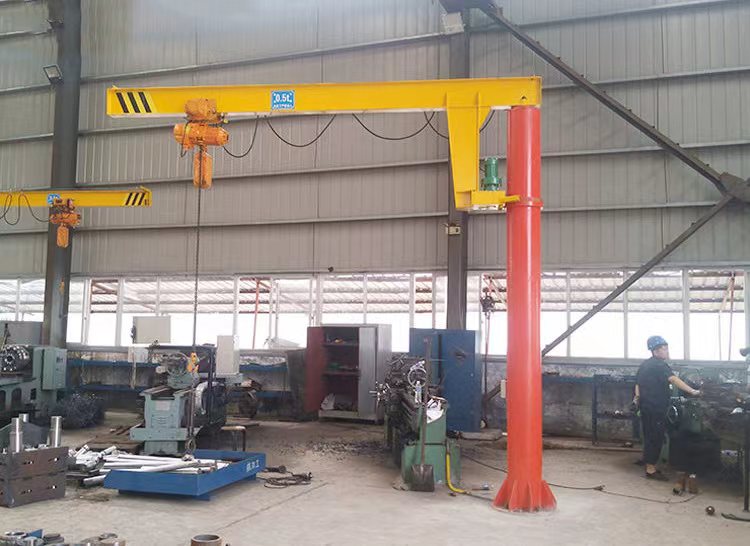
- On-site Teams: Professional installers who can travel to your site in Europe, Asia, or Africa to ensure the freestanding jib crane is anchored perfectly.
- Maintenance: A full catalog of jib crane parts is kept in stock for rapid shipping to minimize downtime.
Pricing, Quotations, and Delivery
Because we are a direct manufacturer, we offer competitive factory pricing without middleman markups.
- Get a Quote: Contact our team with your required reach and capacity to receive a personalized proposal within 24 hours.
- Delivery Cycle: Standard small jib crane models ship within 15–20 days. Large-scale industrial jib crane systems typically ship within 30–40 days from the date of design approval.
FAQ: Frequently Asked Questions
Q: Can I install a jib crane on my current floor?
A: A foundationless jib crane can often be installed on 6 inches of reinforced concrete. For heavier loads, a dedicated foundation is required.
Q: What is the difference between a jib and a boom?
A: In this context, they are often the same. The jib of a crane is the horizontal member, also frequently called the crane jib boom.
Q: Do you sell just the jib crane parts?
A: Yes, as jib crane manufacturers, we supply individual components including hoists, trolleys, and replacement arms for existing setups.
Q: Is it safe to use a homemade jib crane?
A: While a jib crane homemade or diy jib crane might work for very light hobbies, industrial environments require certified, load-tested equipment to meet safety regulations and protect lives.
Would you like me to prepare a technical drawing or a weight-loading chart for a specific 2-ton model to help you with your facility planning?