


What is the difference between overhead and gantry cranes?
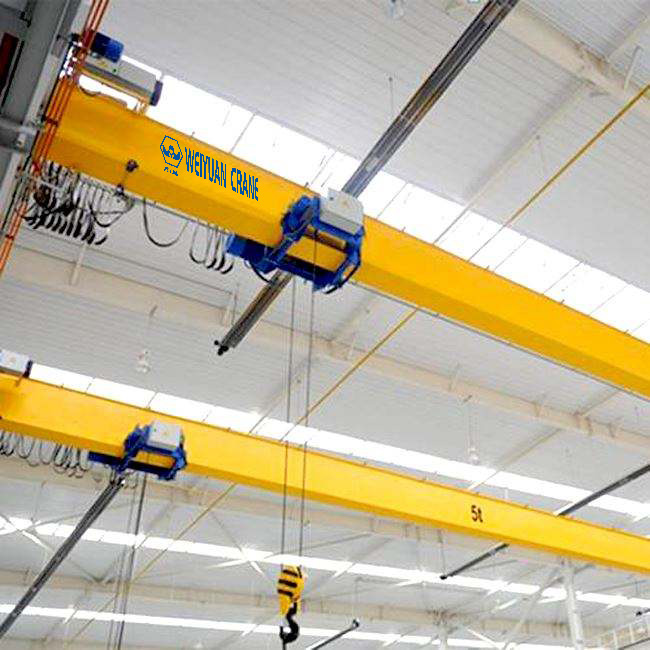
For facility managers and production engineers, choosing between lifting systems is rarely just about lifting capacity. It is about how the equipment interacts with your workspace. The two most common heavy lifters—overhead cranes and gantry cranes—are often confused because they perform similar tasks. However, their structural impact on your facility is vastly different.
As a manufacturer integrating design, production, and installation, WEIYUAN sees this decision point daily. This guide breaks down the technical and practical differences to help you decide which system fits your operational footprint.
The Core Structural Distinction
The primary difference lies in how the weight is supported.
- Overhead Cranes (Bridge Cranes): These utilize the building’s structure. The bridge travels along elevated runways attached to the factory walls or ceiling columns.
- Gantry Cranes: These stand on their own “legs.” The bridge is supported by steel legs that travel on rails embedded in the floor or on wheels (for portable units).
Think of it this way: An overhead crane belongs to the building, while a gantry crane belongs to the floor.
Overhead Cranes: The Indoor Space Maximizer
If your goal is to maximize every square meter of your factory, an overhead system is usually the superior choice.
By utilizing the ceiling space rather than floor space, these cranes allow forklifts and personnel to move freely below without obstruction. This “zero footprint” design is why overhead units are the standard in automotive manufacturing and steel processing.
Key Engineering Advantages:
- Optimized Structure: We utilize an optimized box-shaped main girder or I-beam design. This results in a lighter dead weight and reduced wheel pressure.
- Efficiency Gains: Implementing this system can improve material handling efficiency by over 20%.
- Coverage: With standard spans ranging from 7.5 meters to 34 meters, a single system can cover the entire width of a factory bay.
When to Consider a Gantry Setup
While overhead cranes and hoists are ideal for indoor density, gantry cranes shine in specific scenarios:
- Outdoor Applications: Rail yards and shipping docks often lack the building structure to support an overhead runway.
- Rented Facilities: If you cannot modify the building structure to install runway beams, a gantry system provides a self-contained solution.
- Supplemental Lifting: Sometimes used beneath a large overhead system to provide localized lifting at a specific workstation.
Technical Performance: Where the Value Lies
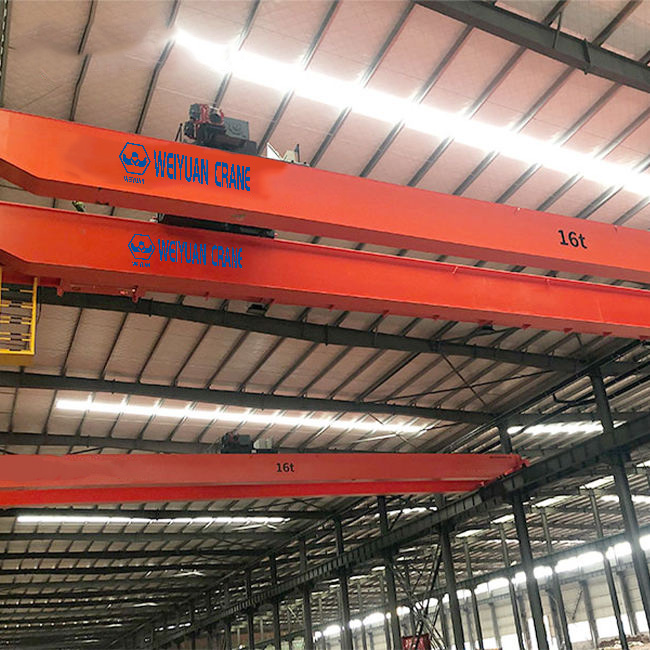
Regardless of whether the bridge sits on legs or elevated runways, the performance comes down to the drive and control technology. This is where an advanced overhead crane system separates itself from basic lifting equipment.
Precision Control
Modern manufacturing demands more than just brute strength; it requires precision.
- VFD Technology: We employ Variable Frequency Drives (VFD) for stepless speed regulation. This eliminates the “swing” of the load, ensuring high positioning accuracy for delicate tasks like mold assembly.
- Reduced Wear: VFDs significantly reduce mechanical shock to overhead crane hoist parts, extending the lifespan of the gears and motors.
Durability for Heavy Duty
For facilities running multiple shifts, the “Duty Class” is critical. A robust system is designed for rigorous use, typically reaching A4 or A5 (Medium to Heavy duty) working classes. This ensures the equipment can handle the constant start-stop cycles of a busy production line.
Case Study: Efficiency in Automotive Assembly
To illustrate the impact of the right overhead crane system, consider a recent WEIYUAN project for the General Assembly Workshop of a large automotive parts manufacturer.
- The Challenge: The facility needed to move heavy chassis components without blocking floor traffic.
- The Solution: Deployment of 5 sets of 10 ton overhead crane (Double Girder type).
- The Result: The facility achieved an 8% reduction in production line cycle time. Furthermore, the equipment has operated for over 8,000 hours with zero safety accidents, proving that the right structural choice pays dividends in safety and uptime.
Safety and Compliance Standards
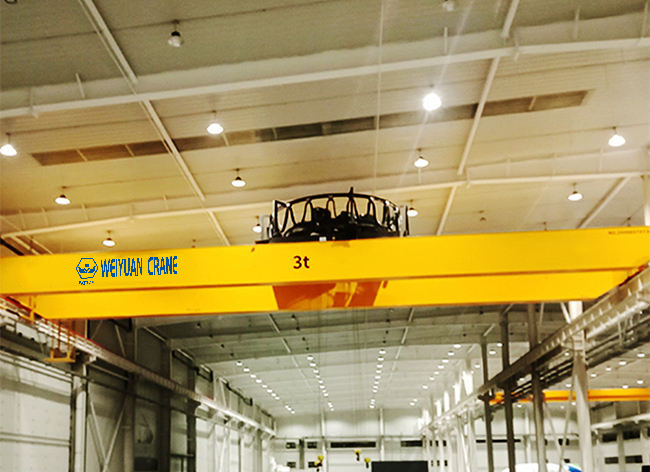
Whether you choose a gantry or an overhead model, safety is non-negotiable. Reputable overhead crane companies must strictly comply with national and industry standards, such as TSG Q0002-2008.
Essential Safety Features:
- Weight Limiters: Automatically cuts off lifting power when the load exceeds rated capacity.
- Voltage Safety: The control circuit voltage for suspended control devices should not exceed the safe voltage of 50V to protect the operator.
FAQ: Making the Final Decision
Q: Which is more expensive, overhead or gantry? A: Generally, overhead crane cost can be higher initially if your building requires structural reinforcement to hold the runways. However, if the building columns are already designed for it, an overhead system is often more cost-effective per square meter of coverage than a gantry system with long floor rails.
Q: Can these cranes work in harsh environments? A: Yes. Whether you need a 5 ton overhead gantry crane for a chemical plant or a steel mill, we can customize units with explosion-proof or anti-corrosion designs.
Q: Do I need specialized operators? A: Yes. Proper overhead crane operator training is essential. We provide detailed installation manuals, video tutorials, and on-site guidance to ensure your team is qualified.
Q: How do I get a quote?
A: To get a precise proposal from an overhead crane supplier, you should provide the Lifting Capacity, Span, Lifting Height, and the Material to be lifted.
Conclusion
The difference between overhead and gantry cranes ultimately comes down to your facility’s structure and your workflow needs. If you want to reclaim your floor space and maximize indoor efficiency, the overhead crane is the industry standard.
At WEIYUAN, we provide free factory structure analysis and crane layout optimization design to help you make this choice. From standard 1-ton units to custom double girder overhead crane systems up to 400 tons, we engineer solutions that lift your business.
Ready to optimize your facility? Contact us for a consultation or to ask about overhead cranes for sale. Our professional technical team is available for on-site support to ensure your installation is seamless.