


What is the Overhead Crane? The Definitive Guide to Maximizing Industrial Efficiency
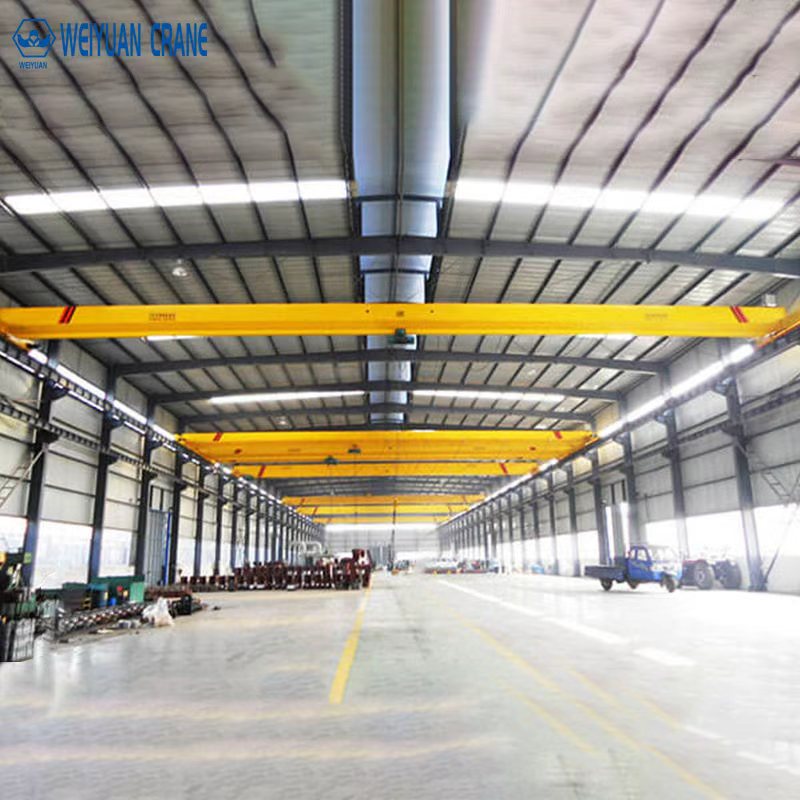
In the realm of heavy industry and logistics, the ability to maneuver massive loads with precision and safety is non-negotiable. At the heart of this crucial operation lies the overhead crane. It is more than just a piece of equipment; it is the central nervous system for vertical lifting and horizontal transport within a defined industrial space.
An overhead crane—often interchangeably called a bridge crane—is an elevated mechanical system designed to provide three-dimensional movement for objects too large or heavy for forklifts or manual handling. This system ensures the continuous, efficient flow of heavy materials, forming the backbone of modern production lines, warehouses, and assembly areas.
The core purpose of this equipment is straightforward: to handle heavy materials. However, the strategic implementation of a high-quality overhead crane yields quantifiable benefits that transform operational efficiency and safety.
The Unmatched Value Proposition
The decision to invest in a crane system is a strategic choice aimed at immediate and long-term operational improvements.
Maximizing Space and Throughput
The system is designed for the modernization of factories, warehouses, docks, and metallurgical sites. By operating in the unused air space above the floor, the overhead crane optimizes the utilization of valuable workshop space. This centralized, elevated material handling approach guarantees the precise and secure movement of large and heavy loads, often resulting in an increase in material handling efficiency by over 20%.
- Application Examples: Key applications include the loading and unloading of molds in an automotive manufacturing plant, the secure hoisting of steel coils in a steel processing factory, and the precise assembly of components in heavy machinery factories.
WEIYUAN, as a professional manufacturer integrating design, production, sales, and installation, understands that a well-engineered crane is an investment in your facility’s future capacity.
Technical Excellence: Features and Specifications that Matter
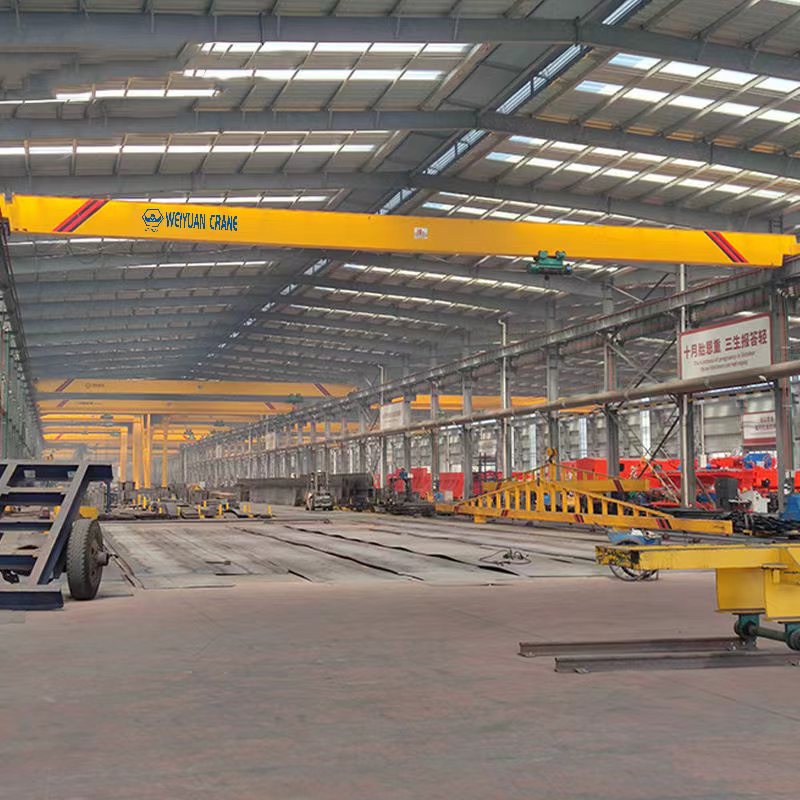
When evaluating an overhead crane for sale, buyers must look beyond the price tag and scrutinize the engineering features that ensure durability and performance.
Advanced Features for Superior Operation
Modern crane systems rely on sophisticated engineering to achieve smooth, reliable movement under heavy loads.
- Structural Design: The cranes utilize an optimized box-girder or I-beam main girder design. This construction results in low self-weight and minimized wheel pressure, which is key to achieving maximum space utilization beneath the crane.
- Driving System: For smooth, precise movement, the system employs a three-in-one reducer (hard-toothed gear reducer, variable frequency brake motor). This integration guarantees stable operation and high-precision positioning.
- Control Mode: The industry standard is Variable Frequency Drive (VFD) speed regulation. VFD provides stepless speed control, which not only boosts operating efficiency but significantly reduces mechanical impact on the structure.
- Durability Rating: The service life and endurance are classified by the Work Duty Class (A-Class). High-quality systems typically achieve A4 or A5 ratings (medium to heavy duty).
Key Technical Specifications for Selection
Matching the crane’s specifications to your facility’s physical constraints and lifting requirements is essential, whether you are looking for a 5 ton overhead crane or a heavier model.
| Specification | Standard Range (WEIYUAN) | Notes |
| Standard Capacity | 1 ton to 80 tons | Custom capacity can be maximized up to 400 tons. |
| Span Length | 7.5 meters to 34 meters | Determines the width of the area covered by the bridge. |
| Lifting Height | 6 meters to 50 meters | Customized based on building structure. |
| Rated Voltage | 380V / 400V / 415V, 50-60Hz | Standard three-phase AC power requirements. |
| Control Methods | Ground pendant, Wireless remote control, Driver’s cab operation | Offers operational flexibility. |
Customization and Application: Tailoring the Overhead Solution
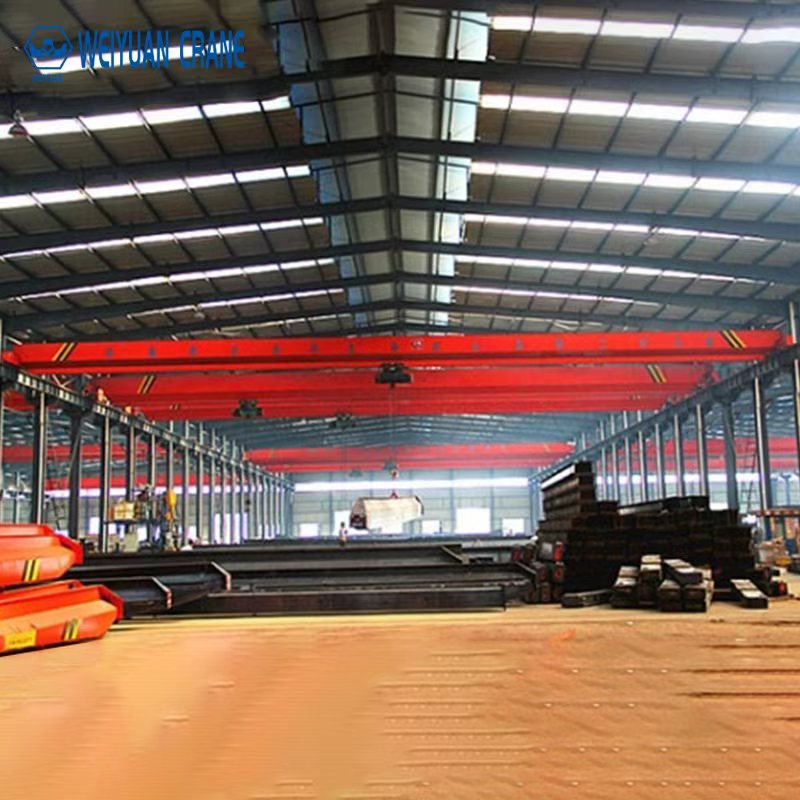
Modern industrial demands often extend beyond standard equipment like the overhead shop crane. Customization and specialized configuration are necessary to meet unique environmental and logistical requirements.
Addressing Unique Industrial Needs
The ability to customize a lifting solution is a hallmark of a premier manufacturer.
- Design Service: We provide a free design service, which includes detailed structural analysis of your plant and optimized layout design.
- Customization Range: Custom options are extensive, covering non-standard capacities, ultra-long spans, and specialized designs for hazardous environments. This includes anti-corrosion or explosion-proof features, as well as complex configurations like maintenance platforms and dual-trolley setups.
- Specialized Handling: To satisfy 100% of unique operational demands, the crane can be fitted with special lifting accessories, such as grabs or electromagnetic suction cups.
Diverse Application Fields
The versatility of the overhead crane system makes it essential across various heavy industries.
- Mechanical Manufacturing
- Metallurgy and Casting
- Mold Processing
- Steel Industry and Power Industry
- Railway Freight Yards and Logistics Warehousing Centers
Safety, Compliance, and Longevity
In the heavy lifting sector, safety and adherence to regulatory standards are paramount. Any purchase, whether a used overhead bridge crane for sale or a new build, must be compliant to protect personnel and investment.
Engineering for Absolute Safety
Compliance is the foundation of trustworthy equipment, especially when considering the sheer force and weight handled by an overhead crane.
- Safety Standards: The equipment must comply with strict national and industry standards, such as the TSG Q0002-2008 ‘Safety Technical Supervision Regulations for Lifting Machinery’.
- Critical Safety Devices: A non-negotiable feature is the Lifting Weight Limiter. This device automatically cuts the hoisting power if the load exceeds the rated capacity, preventing dangerous overload situations.
- Essential Safety Components: Cranes must be equipped with limit switches, emergency stop buttons, a robust braking system, and reliable power cut-off devices. Furthermore, the control voltage for suspension control devices is kept below 50V (safety voltage).
Companies should prioritize overhead crane training and ensure their operators seek overhead crane certification near me to guarantee safe operation.
Proven Reliability and Trust
Credibility in manufacturing is earned through reliable long-term performance data.
- Case Study: In a major automotive component manufacturing facility’s final assembly workshop, the deployment of 5 sets of 10-ton double-girder bridge cranes was executed. The result was an 8% reduction in the production line cycle time. These cranes have maintained over 8,000 hours of safe operation with zero safety incidents.
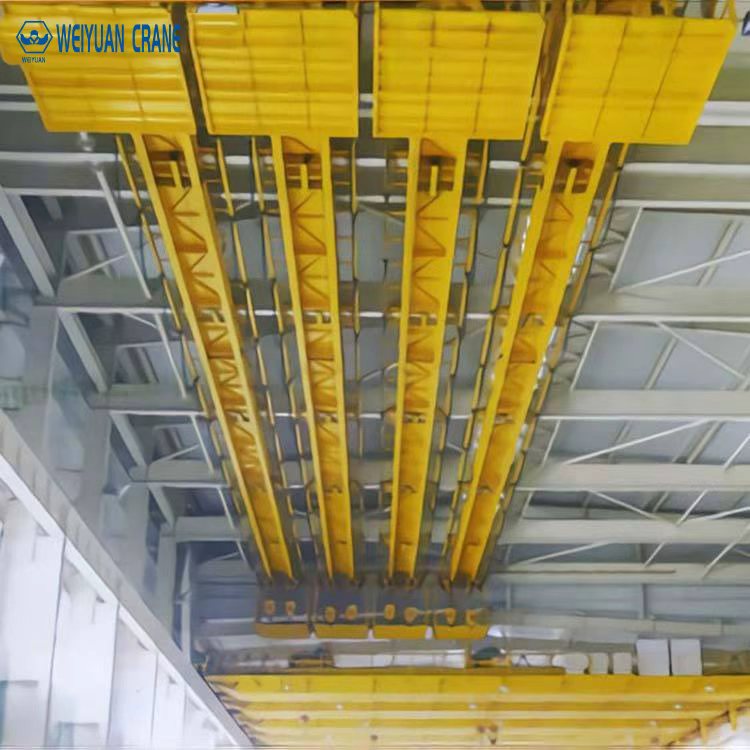
Service, Support, and Procurement Logistics
The decision to purchase an overhead crane involves logistical planning beyond the equipment itself. Comprehensive installation and support services are critical to minimizing downtime and maximizing the return on investment.
Installation and Aftercare Commitment
WEIYUAN provides comprehensive support to ensure a seamless integration of the system.
- Installation Support: We offer detailed installation manuals and video tutorials for remote guidance. For large or complex projects, our professional technical team can be deployed on-site to assist with installation and commissioning.
- Warranty and Service: We provide a one-year warranty. Our after-sales service includes designated parts support for repair and replacement. This rapid support network addresses needs such as overhead crane repair near me and overhead crane service near me.
Pricing, Quotation, and Delivery
Transparent procurement processes are vital for any major capital expenditure.
- Quotation Process: Since the price of an overhead crane depends heavily on specifications and customization requirements, we encourage clients to obtain a personalized quote. You can receive a quotation by completing the demand form on our website or by contacting our customer service hotline for an individualized solution.
- Delivery Schedule: Standard, in-stock models are typically shipped within 3-5 working days. Customized models, depending on complexity, have a delivery cycle of 2-4 weeks following final design approval.
Frequently Asked Questions (FAQ)
Addressing Common Buyer Queries
- What information is required for an accurate quote?The more detail provided, the better. Key factors include A: Lifting capacity; B: Crane span (arm length); C: Lifting height/Hook travel; D: Material being lifted; E: Power source or any other special requirements.
- What operational methods are available?Standard control options are: A: Handheld controller with buttons (pendant control); B: Wireless remote control with buttons.
- Can the crane be used in hazardous environments?Yes. We can customize the unit with anti-acid or explosion-proof features to ensure safe operation in challenging environments.
- What is the warranty period?The standard warranty is 12 months, assuming use within the standard operating guidelines.
- How is the crane installed?Our senior engineers can travel to the site to provide installation guidance and training services for your team.
- Can I visit your facility?Yes, factory visits are welcome. We can arrange transportation from the nearest station or airport and assist with hotel reservations