


Why is It Called a Gantry Crane? Understanding Its Name, Design, and Industrial Value
In the world of heavy lifting and logistics, the gantry crane is a symbol of strength and efficiency. You’ll see them towering over busy ports, sprawling construction sites, and massive assembly halls. But have you ever wondered about the name? Understanding why it’s called a “gantry” crane—and how it differs from other systems—is key to choosing the right material handling solution for your business.
Defining the Gantry Crane: What’s in a Name?
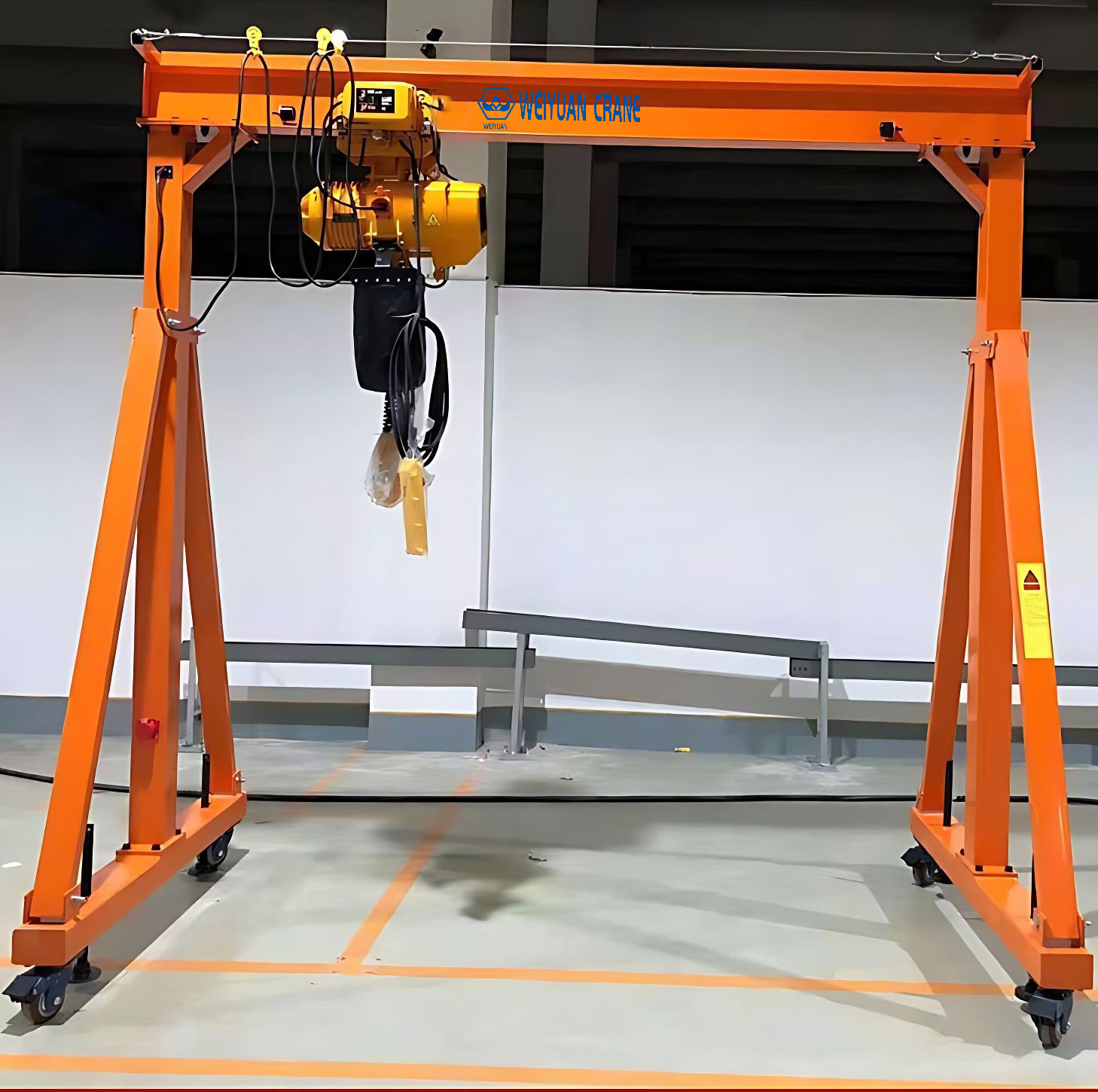
To define gantry crane is to look at its structural architecture. The word “gantry” refers to a framework that spans an area, typically used to support equipment. Unlike a bridge crane that is permanently fixed to a building’s structure, a gantry crane is built on a “gate-like” frame. It consists of a horizontal bridge beam supported by upright legs that move along a floor-mounted rail or a trackless surface.
This unique “gate” shape allows the crane to span across a workspace, supporting a gantry crane trolley or hoist that moves horizontally along the bridge to lift and lower loads. Because it carries its own support system, it is exceptionally versatile for both indoor and outdoor applications.
Gantry Crane vs Bridge Crane: Key Differences
One of the most common questions in the industry is the comparison of a gantry crane vs bridge crane.
- Support Structure: A bridge crane (or overhead crane) relies on the building’s columns and walls to support its runway beams. In contrast, an industrial gantry crane is self-supporting, with its legs transferring the load directly to the ground or rails.
- Flexibility: Because they don’t require an existing building structure, overhead gantry cranes are much easier to install in outdoor yards or rented facilities where modifying the building isn’t an option.
- Cost-Effectiveness: For long spans and outdoor use, the cost of a gantry crane is often lower than building a massive overhead runway system.
Key Features and Advantages of Gantry Systems
A high-performance gantry crane is designed for safety, durability, and high throughput. As an integrated manufacturer, WEIYUAN specializes in professional design and installation to ensure these machines meet the rigors of heavy-duty cycles.
- Robust Steel Design: We utilize optimized box-type girders and Q235/Q345 structural steel to ensure maximum stability under heavy loads and harsh weather conditions.
- Precision VVVF Control: Variable Frequency Drive (VVVF) systems provide smooth starts and stops. This protects the mechanical components and allows for the precise positioning of delicate or massive loads.
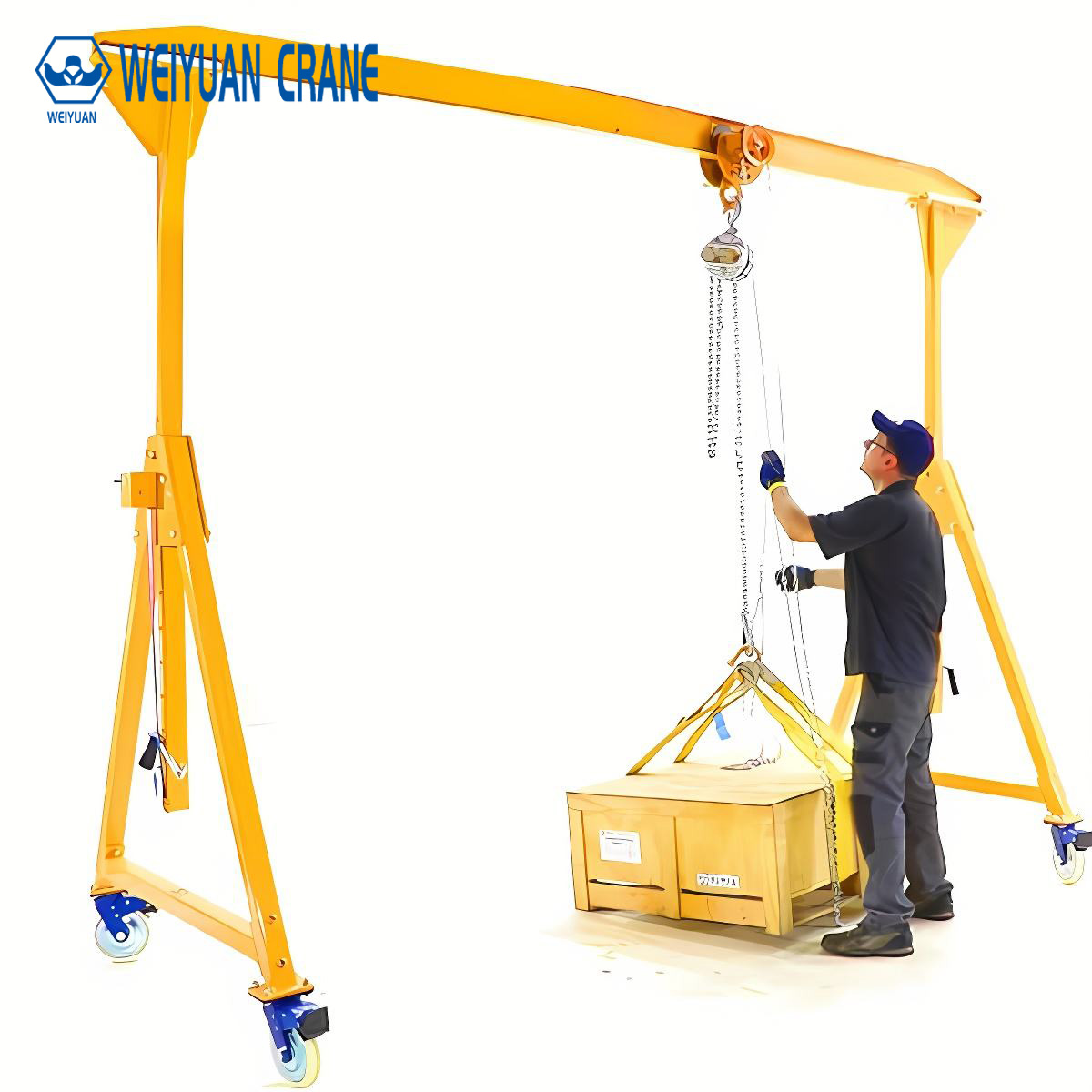
- Diverse Configurations: From a small mini gantry crane for light workshops to massive rubber tired gantry cranes (RTG) for ports, the design can be adapted to any environment.
- Smart Monitoring: Modern systems include remote diagnostics and monitoring to predict maintenance needs before downtime occurs.
Technical Specifications (Sample Data)
| Item | Specification Range | Suitability Consideration |
| Lifting Capacity (SWL) | 5 Tons to 500+ Tons | Based on your maximum load requirement |
| Span Length | 10 Meters to 50 Meters | Determines the width of the coverage area |
| Lifting Height | 6 Meters to 30 Meters | Depends on vertical space and stacking needs |
| Duty Class | A5 (Intermediate) to A8 (Ultra-Heavy) | Based on cycle frequency and load rate |
| Power Supply | 380V / 50Hz (or local standard) | Matches your facility’s grid |
Customization and Design Options
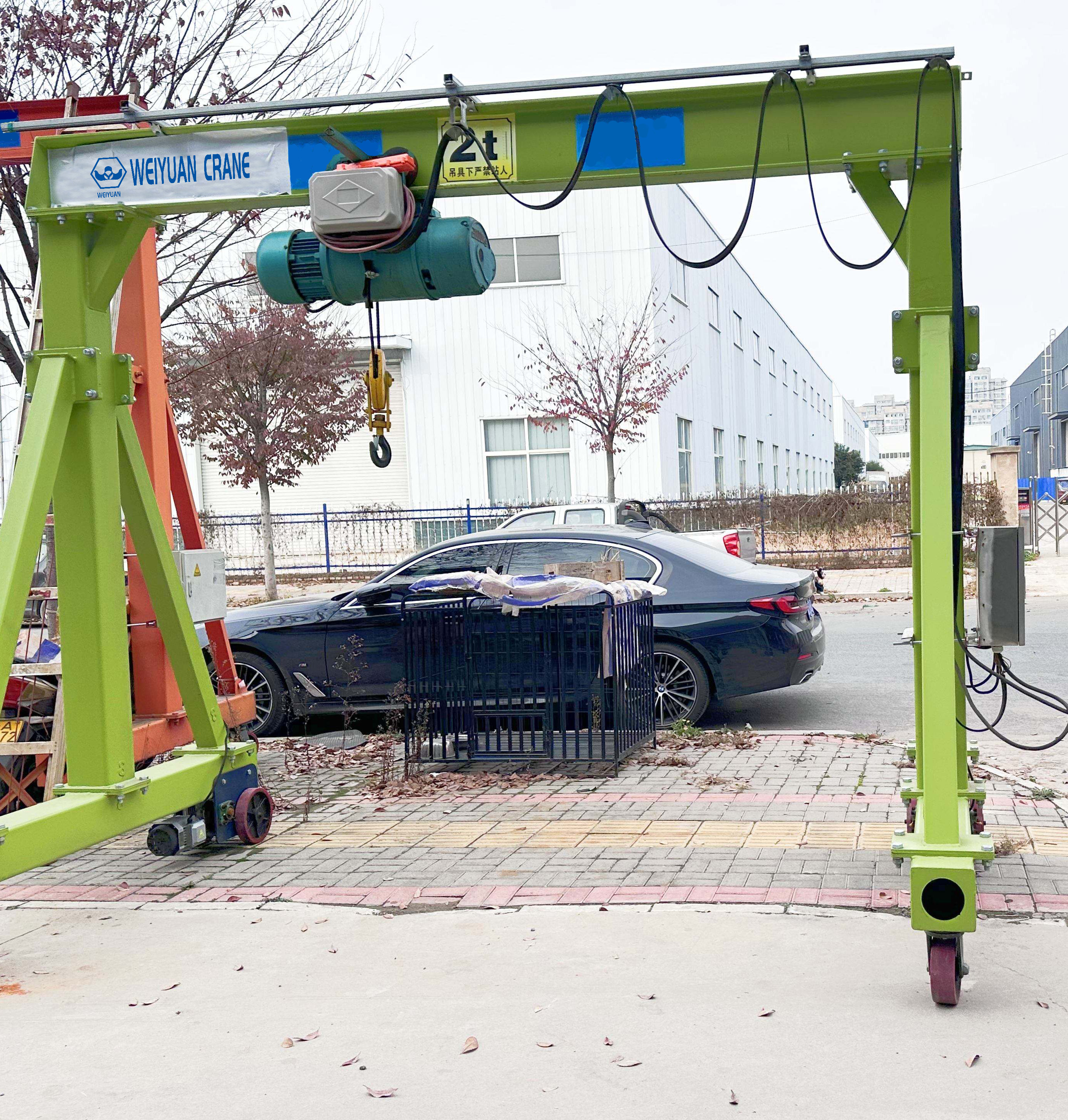
No two industrial sites are identical. A professional gantry crane manufacturer should provide a fully tailored solution. At WEIYUAN, we offer free technical consultation to ensure your equipment fits your site perfectly.
- Sizing & Span: We precisely customize the span, cantilever length, and lift height based on your rail distance and facility height.
- Functional Features: Choose between single or double girder structures, specialized anti-sway systems, and various hoist speeds.
- Environmental Adaptation: We can build specialized cranes for hazardous environments, including explosion-proof and anti-corrosion designs for metallurgy or chemical plants.
Diverse Application Fields
Because of their strength and mobility, these cranes are essential in several key sectors:
- Ports and Terminals: Rubber tyre gantry cranes and rail-mounted systems (RMG) are the backbone of container handling.
- Construction & Precast: Essential for moving massive steel structures and precast concrete beams.
- Manufacturing: Used in shipyards and heavy machinery plants to transport and assemble heavy components.
- Rail Yards: Ideal for loading and transferring freight from rail cars to trucks.
Case Study: Shipyard Component Handling
A major shipyard faced the challenge of assembling massive hull sections weighing hundreds of tons in a coastal environment with high salinity and humidity.
The WEIYUAN Solution:
We designed and delivered a 300-ton double-girder rail-mounted gantry crane. To combat the environment, it was equipped with high-protection motors and anti-corrosion coatings. The high-precision VVVF system ensured that the massive sections could be aligned with millimeter accuracy during welding. This reduced the shipyard’s construction cycle and significantly increased its production capacity.
Installation, Support, and FAQ
We provide a complete support package for all our clients:
- Global Support: We offer detailed manuals and video tutorials for online guidance. For complex projects, our senior engineering team is available for on-site installation and training.
- Warranty: We provide a 12-month warranty with dedicated spare parts support.
- Lead Time: Standard models typically ship within 3-5 business days, while custom systems require 2-4 weeks.
Frequently Asked Questions
1. What info do I need for a quote?
Please provide the lifting capacity, span length, lifting height, type of material, and power source. The more detail (including gantry crane blueprints or site photos), the better.
2. Can these cranes work in dangerous environments?
Yes. We can customize acid-resistant or explosion-proof systems for specialized industrial needs.
3. What are the operating options?
Standard options include handheld pendant controllers or wireless remote controls. You can choose the one that best fits your operator’s needs.