


Boost Your Facility’s Efficiency with Gantry Cranes: The Ultimate Productivity Guide
In the world of heavy industry, logistics, and manufacturing, time is the most valuable commodity. Every minute a multi-ton load sits idle, waiting for the right equipment to move it, is a minute of lost productivity that directly impacts your bottom line. While forklifts handle small loads and indoor bridge cranes serve enclosed bays, a significant portion of industrial work happens in large, open spaces where traditional lifting solutions simply cannot operate.
This is precisely where freestanding lifting systems become a game-changer for facility efficiency. If your operations involve outdoor storage yards, massive fabrication halls, or areas where building structures cannot support a crane, you have likely encountered the logistical bottlenecks that slow everything down. This guide is designed to be your ultimate resource for understanding how the right material handling equipment can dramatically boost your facility’s output, reduce operational costs, and create a safer, more streamlined workflow.
We will explore how these self-supporting powerhouses eliminate common delays, the specific types suited for different industrial applications, and the modern technologies that make them faster and more precise than ever before.
Understanding the Core Inefficiency: The Waiting Game
The single biggest drain on industrial productivity is waiting. An operator might wait for a shared overhead crane to be free. A team might wait for a specialized heavy-haul forklift to arrive. A truck driver might wait for a mobile crane rental to show up and unload their cargo. This “waiting game” is a silent profit killer.
A primary cause of these delays is a mismatch between the lifting equipment and the operational environment. You cannot expect a standard indoor bridge crane to function in an outdoor rail yard, nor can you rely on a forklift to safely handle a 50-ton concrete beam. True efficiency is achieved when your lifting equipment is perfectly matched to the task, the load, and the location.
This is the fundamental problem that Gantry Cranes are designed to solve.
What is a Gantry Crane and Why is it Different?
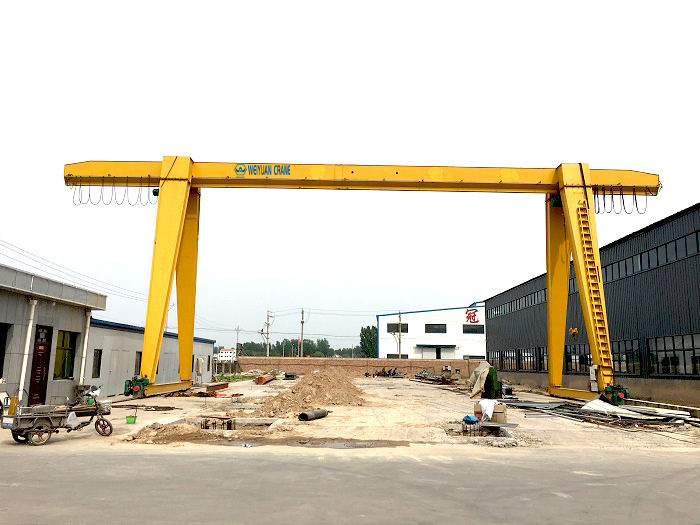
Unlike an overhead bridge crane that mounts to a building’s support columns and roof structure, a gantry crane is a completely self-supporting system. It consists of a horizontal bridge (girder) supported by vertical legs. These legs travel along the ground, either on fixed steel rails or on heavy-duty wheels.
This freestanding design is its greatest advantage. Because it carries its own load directly to the ground, it does not rely on any part of a building for support. This structural independence is the key to unlocking massive efficiency gains in environments where other cranes cannot operate.
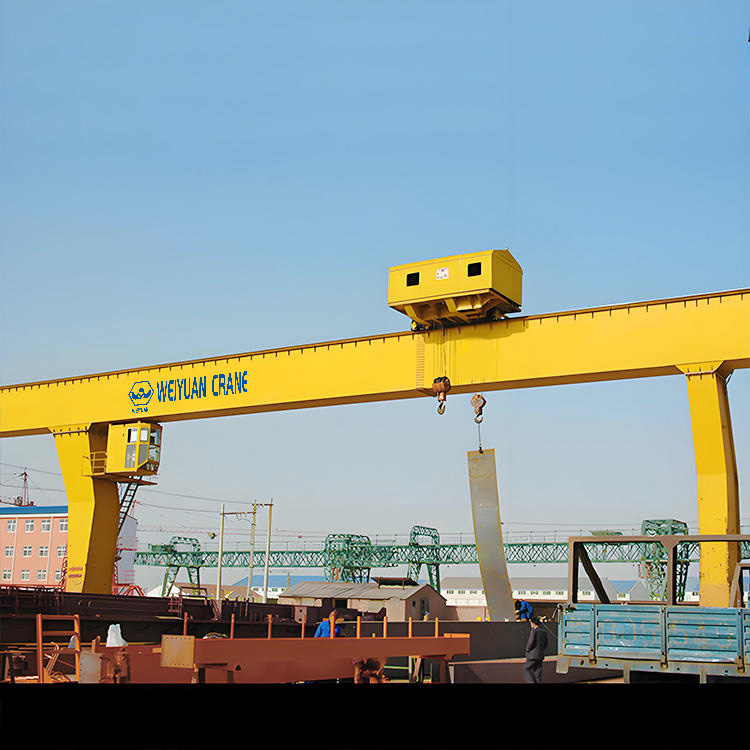
Weiyuan L-Shape Leg Walk Gantry Crane | Manufacturer Direct, Enhanced Mobility
The Weiyuan L-Shape Leg Walk Gantry Crane is a high-performance single-girder gantry crane with a distinctive L-shaped leg design that offers superior clearance for long and oversized loads, and smooth “walk” travel on ground rails — direct from the manufacturer for competitive pricing and reliable quality. :contentReference
View Product / Get Quote1. Unlocking Productivity in Outdoor Environments
Many heavy industries, such as shipping, stone quarrying, precast concrete, and steel distribution, operate primarily outdoors. These large, open yards present a unique material handling challenge.
The Solution for Open Yards
Building a structure to support a crane over a multi-acre yard is financially and logistically impossible. Gantry Cranes are the definitive solution. They are engineered from the ground up to withstand the rigors of outdoor use, with features like:
- Weatherproof Components: Motors, electrical cabinets, and controls are housed in NEMA-rated enclosures to protect against rain, dust, and extreme temperatures.
- Corrosion Resistance: The steel structure is treated with specialized multi-part epoxy and polyurethane coatings to prevent rust and degradation.
- Wind Protection: Designs incorporate features like rail clamps and storm tie-downs to secure the crane during high winds, ensuring both safety and equipment longevity.
By installing a rail-mounted gantry, a facility can load, unload, and organize massive materials across a huge area with just a single operator, drastically reducing the reliance on slow, expensive, and less safe mobile equipment like hydraulic cranes.
2. Eliminating Building Constraints and Costs
What if you need heavy lifting capacity inside a building that wasn’t designed for it? Many modern warehouses and pre-engineered metal buildings have lightweight structures that cannot support the immense forces of a traditional bridge crane.
Heavy Lifting in Light Structures
This is where a gantry becomes an incredible productivity tool for indoor applications. You can install a high-capacity gantry system inside a light-duty building without undertaking a costly and time-consuming structural retrofit. This allows businesses in leased facilities or those looking to avoid major construction to gain heavy lifting capabilities quickly. The efficiency boost comes from minimizing installation downtime and avoiding massive capital expenditure on building reinforcement.
3. Creating Flexible and Adaptable Workflows
Industrial needs evolve. A production layout that is efficient today might be obsolete tomorrow. Fixed lifting systems can lock you into a rigid workflow.
The Power of Mobility
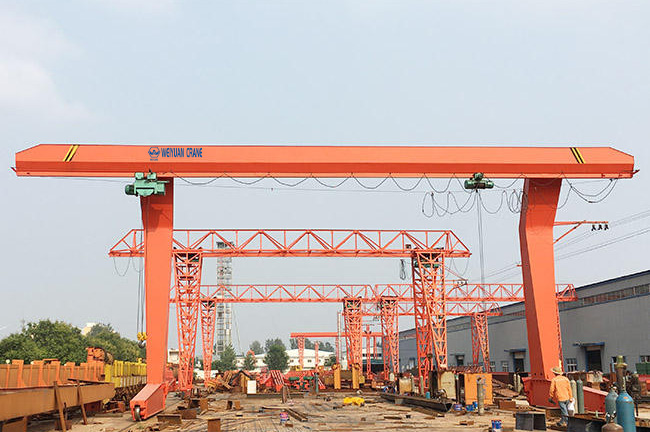
This is where trackless, rubber-tired gantry cranes (RTGs) offer unparalleled flexibility. These cranes are not bound to a fixed rail path. An operator can drive the crane anywhere in the facility where there is a suitable flat concrete surface.
- Serve Multiple Bays: One mobile gantry can service the fabrication bay in the morning, move to the shipping department in the afternoon to load trucks, and then be positioned over a key piece of machinery for maintenance overnight.
- Indoor-Outdoor Flexibility: Drive the crane outside to unload a flatbed, then bring the material directly inside to the point of use, creating a seamless workflow.
This adaptability means your lifting equipment serves your process, not the other way around. It eliminates the need to purchase multiple fixed cranes for different areas, making it a highly efficient use of capital.
4. Specific Gantry Types for Targeted Efficiency Gains
Choosing the right type is critical for maximizing productivity.
Full Gantry Cranes
This is the most common type, with two legs supporting the bridge. They are workhorses for shipyards, rail yards, and heavy manufacturing, offering the highest capacities and widest spans.
Semi-Gantry Cranes
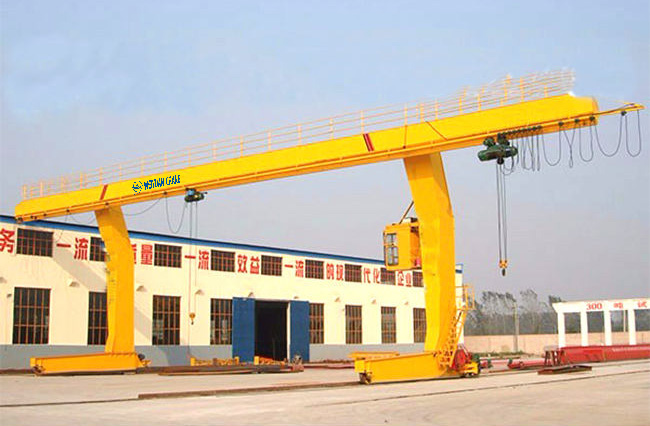
This clever hybrid design features one leg that runs on the ground and one side of the bridge that runs on an elevated runway, usually along the side of an existing building wall. This is extremely efficient for facilities that need to service a long production line adjacent to a wall, as it keeps one side of the floor completely clear of tracks.
Portable Gantry Cranes
For workshops, maintenance bays, and lighter fabrication, portable gantries are an essential tool. These smaller, wheeled units (often with adjustable height and span) can be easily moved by hand and positioned over a specific workpiece. They are perfect for tasks like pulling engines, lifting heavy molds, or moving sub-assemblies, eliminating the need for workers to wait for a shared facility crane for a small but heavy lift.
5. Technology That Drives Speed and Precision
Modern lifting systems are not just about brute strength; they are about intelligent control.
- Variable Frequency Drives (VFDs): This is the single most important technology for crane efficiency. VFDs provide smooth, variable speed control for all crane motions. The operator can eliminate the sudden “jerk” of older cranes, which prevents dangerous load swing. By eliminating the time spent waiting for a swinging load to stabilize, cycle times are dramatically reduced.
- Remote and Automated Controls: Wireless radio remotes allow the operator to move freely and get the best possible view of the lift, enhancing both safety and speed. For ultimate productivity in repetitive applications, fully automated Gantry Cranes can operate 24/7 with no human operator, guided by the facility’s warehouse management system.
Establishing a Culture of Safety and E-A-T
To achieve sustainable productivity, you must build a culture of Expertise, Authoritativeness, and Trustworthiness (E-A-T) around your equipment. An unsafe operation is an inefficient one.
- Expert Training: Ensure all operators are expertly trained and certified not just on the basic controls, but on advanced techniques like managing load dynamics and performing daily pre-use inspections.
- Authoritative Maintenance: Adhere strictly to the manufacturer’s recommended maintenance schedule and all relevant safety standards (e.g., OSHA, ASME). An authoritative maintenance log proves compliance and prevents unexpected downtime from equipment failure.
- Trustworthy Equipment: Invest in high-quality equipment with built-in safety features like overload protection, anti-collision systems, and emergency stops. When your team trusts their equipment, they can work confidently and efficiently.